






Kostel svatého Antonína Paduánského (Znojmo) Church
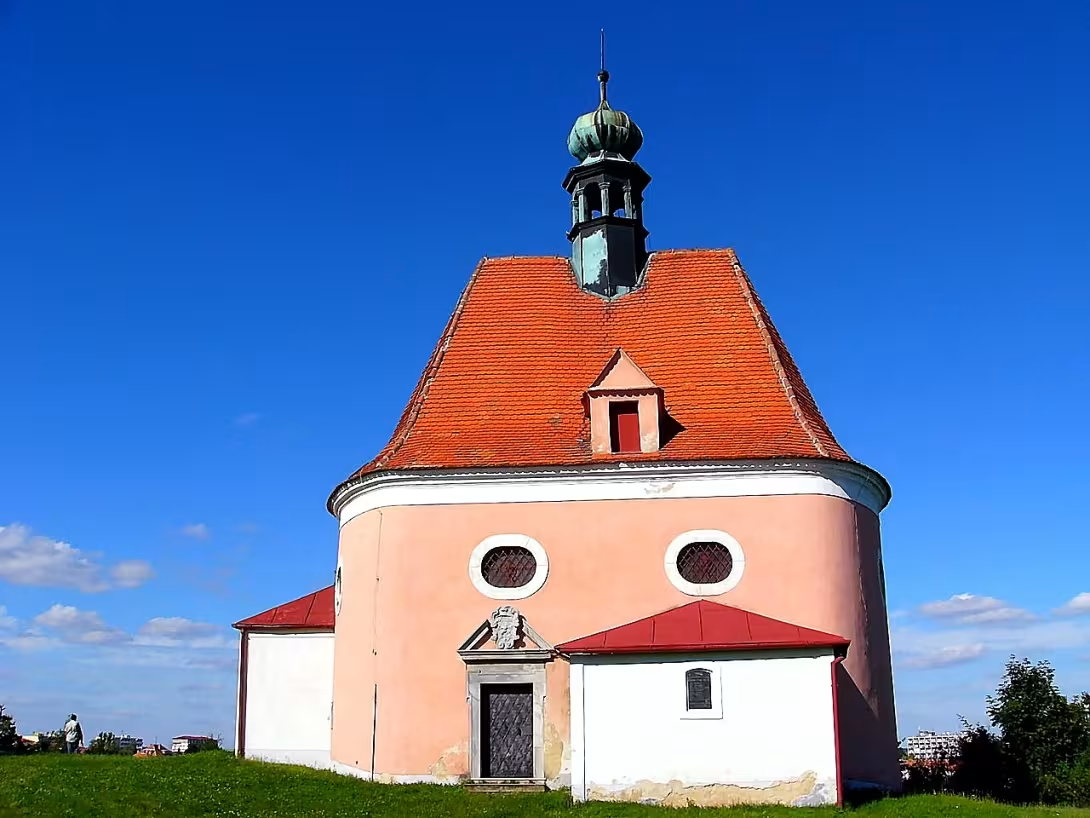
The Church of Saint Anthony of Padua in Znojmo-Hradiště is a notable Baroque pilgrimage site perched on a rocky outcrop above the Gránický stream valley. Built in 1622 and consecrated the following year under Archbishop Arnošt Vojtěch z Harrachu's patronage, this church stands out for its picturesque setting and spiritual significance. Its historical context within the Habsburg Monarchy during Emperor Leopold I’s reign adds to its allure as a site of religious and cultural importance.
The origin of the Church dates back to 1622 when Probošt Tomáš ze Šlesinu, a counselor to Emperor Leopold I, commissioned it. The construction aimed to meet spiritual needs and reflect Counter-Reformation efforts prevalent in Europe at that time. By 1623, the church had been consecrated under Archbishop Arnošt Vojtěch z Harrachu's patronage, marking its significance within the region’s religious landscape.
Architecturally, the Church is a small Baroque structure characterized by its early 17th-century design. Its location on a rocky outcrop enhances its visual prominence in the surrounding landscape. The church's spiritual depth is enriched by a nearby smaller chapel dedicated to Saint Elijah and a Stations of the Cross path, which was reconstructed and redesigned in 1992.
Throughout history, the Church has remained an important religious site. Established during significant religious developments, it underscores its role as part of Counter-Reformation efforts within the Habsburg Monarchy. Its integration into a pilgrimage route featuring a Stations of the Cross path highlights its enduring spiritual significance.
Today, the Church continues to attract visitors with its historical and architectural charm. Its picturesque location overlooking the Gránický stream valley offers both spiritual reflection and scenic beauty. Visitors are drawn not only by its Baroque architecture but also by the opportunity to explore a site steeped in history and religious tradition.
The Church of Saint Anthony of Padua remains a testament to Znojmo-Hradiště's rich cultural and religious heritage. Its historical significance, combined with architectural beauty and spiritual allure, makes it a worthwhile destination for those interested in exploring Baroque pilgrimage sites. Visitors are invited to experience this remarkable monument and immerse themselves in its storied past.
Then and now
Drag the slider to compare how the landmark may have looked when it was built with the view today.
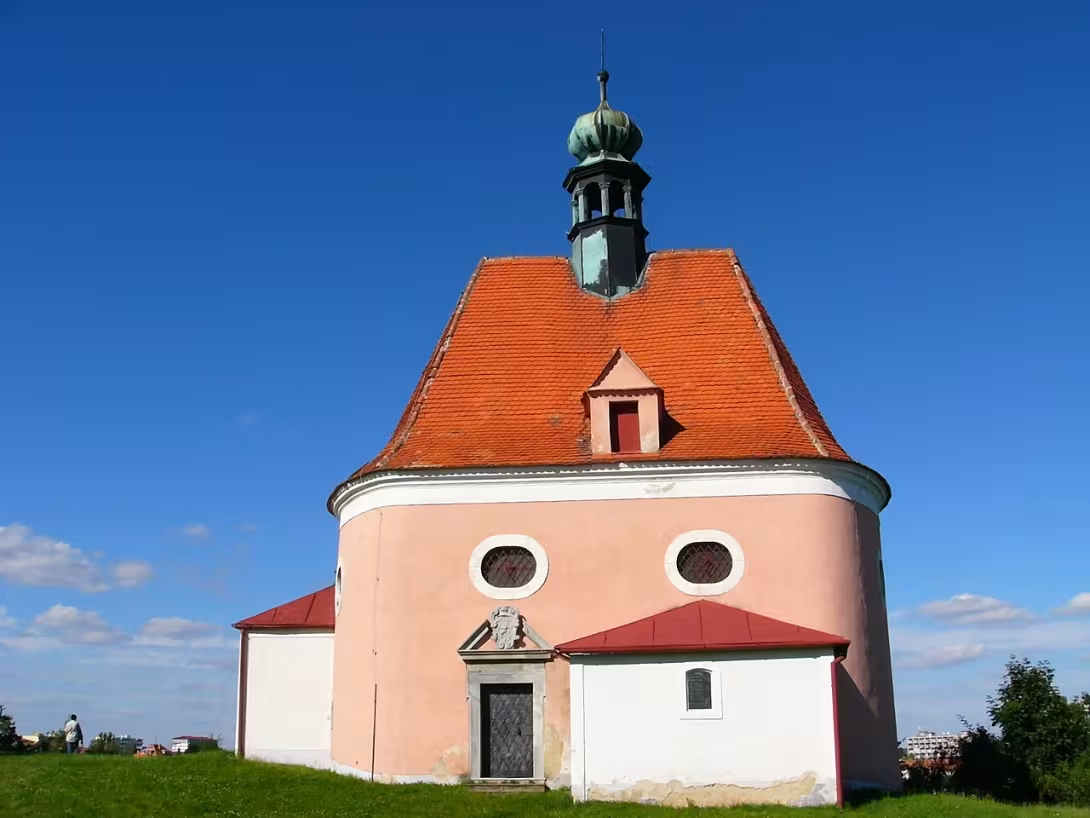

The historical appearance on the left is an AI-generated visualisation and serves as inspiration only.
Historical milestones
- 1622
- Založení kostela svatého Antonína Paduánského.
- 1623
- Kostel byl zasvěcen pod patronacím arcibiskupa Arnošta Vojtěcha z Harrachu.
- 17. století
- Součást protireformace v rámci Habsburské monarchie.
- 1992
- Rekonstrukce a redesign cesty křížových cest.
Architectural development
The Church of Saint Anthony of Padua is a small baroque structure built in 1622. It was later complemented by a chapel dedicated to Saint Elijah and the creation of a Stations of the Cross path, which was reconstructed and redesigned in 1992.
Historical events
- 1622
- Construction of the Church of Saint Anthony of Padua began.
- 1623
- Consecration of the church under Archbishop Arnošt Vojtěch z Harrachu's patronage.
Points of interest
- The Church of Saint Anthony of Padua was built in 1622 and consecrated the following year under Archbishop Arnošt Vojtěch z Harrachu's patronage. - It is a Baroque pilgrimage site located on a rocky outcrop above the Gránický stream valley, reflecting Counter-Reformation efforts during Emperor Leopold I’s reign within the Habsburg Monarchy. - The church was commissioned by Probošt Tomáš ze Šlesinu, a counselor to Emperor Leopold I, highlighting its historical and religious significance in the region. - A nearby smaller chapel dedicated to Saint Elijah and a Stations of the Cross path, reconstructed in 1992, enhance the site's spiritual depth. - The church remains an important religious site today, attracting visitors with its historical and architectural charm as well as its picturesque location.
Guide
This guide is narrated by a synthetic voice generated by artificial intelligence.
Show guide text
This text was created by artificial intelligence and has not been editorially reviewed. It may contain inaccuracies.
Welcome! You are standing before one of the most famous Baroque churches in Znojmo. The Church of Saint Anthony of Padua towers on a rocky outcrop above the valley of Gránický stream, offering stunning views of the surrounding landscape. Look up and admire its impressive facade, characteristic of 17th-century Baroque architecture.
Let's delve into history to discover who built this church and why. The Church of Saint Anthony of Padua was founded in 1622 by Provost Tomáš ze Šlešina. It was consecrated under the patronage of Archbishop Arnošt Vojtěch z Harrachu in 1623. This period is significant because the church was built as part of the Counter-Reformation within the Habsburg Monarchy.
Notice that the church is constructed in the Baroque style, which was popular at the time. The facade is richly decorated with many details typical of Baroque architecture. Now focus on the front of the church. Here you can see beautiful sculptures and ornaments that enhance the overall atmosphere of the church.
The Church of Saint Anthony of Padua is also known for its Stations of the Cross, which were reconstructed in 1992. These stations are an important part of Christian tradition and offer visitors the opportunity to deepen their faith.
Two significant figures are associated with this church. The first is Provost Tomáš ze Šlešina, who founded the church, and the second is Archbishop Arnošt Vojtěch z Harrachu, who consecrated it. Both of these individuals played a key role in the history of this church.
There's also an interesting feature that might catch your attention. The Church of Saint Anthony of Padua is built on a rocky outcrop that offers stunning views of the surrounding landscape. If you take a walk around the church, you can enjoy beautiful vistas of Gránický stream valley.
Now pause for a moment and savor the atmosphere of this Baroque church. The Church of Saint Anthony of Padua is not only an exquisite architectural work but also a place where you can experience deep spirituality and religious reverence. Thank you for stopping by this site, and we hope you will want to return to explore more of its mysteries.
Tips for visitors
The best time to visit Kostel svatého Antonína Paduánského is during the late spring or early autumn months, when the weather is mild and pleasant for exploring both the church and its surrounding natural beauty. Visiting in these seasons allows you to enjoy the lush landscapes and vibrant colors of the region without the discomfort of summer heat or winter cold. Additionally, the lighting conditions are ideal for photography, with softer light enhancing the architectural details and the scenic views.
The church is accessible by both car and public transport, making it easy to reach from Znojmo or other nearby areas. If you prefer using public transportation, check current routes and schedules through a local transit search tool to ensure seamless travel to this historic site.
When planning your visit, consider bringing comfortable walking shoes as exploring the rocky outcrops and open landscapes around the church can involve some walking on uneven terrain. A camera is also recommended to capture the stunning views from the Stations of the Cross path and the picturesque setting overlooking the Gránický potok valley. Additionally, carrying a light jacket or sweater might be useful due to variable weather conditions.
For photography enthusiasts, the best spots around Kostel svatého Antonína Paduánského are those offering panoramic views of the church against the backdrop of the valley and rocky outcrops. The early morning or late afternoon light provides a warm glow that beautifully highlights the baroque architecture. Exploring different angles along the Stations of the Cross path can also yield unique perspectives and compositions.
Nearby attractions within a 30-minute drive include other historical sites in Znojmo, such as the Znojmo Castle and the Old Town with its charming streets and buildings. These locations offer additional cultural insights into the region's history and architecture. For families with children, these areas provide an engaging experience with opportunities to learn about local heritage while enjoying outdoor spaces.
For families visiting Kostel svatého Antonína Paduánského, consider bringing along a small picnic for a relaxing break in the natural surroundings. The open landscapes and rocky outcrops are perfect for children to explore safely under supervision. Engaging them with stories about the church's history or having them participate in finding unique photo opportunities can make the visit more interactive and enjoyable.
Frequently asked questions
Can the monument be visited?
Religious buildings are usually open mainly during services; at other times a visit is normally arranged with the parish or the operator. We have not verified specific times.
Where is the monument?
Location: Znojmo, Jihomoravský kraj. The map on this page shows the exact spot.
Why is the monument protected?
It is listed in the Central List of Cultural Monuments of the Czech Republic as a cultural monument (register no. 33710/7-6951).
Businesses nearby
Do you run a restaurant, accommodation, shop, museum, rental, wellness or other visitor service near this monument? Show yourself directly to the people heading to it — this is how they will see you in the app and on the web:
Nearby
The church overlooks the Gránický stream valley and is situated on a rocky outcrop. Nearby features include a small chapel dedicated to Saint Elijah, enhancing the area's religious landscape.
Accommodation nearby
Themed route
Znojmo's Hidden Gems
This 4-point itinerary takes you through the charming town of Znojmo, exploring its historic sites and natural beauty.
1. Kostel svatého Antonína Paduánského (Znojmo), Church This stunning church is the main attraction of the tour, perched on a rocky outcrop overlooking the Gránický stream valley. Its unique architecture and serene atmosphere make it a must-visit.
2. Chapel of Saint Elijah, Chapel A short walk from the church, this small chapel dedicated to Saint Elijah adds to the area's spiritual significance. Its tranquil setting and picturesque surroundings make it an ideal spot for reflection.
3. Gránický stream valley, Nature Take a leisurely stroll through the valley, surrounded by lush greenery and the gentle sound of the Gránický stream. The valley's natural beauty provides a peaceful contrast to the historic sites.
4. Znojmo's Old Town, Historic Town As you explore the town, wander through its narrow streets and discover its charming architecture, quaint shops, and lively atmosphere. The town's rich history and cultural heritage await your discovery.
Seasonal recommendations
Jaro
Spring is the ideal time to visit St. Anthony of Padua Church because nature around the church is in full bloom. The atmosphere during this period is relaxed and full of optimism. We recommend visiting the church in early morning or afternoon light when sunlight reveals the beauty of its architecture and artworks. It's also wise to avoid the main tourist season to prevent overcrowding.
Léto
In summer, St. Anthony of Padua Church is surrounded by beautiful greenery and flowers. The peak tourist season occurs in the summer months, so it's best to come early to avoid crowds. We recommend bringing a scarf or sunglasses for sun protection.
Podzim
The autumn period offers St. Anthony of Padua Church in a more tranquil atmosphere, with beautiful fall colors appearing around the church. We suggest visiting in late afternoon when sunlight illuminates the church façade and creates stunning lighting effects.
Zima
The winter period is quiet and peaceful but also ideal for visiting St. Anthony of Padua Church. We recommend visiting in late afternoon when sunlight highlights the church façade with beautiful lighting effects. It's also wise to bring warm clothing as temperatures may drop.
Visualizations and artistic views


The visualisations are generated by artificial intelligence and serve as inspiration.
Photos from the area
Real photos taken near the monument


Zdroj a licence jsou uvedeny u každého snímku.
Atmosphere of the place
This atmospheric visualisation of the place and period was generated by artificial intelligence. It is not real footage of the location.
Tips from visitors
No tips yet. Be the first!
Log in and add your tip.
Sources and literature
Photos: Honny / CC BY-SA 3.0 — Wikimedia Commons. The author and licence also appear when you hover over the image.
Faktickým podkladem tohoto textu byl článek na Wikipedii, jehož autory jsou přispěvatelé Wikipedie. Článek je dostupný pod licencí CC BY-SA 4.0.
Location on the map

Příběhy a pověsti
Legendy, pověsti a příběhy spjaté s touto památkou

Příběh: Kostel svatého Antonína Paduánského (Znojmo)
Bylo to v pondělí ráno, kdy Jan z Vrbičanů slyšel šepot nad hlavou své matky — ne ten běžný kašel v posteli, ale něco jemného a tajemného jako šust větru. St…
Číst příběh
Pověst: Kostel svatého Antonína Paduánského (Znojmo)
Podle místní pověsti, jež se v Znojmě vyprávěla od nepaměti u krbů i u studní, stojí kostelík svatého Antonína na tom skalnatém místě nad Gránickým potokem z…
Číst příběhFotografie návštěvníků
Zatím žádné fotografie. Buďte první, kdo přidá fotografii z návštěvy!
Log in a přidejte svou fotografii nebo hodnoťte.
Za ověřenou návštěvu v aplikaci získáte víc bodů — poznáme podle GPS, že jste na místě.
Reviews and comments