






kostel svatého Barnabáše Church
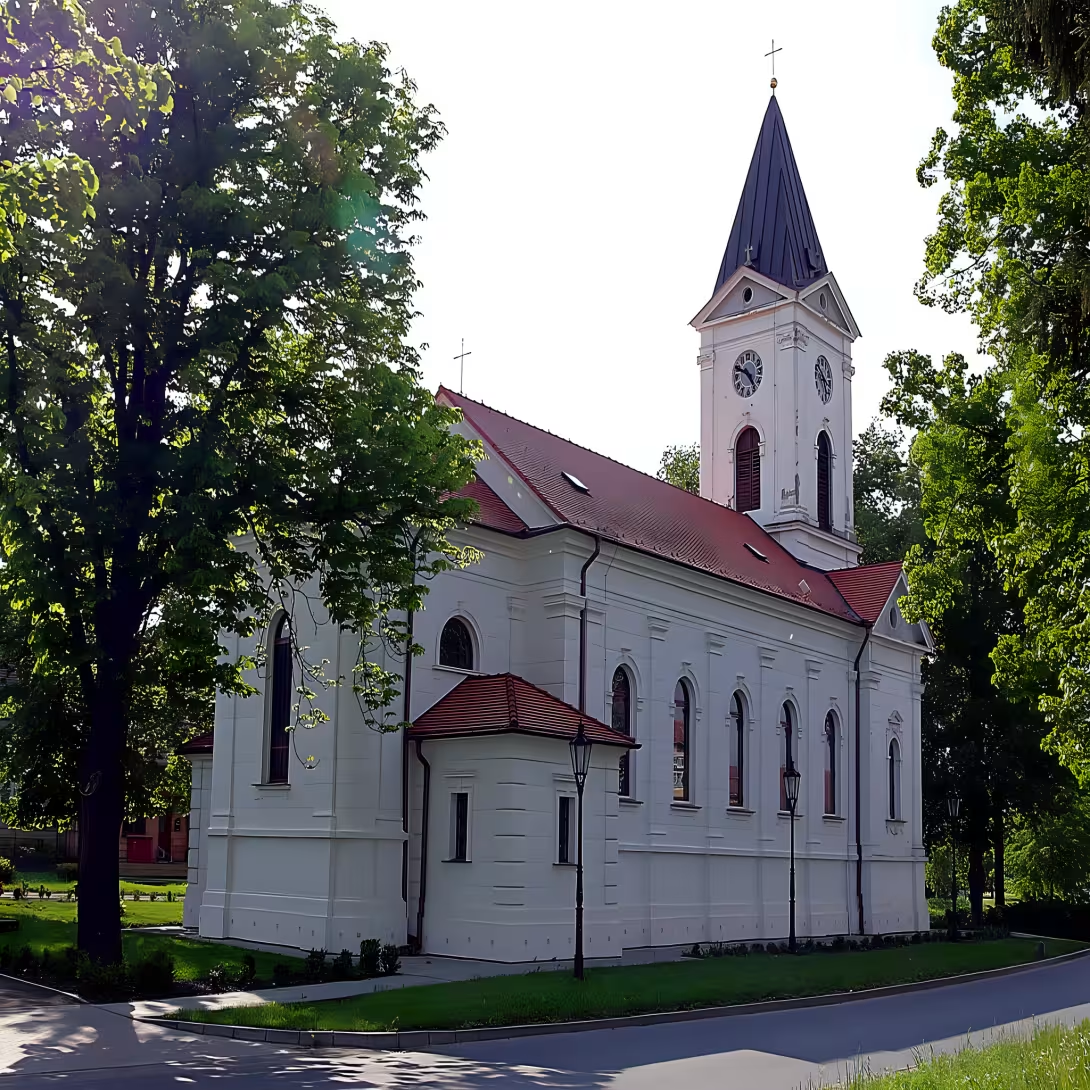
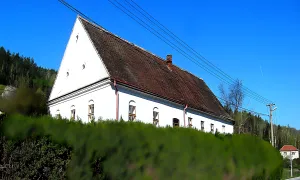
The Roman Catholic kostel svatého Barnabáše stands in the village of Těšany in the district of Brno-venkov and serves as a parish temple of the mining parish. Its construction relates to the very long history of this site - it is preceded by an indication traditionally linking the fate of the village to the fire that broke out on Saturday, 11 June 1697, the day the Catholic Church celebrates Saint Barnabas. This day became important for Těšany - after a suspected fire, local people built a small chapel with a bell tower to serve their spiritual needs.
With time and the growing religious needs of the growing community, the need for a church of greater proportions came. The construction was officially authorised in 1896 and completed in 1897. But more than eight years later, the temple was festively consecrated only on June 12, 1906, when the formation was donated to him by his патrон and protector, Saint Barnabas, whose name was a symbol of protection against the devastating fires that the village had suffered in the past.
Architectural is the construction of a single boat, where the tower shuts down in the axis of the facade. The church has a chipped floor plan and on both sides are symmetrically located tributaries that complement its appearance. Part of the church are also bells - three that received their initiation during the 20th century: the bell of St. Barnabas dates back to 1959, the bell of the Holy Family from 1955 and the bell of St. John the Baptist from 1956.
In recent times, the church has undergone important repairs. In the years 1991-1993, it was repaired and in 1999 the whole reconstruction of the roof and tower followed, which ensured its long-term existence. Visitors can see here an authentic example of the Czech rural sacral architecture at the end of the 19th century, which bears traces of the long development of the local community and its perseverance towards natural accidents.
Then and now
Drag the slider to compare how the landmark may have looked when it was built with the view today.
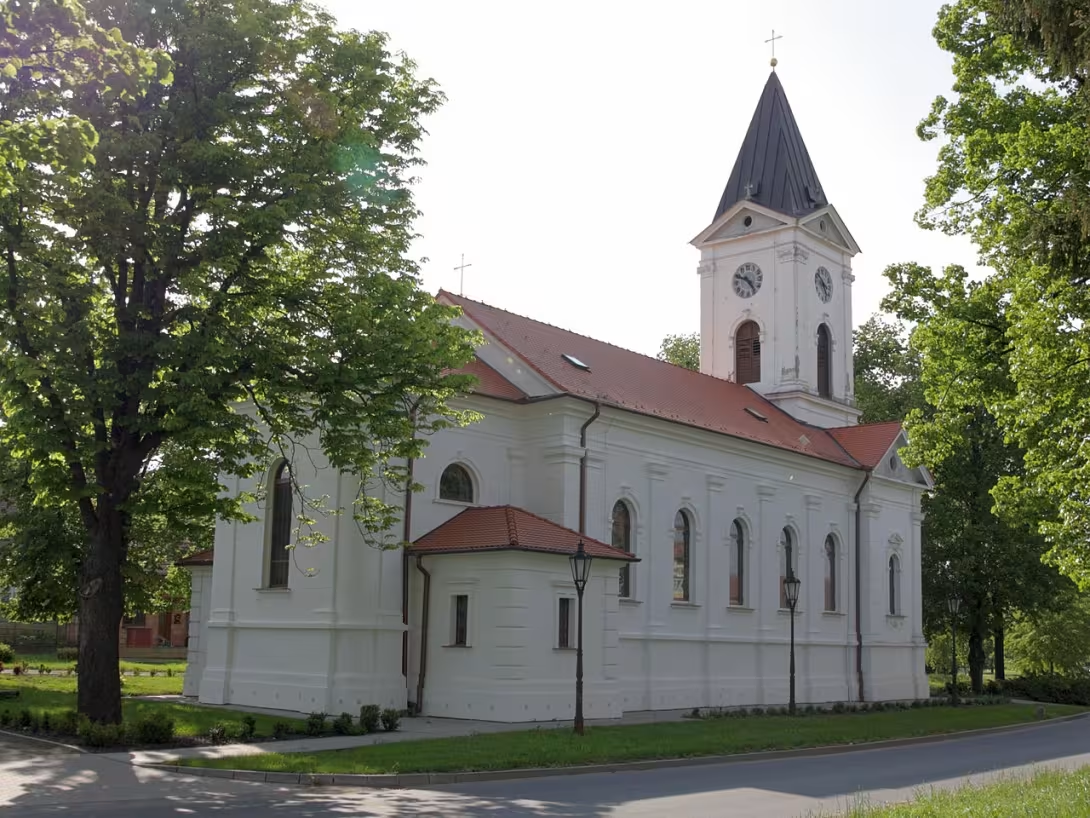
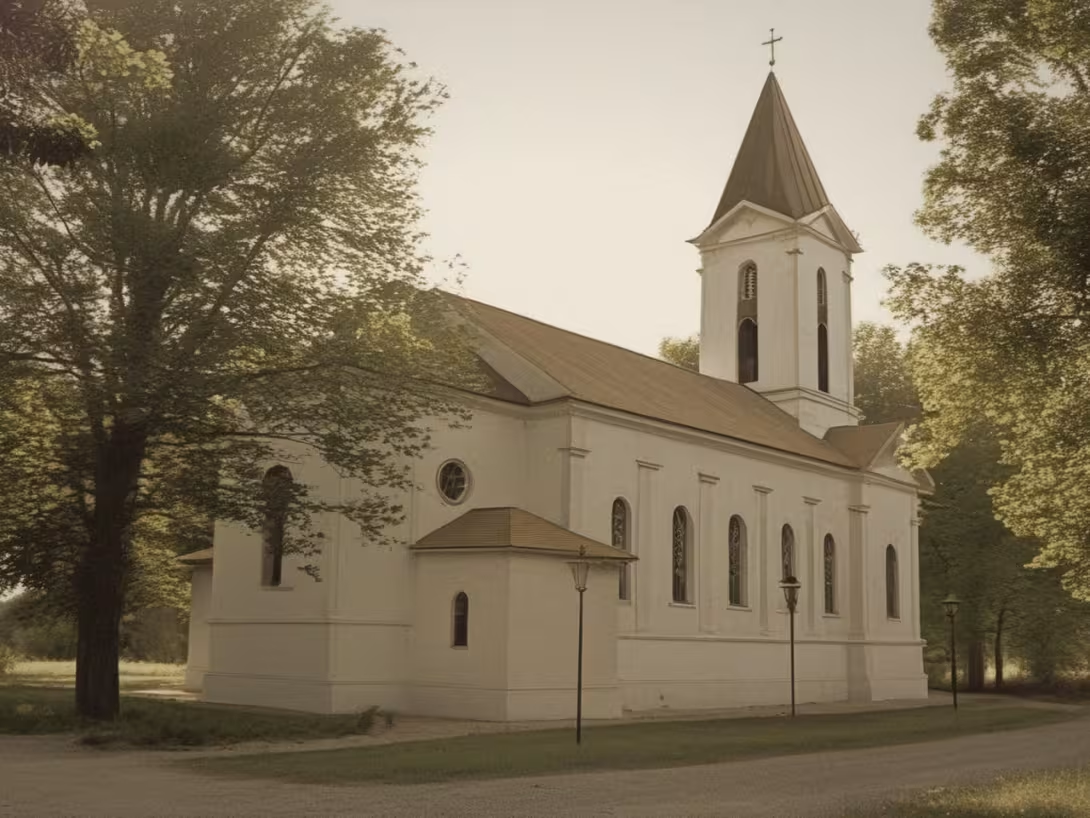
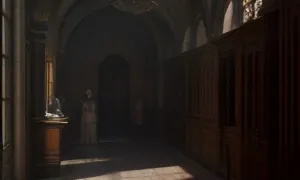
The historical appearance on the left is an AI-generated visualisation and serves as inspiration only.
Historical milestones
- 1697
- A devastating fire in the village on St. Barnabas Day.
- 1896
- Permission to build a church.
- 1897
- Completion of church construction.
- 1906
- The ceremonial consecration of the temple.
Architectural development
A single-boat temple with a separate floor plan and a tower in the axis of the facade. The roof and tower were completely reconstructed in 1999.
Historical events
In 1697 a devastating fire broke out in the village, which led to the construction of the first chapel. In 1906, the present church was ceremonially consecrated.
Owners
Roman Catholic Church
Points of interest
- St. Barnabas' church in Teshaany was built after a fire broke out on June 11, 1697.
- The church was officially authorized in 1896 and completed in 1897.
The temple was ceremoniously consecrated on June 12, 1906.
- The church has a broken plan and on both sides are symmetrically located ports.
- There are three bells in the church that have received their initiation during the 20th century.
Guide
This guide is narrated by a synthetic voice generated by artificial intelligence.
Show guide text
This text was created by artificial intelligence and has not been editorially reviewed. It may contain inaccuracies.
Welcome to the village Těšany. You are standing in front of one of the most important and most important building units in this area, in front of the church of St. Barnabas. Before you go any further, I suggest you stop for a moment, soak up the atmosphere of this place and feel the calm that exists here. In front of your eyes is a building that is not just a wall and a roof, but a living witness to the many events that people have experienced in recent centuries. Feel the present, the seriousness this temple brings all around.
Let us now look together deeper below the surface of this building and understand why the church stands here in this very place and why it has such a specific character. In order to understand the importance of today's moment, we must go back far to the past, to a time when today's appearance has not yet occurred. It all started much before the first brick of the present church was laid. Since the end of the seventeenth century, there was a little chapel that served as a spiritual centre for local people. But this chapel was part of a much more fragile world that was once irreversibly changed.
We remember the fateful day of the eleventh day of June in the year one thousand six hundred ninety-seven. It was St. Barnabas' day. On this very day, the village was hit by a devastating fire that left nothing in place. This tragedy was an enormous blow to the people at the time and destroyed not only the chapel, but also part of their life space. But this event did not break people's faith, but rather deepened it. It is thanks to this tragic fire that in the memory of generations the relationship between this place and its patron.
The way to build the new temple you see before you was very long. After the fire, people had to wait a long time before the situation calmed down and it was possible to replan building something lasting. That is why it is important to realise that the present church is not only a building, but a symbol of renewal and endurance. It was in the year one thousand eight hundred ninety-six that an official permit was finally issued for the construction, which the whole village was looking forward to for so long. The construction itself took place quite quickly during two years, when the construction was completed in one thousand eight hundred ninety-seven. The whole process only culminated a few years later, when the temple on the 12th June of the year was one thousand and sixteen hundred and six ceremoniously consecrated.
Now pay attention to the architecture itself and to what you're seeing right in front of you right now. Look at the overall design of the building. The church is designed as a one-piece temple, meaning that its inner space consists of one main bed. Looking at the building, you can see its balance. Notice how the whole building is arranged. In the axis of the facade there is a tower that dominates the whole view and serves as an orientation point for the whole village. If you look at the sides of the church, you'll see symmetrically placed attachments. This symmetry gives the building a sense of stability and harmony, which is a very important element in the architecture of sacral structures. The indented floor plan that the building has creates an interesting spatial impression and gives the temple its unique character.
While you're looking at the facade, try to imagine all the generations of people standing here in the same place as you. Although we do not know the names of the particular architects who have born this proposal, we can feel their intention to create a place that will be dignified and friendly to every believer and visitor. Each element, from the tower height to the dimension of the attachment, was designed to form a whole.
Now I would like to invite you to think about one very interesting thing that links the history of this place to its spiritual significance. Why was this church dedicated to Saint Barnabas? The answer is closely linked to the tragedy of six hundred ninety-seven. Saint Barnabas is traditionally perceived as a protector of devastating fires. It's a fascinating connection. A place that was once destroyed by fire became a place dedicated to a saint to protect mankind from this danger. This symbolism is deeply rooted in the architecture and sanctification of this temple. It's like the community wants to take this act and turn it into hope and protection for future generations.
When you look at this structure, you don't just see rocks and painting, but you see a story about survival. You see a history that's constantly changing. The church of St. Barnabas in Tesany is proof that even after a great demise, something new, something solid and lasting can be created.
I hope this brief insight into the past has helped you better understand what you're seeing right now. This temple is ready to offer you more moments of silence and contemplation. I suggest you continue your tour of the area, feel the atmosphere of this place and let yourself be carried away by the sense of peace that the historic environment offers. Thank you for choosing to devote your time to this monument and for listening to this story. We wish you a beautiful next part of your journey.
Tips for visitors
The best time to visit the church of St. Barnabas is during the day when the sun is slightly lit and the interior of the church shines with excellent light. Since the church serves as a parish temple, it is possible to visit it during services or concerts that are often accompanied by music and singing.
Frequently asked questions
Can the monument be visited?
Religious buildings are usually open mainly during services; at other times a visit is normally arranged with the parish or the operator. We have not verified specific times.
Where is the monument?
Location: Těšany, Jihomoravský kraj. The map on this page shows the exact spot.
Why is the monument protected?
It is listed in the Central List of Cultural Monuments of the Czech Republic as a cultural monument (register no. 1000143604).
For kids
Imagine going back 136 years, until Těšany was a small village in the heart of Bohemia. That's where you found the kostel svatého Barnabáše, which stood as a defense against cliffs and deep forests.
It's like the church is a haven for people who lived here. They were peasants, shepherds and people who came to seek happiness in these beautiful regions. The church served them as a place of prayer, where they met at their religious stops.
Businesses nearby
Do you run a restaurant, accommodation, shop, museum, rental, wellness or other visitor service near this monument? Show yourself directly to the people heading to it — this is how they will see you in the app and on the web:
Nearby
ITEX Show interactive overview of the surroundings - restaurants, accommodation, rentals and other places within a 15 km radius.
Data: OpenStreetMap contributors, 15 km radius.
‡ Historical monuments
- Memorial Brothers Carrot (6.1 km - 57)
- Boleradice (9.3 km)
- Monument (10.9 km)
- Monument Battle of three emperors (11.2 km)
- 1805 (11.9 km)
- General Kutuzov (12.0 km)
- Memorial of writing on Moravian (12.3 km)
- Leopold Šrom (13.6 km)
Restaurant and catering
- Marysá (0.3 km)
- U Sticks (2.3 km)
- PUB BLIK UM (6.1 km)
- Tankovna (7.6 km)
- Restaurant Orlovna (7.6 km)
- Na Sokolovne (8.7 km - Masarykova 52)
- BOLORADA HOSTE (8.9 km)
- Restaurant Formanka (10.9 km)
Accommodation
- Social House Orlovna Šitbořice (3.2 km - Liberation 403)
- Guesthouse Old Vinohrad (8.9 km)
- Adina (9.5 km)
- Hotel National Doms (11.0 km)
- Guesthouse Garden (13.3 km)
- Guesthouse Ajka (13.3 km - Masarykova 468)
- Guesthouse Garden (13.4 km - Masarykova 229)
- Guesthouse Casiopea (13.4 km - Masarykova 149)
› Rental and sports
- Sokolovna (6.6 km - 229)
- VIIK SPORT - BIKE - SKIO - SHOP (7.3 km - Railway station 220)
- MB Cyclo (8.8 km)
- Covered Pool (9.2 km)
- Planteko (11.3 km)
- Residual Šemora (11.3 km)
- Pavel Kuchaø (11.7 km)
- Eagle Køenovice (12.0 km)
© Tourism and nature
- View Nedanov (7.8 km)
- Old Hora (8.0 km)
- Projection (9.4 km)
- Akat tower (9.4 km)
- Pracký kopec (9.6 km)
- Study in the big Hájku (9.7 km)
- Horní Bojanovice (rozc., bus) (10.6 km)
- U Shacks (12.4 km)
Accommodation nearby
Trips and activities nearby
Guided tours, tickets and activities nearby from GetYourGuide
Affiliate link: if you buy from the partner, we may receive a commission. The price for you does not change.
Search tours and activities →Themed route
Těšan cruise route
1. Church of St. Barnabas (church) - main destination of the route, beautiful Gothic church with rich history and architecture. 2. Municipal square (square) - spacious square in the centre of the village, where the church is located, and where traditional events and festivals are held. 3. Těšanský mlýn (mill) - The historical mill from the 18th century, which today serves as a cultural centre with an exhibition of local history and culture.
The route is suitable for walking or cycling. The total length of the route is approximately 2 km.
Seasonal recommendations
Seasonal recommendation for visiting St. Barnabas' church in Tysany:
Spring Specific is the lighting that breaks the smile on the faces of visitors. The woods around the church are full of flowers and greenery, creating a pleasant atmosphere. Practical advice: When visiting in spring months it is recommended to come early to avoid crowds of tourists. Dress well for warm and cold days.
Summer In summer, kostel svatého Barnabáše is full of life. The woods are full of flower crops and nature breaks the eye. Specific is the heat of sunlight that illuminates the church space. Practical advice: When visiting in summer it is recommended to come early to avoid crowds of tourists. Dress well for warm days and don't forget your welcome glass of water.
Autumn In autumn kostel svatého Barnabáše is full of color and aroma. The woods are full of crops and nature breaks the eye. Specific is the lighting that breaks the smile on the faces of visitors. Practical advice: Visiting in autumn is recommended to come later to avoid crowds of tourists. Dress well for cold and warm days.
Winter In winter kostel svatého Barnabáše is full of silence and measure. The woods are full of snow and nature breaks the eye. Specific is the lighting that breaks the smile on the faces of visitors. Practical advice: When visiting in winter it is recommended to come later to avoid crowds of tourists. Dress well for warm days and don't forget your welcome glass of tea.
Visualizations and artistic views


The visualisations are generated by artificial intelligence and serve as inspiration.
Photos from the area
Real photos taken near the monument


Zdroj a licence jsou uvedeny u každého snímku.
Tips from visitors
No tips yet. Be the first!
Log in and add your tip.
Sources and literature
Photos: RomanM82 / CC BY-SA 3.0, rozlišení zvýšeno umělou inteligencí — Wikimedia Commons. The author and licence also appear when you hover over the image.
Faktickým podkladem tohoto textu byl článek na Wikipedii, jehož autory jsou přispěvatelé Wikipedie. Článek je dostupný pod licencí CC BY-SA 4.0.
Location on the map


Příběhy a pověsti
Legendy, pověsti a příběhy spjaté s touto památkou
Fotografie návštěvníků
Zatím žádné fotografie. Buďte první, kdo přidá fotografii z návštěvy!
Log in a přidejte svou fotografii nebo hodnoťte.
Za ověřenou návštěvu v aplikaci získáte víc bodů — poznáme podle GPS, že jste na místě.
Reviews and comments