



Kostel svatého Bartoloměje (Březí) Church
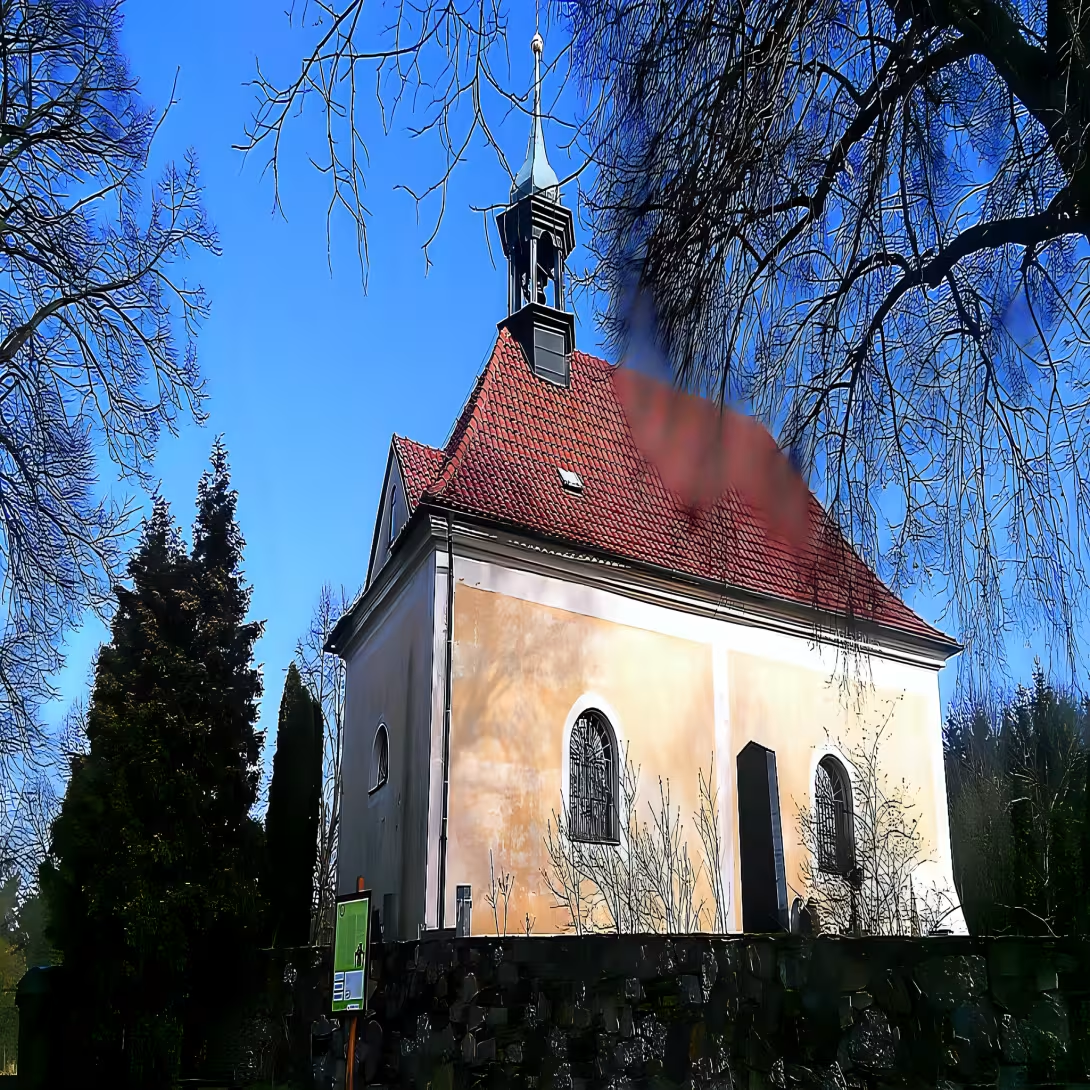
The church of St. Bartholomew is the oldest preserved building in Březí and is one of the protected cultural monuments of the Czech Republic. The church is surrounded by a common cemetery for the municipalities Březí and Pacov, which underlines its role in the life of local communities.
The construction is probably from the 13th century. The first written mention of the village and its parish dates back to 1358. While the vicar's residence was demolished during the Hussite wars, the church maintained its existence, even though it was badly damaged by the Thirty Years' War. At the end of the Baroque period, the church underwent a large reconstruction initiated by Marie Teresa Savojská in 1732-1733. This modification turned the Gothic building into a modern Baroque style. Jurisdiction of the parish was gradually changed - from Horka before the Reformation, to Tuclats and Hradešín (until 2009) until the present time when the church is administered from Úval.
It is an architectural construction with a square presbytery arched by a cross vault. The interior is decorated in rococo style. The main element is the altar made by carpenter Jan Ulik of the Roman in 1777, which depicts St. Bartholomew, patron saint of the church. We will record more extensive renovation in 1891, when new tiles were laid, the altar decorated and the vault painted over it. The organ dates back to a later period - it was installed in 1994.
The fate of the bells followed the turbulent history of the 20th century. In 1850, new bells depicting St. James and St. Bartholomew were hung into the church. In 1916, a bell fell to a war prop. The refund was installed in 1925, but it lasted only until 1942, when the Second World War robbed the church of both bells. The bell was restored only in 1992, when the local community and the Dutch believers participated in the collection for the new bell, which was festively hung.
The church of St. Bartholomew thus represents a living chronicle of the Czech past - the architectural layer from goth to baroque to modern elements speaks directly about the long history of this place and its transformations.
Then and now
Drag the slider to compare how the landmark may have looked when it was built with the view today.
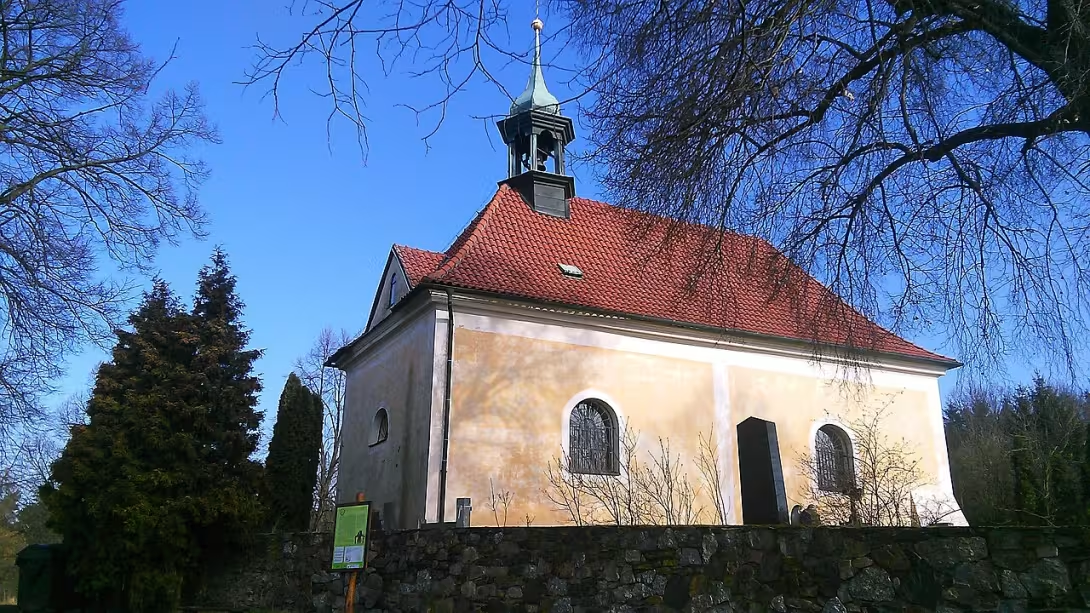
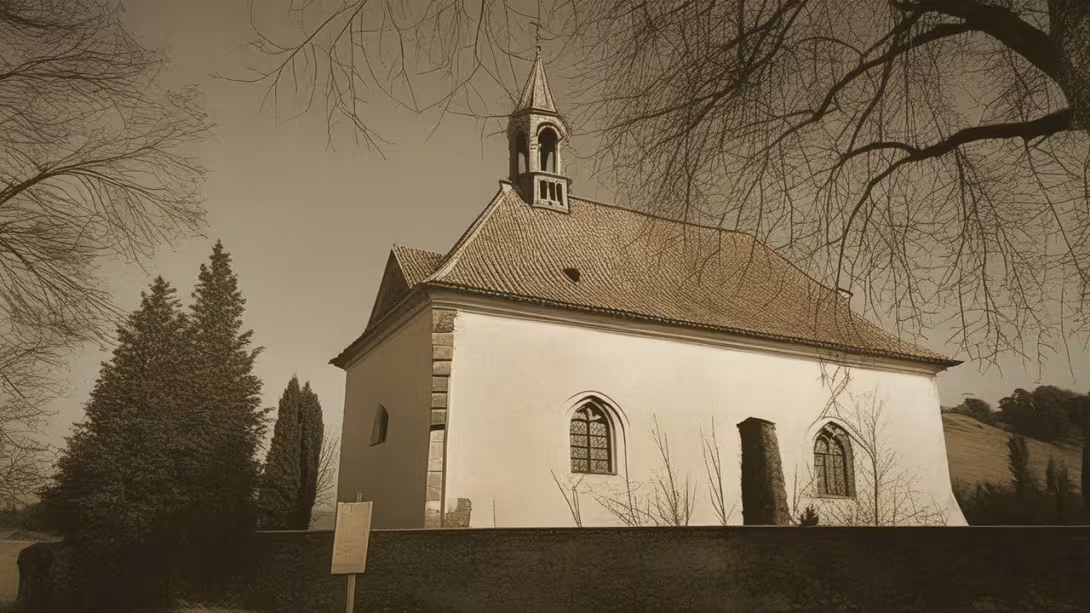
The historical appearance on the left is an AI-generated visualisation and serves as inspiration only.
Historical milestones
- 13th Century
- Possible formation of the original Gothic church.
- 1358
- First written mention of the village Březí with fara.
- 1732-1733
- Baroque reconstruction of the church by order of Marie Theresa Savoy.
- 1777
- The production of the altar of St. Bartholomew by carpenter Jan Ulik of the Roman.
- 1994
- Design and installation of organ.
Architectural development
Originally a Gothic church with a single-boat structure and a square presbytery arched by a cross vault. In the 18th century it underwent a Baroque reconstruction, which preserved the Gothic core. The interior was modified in rococo style, with an altar from 1777 being one of the most important elements. There were minor modifications in the 19th century, like the new paving and painting of the vaults above the altar.
Historical events
- 1358
- The first written mention of the village Březí with a rectory, but the church was not destroyed during Hussite wars.
- 1732-1733
- Baroque reconstruction of the church at the orders of Marie Theresa Savojská after damage during the 30 years war.
- 1992
- The return of the bell to the church after World War II thanks to a collection of locals and believers from the Netherlands.
Points of interest
- The church of St. Bartholomew is the oldest preserved building in Březí and together with the cemetery serves the municipalities of Březí and Pacov.
- Originally a Gothic church underwent a Baroque reconstruction at the turn of 1732-1733 at the order of Marie Theresa of the Savoy.
- The altar with the painting of St. Bartholomew was made in 1777 by the carpenter Jan Ulik of the Roman.
- In 1916 and 1942 the church lost both bells due to war events, the reconstruction was successful only in 1992.
The organ in the church was installed in 1994.
Guide
This guide is narrated by a synthetic voice generated by artificial intelligence.
Show guide text
This text was created by artificial intelligence and has not been editorially reviewed. It may contain inaccuracies.
The Church of Saint Bartholomew is the oldest preserved monument in Březí and is protected as a cultural monument of the Czech Republic. A cemetery lies around the church, which serves the inhabitants of Březí and Pacov.
The church probably dates from the thirteenth century. A mention of the settlement with a parish survives from the year 1358. The parish disappeared during the Hussite Wars, but the church survived. It was only severely damaged by the Thirty Years' War. The originally Gothic building therefore underwent Baroque reconstruction, which Maria Theresa Savoy ordered in the years 1732 to 1733.
The church is single-naved and has a square presbytery with a cross vault. The interior is Rococo. The altar from the year 1777 was made by carpenter Jan Ulík from Říčany and depicts Saint Bartholomew on it. In the year 1891 the church received a new floor, the altar was decorated and the vault above it was painted. The organ is from the year 1994.
The bells had a turbulent fate. In the year 1850 new bells were hung in the church depicting Saint James and Saint Bartholomew. During the First World War, in the year 1916, one of them was requisitioned. A replacement was successfully obtained in the year 1925, but it lasted only until the year 1942. Then the church lost both bells because of the war. A new bell was made and hung only in the year 1992, thanks to a collection among the inhabitants of the parish and the faithful from the Netherlands.
The church gradually belonged to several parishes. Until the Reformation it fell under Horka, later under Tuklaty and in the years 1734 to 2009 under Hradešín. Today it is administered from Úvaly.
Tips for visitors
The best time to visit the church of St. Bartholomew is during the spring and summer months when the outdoor light is pleasant and nature around the monument blooming. In June and July it is also likely that church services or cultural events are held that can enrich the visit. The church is usually calmer in the morning of the week, which allows for a better tour without crowds.
It is recommended to arrive by car because public transport to the village is not very common. The current connection and departure information can be found in the traffic search engine. If you arrive by car, you can also take the opportunity to explore the surrounding countryside.
When visiting, wear comfortable shoes and suitable clothes because the church and its surroundings are in some parts of the rural path or uneven pavement. In summer, it is advisable to carry sunglasses and sunscreen as the church area is mostly open. For children, prepare some activities such as a small laptop or games that will entertain them while waiting.
The best places for photography are the entrance part of the church, where its historical appearance is well captured, and the surrounding church, where forest stands and agricultural fields are located. For quality photos is the ideal time morning or evening when light is softer and less contrast. The inside of the church is also interesting, but photography inside is often limited.
In the vicinity of St. Bartholomew's Church there is a Pacov Chateau which is approximately five kilometres away. This Baroque chateau with a park is another interesting monument you can see during your visit. It is an ideal place for families with children because the chateau park offers plenty of space for walks and games outside. The chateau tour can also be an interesting activity for children.
For families with children, a visit to St. Bartholomew's Church is an excellent opportunity to learn about history and architecture. Children can be intrigued by the ancient appearance of the church and its surroundings. You can talk to them about what the village looked like in the past and see the surrounding nature. In the nearby Pacov chateau, children can walk around the park and perhaps take part in some outdoor activities that are often more interesting for children than the tour itself.
Frequently asked questions
Can the monument be visited?
Religious buildings are usually open mainly during services; at other times a visit is normally arranged with the parish or the operator. We have not verified specific times.
Where is the monument?
Location: Březí, Středočeský kraj. The map on this page shows the exact spot.
Why is the monument protected?
It is listed in the Central List of Cultural Monuments of the Czech Republic as a cultural monument (register no. 36383/2-2028).
For kids
Imagine going back to when our ancestors lived in the village Březí. The church of St. Bartholomew stood there even then, and around it was a small town.
There were people here who lived for a living in agriculture and trade. They were labourers and believed in God. The church was their most important building where weddings, funerals and prayers were held.
Businesses nearby
Do you run a restaurant, accommodation, shop, museum, rental, wellness or other visitor service near this monument? Show yourself directly to the people heading to it — this is how they will see you in the app and on the web:
Events nearby
Zdroj akcí: otevřená data měst a obcí ČR (Národní katalog otevřených dat) a kalendář akcí Národního památkového ústavu.
Accommodation nearby
Trips and activities nearby
Guided tours, tickets and activities nearby from GetYourGuide
Affiliate link: if you buy from the partner, we may receive a commission. The price for you does not change.
Search tours and activities →Themed route
Thematic cruise route: Baroque and natural beauty surrounding Březí
1.Kostel svatého Bartoloměje (Březí) * Type: Sacral landmark * A unique Baroque church from the 18th century with rich decoration that dominates a picturesque village. Its quiet environment and historical architecture offers an ideal escape from the excitement.
2. Pacov Chateau * Type: Cultural monument (about 5 km from Březí) * A picturesque Baroque chateau with a large park, which is one of the most important cultural centers of the region. Its historic interiors and surrounding greenery are worth exploring.
3. Forestry on the outskirts of the village Březí * Type: Natural location * Natural forests on the edge of agricultural fields offer a short but pleasant walk with the possibility to observe local flora and fauna.
4. The river Vltava basin * Type: Water flow * A short section of the stream that flows through the surrounding area is suitable for a short walk along the water. Its quiet surroundings complement the natural atmosphere of the trip.
The route combines historical and natural attractions around Březí and Pacova while respecting the given conditions.
Seasonal recommendations
Spring In March and April, the church of St. Bartholomew in Březí awakens to life after winter calm - its stone walls, illuminated by the sun, gain a warm yellowish colour, while the surrounding meadows flourish with the first spring flowers. The specific weather here is mild but variable: the morning often wet, the afternoon sunny, and the air smells fresh after the rain and the blooming apple set. The atmosphere is quiet, almost intimate, because the traffic is still low - an ideal time to observe details such as medieval paintings on the ceiling or stone reliefs that fall into shadow in other seasons. Practical advice: visit early in the morning when light falls directly into the boat and highlights the color of the stained glass; Dress in layers - spring temperatures change quickly. Avoid weekends when local hikers can come here. It is also convenient to visit nearby forests where the first forest flowers appear in April and thus combine a tour of the church with a short walk.
Summer In June and July, the church of St. Bartholomew will turn into a tourist magnet - the sun rays are reflected from white plaster and create a light game in the interior, while the outdoor area in front of the church offers shade from the surrounding trees. Specific here is the heat, which in the morning can be too intense for a longer tour, and therefore it is advisable to take advantage of the time before the ninth or after the sixteenth hour when the sun shines tilted and the church is lit from the side, which highlights its Gothic proportions. The atmosphere is lively but not chaotic - local visitors often come with children, which adds to the impression of a happy family trip. Practical advice: come with a bottle of water and light clothes, but don't forget the hat or scarf against the sun; In the main summer season (July-August) avoid the noon hours when crowds accumulate at the entrance. If you have the opportunity, visit the church on Tuesday or Thursday when the attendance is lower. Also remember to relax on the benches at the church, where small concerts of local musicians are often held in summer evenings.
Autumn The Golden September and October bring a unique atmosphere to Březí - the church of St. Bartholomew, surrounded by a deciduous forest, gets a mysterious feel when its windows are projected into red and brown leaves. There is a colder light, which softens the interior and creates contrast between dark wooden benches and bright stone columns. The air is fresh, often with a hint of moisture, and in November there may already be the first freezers to deliver beauty to the landscape. The atmosphere is calm and thoughtful, because autumn traffic is low and the church acts almost as a private area. Practical advice: Dress up in warm but comfortable layers - temperatures range from 10 to 15 degrees, and evenings can be cold. Visit the church in the morning, when the light is the most beautiful, and take the opportunity to walk around the surrounding fields where crops are harvested in October. In advent time, small Christmas markets can also be held nearby, but the church itself remains a quiet place for prayer or meditation.
Winter In December and January the church of St. Bartholomew will turn into a picturesque winter scenery - its roofs and towers are covered with a thin layer of snow, while the interior, lit with candles and Christmas decorations (if available) emits warmth and cosy. There is a short daylight light, which the church lights only from one side, which creates a dramatic shadow and highlights its architecture. The atmosphere is quiet and almost sacred - in winter, the church is often visited only by locals or tourists seeking escape from the urban rush. Practical advice: Dress very warm - temperatures fall below freezing point, and the winds from surrounding fields can be penetrating. Visit the church in the morning, when the light is most intense, and check the opening times - in winter it is often shorter, especially on Sundays and holidays. If you choose to visit in advent time, avoid Saturdays when groups can come here for Christmas concerts. In winter it is also nice to join a visit to the church with a walk in the snow fields or a visit to a nearby pub where traditional winter food is served.
Visualizations and artistic views


The visualisations are generated by artificial intelligence and serve as inspiration.
Photos from the area
Real photos taken near the monument


Zdroj a licence jsou uvedeny u každého snímku.
Atmosphere of the place
This atmospheric visualisation of the place and period was generated by artificial intelligence. It is not real footage of the location.
Tips from visitors
No tips yet. Be the first!
Log in and add your tip.
Sources and literature
Photos: JAn Dudík / CC BY 3.0, rozlišení zvýšeno umělou inteligencí — Wikimedia Commons. The author and licence also appear when you hover over the image.
Faktickým podkladem tohoto textu byl článek na Wikipedii, jehož autory jsou přispěvatelé Wikipedie. Článek je dostupný pod licencí CC BY-SA 4.0.
Location on the map





Příběhy a pověsti
Legendy, pověsti a příběhy spjaté s touto památkou
Fotografie návštěvníků
Zatím žádné fotografie. Buďte první, kdo přidá fotografii z návštěvy!
Log in a přidejte svou fotografii nebo hodnoťte.
Za ověřenou návštěvu v aplikaci získáte víc bodů — poznáme podle GPS, že jste na místě.
Reviews and comments