



Kostel svatého Františka Serafinského v Dolině Church
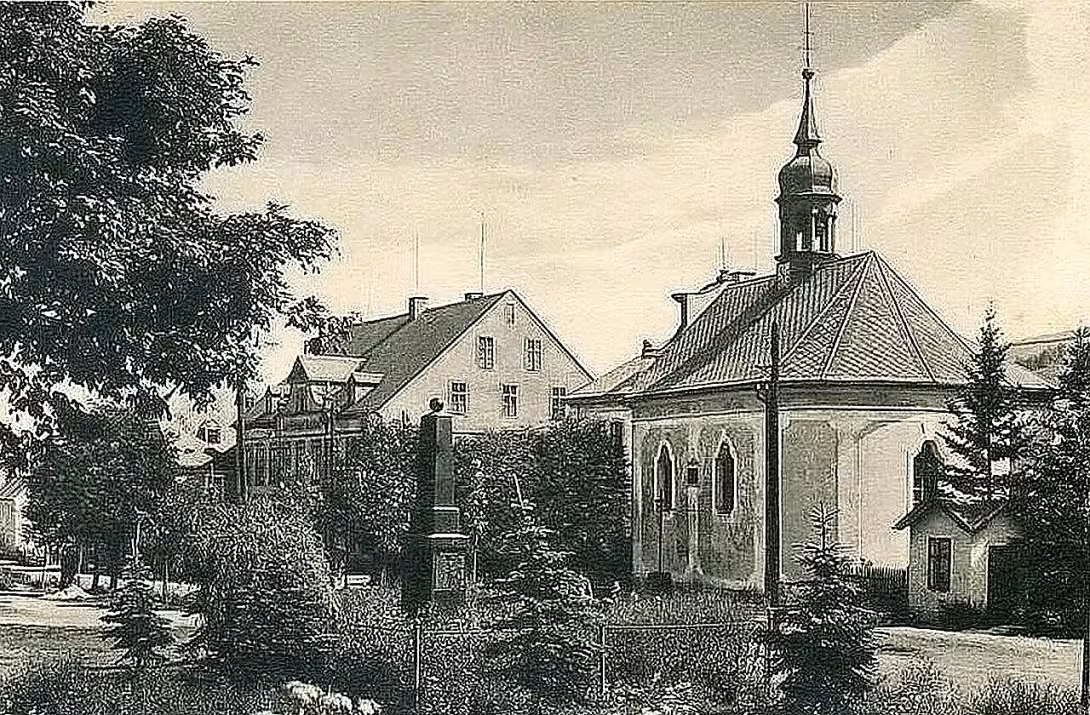
Objekt se nedochoval — na místě dnes nestojí. Následující text popisuje jeho historii, ne současnou návštěvu.
The Church of Saint Francis of the Seraphim in Dolina was a notable late Baroque hall church located in the vanished village near Přísečnice in the Ústecký region. Constructed in 1763, it served as a filial to the parish in Přísečnice until its demolition after 1974. This monument is significant for its architectural style and historical context within Bohemia under Habsburg rule during the mid-18th century.
Built in 1763, the church reflected Baroque architectural developments prevalent in Bohemia at that time. As a filial of the Přísečnice parish, it played an important role in the local religious community until its decline and eventual demolition. The construction period aligns with broader cultural and artistic trends under Habsburg influence, emphasizing ornate design and grandeur typical of Baroque architecture.
Architecturally, the church featured a late Baroque style characterized by an oblong ground plan with a semi-circular presbytery. Its facades were adorned with simple lisened frames and paired casement windows on each side, contributing to its elegant appearance. A distinctive small belfry emerged from the roof, enhancing the church's profile. Inside, vaulted ceilings featured frescoes depicting the Immaculate Conception and the Holy Trinity. The interior also housed an 18th-century tabernacle main altar, considered one of the most beautiful elements of the church.
Throughout its history, the church underwent several enhancements funded by the local community. In 1894, new organs were acquired for the church, followed by the installation of tower clocks in 1901. These additions reflect the active engagement and investment of the local population in maintaining their place of worship. However, post-World War II changes led to significant shifts in the region's demographics and infrastructure development.
By the late 20th century, Dolina became part of the first protective zone of the Přísečnice reservoir, contributing to its depopulation. In 1972, the church lost its heritage protection status, leading to its demolition after 1974. The village itself was officially dissolved in 1979, marking the end of an era for this once-thriving community.
Today, the site where the Church of Saint Francis of the Seraphim once stood is no longer accessible as a place of worship or historical visitation. However, its legacy remains significant as a testament to the architectural and cultural history of the region during the Baroque period. The church's story offers valuable insights into the religious, social, and environmental transformations that have shaped this part of Bohemia over centuries.
Visitors interested in exploring the rich tapestry of Czech history can reflect on the Church of Saint Francis of the Seraphim as a symbol of both cultural heritage and change. While the physical structure no longer exists, its historical significance continues to invite curiosity and appreciation for the region's past.
Then and now
Drag the slider to compare how the landmark may have looked when it was built with the view today.
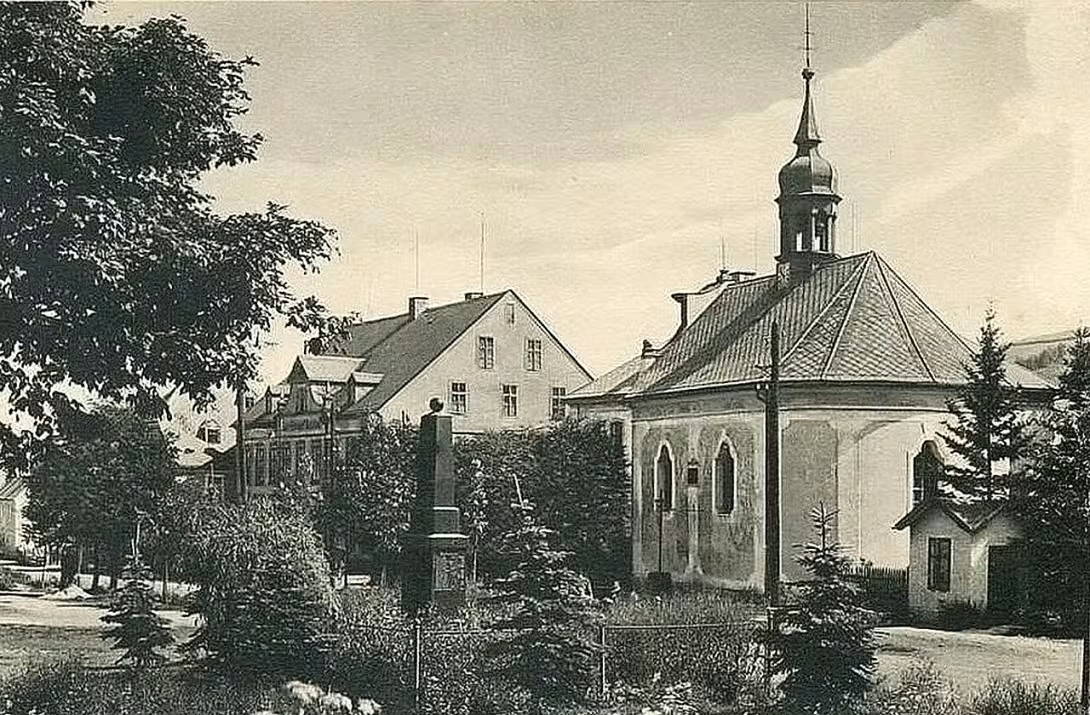

The historical appearance on the left is an AI-generated visualisation and serves as inspiration only.
Historical milestones
- 1763
- The church was built.
- 1894
- New organs were acquired for the church.
- 1901
- Tower clocks were installed in the church.
- 1972
- Heritage protection for the church was revoked.
- 1974
- The church was demolished.
Architectural development
Constructed in 1763 as a late Baroque hall church, it featured an oblong ground plan with a semi-circular presbytery. The facades were adorned with simple lisened frames and paired casement windows. A small belfry was added to the roof, enhancing its architectural profile.
Historical events
In 1894, new organs were acquired for the church at the expense of the local community.
In 1901, tower clocks were installed.
The church lost its heritage protection in 1972 and was demolished after 1974.
Points of interest
- The Church of Saint Francis of the Seraphim was built during a time when Bohemia experienced significant cultural shifts under Habsburg rule, reflecting broader European artistic trends that emphasized ornate designs and grandeur.
- Despite its eventual demolition, the church's interior featured frescoes depicting the Immaculate Conception and the Holy Trinity, showcasing the religious artistry of the late Baroque period in a small village setting.
- In 1894, the local community invested in new organs for the church, demonstrating their commitment to maintaining and enhancing their place of worship despite its eventual decline.
- The church's distinctive architectural feature included a small belfry that emerged from the roof, contributing to its elegant profile and distinguishing it within the region’s late Baroque structures.
- Following World War II, significant demographic shifts and infrastructure developments led to Dolina becoming part of the first protective zone of the Přísečnice reservoir, ultimately resulting in the village's depopulation and the church losing its heritage protection status.
Guide
This guide is narrated by a synthetic voice generated by artificial intelligence.
Show guide text
This text was created by artificial intelligence and has not been editorially reviewed. It may contain inaccuracies.
Welcome to the site of the Church of Saint Francis of the Seraphim in Dolina, a place where history whispers stories through its very soil. As you stand here in Mezilesí, Ústecký kraj, imagine the late Baroque hall church that once graced this landscape with its elegant form and spiritual presence.
The church was built in 1763 during an era when Bohemia was experiencing significant cultural shifts under Habsburg rule. This period saw a reflection of broader European artistic trends that emphasized ornate designs and grandeur, echoing the spirit of transformation and enlightenment that swept across the continent.
As you look around this now-silent site, picture the church's simple lisened facades, with paired casement windows on each side offering glimpses into its sacred interior. The small belfry once peeked from the roof, calling the faithful to prayer through time. Though the physical structure no longer stands, its architectural essence lives on in our imaginations.
Inside, the church boasted vaulted ceilings adorned with frescoes of the Immaculate Conception and the Holy Trinity, creating a celestial canopy that spoke to the divine. An 18th-century tabernacle stood as a testament to the craftsmanship and devotion of those who built it. These elements combined to create an atmosphere of reverence and beauty.
While specific architects remain unknown, the church's construction reflects the collaborative spirit of artisans and believers united in their purpose. The stories of these individuals may be lost to time, but their legacy endures through the memories and records that have survived.
One fascinating aspect of this site is its connection to a period when Bohemia was at the crossroads of cultural evolution. Despite its eventual demolition in 1974, after heritage protection was revoked in 1972, the church's story continues to captivate those who seek to understand the past.
As you reflect on what once stood here, let your imagination wander through its halls and envision the lives that intersected with this sacred space. We invite you to explore further, delving into the rich tapestry of history that surrounds us.
Thank you for joining us in honoring the memory of the Church of Saint Francis of the Seraphim. May your journey be filled with discovery and wonder as you continue to uncover the stories etched into our shared heritage.
Businesses nearby
Do you run a restaurant, accommodation, shop, museum, rental, wellness or other visitor service near this monument? Show yourself directly to the people heading to it — this is how they will see you in the app and on the web:
Nearby
Dolina is now a vanished village located near Přísečnice in the Ústecký region. The area became part of the first protective zone of the Přísečnice reservoir, contributing to its depopulation and eventual demolition.
Visualizations and artistic views


The visualisations are generated by artificial intelligence and serve as inspiration.
Photos from the area
Real photos taken near the monument


Zdroj a licence jsou uvedeny u každého snímku.
Tips from visitors
No tips yet. Be the first!
Log in and add your tip.
Sources and literature
Photos: autor neuveden / Public domain — Wikimedia Commons. The author and licence also appear when you hover over the image.
Faktickým podkladem tohoto textu byl článek na Wikipedii, jehož autory jsou přispěvatelé Wikipedie. Článek je dostupný pod licencí CC BY-SA 4.0.
Location on the map
More monuments – Mezilesí
Show all in the municipality
Příběhy a pověsti
Legendy, pověsti a příběhy spjaté s touto památkou

Fotografie návštěvníků
Zatím žádné fotografie. Buďte první, kdo přidá fotografii z návštěvy!
Log in a přidejte svou fotografii nebo hodnoťte.
Za ověřenou návštěvu v aplikaci získáte víc bodů — poznáme podle GPS, že jste na místě.
Reviews and comments