



Kostel svatého Gorazda (Olomouc) Church
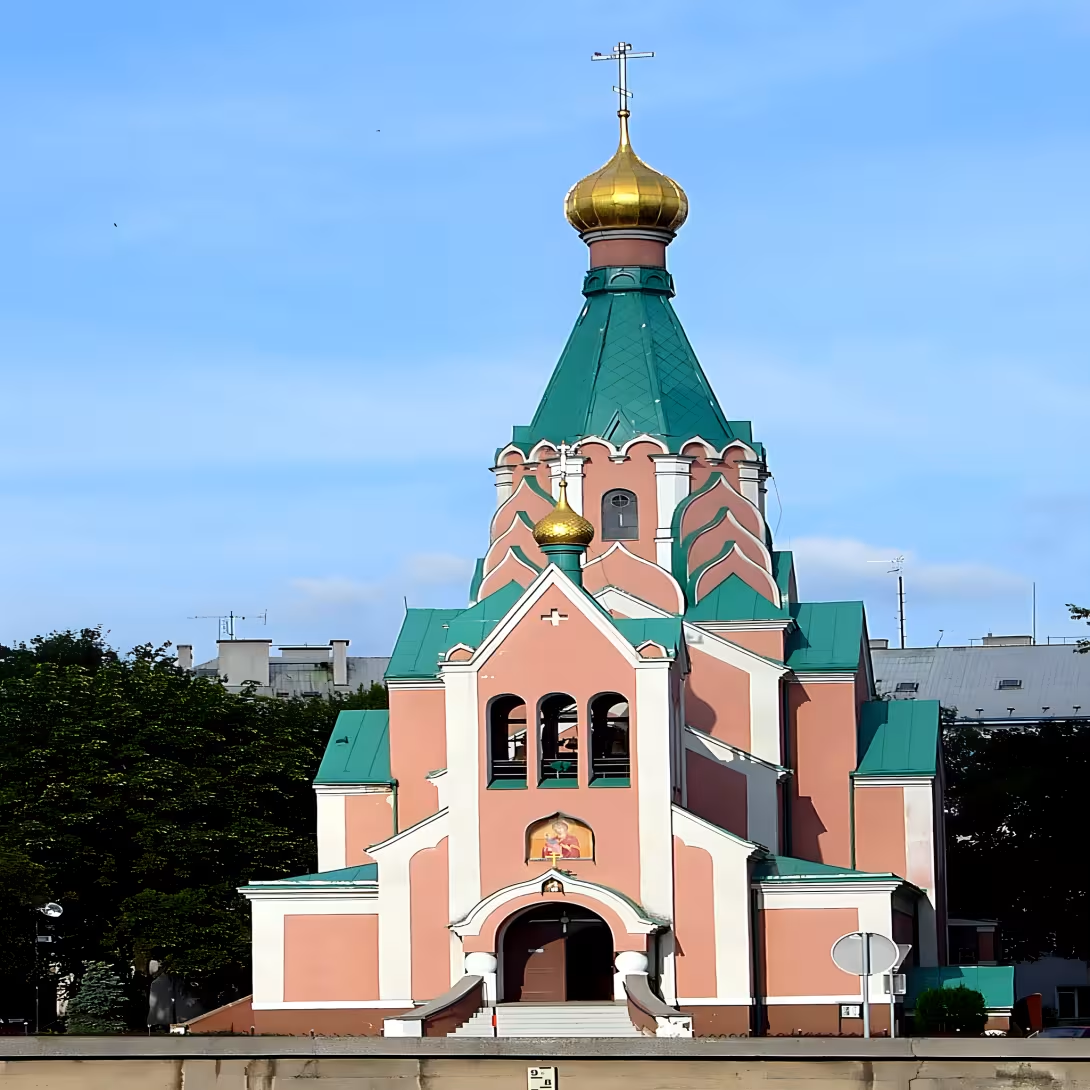
The Orthodox Church village was founded in Olomouci in 1924 with Bishop Gorazdi in charge. In the early years, the faithful met on worship in the chapel of God's body, located in the building of the former Jesuit Convikt. The decision to build its own temple led to the organisation of a public collection. The base stone was laid in June 1937 and the construction was completed in 1939. On 29 May that year, the temple was dedicated to St. Gorazdo, according to which it bears its name. The author of the architectural design, the spiritual Vsevolod Kolomacký, designed construction serving not only liturgical purpose, but also for the social activity of the church community.
World War II brought heavy interference. In the autumn of 1942 the temple was closed in connection with the Heydrichiad and until May 1945 it served as a warehouse. After the end of the war, the building was restored in a degraded state under the supervision of Father Kolomacký. In 1950, the temple gained the status of the cathedral temple, as Olomouc became the seat of the eparchia. Between 1982 and 1987, a general repair took place during which the colour of the facade changed - tin roofs were painted green, the facades combine light brick colour with white lizene frames. Wall iconopaintings have also been repaired. After the floods in 1997, the basement areas were modified.
Architecturally, the temple is placed in the Byzantinizing style of Russian provenance. It stands on the ground of a triangular plan near the bridge via Moravia. The main element is a six-sided tower with a needle roof, completed with onion gilded fighting with a cross. The facade is lined by cocoons depicting the flames of the Holy Spirit. The lower tower with bell tower contains three bells - their number symbolizes the Three-One God, side openings express the double nature of Jesus Christ. The entrance is highlighted by a semicircular enchantment with a nickel containing the painting of St. Gorazda. The icon of Bohorodice of Jerusalem is placed on the facade.
The interior has a cross plan with monumental space under the octave tower. Iconostas with gilded doors separates the temple ship from the altar space. The rich figural and decorative painting covers the whole area. The dove is depicted in the ceiling dome as a symbol of the Spirit, and in the corners of the four evangelists. Six pillars in the ship are decorated with icons of saints. The upper band of the painting depicts scenes from the life of Christ and Bohorodice, medium and lower belts contain images of Orthodox saints. The equipment includes a large panychid table and a copper warm baptizer.
The Church of St. Gorazda presents a fascinating example of the religious architecture of the twentieth century and offers insight into Orthodox tradition and art in the Czech Republic.
Then and now
Drag the slider to compare how the landmark may have looked when it was built with the view today.
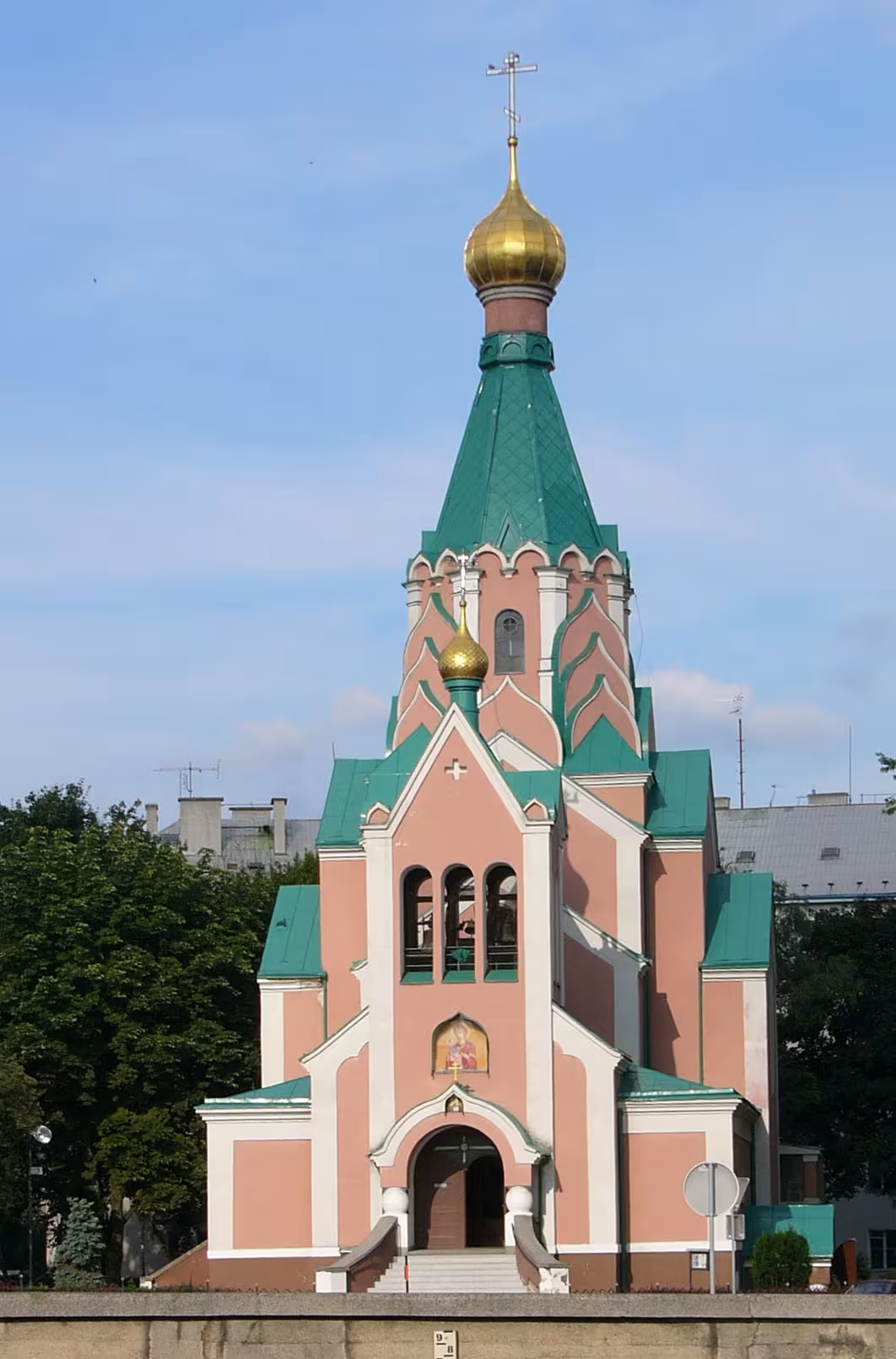

The historical appearance on the left is an AI-generated visualisation and serves as inspiration only.
Historical milestones
- 1924
- Establishment of Orthodox village and appointment of Bishop Gorazda
- 1937
- Laying of the temple base stone
- 1939
- Completion and initiation of St. Gorazd Temple
- 1950
- Transformation of the temple at the Olomouc-Brno Eparchie Cathedral
- 1982-1987
- General repair of the temple with color change of facades and repair of iconomalebes
Architectural development
The temple was built in 1937- 1939 according to the design of the spiritual Vsevolodo Kolomacký in style of Russian Orthodox architecture. The main materials are brick and concrete, the facades are a combination of brick and white lizen frames. During the years 1982- 1987, a general repair took place, in which the colours of the facades were changed and icono-paintings were repaired. After the floods in 1997, the basement areas were modified.
Historical events
- 1924
- The establishment of Orthodox Church in Olomouci and the appointment of Bishop Gorazda
- 1937
- The laying of the foundation stone of St. Gorazda's temple
- 1942-1945
- Closure of the temple in connection with occupation and subsequent use as a warehouse
- 1950
- Transformation of the temple at the Olomouc-Brno Eparchie Cathedral
Owners
- 1924-1939
- since 1950
Points of interest
- The temple was built on a triangular plot near the bridge across the river Moravia.
- The base stone was laid in June 1937 and the construction was finished in 1939.
- During World War II, the temple was closed between 1942- 1945 and served as a warehouse.
- In 1950, the temple acquired the status of a cathedral because Olomouc became the seat of Orthodox Eparchia.
- The facade of the temple was painted green on the roof after general repair (1982- 1987) and combines light brick colour with white lizene frames.
Guide
This guide is narrated by a synthetic voice generated by artificial intelligence.
Show guide text
This text was created by artificial intelligence and has not been editorially reviewed. It may contain inaccuracies.
The Cathedral of Saint Gorazd is an Orthodox cathedral church on Gorazdovo náměstí in Olomouc. It is protected as a cultural monument.
The Orthodox church parish was established in Olomouc in 1924 and Bishop Gorazd was appointed to lead it. The faithful initially gathered in the chapel of Corpus Christi in the building of a former Jesuit dormitory. Later they decided to build their own church. The church organized a public collection and in June 1937 the foundation stone was laid. The building was to serve both worship services and community association activities.
The design was developed by the Orthodox priest Vsevolod Kolomacký. The cathedral was completed in 1939 and on May twenty-ninth of that year it was consecrated to Saint Gorazd. In the autumn of 1942 it was closed in connection with the Heydrichiad and until May 1945 it served as a storage facility. After the war the devastated cathedral was repaired under the supervision of Father Kolomacký. Since 1950 it has been a cathedral because Olomouc is the seat of the Olomouc-Brno eparchy. During a major renovation from 1982 to 1987 it received its current colors: green metal roofs, light brick-colored facade surfaces and white frames. A chapel dedicated to Saint Gorazd was created in the basement at that time. After the floods in 1997 these spaces were renovated again.
The cathedral stands on a triangular plot near the bridge across the Morava River and forms a landmark of this part of the city. It is built in a Byzantinizing style of Russian origin. The complex structure rises in steps toward a high tower with a pyramidal roof, topped with a gilded onion dome and cross. Decorative arches on the facade, so-called kokošníky, represent the flames of the Holy Spirit. Above the entrance stands a lower bell tower with three bells. It has three tall windows and two openings on the sides. These represent the Holy Trinity and the twofold nature of Jesus Christ, divine and human. Above the main entrance is an image of Saint Gorazd and below the bell tower peak is an icon of the Bogorodica of Jerusalem.
Inside the cathedral has a cross-shaped floor plan. The lower entrance section opens into a high space beneath the tower. The altar area is separated by an iconostasis with gilded main doors. In the nave stands a large panychida table and a copper embossed baptismal font. The walls are covered with rich paintings and inscriptions. In the dome is a dove as a symbol of the Holy Spirit and beneath it icons of the four evangelists. The upper band of icons depicts scenes from the life of Christ and the Bogorodica. Below are depicted Orthodox saints.
Tips for visitors
Best time to visit St. Gorazda's church is in the morning or in the afternoon. In these times the place is quieter, and you can better enjoy its unique architecture without crowds of tourists. In addition, in sunny weather in the morning the light is ideal for photographing inside and outside details of the church.
The church is accessible by car and public transport. Check the current connection for public transport in the search engine or on the official website of the transport company. From the center of Olomouce the church is only a short walk away.
When visiting, wear comfortable clothes and shoes because the church is located in the historical part of the city and the way here may be a little uneven. It is often cold in the interior, so bring a light sweater or sweater. If you are planning to photograph, remember to take a camera or smartphone with sufficient storage space.
The most suitable places for photography are the outer part of the church, especially its six-sided tower and facade with Byzantine elements. The best light for shooting can be found in the morning or afternoon sun, when light falls favourably and creates fewer shadows. In the interior, care must be taken not only to light up detailed elements, but also the general impression of space.
In the vicinity of the church of St. Gorazda there are several other interesting places worth visiting. For the first stop you can choose the Church of St. Wenceslas, which is located only about one kilometer from St. Gorazda's Church. This Gothic church from the 13th century is dominated by the old town of Olomouce and offers rich history and architecture. Another interesting thing is the OlomoucKé walls and the Chateau of Sternberk, which are about two kilometres from St. Gorazda's Church.
For families with children a visit to St. Gorazda's Church is a great opportunity to explore history and architecture. Children can see a unique interior with elements of Russian Orthodox architecture and a six-sided tower, which is an interesting building for them. In the vicinity of the church it is also possible to visit St. Wenceslas Church, where interesting cultural events or tours are often held for children. It is also recommended to take a short walk around the historical centre Olomouce, where children can discover other historical monuments and attractions.
Frequently asked questions
Can the monument be visited?
Religious buildings are usually open mainly during services; at other times a visit is normally arranged with the parish or the operator. We have not verified specific times.
Where is the monument?
Location: Gorazdovo nám. 1125/14, Olomouc, Olomoucký kraj. The map on this page shows the exact spot.
Why is the monument protected?
It is listed in the Central List of Cultural Monuments of the Czech Republic as a cultural monument (register no. 46818/8-2957).
For kids
Imagine going back 87 years until the Baroque Church of St. Gorazda in Olomouci hasn't been built yet. It was like in a game where you're the lead hero and you have to solve a mysterious anxiety!
There were people living here who lived by old traditions and beliefs. The city was full of life's joy and misery. The church of St. Gorazda was just one of many churches in Olomouci where religious activities and social events took place.
Businesses nearby
Do you run a restaurant, accommodation, shop, museum, rental, wellness or other visitor service near this monument? Show yourself directly to the people heading to it — this is how they will see you in the app and on the web:
Events nearby

Zdroj akcí: otevřená data měst a obcí ČR (Národní katalog otevřených dat) a kalendář akcí Národního památkového ústavu.
Accommodation nearby
Trips and activities nearby
Guided tours, tickets and activities nearby from GetYourGuide
Affiliate link: if you buy from the partner, we may receive a commission. The price for you does not change.
Search tours and activities →Themed route
Thematic cruise route: Gothic and medieval Olomouc
1. Church of St. Gorazda * Type: * Roman-Gothic church from the 13th century. * Why visit? * Unique architecture with remarkable frescoes and historical significance as a pilgrimage place. Its quiet atmosphere contrasts with the busy city centre.
2. Church of St. Wenceslas * Type: * Gothic church from the 13th century, dominant construction of the old town. * Why visit? * The impressive towers and rich decoration inside reflect the medieval pride of Olomouce. The visit is a logical continuation of St. Gorazda's Church, a short walk away.
3. OlomoucKé walls and castle Šternberk * Type: * The remains of medieval walls and chateau grounds. * Why visit? * They provide a view into the city's defence system and offer picturesque views. Castle Šternberk is one of the most important monuments of the region, just minutes away from St. Wenceslas Church.
4. Freedom Bridge * Type: * Historical bridge over the river Moravia. * Why visit? * It symbolises the connection between both parts of the city and offers a picturesque panorama of Olomouc monuments. It is the ideal end of the route when the visitor returns to the center.
Seasonal recommendations
Spring In the spring months, the church of St. Gorazda is surrounded by a soft, scattered light that flows through the young leaves of the surrounding trees and creates a shadow game on the stone walls. Nature is awakening - the greenery on the surrounding surfaces becomes more lively, while there is a calm, almost intimate atmosphere in the church, where visitors often stop at gothic windows that are starting to shine again. The sound environment is also specific: the singing of birds from surrounding orchards penetrates the interior and blends with a quieter ringing that is less frequent at this time. Practical advice: Spring is ideal for visiting in the morning when the church is still cold and full of people. It is recommended to dress in layers - it is cold in the morning, but after nine o'clock the sun warms quickly. Avoid weekends when groups of tourists from nearby cities come here. It is also appropriate to visit nearby Saint Kopecek, where trees flourish in May and the whole landscape offers views that are not visible from the church.
Summer In the summer months, the church of St. Gorazda performs in a sharp, almost white illuminated context, when the sun draws its silhouette against the blue sky at noon. The interior is often illuminated at this time, but due to the high temperatures inside it is often stuffy, especially in late afternoon hours when heat builds up in stone walls. The surrounding area offers green areas and shadows from trees that are ideal for relaxing after a tour. The atmosphere is more lively - families with children who are interested in Baroque decoration come here in the main summer season and sometimes there are short concerts in summer cultural events. Practical advice: Come early in the morning, no later than nine o'clock, so you don't miss the coldest part of the day. Light, breathable clothes are suitable, but don't forget the hat or scarf - the sun on the stone benches and corridors burns strongly. In the summer months the church is opened longer, but in hot days it is worth visiting nearby gardens, where there is a more pleasant shade.
Autumn Autumn brings golden and red shades to the surroundings of the church of St. Gorazda, which are reflected in stained stained windows and create a mysterious, warm atmosphere in the interior. The light is scattered, often foggy, which gives the church an intimate, almost mystical touch. The surrounding nature is changing - leaves on trees turn into a colorful mosaic and, due to lower temperatures, the air is cleaner, which increases the contrast between dark stone walls and bright colors of painting. At this time the church is often visited by photographers looking for contrast between historical architecture and autumn landscape. Practical advice: Autumn is ideal for visiting in the afternoon, when the sun shines oblique and creates long shadows that highlight the details of the facade. Dress up in warm but non-mass layers - the morning and evening are cold, but at noon the temperature keeps to a pleasant level. Avoid rainy days when the church may create moisture and some parts of the decoration may be less accessible.
Winter The winter visit to St. Gorazda Church offers a unique atmosphere where the church appears to be a dark, almost mysterious monolith surrounded by white snow and ice. The light is limited - the sun can only light up part of the facade in short days, while the interior is heated and creates a contrast between a cool outdoor environment and a warm, heated space. The surrounding area is quiet, without crowds of tourists, and the church acts as a refuge. Christmas concerts sometimes take place here in advent time, which provide space for Christmas magic. Practical advice: Winter is the quietest time to visit, but opening times are shorter - usually from 9 to 16 hours. Hot but comfortable clothing is recommended, which does not restrict movement, especially if you plan to tour the surrounding monuments. Come in the morning when the church is still relatively cold and full of people. Take the opportunity to visit nearby museums or cafés that offer a pleasant environment to relax in winter.
Visualizations and artistic views


The visualisations are generated by artificial intelligence and serve as inspiration.
Photos from the area
Real photos taken near the monument

Zdroj a licence jsou uvedeny u každého snímku.
Atmosphere of the place
This atmospheric visualisation of the place and period was generated by artificial intelligence. It is not real footage of the location.
Tips from visitors
No tips yet. Be the first!
Log in and add your tip.
Sources and literature
Photos: Michal Maňas / CC BY 4.0, rozlišení zvýšeno umělou inteligencí — Wikimedia Commons. The author and licence also appear when you hover over the image.
Faktickým podkladem tohoto textu byl článek na Wikipedii, jehož autory jsou přispěvatelé Wikipedie. Článek je dostupný pod licencí CC BY-SA 4.0.
Location on the map
Příběhy a pověsti
Legendy, pověsti a příběhy spjaté s touto památkou
Fotografie návštěvníků
Zatím žádné fotografie. Buďte první, kdo přidá fotografii z návštěvy!
Log in a přidejte svou fotografii nebo hodnoťte.
Za ověřenou návštěvu v aplikaci získáte víc bodů — poznáme podle GPS, že jste na místě.
Reviews and comments