






Kostel svatého Havla (Počedělice) Church
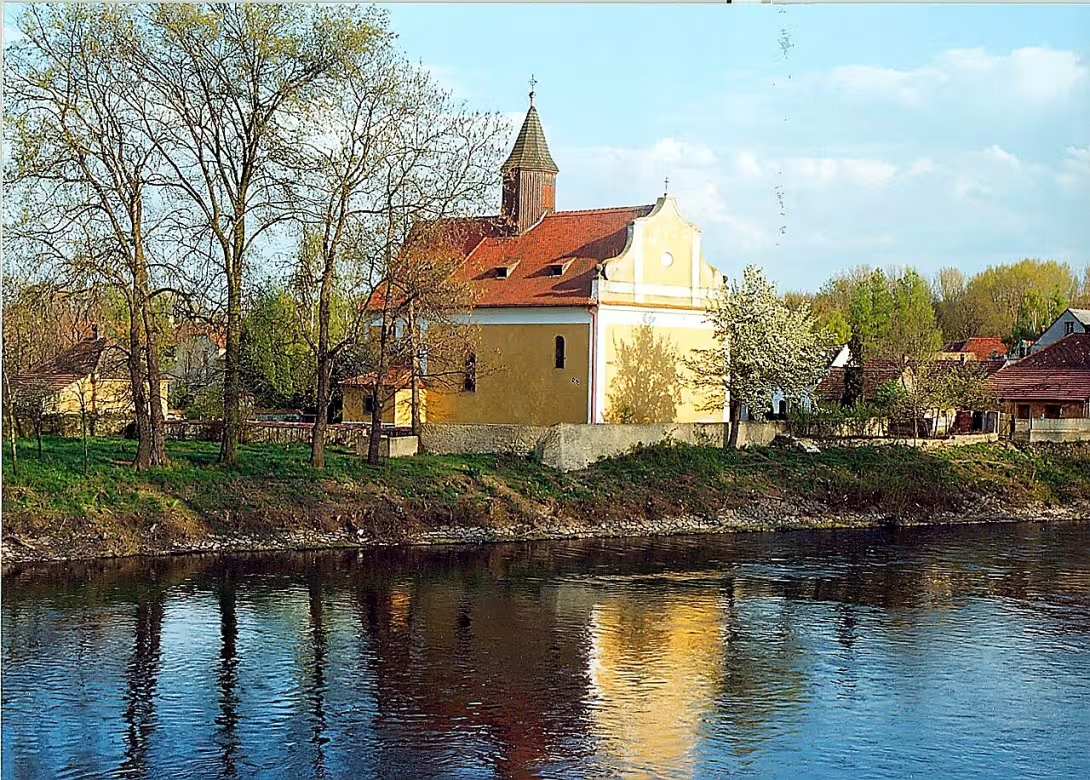
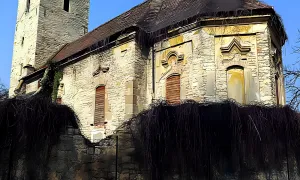
Kostel svatého Havla in Počedělice is a historically significant church originally built in the Gothic style during the first half of the 14th century. Situated in the southwestern part of Počedělice near the Ohře river, it stands within an area surrounded by a cemetery that serves as both a cultural and functional flood barrier. The church underwent substantial Baroque renovations between 1749 and 1750, including the construction of a new sacristy, changes to its windows, and the addition of a southern portal. Recognized as a cultural monument of the Czech Republic, this site offers insight into both Gothic and Baroque architectural styles.
The church's origins trace back to the early 14th century when it was constructed in the Gothic style, reflecting significant architectural developments across Europe during that period. At its inception, Bohemia was part of the Kingdom of Bohemia under the Holy Roman Empire, a time marked by the spread of Christianity and regional dynastic influences. The church is first documented in 1352 when it paid unusually high taxes to the papal treasury, indicating its early importance. By 1422, Václav served as the last known pre-Hussite Catholic priest before the Thirty Years' War led to the parish's dissolution and the church becoming a filial to Chožov.
Architecturally, Kostel svatého Havla is characterized by its single-nave structure with an oblong presbytery featuring five-sided closure supported by buttresses. The Baroque renovations introduced significant changes: a new sacristy was added on the north side, and the original western entrance was sealed off while a southern portal was constructed. The church's windows were replaced during this period, aligning with its transformation into a Baroque aesthetic. Notably, the presbytery is adorned with cross-ribbed vaults and a five-part star-shaped rib vault at its conclusion, supported by pear-shaped ribs and corbel consoles. The nave features a flat ceiling, while a wooden loft rests on a single pillar.
Throughout its history, Kostel svatého Havla has seen various administrators and dramatic changes in fortune. After the Thirty Years' War, it became a filial church to Chožov due to the dissolution of its parish. The Baroque renovations between 1749 and 1750 marked a significant transformation period, with further modifications such as the construction of a sanctus bell tower in 1789. Post-World War II, the building deteriorated significantly but was restored with a new roof in 1976.
The church's interior is notably sparse today, retaining only a neo-Baroque main altar. A tombstone for Eliška z Vršovic and Polenska from around 1474 remains embedded in the western wall of the nave. The original Gothic frescoes have been whitewashed over time, leaving behind only fragments of their historical presence.
Surrounding Kostel svatého Havla is a cemetery with a Baroque entrance gate that doubles as a flood barrier due to its proximity to the Ohře river. Nearby features include a small neo-Gothic chapel dedicated to the Holy Trinity and a damaged stone cross dating back to the early 19th century, adding layers of historical intrigue to the site.
Today, Kostel svatého Havla stands as a testament to both Gothic and Baroque architectural styles, offering visitors a glimpse into its rich history. Despite its sparse interior, the church's cultural significance and surrounding features make it worth visiting for those interested in exploring the architectural evolution of religious sites in the Czech Republic. Its status as a protected monument underscores its importance, inviting visitors to appreciate its historical and aesthetic value.
Then and now
Drag the slider to compare how the landmark may have looked when it was built with the view today.
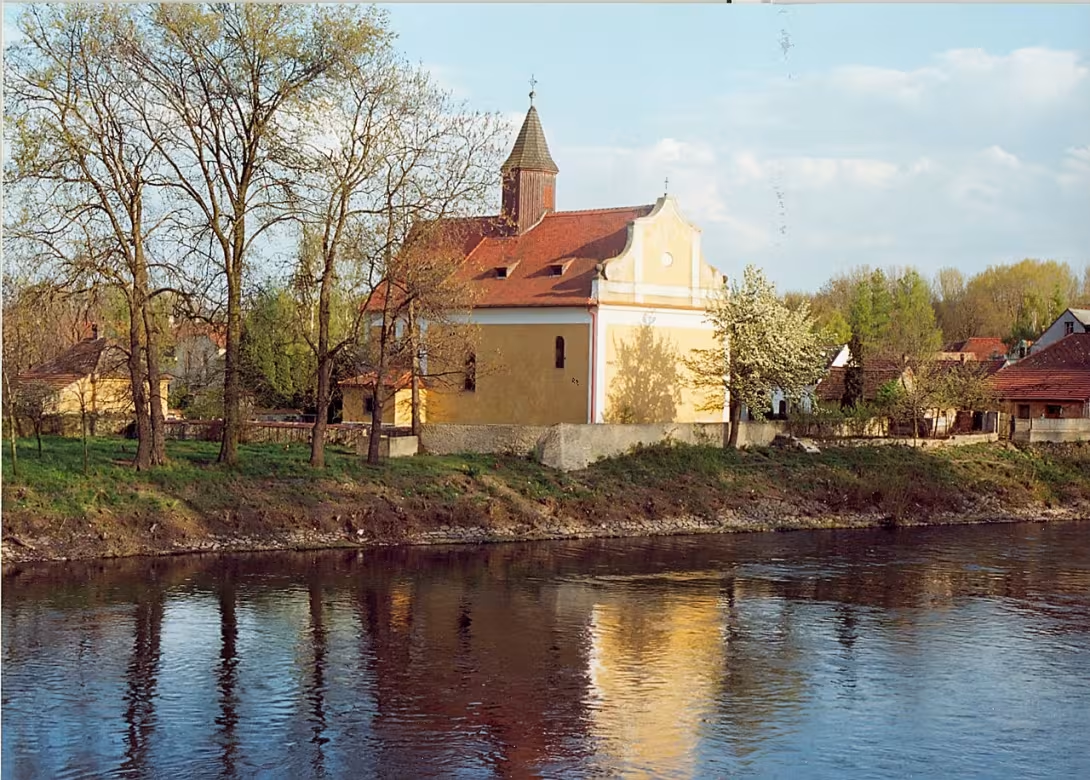
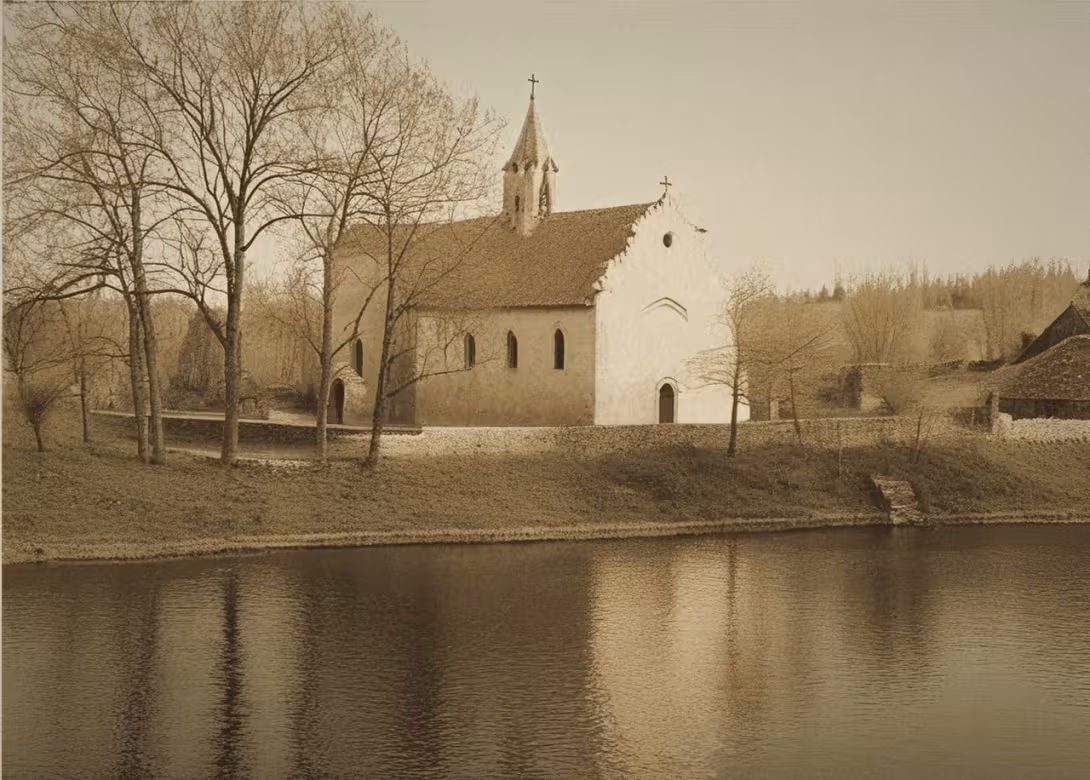
The historical appearance on the left is an AI-generated visualisation and serves as inspiration only.
Historical milestones
- kolem 1350
- Vznik kostela svatého Havla v gotickém stylu.
- 1352
- První dokumentace kostela s vyššími daněmi pro papežskou pokladnu.
- 1422
- Poslední známý předhusitský katolický kněz Václav.
- 1749-1750
- Barokní renovace kostela, včetně nové sakristie a portálu.
- 1789
- Postavení sanctusového zvonice.
Architectural development
The church was originally constructed in the Gothic style during the early 14th century. It underwent significant Baroque renovations between 1749 and 1750, which included adding a sacristy, modifying windows, and constructing a southern portal. After World War II, the building deteriorated significantly but received a new roof in 1976.
Historical events
1352: First documented mention of the church in records for paying unusually high taxes to the papal treasury.
1422: The last known pre-Hussite Catholic priest, Václav, served before the Thirty Years' War led to the parish's dissolution and the church becoming a filial to Chožov.
Points of interest
- The church of Kostel svatého Havla was initially notable for its unusually high taxes paid to the papal treasury in 1352, indicating its early significance within the region.
- Václav served as the last known pre-Hussite Catholic priest at Kostel svatého Havla before the Thirty Years' War led to significant changes, including the church becoming a filial of Chožov.
- The Baroque renovations between 1749 and 1750 introduced not only architectural changes but also a new sacristy on the north side and a southern portal, reflecting the period's stylistic transformation.
- A tombstone embedded in the western wall of the nave commemorates Eliška z Vršovic and Polenska from around 1474, offering a rare glimpse into personal histories connected to the church.
- The original Gothic frescoes within Kostel svatého Havla have been whitewashed over time, leaving only fragments that hint at its rich artistic past.
Guide
This guide is narrated by a synthetic voice generated by artificial intelligence.
Show guide text
This text was created by artificial intelligence and has not been editorially reviewed. It may contain inaccuracies.
Welcome to the historic site of Kostel svatého Havla in Počedělice, a remarkable testament to architectural evolution and cultural significance over centuries. As you stand before this venerable structure, imagine stepping back into time where Gothic elegance first took shape in the early 14th century.
The origins of this church trace back to around 1350 when it was constructed in the distinguished Gothic style. This period marked a pivotal moment for Počedělice as the church became notable not just for its architectural beauty but also for its economic significance. By 1352, Kostel svatého Havla had already gained attention due to the unusually high taxes paid to the papal treasury—a clear indicator of its importance within the region.
As you gaze upon the church now, notice how it seamlessly blends elements from different architectural periods. The original Gothic features have been thoughtfully preserved and enhanced through substantial Baroque renovations that took place between 1749 and 1750. During this transformation, a new sacristy was constructed, windows were modified to reflect the opulent style of the era, and a southern portal was added, enriching its grandeur.
The church's history is intricately linked with significant figures such as Václav, who served as the last known pre-Hussite Catholic priest here. His tenure ended before the tumultuous waves of the Thirty Years' War reshaped religious landscapes across Europe.
One intriguing aspect of Kostel svatého Havla’s past is its early financial prominence, highlighted by the high taxes it contributed to the papal treasury in 1352. This detail not only underscores its historical value but also invites curiosity about the stories and lives intertwined with this sacred site.
As your visit draws to a close, I invite you to linger a moment longer, absorbing the atmosphere that centuries of history have imbued within these walls. Whether it's the whisper of prayers past or the echo of footsteps along its nave, there is much more to explore beyond what meets the eye.
Thank you for joining me on this journey through time at Kostel svatého Havla. May your exploration continue with a sense of wonder and appreciation for the stories that places like these hold dear. Farewell, until we meet again in another chapter of history's vast narrative.
Tips for visitors
The best time to visit the Church of St. Wenceslas in Počedělice is during late spring or early autumn when the weather is mild, making it comfortable for walking around the church grounds and exploring nearby attractions. These seasons also offer beautiful natural lighting that enhances the historical architecture. Additionally, visiting on weekdays can help avoid larger crowds typically found on weekends.
Wenceslas is generally available in the vicinity, though spaces may be limited during peak times or events. It's advisable to check current routes and schedules online before your visit to ensure a smooth journey.
When visiting the church, it is recommended to bring comfortable walking shoes as you'll likely want to explore both the church grounds and surrounding cemetery area. A camera or smartphone for photography is also suggested, especially if you're interested in capturing the architectural details of the Gothic and Baroque styles. Don't forget a light jacket or umbrella in case of unpredictable weather.
For photography enthusiasts, early morning or late afternoon provides the best natural lighting to capture the church's intricate stonework and surrounding landscape. The baroque entrance gate and the neo-Gothic chapel dedicated to the Holy Trinity offer unique perspectives for photos. Be mindful of any restrictions on flash photography inside the church.
Nearby attractions within a 30-minute drive include other historical sites in the Ústecký region, such as castles or museums that provide insight into local history and culture. For families with children, consider visiting the small chapel dedicated to the Holy Trinity for its serene atmosphere, which can be both educational and calming.
Frequently asked questions
Can the monument be visited?
Religious buildings are usually open mainly during services; at other times a visit is normally arranged with the parish or the operator. We have not verified specific times.
Where is the monument?
Location: Počedělice, Ústecký kraj. The map on this page shows the exact spot.
Why is the monument protected?
It is listed in the Central List of Cultural Monuments of the Czech Republic as a cultural monument (register no. 43705/5-1328).
Businesses nearby
Do you run a restaurant, accommodation, shop, museum, rental, wellness or other visitor service near this monument? Show yourself directly to the people heading to it — this is how they will see you in the app and on the web:
Nearby
Surrounded by a cemetery with a baroque entrance gate that doubles as a flood barrier, the church area also features a small neo-Gothic chapel dedicated to the Holy Trinity and a damaged stone cross dating back to the early 19th century.
Accommodation nearby
Themed route
Thematic Walking Tour: Počedělice
1. Kostel svatého Havla (Počedělice) - Type: Church - Why Visit: Begin your tour at the heart of Počedělice with this historic church dedicated to Saint Hubertus, known for its architectural beauty and spiritual significance in the region. Explore the serene ambiance and appreciate the intricate details that make it a centerpiece of local heritage.
2. Baroque Entrance Gate - Type: Architectural Feature - Why Visit: Located within the cemetery surrounding the church, this baroque entrance gate not only serves as an artistic highlight but also functions as a flood barrier, showcasing the ingenuity of historical design solutions in Počedělice. Its dual purpose offers insight into both cultural and practical aspects of past community planning.
3. Neo-Gothic Chapel of the Holy Trinity - Type: Chapel - Why Visit: A short walk from the church, this small neo-Gothic chapel provides a contrasting architectural experience with its distinct style and spiritual focus on the Holy Trinity. Its presence adds depth to the religious landscape of Počedělice, inviting reflection and admiration for its unique design.
4. Damaged Stone Cross - Type: Historical Monument - Why Visit: Dating back to the early 19th century, this stone cross stands as a testament to the area's rich history and enduring cultural narratives. Despite its damaged state, it offers a poignant reminder of the passage of time and the stories embedded within Počedělice’s landscape.
This tour encapsulates the historical and architectural essence of Počedělice, offering visitors an intimate exploration of its religious landmarks and their significance in the local community.
Seasonal recommendations
Spring: Visiting the Church of Saint Wenceslas during spring offers a unique experience as nature begins to awaken around Počedělice. The surrounding landscape bursts into vibrant colors with blooming flowers, creating a picturesque backdrop for the church's historic architecture. As daylight hours increase, visitors can enjoy longer periods exploring both the interior and exterior details without feeling rushed. However, be mindful of unpredictable weather; it's wise to bring an umbrella or raincoat in case of sudden showers. While crowds are generally manageable during this time, early morning visits might offer a more tranquil experience before local tourists arrive.
Summer: The summer months provide ideal conditions for exploring the Church of Saint Wenceslas due to longer daylight hours and pleasant weather. This is the peak tourist season, so expect larger crowds, especially on weekends and holidays. To avoid long waits, consider visiting in the early morning or late afternoon when temperatures are cooler and fewer people are around. Comfortable walking shoes and light clothing are recommended as you explore the lush surroundings. Don't forget to bring water and sunscreen for a safe and enjoyable visit.
Autumn: Autumn brings a serene atmosphere to Počedělice, with the Church of Saint Waveslas surrounded by stunning fall foliage that enhances its historic charm. The cooler temperatures make it an ideal time for leisurely strolls around the church grounds without the discomfort of summer heat. While this season is less crowded than summer, some visitors may still be present to enjoy the picturesque scenery. Layered clothing is advisable as temperatures can vary significantly throughout the day. Early morning visits might offer a particularly peaceful experience with misty landscapes.
Winter: Winter transforms Počedělice into a quiet and contemplative setting, perfect for those who appreciate the serene beauty of snow-covered landscapes. The Church of Saint Wenceslas takes on a mystical appearance under soft winter light, offering a unique perspective compared to other seasons. While fewer visitors are expected during this time, it's important to check in advance if the church is open, as some services may not operate regularly throughout the winter months.
Visualizations and artistic views


The visualisations are generated by artificial intelligence and serve as inspiration.
Photos from the area
Real photos taken near the monument


Zdroj a licence jsou uvedeny u každého snímku.
Tips from visitors
No tips yet. Be the first!
Log in and add your tip.
Sources and literature
Photos: Gortyna / CC BY-SA 3.0 — Wikimedia Commons. The author and licence also appear when you hover over the image.
Faktickým podkladem tohoto textu byl článek na Wikipedii, jehož autory jsou přispěvatelé Wikipedie. Článek je dostupný pod licencí CC BY-SA 4.0.
Location on the map
More monuments – Počedělice
Show all in the municipality
Příběhy a pověsti
Legendy, pověsti a příběhy spjaté s touto památkou

Fotografie návštěvníků
Zatím žádné fotografie. Buďte první, kdo přidá fotografii z návštěvy!
Log in a přidejte svou fotografii nebo hodnoťte.
Za ověřenou návštěvu v aplikaci získáte víc bodů — poznáme podle GPS, že jste na místě.
Reviews and comments