






kostel svatého Havla (Sulkovec) Church
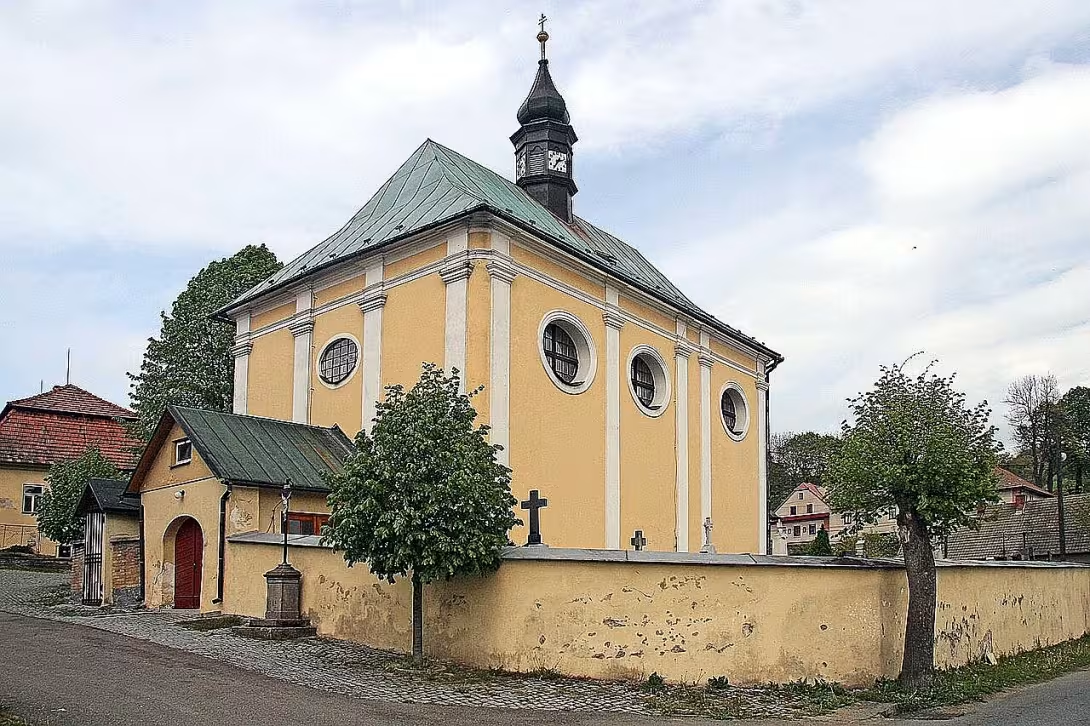
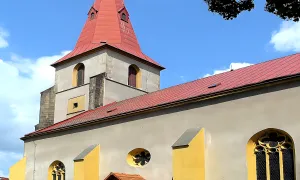
St. Wenceslas Church in Sulkovec is a Roman Catholic church dedicated to St. Wenceslas, which serves as a parish church for the local community. Between 1735 and 1736, this Baroque structure replaced an older church whose age remains unknown. It is a cultural monument that reflects its historical importance and permanent presence in the region.
the church was built at a time when the Czechs were part of the Habsburg monarchy, an example of significant baroque architectural development, influenced by the anti-reforming efforts of the Catholic Church to inspire faith through art and architecture. Details of his predecessor are rare.
The church is an architectural testament to the Baroque style of the mid-18th century. Over the years, it has undergone numerous renovations that have preserved its historical integrity while adapting to modern needs. In 1847 significant repairs were made, including changes to the roof and windows. Another renovation in 1899 changed the area of the congregation and in 1956 the external facade was replaced. The electrical system church received an update in 1959, reflecting continued efforts to maintain its functionality.
During its history, the Church of St. Wenceslas experienced several key events that shaped its present form. In 1845, the tower was struck by lightning, which required changing the bell. The church also underwent liturgical changes in 1986 under the Second Vatican Council guidelines. These adaptations stress the ability of the church to adapt to evolving religious practices while preserving its historical nature.
Inside, the church is richly decorated with various artistic elements. The main altar dating back to 1893 is a wooden carving depicting the Last Supper, adding a layer of spiritual and artistic depth. The side altar in front of the church shows the painting of Saint Isidor. In addition, the church is located in 1964, painted cross from 1893, wooden bench from 1947 and baptist font from 1908. These elements together contribute to the sacred atmosphere of the church.
the church is centrally located within the cemetery near the local square, near the parish house. Near is the Baroque stone statue of St. John Nepomuk, also protected as a cultural monument. This setting increases the historical and cultural importance of the church, offering visitors a view of the rich heritage of the region.
Today, the Church of St. Wenceslas remains an active place of worship and a place of historical interest. Thanks to well preserved architecture and artistic elements, it is worth visiting interested in Baroque art and history. The church continues to serve its community while inviting visitors to explore their historical past and appreciate its cultural value.
Then and now
Drag the slider to compare how the landmark may have looked when it was built with the view today.
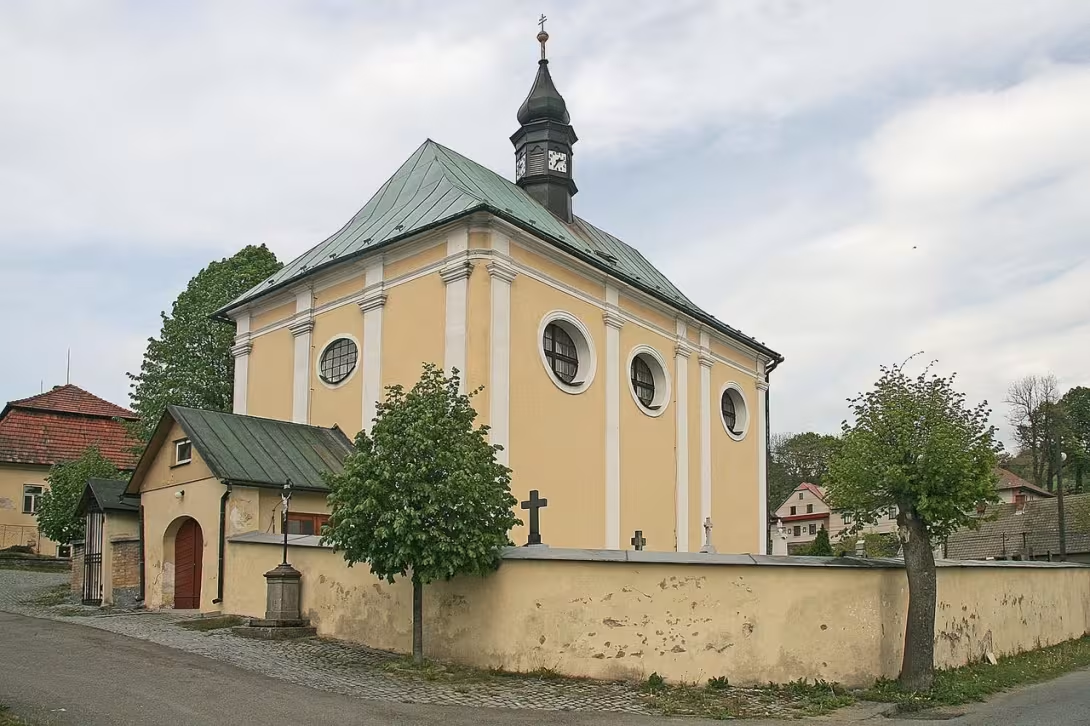

The historical appearance on the left is an AI-generated visualisation and serves as inspiration only.
Historical milestones
- 1735-1736
- Construction of the present Baroque church.
- 1845
- Lightning damaged the tower, which led to a replacement bell.
- 1847
- Main repairs including roof and window replacement.
- 1986
- Lithuanian changes after the second Vatican Council.
Architectural development
The Church of Saint Wenceslas has seen several stages of development since its construction in the middle of the 18th century. Significant changes include major repairs in 1847, which included changing roofs and windows, and further renovations in 1899, which changed the congregation area. The outside facade of the church was replaced in 1956 and other updates of the electrical system were made in 1959.
Historical events
In 1845 a lightning strike caused damage to the tower church, which led to a replacement bell later in the year.
Significant repairs were made in 1847, including changes to the roof and windows.
The liturgical arrangements for the second Vatican Council were implemented in 1986.
Points of interest
- The Church of Saint Wenceslas was built at a time when the Czechs were under the Habsburg monarchy, reflecting the influence of baroque architecture driven by the aim of Catholic counterReformation to inspire faith through art.
- Details of the predecessor church are rare, adding air mysteries and intrigue about its early history before being replaced in 1735-1736 with this new baroque structure.
- In 1847, after lightning strikes, there were significant repairs of roofs and windows in 1845, which proved resilience and adaptability during centuries of natural challenges.
- the church underwent liturgical changes in 1986 on the basis of the second vatican council guidelines, showing its ability to develop with modern religious practices while preserving historical significance.
- There is a Baroque stone statue of St. John Nepomucký, which complements the cultural monument status of the area and offers another layer of historical context for visitors who explore the surroundings of the church.
Guide
This guide is narrated by a synthetic voice generated by artificial intelligence.
Show guide text
This text was created by artificial intelligence and has not been editorially reviewed. It may contain inaccuracies.
Welcome to St. Wenceslas Church in Sulkovec, a quiet and challenging monument nestled in the picturesque landscape of Kraj Vysočina. As you stand here, take a moment to immerse yourself in the view before you - a testimony of faith and history that resisted the test of time.
the church is today a Baroque masterpiece built between 1735 and 1736, at a time when the Czechs were under the Habsburg monarchy. This period has seen the flourishing Baroque architecture, driven by the aim of the Catholic counterReformation to inspire faith through art. The original structure, which once stood here, remains veiled by the mystery, its age unknown, but served as the spiritual heart of this community until this great building replaced it.
As you approach the church, notice the elegance and symmetry characteristic of baroque design. Notice how architecture attracts your eyes up, causes contemplation and fear. The facade, although modest in its ornaments compared to some other Baroque churches, emits a silent dignity that speaks of its historical significance.
During its existence, this church was more than just a building; He witnessed history and change. In 1845 the tower was struck by lightning, which required the exchange of bells - the moment when nature itself left its mark in this sacred space. Just two years later, in 1847, major repairs were made, including roof and window exchanges, ensuring that the church continues to serve as a beacon for the local community.
The Church of Saint Wenceslas is not only about its physical structure, but also about the stories it holds in its walls. While specific historical figures associated with this church remain unknown, the collective memory of generations that have gathered here adds layers to its narrative. In 1986, following the second Vatican Council, liturgical changes were made reflecting broader shifts in religious practices and beliefs.
One interesting aspect of this church is its predecessor, whose details are rare and yet they add a layer of mystery on the spot. Imagine what stories these walls could tell if they could speak - the transition from one era to another, countless prayers whispered inside these borders and the resistance displayed for centuries of change.
At the end of your visit, I urge you to stay in this area, which bridges are past and present. Let its history surround you and perhaps you will find a moment of peace or inspiration. Thank you for joining me on this journey through time at St. Wenceslas' church. Let your research continue with curiosity and wonder.
Frequently asked questions
Can the monument be visited?
Religious buildings are usually open mainly during services; at other times a visit is normally arranged with the parish or the operator. We have not verified specific times.
Where is the monument?
Location: Sulkovec, Kraj Vysočina. The map on this page shows the exact spot.
Why is the monument protected?
It is listed in the Central List of Cultural Monuments of the Czech Republic as a cultural monument (register no. 15890/7-4449).
Businesses nearby
Do you run a restaurant, accommodation, shop, museum, rental, wellness or other visitor service near this monument? Show yourself directly to the people heading to it — this is how they will see you in the app and on the web:
Nearby
the church is located in the centre of the cemetery near the local square, near the parish house. Near is the Baroque stone statue of St. John Nepomuk, which is also protected as a cultural monument.
Accommodation nearby
Themed route
Thematic cruise route: Sulkovec
1. Church of St. Havel (Sulkovec) * Type: * Historical landmark * Why is it worth visiting: * This baroque church is the central duke and historical heart of the village Sulkovec. It's an architecture that passes on to its own resources that appreciates rich history and art details. The church is set at the destination of the maple from 1384, which is to have historical value.
2. Baroque stone monument of St. John Nepomuk * Type: * Cultural monument * Why is it worth a visit: * This Baroque monument is placed close to the skeleton and represents a new cultural monument. His statue of St. John Nepomuk, which as a cultural heritage, offers for the Hungarian processing and historical context of the region.
3. Mild formalities * Type: * Cultural and historical city centre * Why is it worth visiting: * The square is a live force component, which itself is a church and monument. It is mine to determine and eliminate which should be used for architecture and has historical significance.
4. Parish House * Type: * Historical building * Why is it worth visiting: * The parish house next to the church is a part of the cultural and historical area. It offers insight into the life of the parish and is a role in the community. His closeness to the church enhances the outsiders better understand the spiritual and historical aspects of the village.
5. Cemetery * Type: * Historical cemetery * Why is it worth visiting: * The cemetery on which the church is located is a positive contemporary history of the city. It offers supported for older epitaphs and memorable, which gives the number of conceived economic history and traditions.
This route offers a complex contribution to the cultural and spiritual product of Sulkovec, intended for St. Havel's Church.
Seasonal recommendations
Spring: St. Havel's Church in Sulkovci in spring offers one-way experiences, where the colic event is revived by culture. Lighting becomes measuring and warmer, which gives the church a romantic and peaceful feeling. In this season, it is advisable to make a commentary in proper delayed hours, where nature is celebrated from the primacy and the crowds are less. The recommendation to wear the applicable measure that should be applicable to the national temperature, and remember to capture beautiful investments around the church with respect to the camera.
Summer: Summer is the main destination for the historical church of St. Havel in Sulkovce, because warm sunny days transforming tourism and minor business activities. The atmosphere becomes vibrant and full of energy, which can be summer evenings, where sunlight is lit with bright lights. Inventories should be added early in the morning or late in the afternoon in order to avoid the large crowd and establish a quiet experience. Forget the forbidden Sunglasses, where against UVB September and the casual rounded for use in related activities.
Autumn: In autumn, the church of St. Havel in Sulkovci offers survival of individual colours of leaves that relate from green to lute and red. The announced is important and important, because the transfer mystical is a price policy. This season is ideal for formalities that can be used without large crowds because the aid can only be determined if these conditions are met. It is stated that there is no need to implement measures and possibly rainfall for direct direct costs which are the subject of aid which can be financed through promotion.
Winter: The winter value of the St. Havel Cube in the Sulkovci offers only one atmosphere of cold and calm, where the surrounding contribution is covered by effort or standing studies of clouds. Illumination means that the weak, breathless and soothing atmosphere around the monument. In the winter moons the opening times of the part shorten, so he recommends visiting the church early in the day. It is important to prepare a warm suit, protective hat and gloves to keep you comfortable while you're inside.
Visualizations and artistic views


The visualisations are generated by artificial intelligence and serve as inspiration.
Photos from the area
Real photos taken near the monument


Zdroj a licence jsou uvedeny u každého snímku.
Tips from visitors
No tips yet. Be the first!
Log in and add your tip.
Sources and literature
Photos: Prazak / CC BY 2.5 — Wikimedia Commons. The author and licence also appear when you hover over the image.
Faktickým podkladem tohoto textu byl článek na Wikipedii, jehož autory jsou přispěvatelé Wikipedie. Článek je dostupný pod licencí CC BY-SA 4.0.
Location on the map


Příběhy a pověsti
Legendy, pověsti a příběhy spjaté s touto památkou
Fotografie návštěvníků
Zatím žádné fotografie. Buďte první, kdo přidá fotografii z návštěvy!
Log in a přidejte svou fotografii nebo hodnoťte.
Za ověřenou návštěvu v aplikaci získáte víc bodů — poznáme podle GPS, že jste na místě.
Reviews and comments