






Kostel svatého Jakuba (Polička-Město) Church
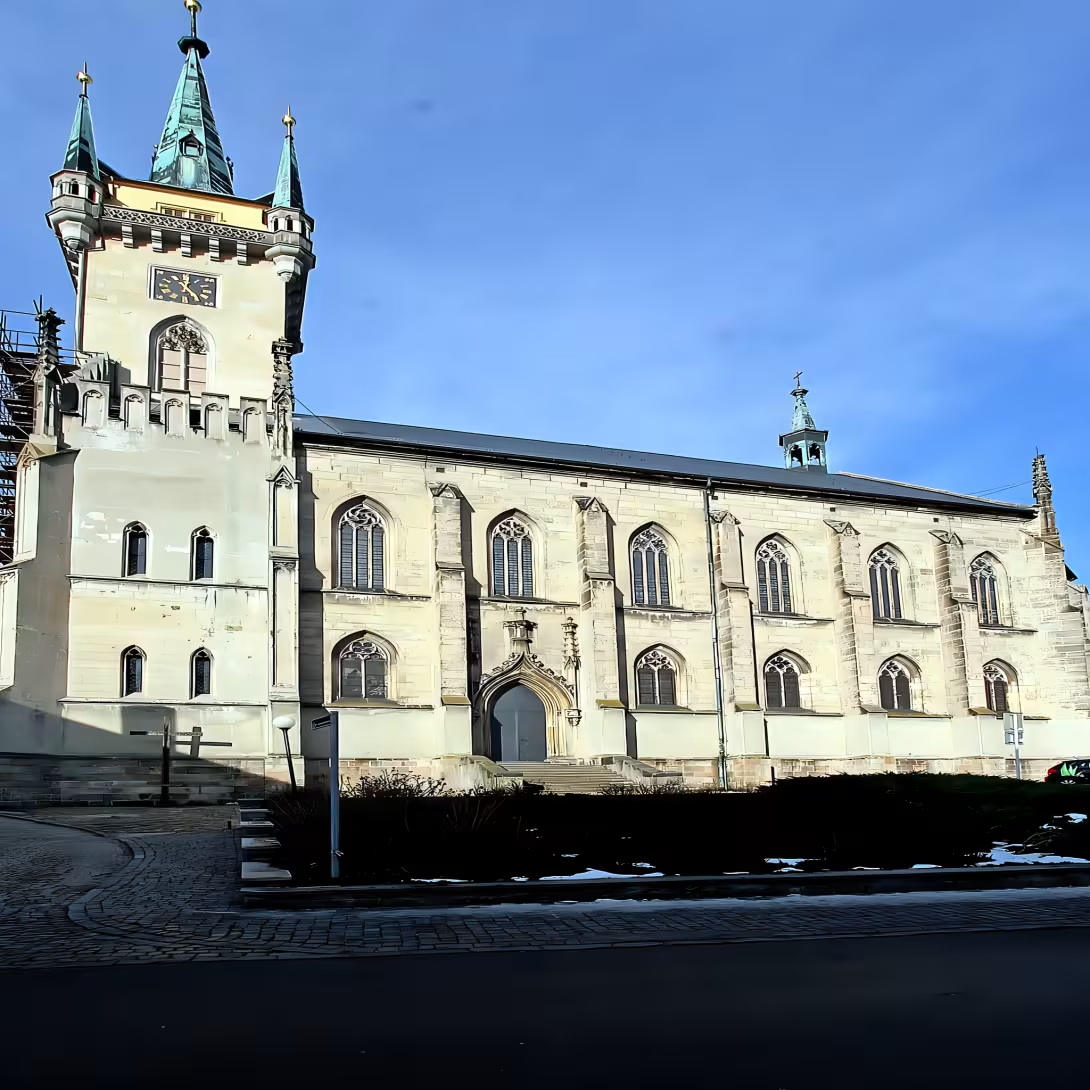
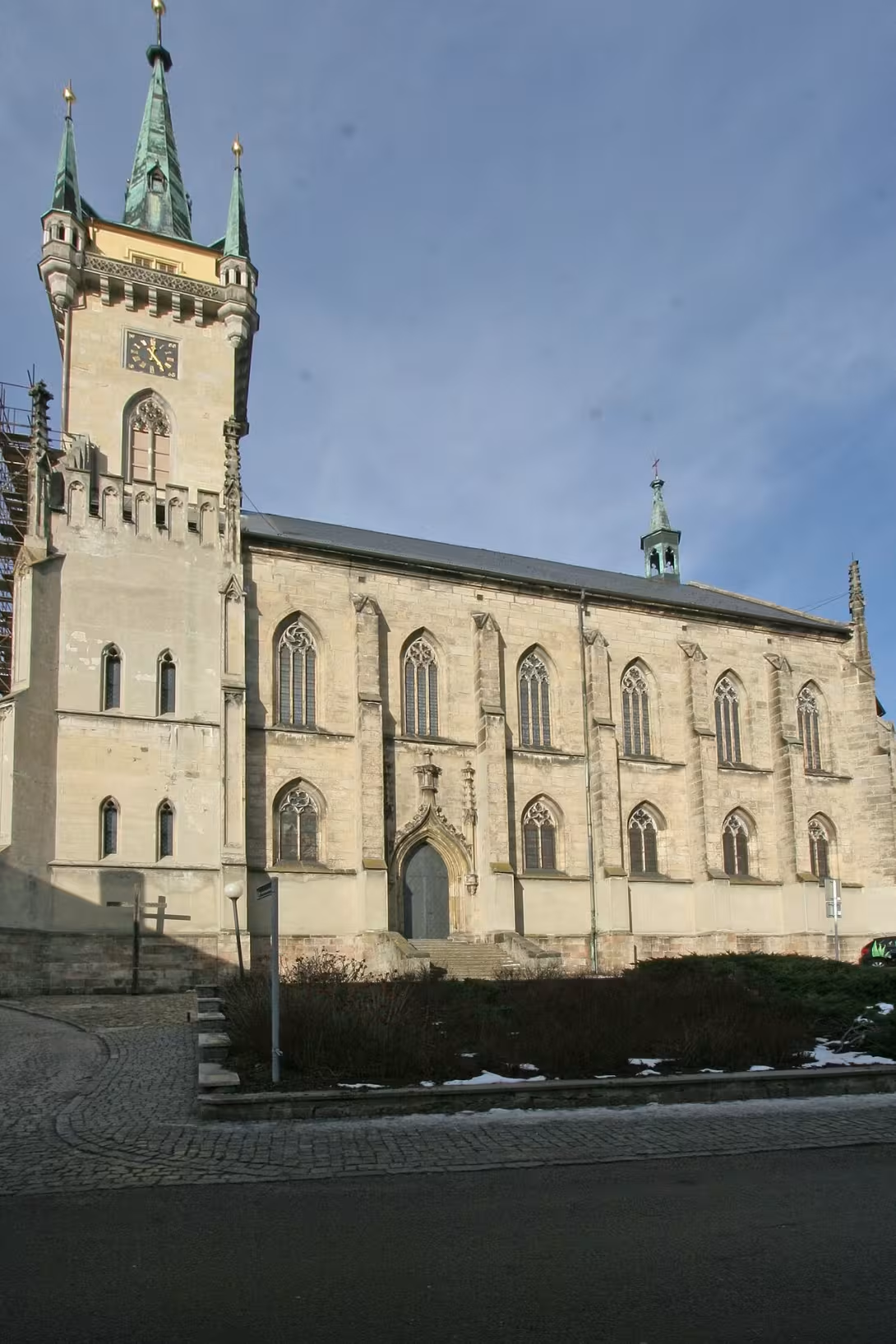
The church of St. Jacob the Greater stands in Polička as the dominant of the town square, whose urban concept dates back to 1265, when the town was founded by the king of Prehemhem Otakar II. The permission of the patron saint St. James corresponds to a typical pattern of colonization temples of the 13th century in Czech countries. The original construction was a three-boat Gothic basilica with a prism tower in the western facade, which was rebuilt during the peak Gothic style by the Emperor Eliska Pomeranská in support of Poščka as a dedicated city of Czech queens.
The dramatic break came in 1840, when the fire fired a significant part of the city. The temple was demolished to the ground, keeping only a six-sided presbytery with cross vaults, one Gothic bell and two baroque statues. In 1853, the foundation stone of the neo-gothic basilica was laid, which was designed by c. k. Earth engineer Antonín Ignác Wach. The implementation plans were prepared by the builder František Schmoranz starší. The construction was completed in 1865.
The interior decor was provided by important artists of their time. The sculptor Václav Levý carved from the carrarian marble statue of St. James the Greater for the main altar (1864) and worked on the pulpit reliefs with motifs of Moses, King David, Christ and Four Evangelists. The painter Josef Hellich contributed four images of the Earth's patrons to the main altar, while Vilém Kandler painted the painting of St. Joseph in the side altar. In 1884, according to Schmoranz's proposal, it was equipped with a chapel of God's grave. In 1908 they added a police native, sculptor Vojtěch Eduard Šaff, sculpture Dohranno with corner statues of St. Wenceslas and Ludmila on the terrace of the central part of the church.
The church is inextricably linked to the personality of the composer Bohuslav Martinů. In 1890, here in one of the chambers in the gallery of the tower, which is 36 meters tall, was born. This connection makes the temple an important place in the history of Czech music.
More recently, the church was provided with care - 6 215 000 crowns were drawn under the Architectural Heritage Rescue Programme for repair from 2009 to 2014. Today, the temple stands as a testament to Polička's belonging to advanced Central European cities and as an example of successful post-disaster recovery.
Then and now
Drag the slider to compare how the landmark may have looked when it was built with the view today.
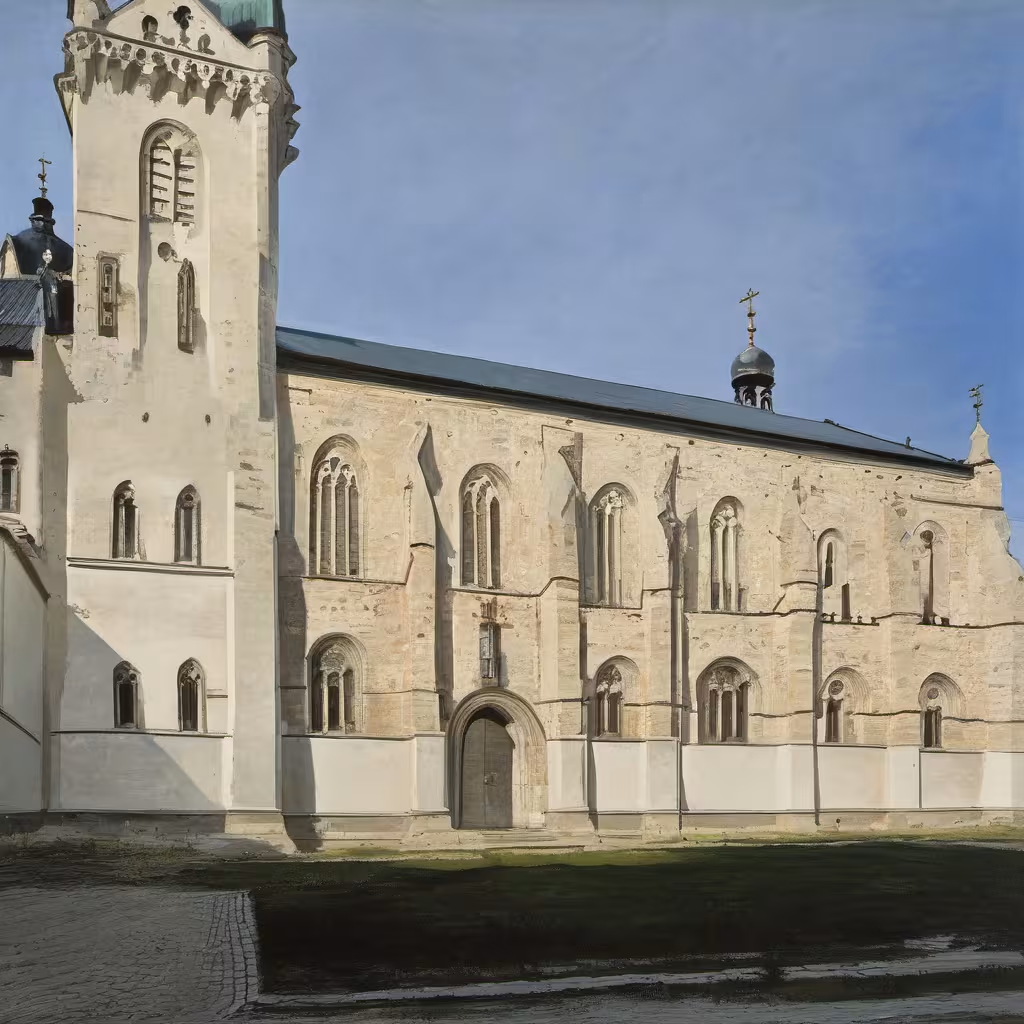
The historical appearance on the left is an AI-generated visualisation and serves as inspiration only.
Historical milestones
- 1265
- The founding of St. Jacob's Church as part of the urban concept of the city of Polička
- 1840
- City fire and destruction of original Gothic basilica, maintaining presbytery
- 1853
- The cornerstone of the neo-gothic reconstruction of the church
- 1865
- Completion of the neo-gothic reconstruction of the church
- 1884
- Equipment of the chapel of God's grave according to the design of František Schmoranza
- 1890
- The birth of Bohuslav Martins in the church tower
Architectural development
The original gothic basilica of the 13th century was rebuilt in the 15th century by Empress Eliška Pomeranská. After the fire of 1840 there were only remnants of the presbytery and the sacraments. The Novogotic building from 1853- 1865 was built on original foundations with the preservation of part of the medieval presbytery. The tower reaches a height of 36 meters and is a dominant city. The interior decoration dates back to the 19th century, including sculptures and paintings from prominent artists.
Historical events
- 1265
- The founding of the city of Poška by the king of Premohmi Otakar II., Church of St. James as part of the urban concept
- 1840
- City fire, destruction of original Gothic basilica (saved only presbytery and some statues)
- 1890
- Born composer Bohuslav Martinů in a closet in the gallery tower
Owners
The ownership of St. Jacob's Church in Polička has changed over the years. Originally, the church was probably owned by a local parish or church. At present, however, it is managed as a cultural monument and is open to the public. Its administration and maintenance shall be entrusted to the competent institutions, which shall ensure that it is maintained for future generations.
Points of interest
- The church of St. Jacob the Greater was originally a three-boat Gothic basilica with a prism tower, which was rebuilt in the 13th century by the Cisařovna Eliška Pomeranská as the faithful city of Czech queens.
- In 1840 he was almost destroyed by a fire, in which there was only a six-sided presbytery with a cross vault, one gothic bell and two baroque statues.
- The new Gothic basilica was designed c. K. by Earth engineer Antonín Ignác Wach and the construction was carried out by František Schmoranz starší, completed in 1865.
- In the interior there are works of important artists, such as the statue of St. James by Václav Left or images of the Earth's patrons by Josef Hellich.
- The church is connected to the birth of the composer Bohuslav Martinů, who was born in 1890 in one of the chambers in the gallery tower 36 meters high.
Guide
This guide is narrated by a synthetic voice generated by artificial intelligence.
Show guide text
This text was created by artificial intelligence and has not been editorially reviewed. It may contain inaccuracies.
Welcome to St. Jacob's Church in Police!
You are standing in front of just one of the most prominent dominant of the city - the church of St. James the Greater, which stands above the square as a monument of centuries. In front of you is a neo-gothic building with a saw shield and a massive tower that rises above the surrounding houses. Although the church today reminds you of its neo-gothic form from the 19th century, its roots go deep into the Middle Ages. Let's take a look together at how this building has changed over the centuries and what secrets and memories it hides within itself.
The original church was founded already in 1265 as part of the urban plan of the town, which was founded by Empress Eliška Pomeranská as the faithful city of Czech queens. It was a three-ship gothic basilica with a prism tower that became the heart of the city back then. In 1840, however, the tragic fire almost destroyed the entire building. From the original Gothic basilica, only part of the presbytery with its cross vaults and several statues that became the last witnesses of the past were preserved. The fire was only left behind by a 60-sided presbytery, but people were not willing to give up. In 1853 the foundation stone of the neo-gothic reconstruction was laid, which lasted until 1865. The work of architects Antonín Wach and František Schmoranza became one of the most important sacral structures in the region.
Now pay attention to what you're seeing. In front of you lies the facade of the church with its characteristic sawing shield, which gives the construction a powerful and impressive character. The tower above the church is a symbol of its resistance and duration. On closer inspection, note the details that reflect the neo-gothic style - barbed vaults, slim windows and decorated portals. The inside of the church you can see is full of historical elements, such as statues and paintings that resemble the past.
Holy Church But James is much more than an architectural monument. It is associated with many important personalities and stories that give the place depth and meaning. One of the most important is Czech composer Bohuslav Martinů, who was born here in 1890. His family lived in the church tower, and this is where his musical charm and talent began. The church thus carried on its walls and its first sounds, which later turned into world-renowned music. Other personalities associated with this place were Václav Levý, Josef Hellich or Vilém Kandler, who deserved the cultural and social life of the city.
Let's now take a look at some of the attractions that the church hides. One of them is the chapel of God's grave, which was equipped in 1884 according to the design of František Schmoranza. This chapel is a unique place that resembles holy places from biblical stories and offers visitors space for prayer and reflection. Another interesting thing is the history of the church itself, which was originally a dedicated church of Czech queens. Its foundation was linked to the urban concept of the city, which was supposed to be the centre of cultural and social life.
Did you know that the church of St. James was also a place where important cultural events took place in the past? Its premises were used for concerts, theatre performances and other events that attracted visitors from the wide area. Today the church is open to all who want to explore its history and atmosphere.
Stay for a while before leaving and feel the atmosphere of this place. The Church of St. James is not only a monument to the past, but also a living place that connects generations. His walls carry memories of the Bohuslav Martins, his musical beginnings and many other personalities who met here. Remember, every stone, every detail in this place has its history and its story.
If you like this visit, feel free to look in other parts of the city. The shelf offers many other attractions that are worth discovering. Whether these are other historical monuments, cultural events or simply a walk around the picturesque city, you will find many surprises here.
Thank you for taking the time to visit St. James's church today. Welcome back any time again!
Tips for visitors
{'text': 'Best time to visit St. James's church is early in the morning or in the afternoon when the sun is favourable to photography. During the summer months avoid the noon hours when the interior can be too hot and light too intense. The church is the dominant of the city, therefore it is ideal to visit it at a time when the city is quiet, for example on Monday morning.'}
{'text': 'The church is accessible by car and public transport. In the vicinity of the city it is possible to find parking, specific places and prices, however, check in advance. If you arrive by bus or train, the stops are close to the historical core of the city. It is recommended to walk because the center is small and full of attractions.'}
{'text': 'When visiting, wear comfortable clothes and shoes as the church and its surroundings offer plenty of historical monuments and pavements. It may be cold in the interior of the church, so you will bring a light sweater or coat. If you are planning to photograph, do not forget your mobile phone with sufficient storage space or camera.'}
{'text': 'The most beautiful photos can be taken from the outside of the church at sunset, when the light illuminates the saw shield and tower. In the interior it is advisable to photograph in the natural light which penetrates the windows. Admission is paid on site, the current price list can be found on the official site of the sights. Always respect the rules for photography, which may be limited in interior.'}
{'text': 'In the vicinity of the church is worth visiting the historical core of the city Polička-Město, which maintains the original medieval urban structure from the 13th century. Another interesting thing is the Church of the Assumption of the Virgin Mary, which is located about a kilometre from St. James's Church. For families with children it is advisable to visit also local museums or walk the picturesque streets full of historic houses.'}
{'text': For families with children it is advisable to visit the church at a time when the children are calm, for example in the morning. Children can see the architecture of the church and its historical elements. In the surroundings you can find small cafes or restaurants where children can relax and refresh themselves. It is also recommended to visit the nearby Church of the Assumption of the Virgin Mary, where children can see other interesting architectural details. '}
Frequently asked questions
Is Kostel svatého Jakuba (Polička-Město) open to the public?
Yes, the church is open to the public all year round. The opening hours are 9: 00 to 5: 00.
How do I get to the place by car / public transport?
Parking is possible in the parking lot near the church. Transport can be arranged by bus from Pošèka to the city centre and then by foot to the church.
How much is the entrance fee and is it paid on the spot?
Admission to the church is free, but it is possible to contribute to the collection.
Is the tour suitable for children and seniors?
Yes, a church tour is suitable for all ages. The church offers comfortable seats for seniors and children's playground in a nearby park.
How long does the tour take?
The church tour takes about 30 minutes.
What are the opening times and booking is required?
The opening hours are 9: 00 to 5: 00. Reservation is not required, but we recommend contacting local information service for up-to-date information.
What's interesting in the immediate vicinity?
Many monuments and attractions, such as the town hall, the church of St. Catherine or the museum, are worth visiting in the nearby historical centre of the city of Police.
For kids
Imagine going back to a time when Polka was nowhere near the village you know today. At that time, there was only a small border crossing on the trade path that linked Europe to Asia.
It was like being in an ancient game and you were just entering the world of ancient Greeks and Romans! Who knows, maybe there were some significant characters in these places from that time? Maybe they stopped for a while and got some important document or letter.
Businesses nearby
Do you run a restaurant, accommodation, shop, museum, rental, wellness or other visitor service near this monument? Show yourself directly to the people heading to it — this is how they will see you in the app and on the web:
Nearby
- The original medieval square with preserved urban structure from the 13th century, surrounded by historical houses and other monuments.
- Another important church in Polička, Gothic with Baroque modifications, standing on the outskirts of the city.
- Protected area with beech forests and rock formations, ideal for tourists and nature lovers.
Accommodation nearby
Themed route
Thematic cruise route: Gothic and Baroque beauty in Police- Town
1. Church of St. James * Type: Gothic church with Baroque elements * Dominant sacral building in the city centre, built in the 14th century, with preserved gothic fresco and rich Baroque decoration. Its location in the middle of the square and historical architecture makes it a necessary point of every tour.
2. The Historical Core of the Police - City * Type: Medieval square with preserved urban structure * One of the best preserved squares in the region, surrounded by Renaissance and Baroque houses. Walk through its narrow streets reveals the medieval atmosphere and connection with the church of St. James.
3. Church of the Assumption of the Virgin Mary * Type: Gothic church with Baroque adaptations * It lies about a kilometer from the centre and offers contrast to the first church - its Gothic core from the 14th century was rebuilt baroque, which is evident on the facade and interior. Ideal for comparing two styles in one region.
* The route is designed to combine the main sacral monuments and the historical core without deflection. The distance between churches is appropriate for walking tours. *
Seasonal recommendations
In spring, the church is surrounded by fresh air and the city is awakened into a new life. The lighting is delicate in this period, and nature begins to bloom around historical walls, creating an optimistic atmosphere. It is ideal for visitors to prepare layered clothes because the morning cold can quickly take turns with afternoon heat. There are fewer people at this time than in the high season, so you can enjoy a quieter tour in the morning.
Summer months bring intense sunlight to the shelf, which beautifully highlights the details of stone architecture. The atmosphere is alive and full of energy, which is typical of the hottest season of the year. We recommend you come as soon as possible in the morning to avoid the biggest crowds and heat. Dress lightly and don't forget to protect yourself from the sun if you move in the surrounding alleys.
Autumn season offers magical, golden light and often accompanied by fog, which gives the monument a mysterious form. The colourful leaves in the surroundings create a peaceful and melancholic background for the tour. It is advisable to wear comfortable shoes suitable for wet surfaces and warmer clothing. The best time to visit are afternoon hours when the sun shines below and the colors are the most distinctive.
In winter time there is a silence at the monument that highlights the cold and bright air. The light is weaker in this period and the days are short, which creates an intimate atmosphere in the interior. It is necessary to wear very warm clothes. Due to shorter opening times in advent and winter time, it is better to schedule a visit around noon to use the largest amount of daylight.
Visualizations and artistic views


The visualisations are generated by artificial intelligence and serve as inspiration.
Photos from the area
Real photos taken near the monument


Zdroj a licence jsou uvedeny u každého snímku.
View from the area
This animation was generated by artificial intelligence from a real photograph of the surroundings. The motion and details are not real footage of the location.
Atmosphere of the place
This atmospheric visualisation of the place and period was generated by artificial intelligence. It is not real footage of the location.
Tips from visitors
No tips yet. Be the first!
Log in and add your tip.
Sources and literature
Fotografie: Petr1888 / CC BY-SA 3.0, rozlišení zvýšeno umělou inteligencí — Wikimedia Commons. The author and licence also appear when you hover over the image.
Faktickým podkladem tohoto textu byl článek na Wikipedii, jehož autory jsou přispěvatelé Wikipedie. Článek je dostupný pod licencí CC BY-SA 4.0.
Location on the map
More monuments – Polička-Město
Show all in the municipality

Příběhy a pověsti
Legendy, pověsti a příběhy spjaté s touto památkou
Fotografie návštěvníků
Zatím žádné fotografie. Buďte první, kdo přidá fotografii z návštěvy!
Přihlaste se a přidejte svou fotografii nebo hodnoťte.
Za ověřenou návštěvu v aplikaci získáte víc bodů — poznáme podle GPS, že jste na místě.
Reviews and comments