






Městský dům čp. 25 House
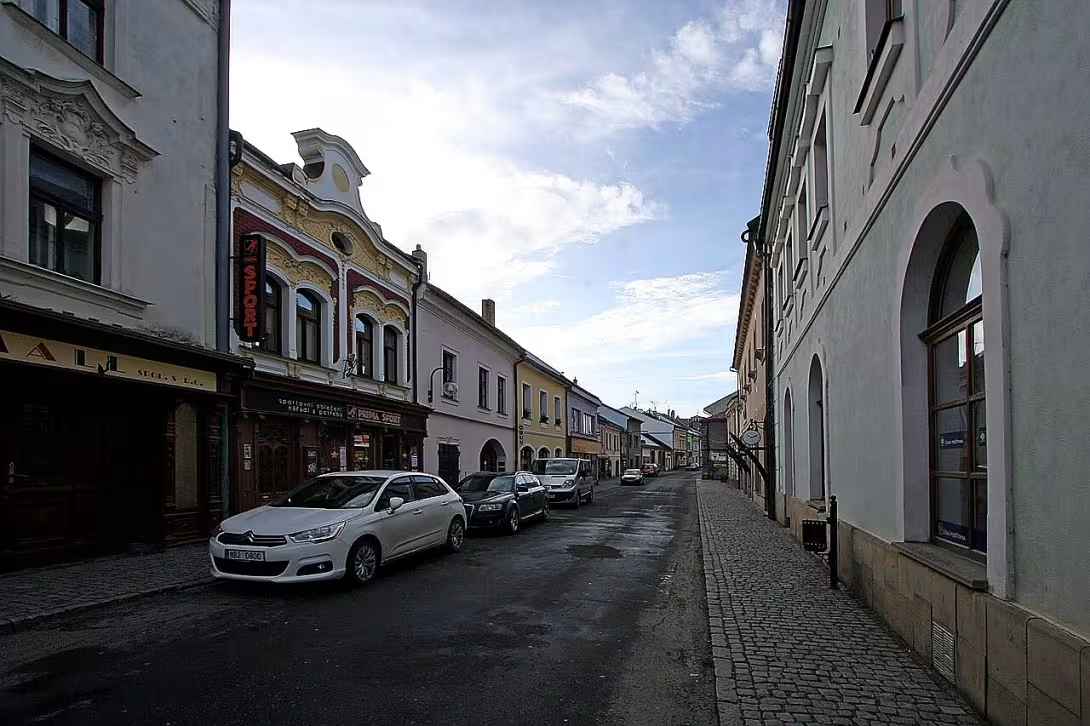
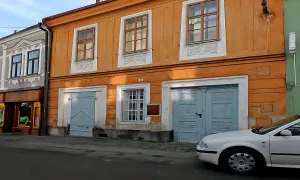
Městský dům čp. 25 in Riegrova Street in Polička is a protected building with a Gothic core. The object underwent a significant Renaissance reconstruction and later extended to the rear tract. The building is remarkable with preserved historical details, such as the Classicist entrance portal with a medallion, and represents valuable evidence of the development of urban architecture.
The oldest history of the house was left with little concrete news. The creation of the original Gothic building falls within the period of development of the city's self-government and trade. This era was part of the wider European process of urbanisation and the formation of urban culture, in which it formed the form of the historical core of Polička.
The architectural form of the house is the result of several building stages. The original Gothic core was significantly rebuilt in the Renaissance, which significantly affected the available object. Later, the house was extended to a rear tract. The interior has traces of different styles, as the arches of baroque or classical origin are preserved there. Today, the exterior appearance of the house is characterized by a modern facade with window openings lined with shambles.
The classical entrance portal is an important element of the object. It is decorated with knitting and rotochs placed in corners. In the upper part there is a medallion with a picture of a sign reminiscent of an anchor and a number four. These details represent significant art elements that complement the historical value of the building.
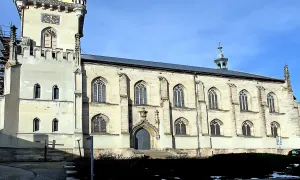
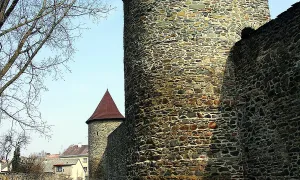
The house is located in the historical heart of Poška, in the immediate vicinity of other monuments such as the city walls or the church of St. James. The building is protected and serves as a proof of the building development of the city. Visiting this place offers the opportunity to explore the history of urban architecture and appreciate the preserved details that have survived centuries of transformation.
Historical milestones
- around 1365
- Zalozeni mesta Policky and the creation of a first Gothic building house
- around 1550
- The renaissance reconstruction of the building
- around 1750
- Barochka adjustments interior and vaults
- around 1820
- Construction of classical entrance portal
Architectural development
The original Gothic building was significantly rebuilt in the Renaissance. Later, the rear tract was built and a classic entrance portal was installed. Baroque or classical vaults were preserved in the interior.
Points of interest
- The house has a Gothic core and has undergone a distinctive Renaissance reconstruction. Later, the object was extended to the rear tract. - The vaults of Baroque or classical origin are preserved in the interior. - The entrance portal is decorated with knitting, rosettes and medallion with anchor sign and four digits. - The exterior appearance of the building is characterized by a modern facade with windows lined with shambles.
Guide
Show guide text
This text was created by artificial intelligence and has not been editorially reviewed. It may contain inaccuracies.
Welcome to the beautiful town of Poščka. You've just stopped at Rieger Street and are standing right in front of one of the most important witnesses of local history, city house number four, twenty-five. Before we go into his secrets, give a moment's attention to the overall impression that this building is building. You may think you're looking at a building that has its own, clearly defined face, but you're actually looking at a fascinating composite image where layers of different ages intersect into one whole. This building is not just a wall and a roof, it is a living record of how the city changed, how human taste and the needs of the people have changed for centuries.
Now let's go back deep into the past to understand where everything started. In order to understand the nature of this place, we need to think about the year around 13,000 sixty-five. This is the time when the town of Policka was just being founded and when the first permanent houses began to be built. It was during this period that what we now call the Gothic nucleus arose. Imagine the first stone walls that formed the foundation of this house. Although today his appearance seems quite different, the oldest parts, the deepest foundation and core of the building, link us to the Middle Ages, to the first breath of this city. So this house is not just a modern object, but it has a hidden soul that goes back to the beginnings of the police settlement.
But over time, the world was changing around, and with it, the style that people wanted to express their homes. Now pay attention to the big turnaround that occurred around the year of a thousand and five hundred and fifty. In this period, which we call the Renaissance, the house has undergone its greatest transformation. This was not just a small repair, but a real reconstruction, which made the object its basic form, which we may feel today in its structure. The Renaissance brought a new order, a new understanding of space and beauty. The house became a more important part of the street, it became an expression of growth and stability. Subsequently, as the cities grew and people were looking for more space, the house was extended to the rear, which gave it dimensions and functionality.
If you look at the architecture of the house now, you might be interested in its present appearance. The facade you see right now has a modern character, which is the way the construction was modified in the newer times to meet the needs of the world today while preserving its dignity. But don't be fooled by what's on the surface. The real treasure of this house is hidden in his details and in what you see when you look at his inputs and in his inner spaces.
Now please pay attention to what is right in front of your eyes at the very entrance to this house. Look at the portal that was created at the time of Classicism, about a thousand eight hundred twenty. It is a very elegant element that gives the whole house order and peace. Notice these fine decorative elements. You see, there's the knitting that's encircling the space, and then there's the rotations that give the whole rhythm. And if you look even more carefully, you'll see a medallion in the middle. What's cursed in it? You'll find the anchor symbol and the numerical form four. These markings are like fingerprints of the past that tell us something about the time this entry was created. It's a fascinating combination of symbolism and pure beauty that welcomes you every time you approach the house.
And what's another strange thing you shouldn't miss? Even if you look at the outer walls, we have to realize that there's another chapter in this house. Around the year a thousand seven hundred and fifty baroque modifications of the interior took place. This means that even if you see a classicist order or a new-looking face on the outside, you still move inside in a space that was shaped by a baroque idea of space and vaults. These vaults, which are preserved in the interior, are proof of how different styles in one object can bind. It's like listening to a few different music compositions that complement each other beautifully in one space.
Maybe now you can think of who lived in this house or who planned these changes. Although the names of particular architects or famous residents of this house have not been directly passed on to us, we must realise that every person who has lived in these areas in the past has contributed to its present form. Every reconstruction, every new detail on the facade or every change in the vault was the result of a human decision, an effort for beauty or a need for comfort. So this house is a monument to the unknown faces that made life here.
The interesting thing that may interest you is the incredible ability of this house to survive and constantly change. Most buildings either disappear or remain immutable. But this house has decided to be different. It's like a living organism that keeps growing, changes its skin, but keeps its core. The fact that today you see a combination of Gothic foundation, Renaissance form, baroque vaults, classical entrance and modern facades is absolutely extraordinary. It's like looking at a book that has many chapters and each is written in different letters, but the story remains one.
Now that you have taken a look at this historical object, I suggest you continue your walk around the city. The shelf has many other similar places waiting for you. Every alley, every house you meet can have a similarly rich and layered history. Remember to look not only at what is large and conspicuous, but also at the small details, such as the medallion with the anchor or fine line of the portal. These little things are often the best guides in the past.
Thank you for spending this moment with us and paying attention to city house number four twenty-five. We hope that this view of its diversity has brought you a new perception of history that is happening right around you. We will destroy you once again, standing in front of the building that carries the walls of 13 hundred and sixty-five, and the face of a thousand eight hundred twenty. Enjoy the rest of your traveling through the city and let yourself be surprised by what else Police will reveal to you. Goodbye.
Tips for visitors
The most appropriate time for a bleach is in the morning at the workhouse, where it is quiet in the historical centre and you can explore the architectural details of the facade without Russian influence. In summer mesicich valuite friendly stin in knots streets.
The town of Policka is available by car and public transport. Parking is possible on reserved platforms in the proximity of a historical expression. Please specify the connections and possibilities of the parks in the current search and transport signs.
We recommend comfortable shoes suitable for the poor after-the-day journey. Remember to take your camera to capture the Gothic element and city walls.
The best light for hikers of the historic house in Riegrove Street is during the golden watch, when the sun grows on the plastic members of the facade. You will also gain from the distance that allows you to capture the house in the context of the surrounding installation.
In any case we recommend establishing city walls that offer a more interesting view of the town, and the church of St. James. For families with children, walking through walls is an ideal activity that combines movement with history.
Businesses nearby
Do you run a restaurant, accommodation, shop, museum, rental, wellness or other visitor service near this monument? Show yourself directly to the people heading to it — this is how they will see you in the app and on the web:
Nearby
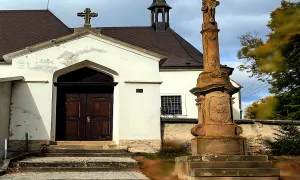
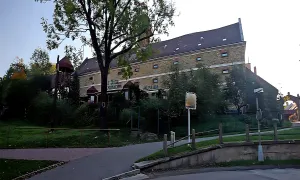
Historické jádro města Polička, městské hradby, kostel svatého Jakuba.
Accommodation nearby
Themed route
1. The historical core of the city Polička (city zone) - The starting point of the journey where you can admire the ancient development and atmosphere of the centre. 2. Church of St. James (Temple) - The dominant city with rich history and beautiful architecture. 3. City walls (fortifications) - Walk under the remains of the old walls that once surrounded the city. 4. Městský dům čp. 25 (building) - Final destination of the trip, which represents a unique urban monument.
Seasonal recommendations
Spring: In the spring, the town house no. 25 in Police- Town opens in front of visitors with a hopeful atmosphere. Sunbeams that penetrate the streets and focus the shadows of historic buildings create impressive lighting that emphasizes the architectural beauty of the monument. Flowers begin to bloom in gardens and nearby meadows, which gives the landscape life and color. It is advisable for visitors to come at an early spring time when there are fewer people, and clothes should be mild - perhaps with a warm leotard for a cooler morning or evening.
Summer: During the summer period, the town house No. 25 in Police- City offers visitors an opportunity to explore the historical monument in the warm sunlight, which highlights the medieval character of the building. The summer atmosphere is full of life and the sound of happy people coming under the shadows of ancient streets. At this time, larger visitor quantities may be expected, especially on the middle of the day, so it is advisable to visit the memorial in the morning or later in the afternoon. A good tip is to bring sunglasses and sun protection.
Autumn: In autumn, the town house No. 25 in Police- City offers a unique atmosphere for visitors when tree leaves turn into golden and red shades. The sun sets early, creating romantic lighting on the streets and on ancient stones of buildings. This time is ideal for a quiet visit with fewer people compared to winter, when the weather is already colder. It is recommended to dress suitable for mild and cold days - perhaps a combination of warm leotards and coats.
Winter: The winter period in Police- The city brings the city house no. 25 a specific atmosphere where historic buildings are decorated with snow or are turned into dark shades under cold sunlight. Winter visit can be calmer because there are fewer people and the opening times of the monument can be reduced. Visitors should bring warm clothes - such as toasty leotards, hats and gloves - and take advantage of this opportunity for a peaceful walk on the streets. If the snow curtain is on its way, this season may be best for photographing the historical centre in an exciting environment.
Visualizations and artistic views

The visualisations are generated by artificial intelligence and serve as inspiration.
Photos from the area
Real photos taken near the monument


Zdroj a licence jsou uvedeny u každého snímku.
Tips from visitors
No tips yet. Be the first!
Log in and add your tip.
Sources and literature
Photos: Petr1888 / CC BY-SA 3.0 — Wikimedia Commons. The author and licence also appear when you hover over the image.
Faktickým podkladem tohoto textu byl článek na Wikipedii, jehož autory jsou přispěvatelé Wikipedie. Článek je dostupný pod licencí CC BY-SA 4.0.
Location on the map
Příběhy a pověsti
Legendy, pověsti a příběhy spjaté s touto památkou
Fotografie návštěvníků
Zatím žádné fotografie. Buďte první, kdo přidá fotografii z návštěvy!
Log in a přidejte svou fotografii nebo hodnoťte.
Za ověřenou návštěvu v aplikaci získáte víc bodů — poznáme podle GPS, že jste na místě.
Reviews and comments