






Městské opevnění (Polička) Town walls
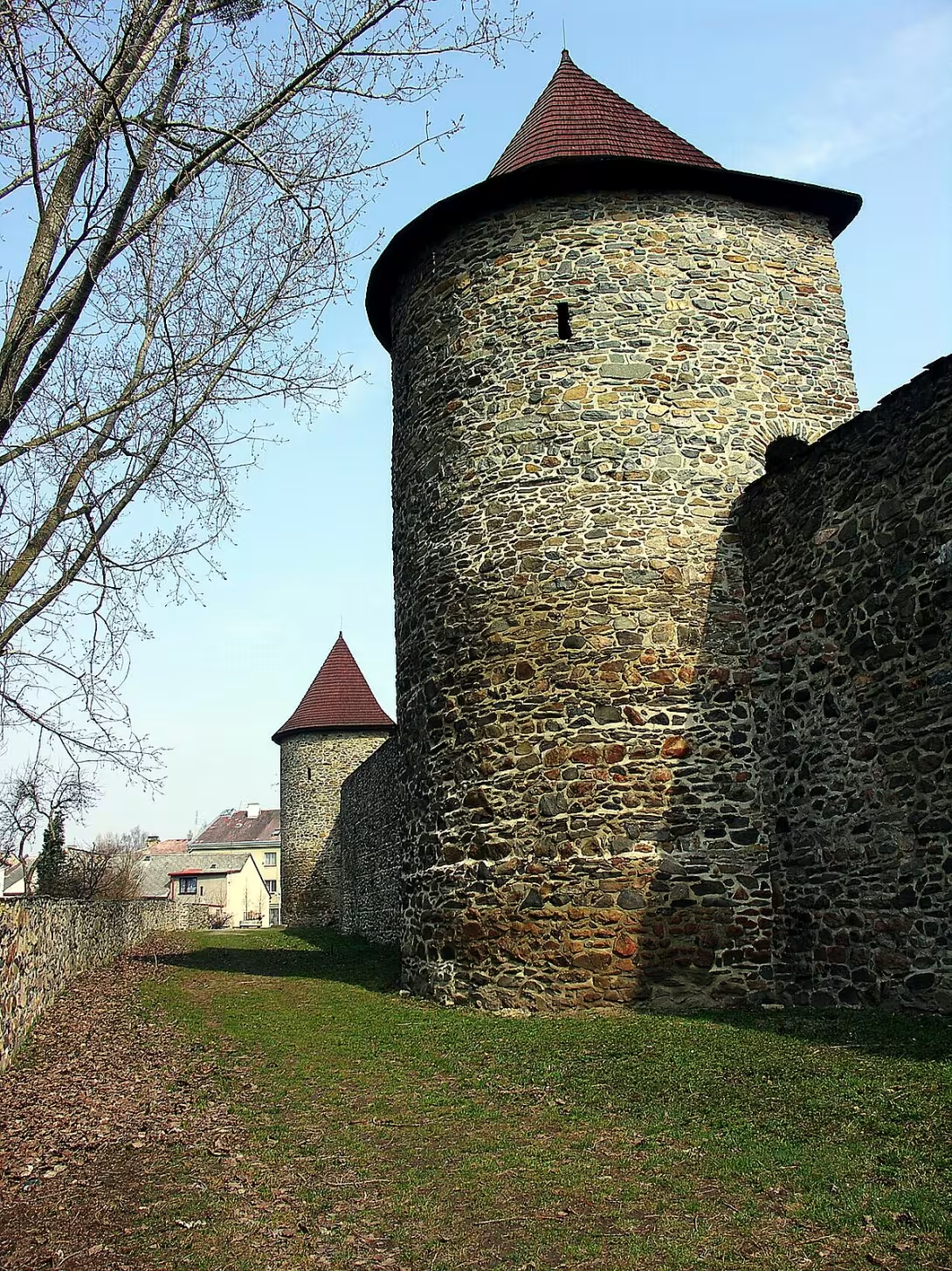
The city walls in Polička are a unique example of medieval fortifications that surround the historical core of the city and include 19 preserved baskets. It is located in the village Polička-Město and is among the best preserved monuments of the fortification system of the medieval city in the Czech Republic. The walls are an important tourist attraction and are managed by the City Museum and Gallery Poščka.
The fortification of the walls dates back to the mid-14th century, when the importance of Policka as one of the royal cities of dowry grew. The original fortification system from the time of the founding of the town Primohmi Otakar II was a low fortification with wooden stake wall. At this time, stone city fortifications have developed in Europe, leading to changes in the defence structure of Polička. The new wall system was built with a main wall with a width of 2.5 metres and a height of 10 metres, in front of which was a park wall and a wide water moat. The walls were equipped with half-circular bastions and four gates: Litomysl, Limberg, Kamenecka and Starolahrad.
The architecture of the city walls shows the development of the defence system from the wooden shed wall to the stone castles with the park wall to the barbaans with the falling bridges from the Jiří z Poděbrad administration. These changes were a reaction to the development of war techniques that over time limited the defensive function of castles. In the 19th century, the gates were demolished and the park wall was destroyed, allowing the city to expand.
The ownership and management of the walls were dealt with by various institutions over the years. Since 1958, the walls have been protected as a cultural monument, leading to their reconstruction in 1972 and a renewed interest in conservation in 2007. City Museum and Gallery Polička take care of the maintenance and promotion of this historic place.
Among the key events are the creation of the city Primhem Otakar II, the construction of stone walls, demolition of gates in 1835-1843 and reconstruction starting in 1972. In the space between the walls and the park wall, poor buildings developed in the 19th century, reflecting social changes in the city.
Today the city walls in Polička are open to the public and serve as a tourist point. The walls are partially opened, allowing visitors to explore the history of the city. The town park with the Sync pond, which originally served to power the water moat, adds peace and beauty to this historic space.
The walls are not only a monument to architecture, but also a witness to the rich history of Polička. Their preservation allows us to better understand the past and appreciate the historical importance of the city. The visit to the wall is not only a journey to the Middle Ages, but also an opportunity to explore the unique culture and heritage of Poščka.
Then and now
Drag the slider to compare how the landmark may have looked when it was built with the view today.
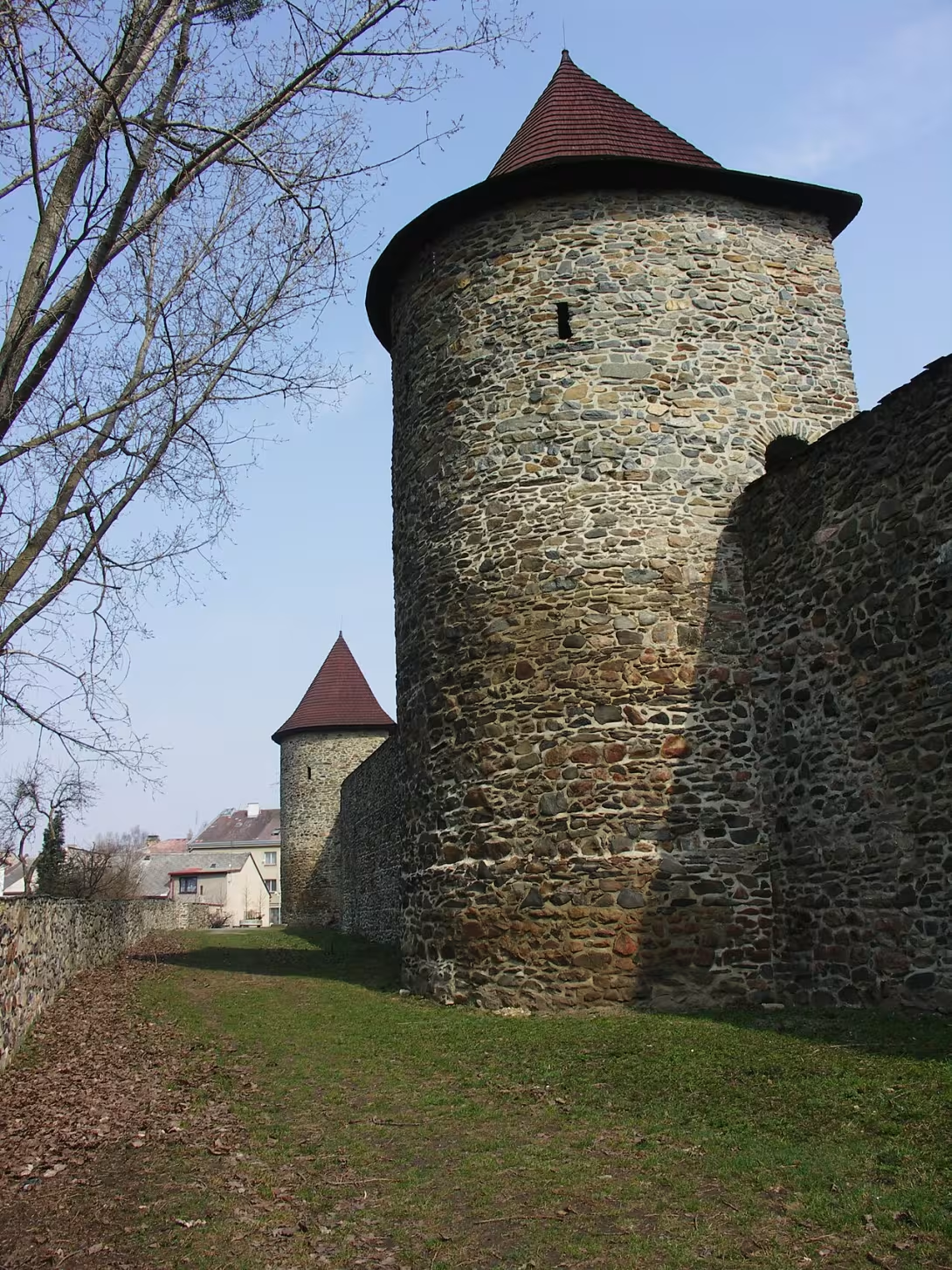
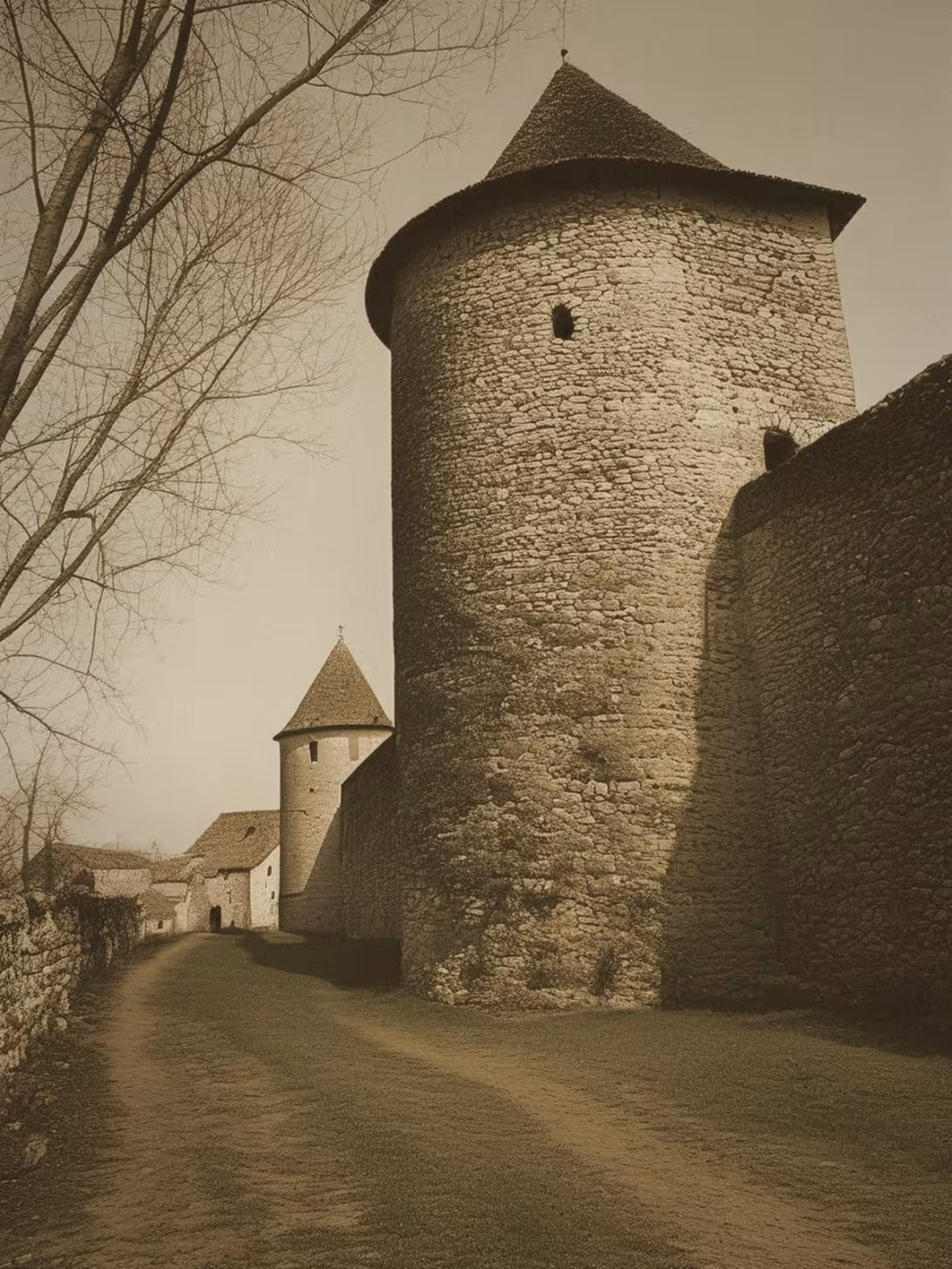
The historical appearance on the left is an AI-generated visualisation and serves as inspiration only.
Historical milestones
- 1958
- The entry of walls on the list of cultural monuments.
- 1972
- Opening of reconstruction of the walls and disposal of the park wall.
- 2007
- Opening of the next phase of reconstruction.
Architectural development
The oldest system was a low wall with a wooden stake wall. In the 14th century, stone walls were built with a park wall and a moat, later added barbaans with drawbridges. In the 20th century, the building was sanitized between the walls and the park and the park wall was destroyed.
Historical events
The founding of the city Primhem Otakar II, construction of stone walls in the middle of the 14th century, demolition of city gates in 1835-1843.
Owners
City Museum and Gallery Polička
Points of interest
- City walls in Polička are a unique example of medieval fortifications and are among the best preserved monuments of the fortifications system of medieval city in the Czech Republic. - The rise of the walls dates back to the middle of the 14th century, when the importance of Policka as one of the royal cities. - The architecture of the city walls shows the development of the defence system from the wooden shed wall to the stone castles with the park wall to the barbaans with the falling bridges. - Since 1958 the walls have been protected as a cultural monument, resulting in their reconstruction in 1972 and a renewed interest in conservation in 2007. - Key events include demolition of gates in 1835-1843, which allowed the city to expand.
Guide
Show guide text
This text was created by artificial intelligence and has not been editorially reviewed. It may contain inaccuracies.
Welcome to the shelf. Right now, you're standing in a place where time stops and history becomes tangible. Before your eyes, there is a monumental city fortification that carries the soul of the medieval royal city. You may have already noticed the incredible length that surrounds the historical core of the city as an impenetrable belt. This continuous unit measures over a thousand two hundred and twenty meters and its presence here dominates the entire area. Now, if you look at these massive stone structures, try to imagine what it must have been like when these walls first rose from the ground. Can you feel the weight of history? It is not only in stone, but in every metre of this fortification, which has protected the lives, property and freedom of the inhabitants of this great city for centuries.
To understand why these walls are so impressive, we need to go back deep into the past, in the middle of the 14th century. In this period, Polička experienced her rise and became one of the important royal faithful cities. This was not just a title privilege, but it meant a huge responsibility and the need for the highest possible security. The original fortification system, which existed here earlier, was no longer sufficient to match the growing importance of the city and the threats of the time. That's why it was decided to build something much stronger and more durable. It was at that time that these stone walls were built here, which were meant to serve as an inviolable protection for the royal city. This transformation from earlier forms of fortifications to massive stone walls was a key moment in the history of Polička and defined its appearance for many centuries in advance.
Now pay attention to the details you have right in front of you. If you look at the height of the wall, you'll see it's going up to 10 meters. It's a really impressive sight. Notice how this huge whole is divided. It's not just one straight wall, but a complex system that includes 19 preserved baskets. These bastions have been strategically deployed throughout the perimeter to enable defensemen to effectively control the surroundings and protect individual parts of the walls. The main component was a high wall that was equipped with a gallery. This gallery was not only an aesthetic element, but a practical way for soldiers who had to be able to respond quickly to any danger. At the time of its greatest flourishment, this system was even more complex. There was also a so-called parking wall outside the main wall, which formed another level of defense and thus created essentially a double barrier for the attackers. Although this external part was later removed, its historical significance and roles throughout the defense scheme remain an integral part of the story of this place.
Looking at these walls, the figures that shaped the fate of Czech countries and thus the fate of Policka itself cannot be mentioned. Although their traces may not appear immediately to be visible at these walls, their influence is felt in every stone. The shelf as a royal city was closely linked to the power history of our rulers. In the context of the existence of these walls, figures such as Přemysl Otakar II, whose era and influence on the building of royal power lay the foundations for the future importance of cities such as Policka. And we must not forget George of Podebrad, a figure that represents one of the most important figures of our medieval history and whose reign was closely linked to the stability and security of the royal cities. These personalities are not just names in textbooks, but are pillars on which the political and strategic weight of this place stood.
You may now wonder how these walls can be presented to us in such good condition. And that's the most interesting thing. Police walls are not just an ordinary monument; is one of the best preserved examples of medieval fortification system in the Czech Republic. It's really unique. But their path to today's form was not without complications. We must remember that maintaining such a monument requires constant effort and care. Already in 1958, the walls were officially listed as cultural monuments, which was the first big step towards protecting them. But a period of fundamental change followed. In 1972, an extensive reconstruction process was launched, but it was also linked to the controversial disposal of the original park wall. These decisions at the time shaped what you see today. And the recovery process does not end; in 2007, the next stage of reconstruction was launched, which aims to keep this historic gem in the best shape for future generations. It's a constant dialogue between the past and the present, trying to preserve the most valuable thing history has left us.
Now that you know the secrets of these walls and know what's behind them, I suggest you continue your walk. Let the atmosphere of this place drift. Walk along these walls, perceive their massiveness, and try in spirit to imagine the life of a city that was so firmly protected. Every bastion, every inch of the wall tells its own story of strength, defense and royal dignity. The shelf has many more surprises waiting to be discovered. Thank you for choosing this time to explore our history. We wish you a beautiful and inspiring journey further along the historic paths of this beautiful city. Goodbye.
Tips for visitors
For the best experience we recommend a visit during the late afternoon when the sun at a low angle highlights the texture of the historical stone and creates a pleasant atmosphere for walking around the walls. At this time there are also fewer people and light is ideal for capturing the beauty of historical architecture.
Transportation to the place is possible by combination of car and public transport; please check the current timetables and parking options near the historical core before travelling in internet search engines. For a comfortable tour we recommend to bring comfortable shoes because the terrain can be uneven, and also drinking water.
If you are looking for ideal places for images, focus on city views through historic gates or from places where walls are best visible. The best light you can get for this footage is at sunset, when the shadows extend and the color of the walls deepens.
After the tour of the fortifications you can continue to the neighbouring city park with the Synská pond, which offers a pleasant environment for relaxation. For families with children, walking in this park is the ideal choice because it offers plenty of space for free movement in the natural environment right in the heart of the city.
Due to the ongoing reconstruction of certain parts of the walls, it is good to consider the possibility of limiting access in certain sections. We recommend to monitor the current state of work on site so that your journey is smooth and without obstacles.
Businesses nearby
Do you run a restaurant, accommodation, shop, museum, rental, wellness or other visitor service near this monument? Show yourself directly to the people heading to it — this is how they will see you in the app and on the web:
Nearby
A town park with a Sync pond.
Accommodation nearby
Themed route
Thematic cruise route: Urban fortification Polička
1. Městské opevnění (Polička) - walls Type: Historical monument Why is it worth a visit: Visit this impressive historical fortification, which testifies to the rich past of the city of Poličky. The walls offer a view of architectural skill and defensive strategies from long past times.
2. City Park Type: City Park Why is it worth a visit: Rest in a quiet environment of the city park where you can relax and explore the beauty of nature in the middle of the historic centre. The park offers an ideal place to relax after exploring the walls.
3. The Son's Pond Type: Pond Why is worth a visit: The Son's pond is not only an attractive place for relaxation, but also offers a view of a living aquatic ecosystem. It is an ideal place for a short walk and relaxation after exploring historical monuments.
4. Access to the walls of the park Type: Postcards Why is it worth a visit: After a walk in the city park you will look at the walls of Poška from a different angle. This view provides a new context and a deeper understanding of the historical environment of the city.
5. A tour of the park interblock Type: Walk Why is it worth a visit: Explore quiet streets and gardens inside the park that offer a view of local architecture and natural beauty. This step concludes your spent time in the Police with a harmonious mixture of history and nature.
This route offers a combination of historical and natural experiences, which allows for deeper knowledge of the city of Polička.
Seasonal recommendations
Spring brings freshness and awakening nature to the city walls. The soft sunlight highlights the details of the stone masonry and contrasts with the new greenery around the fortification. The atmosphere is peaceful and ideal for observing the gradual restoration of the monument. For the visit we recommend layered clothes that prepare you for temperature fluctuations between cold morning and warmer afternoon. It's the best time for those who want to escape the crowds and enjoy the peace.
In summer season, the longest days are and the sun is the most heated by historical walls. The atmosphere is lively and full of energy, which is accompanied by more visitors. Due to high temperatures and possible crowds, it is best to arrive early in the morning or late in the afternoon when shadows are longer and air is more pleasant. Remember the high-quality headgear, sun protection and plenty of water to enjoy your walk after fortifications without fatigue.
Autumn turns the surrounding walls into a varied palette of golden and brown shades. The morning mist gives the place a mysterious and historic atmosphere that perfectly matches the ancient stone. Due to the variable weather and wind, it is advisable to choose waterproof jacket and durable clothes. The best time for walking is around noon, when the light is the most stable and the daily time is still sufficient for the tour even in the framework of the ongoing reconstruction.
Winter in Polička offers the greatest sense of loneliness and silence. Freezing air and any snow on the walls create a nostalgic scene that highlights the age of the monument. In this period it is necessary to have very warm clothes and solid shoes with good grip to avoid slipping on a moist or frozen surface. Due to the shorter daily time and possible effects of weather on the reconstruction workplace, we recommend planning the visit in clear days and taking into account the reduced accessibility of some parts.
Visualizations and artistic views


The visualisations are generated by artificial intelligence and serve as inspiration.
Photos from the area
Real photos taken near the monument


Zdroj a licence jsou uvedeny u každého snímku.
Tips from visitors
No tips yet. Be the first!
Log in and add your tip.
Sources and literature
Fotografie: H2k4 / CC BY-SA 3.0 — Wikimedia Commons. The author and licence also appear when you hover over the image.
Faktickým podkladem tohoto textu byl článek na Wikipedii, jehož autory jsou přispěvatelé Wikipedie. Článek je dostupný pod licencí CC BY-SA 4.0.
Location on the map
More monuments – Polička-Město
Show all in the municipality
Příběhy a pověsti
Legendy, pověsti a příběhy spjaté s touto památkou

Fotografie návštěvníků
Zatím žádné fotografie. Buďte první, kdo přidá fotografii z návštěvy!
Přihlaste se a přidejte svou fotografii nebo hodnoťte.
Za ověřenou návštěvu v aplikaci získáte víc bodů — poznáme podle GPS, že jste na místě.
Reviews and comments