



Kostel svatého Jakuba Staršího (Horní Domaslavice) Church
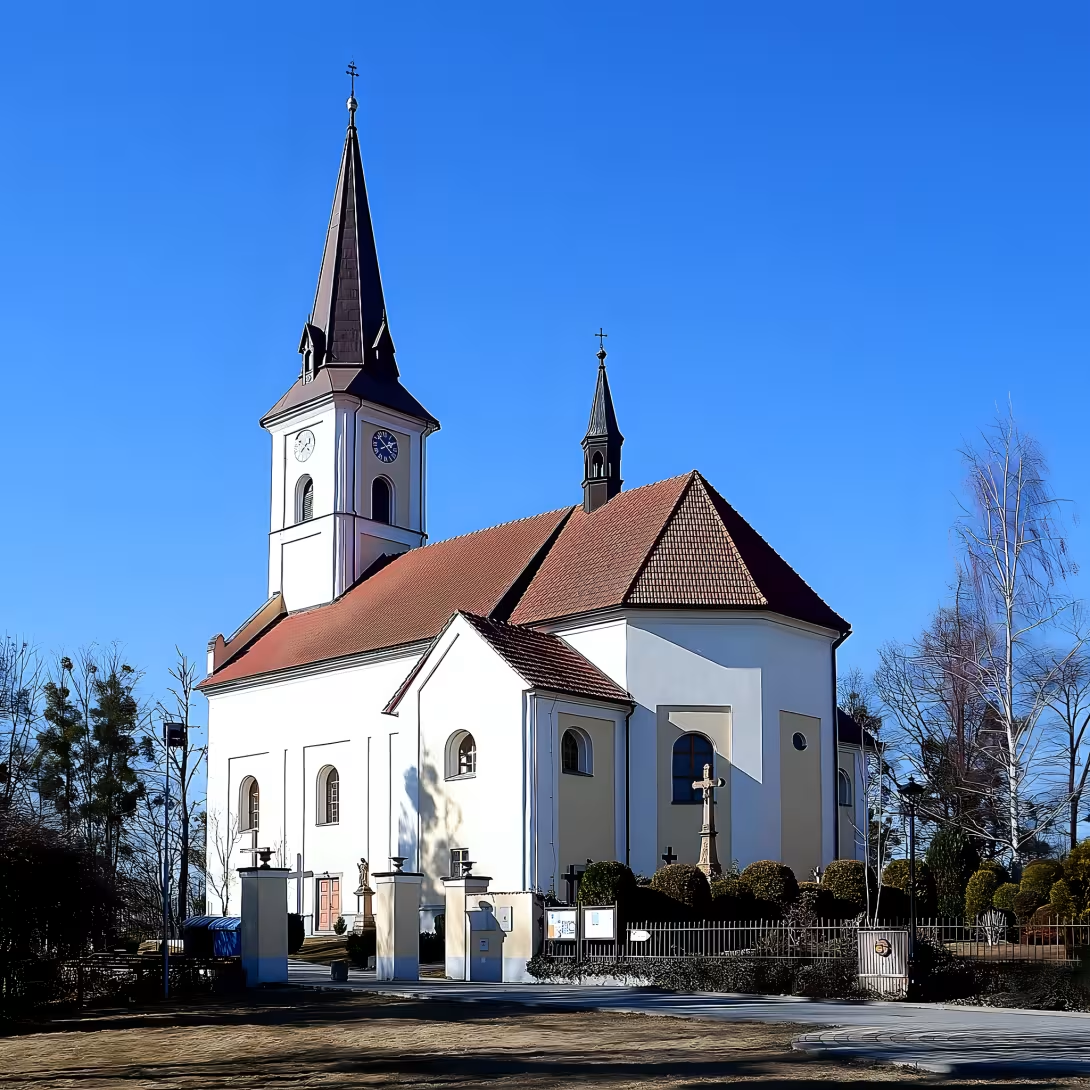
The church of St. James the Elder belongs to the bishop of Ostrava-Opavská, Dean Frýdek, and is an important parish temple of the district of Frýdek-Místek. Its cultural protection since 1999 has demonstrated the historical and architectural value that the local community has long appreciated.
A new brick building was built on the site of the original wooden church between 1739 and 1745. The extension of the building took a very long time - the tower was built gradually from 1803 to 1906. In the first decades of the 19th century (1824-1836) the church underwent major modifications: there were built oratoriums on the sides of the priesthood, paved interior and a new wall built around the cemetery. Around 1860 he was equipped with bells.
The construction has experienced several difficult trials. She was caught in a fire in 1773. The worst катастrofa came on August 25, 1892, when flames destroyed churches and parish buildings. The following year, the temple was repaired, equipped with new organ and benches, and on 30 September 1893 new bells were sanctified and hung.
The 20th century brought a number of maintenance and modernization. In 1923, extensive repairs of the church, rectory and cemetery walls were carried out. The interior was painted in 1929 and the tower was repaired in 1931. Electricity reached the temple in 1943, electrical installation was repaired in 1947.
The essential restaurant lasted between 1975-1985. At that time the original brick altar from 1745 was rebuilt and the old organ from 1893 was replaced by tools added from a broken church in Valstejn (originally manufactured in 1896). In 1990, the church suffered theft. In 1995, a new tile was laid from the Godul smooth sandstone around the sacrifice table. The tower requested repairs to the tower clock in 2005.
The latest renewal took place between 2006 and 2013 as a complex restaurant. The roof was restored, the drainage was resolved, the facade was repaired and the area around the building was modified. There was a new painting in the interior. Investments amounted to CZK 4.7 million.
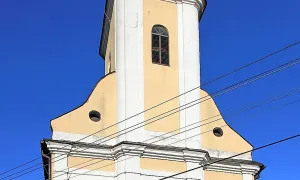
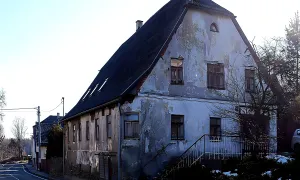
Architecturally, it is a single-boat brick building with a polygonal finish built on a rectangular ground plan with a saddle roof. A characteristic prism tower dominates the eastern facade. This simply monumental form lasted more than two centuries of intensive maintenance to witness the long-term godliness of local believers.
Then and now
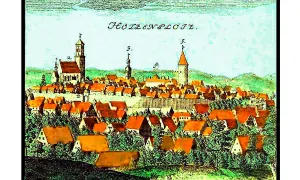
Drag the slider to compare how the landmark may have looked when it was built with the view today.
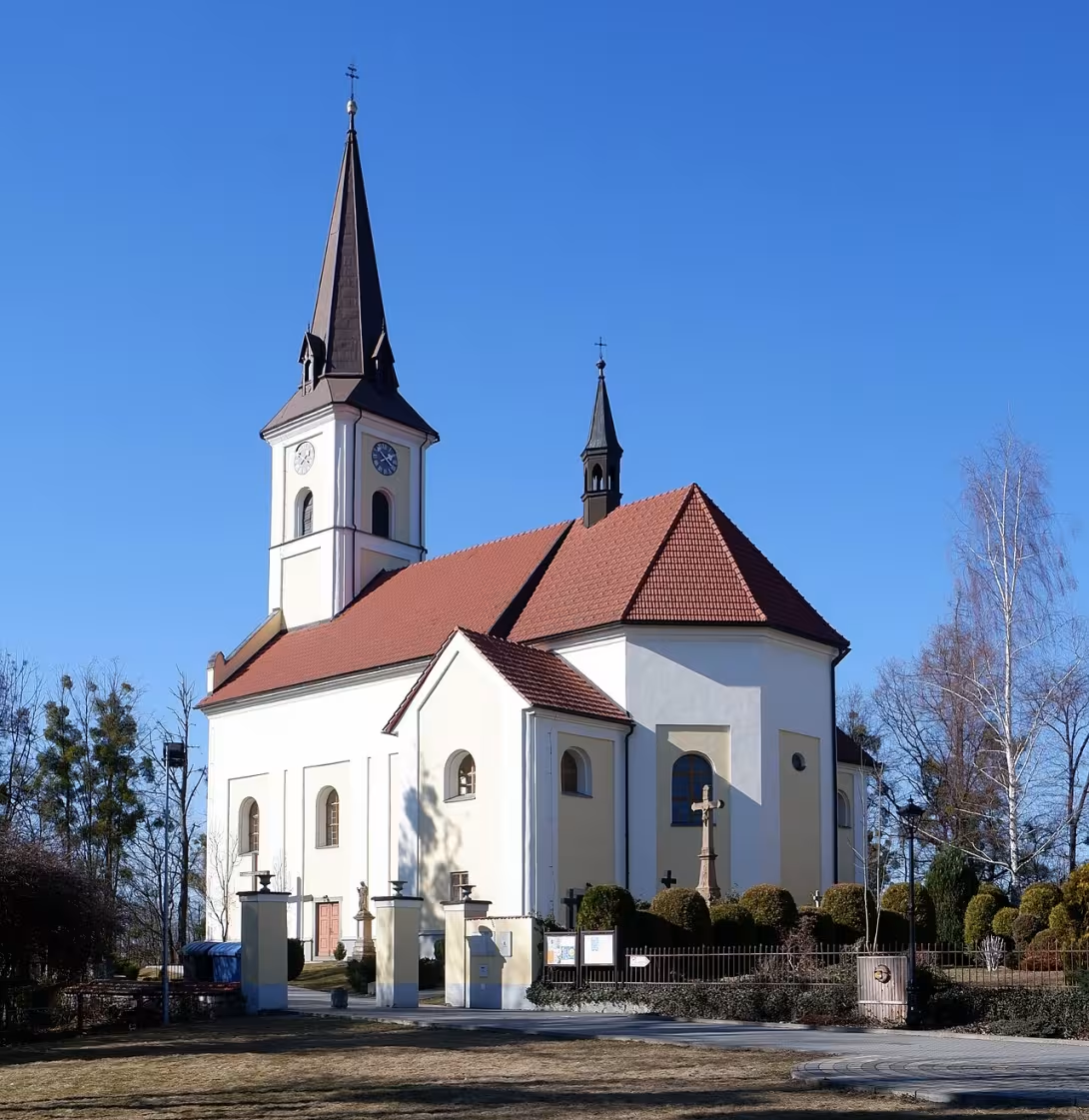
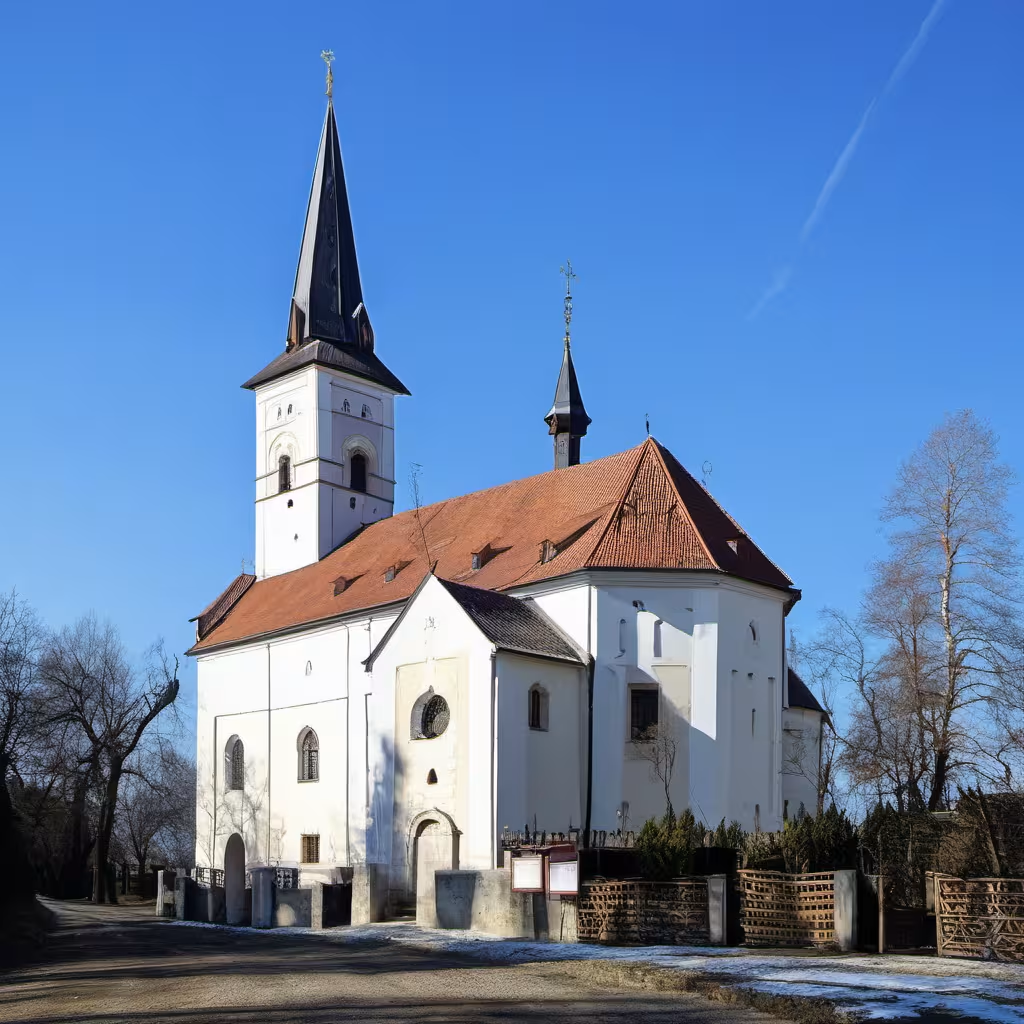
The historical appearance on the left is an AI-generated visualisation and serves as inspiration only.
Historical milestones
- 1739-1745
- Construction of a brick church at the site of the original wooden building.
- 1803-1906
- The extension of the tower to the main building of the church.
- 1892
- A church fire and a parish building followed by repairs in 1893.
- 1999
- Declaration of the church cultural monument of the Czech Republic.
Architectural development
The original Baroque building from 1739-1745 was supplemented by a prism tower in the eastern facade in 1803-1906. In the 19th century the oratory was built and the area was supplemented with a wall. In the years 1975-1985 there was a large restaurant where the original brick altar was rebuilt.
Historical events
In 1773, the church burned down. On 25 August 1892 there was another devastating fire that also hit the parish building. In 1999 the church was declared a cultural monument of the Czech Republic.
Owners
Parish Horní Domaslavice
Points of interest
- The church was built between 1739 and 1745 on the site of the original wooden building. - The tower was built gradually over more than 100 years, namely from 1803 to 1906. - The church was hit twice in the past by fire in 1773 and subsequently in 1892. - The organ installed during the reconstruction between 1975 and 1985 comes from a demolished church in Valstejn and was manufactured in 1896. - In 1995, a new tile was placed around the victim's table from the Godulus smooth sandstone.
Guide
This guide is narrated by a synthetic voice generated by artificial intelligence.
Show guide text
This text was created by artificial intelligence and has not been editorially reviewed. It may contain inaccuracies.
The Church of Saint James the Elder in Horní Domaslavice in the Frýdek-Místek district is the parish church of the Roman Catholic Parish of Domaslavice. It falls under the deanery of Frýdek and the diocese of Ostrava-Opava. In nineteen ninety-nine it was declared a cultural monument.
The brick church was built between seventeen thirty-nine and seventeen forty-five on the site of an older wooden church. It is a single-nave structure with a rectangular floor plan, a polygonal choir and a gable roof. In the eastern façade stands a prismatic tower.
The church caught fire twice during its history. The first time in seventeen seventy-three. From eighteen oh-three a tower was added to it. Between eighteen twenty-four and eighteen thirty-six, oratories were added on either side of the sanctuary, the church received a floor and a wall grew around the cemetery. Around eighteen sixty new bells were installed.
The second major fire came on August twenty-fifth, eighteen ninety-two and also damaged the rectory. The church was repaired immediately the following year. It was then given new organ and pews and on September thirtieth, eighteen ninety-three new bells were blessed and hung.
The twentieth century brought a series of further modifications. In nineteen twenty-three the church, rectory and cemetery wall were repaired, in nineteen twenty-nine the church was repainted and in nineteen thirty-one the tower was repaired. Electricity was introduced in nineteen forty-three. Between nineteen seventy-five and nineteen eighty-five the church underwent restoration and its original brick altar from seventeen forty-five was rebuilt during this work.
During this reconstruction the damaged organ from eighteen ninety-three was also replaced. The new organ dates from eighteen ninety-six and was brought to Horní Domaslavice from a demolished church in Valštejna.
In nineteen ninety the church was robbed. Five years later flooring from Godula smooth sandstone was laid around the altar table and in two thousand five the tower clock was repaired. The most recent major reconstruction took place between two thousand six and two thousand thirteen. The roof and façade were renewed, the church received drainage, the area around it was improved and the interior was repainted. The work cost a total of four point seven million crowns.
Tips for visitors
The best time to visit is during the morning hours in the summer months, when the sun lights up the polygonal end of the church and surrounding area beautifully. In this period, there is also the best chance of a peaceful tour without much excitement.
If you use public transport, check the current connection to the village with available search engines.
To visit, bring comfortable shoes to move on the premises and the camera. The best light to capture the architecture of the church from the outside is in the late afternoon, when soft light highlights the details of the building.
In the immediate vicinity of the village Horní Domaslavice in the district of Frýdek-Místek we recommend to visit the water tank Čermanice, which offers great possibilities for relaxation by water and walks in nature.
For families with children, the location is ideal for a simple trip. Connect a tour of the historical monument with a trip to the Urmanice water tank where children can enjoy time in nature and by the water.
Frequently asked questions
Can the monument be visited?
Religious buildings are usually open mainly during services; at other times a visit is normally arranged with the parish or the operator. We have not verified specific times.
Where is the monument?
Location: Horní Domaslavice, Moravskoslezský kraj. The map on this page shows the exact spot.
Why is the monument protected?
It is listed in the Central List of Cultural Monuments of the Czech Republic as a cultural monument (register no. 49841/8-3986).
For kids
Imagine going back to the past. You stand in the square and you see the village in full development around you. The village of Horní Domaslavice had about a thousand inhabitants. They were mostly peasants who worked in fields, shepherds with sheep and goats or craftsmen like carpenters, smiths or carpenters.
Businesses nearby
Do you run a restaurant, accommodation, shop, museum, rental, wellness or other visitor service near this monument? Show yourself directly to the people heading to it — this is how they will see you in the app and on the web:
Nearby
The village of Horní Domaslavice is located in the district of Frýdek-Místek, close to the water tank Nuremice.
Accommodation nearby
Themed route
Church of St. Jacob the Elder Type: Monuments, sacral construction Why is it worth a visit: This church is the main destination of the trip and represents an important cultural and historical dominance of the village Horní Domaslavice. Its architecture and history attract lovers of sacral art and a peaceful environment.
Water tank Jermanice Type: Water area, recreational area Why is it worth a visit: Located near the village and offers the possibility of relaxing at the water after a sightseeing tour. It is an ideal place for a short walk along the shore or rest in nature.
Ambient municipalities Horní Domaslavice Type: Natural and cultural environment Why is it worth a visit: The immediate surroundings of the church and the village provide a quiet atmosphere for short walks. It allows itself to enjoy a quiet landscape without the need to travel to more remote locations.
Area around the church Type: Tanks, immediate surroundings Why is it worth a visit: A tour of the immediate surroundings of the church allows a detailed insight into the history of the place. It is a suitable place to photograph and think in a quiet environment.
Village Horní Domaslavice Type: Village environment Why is worth a visit: Walk around the village allows you to know the local character and atmosphere of the region. It offers a view of the typical Moravian-Silesian village development and lifestyle.
Seasonal recommendations
Spring: The Church of St. Jacob the Elder in the Upper Domaslavice offers a unique atmosphere where the sun's rays of softness intersect with young tree leaves. This season, it is particularly interesting to see how nature comes back to life around historical monuments. When visiting the spring season we recommend to arrive early in the morning when the place is still quiet and is not burdened by a crowd of tourists. Dress appropriately - the day may be warm, but the evening may become colder.
Summer: Summer brings long sunny days and ideal conditions for visiting the church of St. Jacob the Elder. The natural beauty of the surrounding fields and forests is in full bloom, which increases the attractiveness of this place. In the main summer season it is recommended to come earlier in the afternoon to avoid the largest crowds of tourists. Do not forget the protective sunglasses and plenty of drinking water because the temperature can be very high.
Autumn: Autumn brings a colourful palette of coloured leaves around the church of St. Jacob the Elder. The atmosphere is slightly cold and calm, making the visit very comfortable. This season is ideal for a relaxed walk around the monument without fear of crowd overload. We recommend wearing warm clothes because autumn weather can suddenly be cold and wet.
Winter: Winter brings a quiet atmosphere around St. Jacob's Elder church. Slightly covered with snow or glacial trees create a view that is unique for this season. Don't forget to wear warm clothes and protective shoes because the weather can be very cold and snow conditions can affect the availability of some routes.
Visualizations and artistic views


The visualisations are generated by artificial intelligence and serve as inspiration.
Photos from the area
Real photos taken near the monument


Zdroj a licence jsou uvedeny u každého snímku.
Atmosphere of the place
This atmospheric visualisation of the place and period was generated by artificial intelligence. It is not real footage of the location.
Tips from visitors
No tips yet. Be the first!
Log in and add your tip.
Sources and literature
Photos: Kamil Czaiński / CC BY-SA 4.0, rozlišení zvýšeno umělou inteligencí — Wikimedia Commons. The author and licence also appear when you hover over the image.
Faktickým podkladem tohoto textu byl článek na Wikipedii, jehož autory jsou přispěvatelé Wikipedie. Článek je dostupný pod licencí CC BY-SA 4.0.
Location on the map
Příběhy a pověsti
Legendy, pověsti a příběhy spjaté s touto památkou
Fotografie návštěvníků
Zatím žádné fotografie. Buďte první, kdo přidá fotografii z návštěvy!
Log in a přidejte svou fotografii nebo hodnoťte.
Za ověřenou návštěvu v aplikaci získáte víc bodů — poznáme podle GPS, že jste na místě.
Reviews and comments