



Kostel svatého Jakuba Staršího (Kadlín) Church
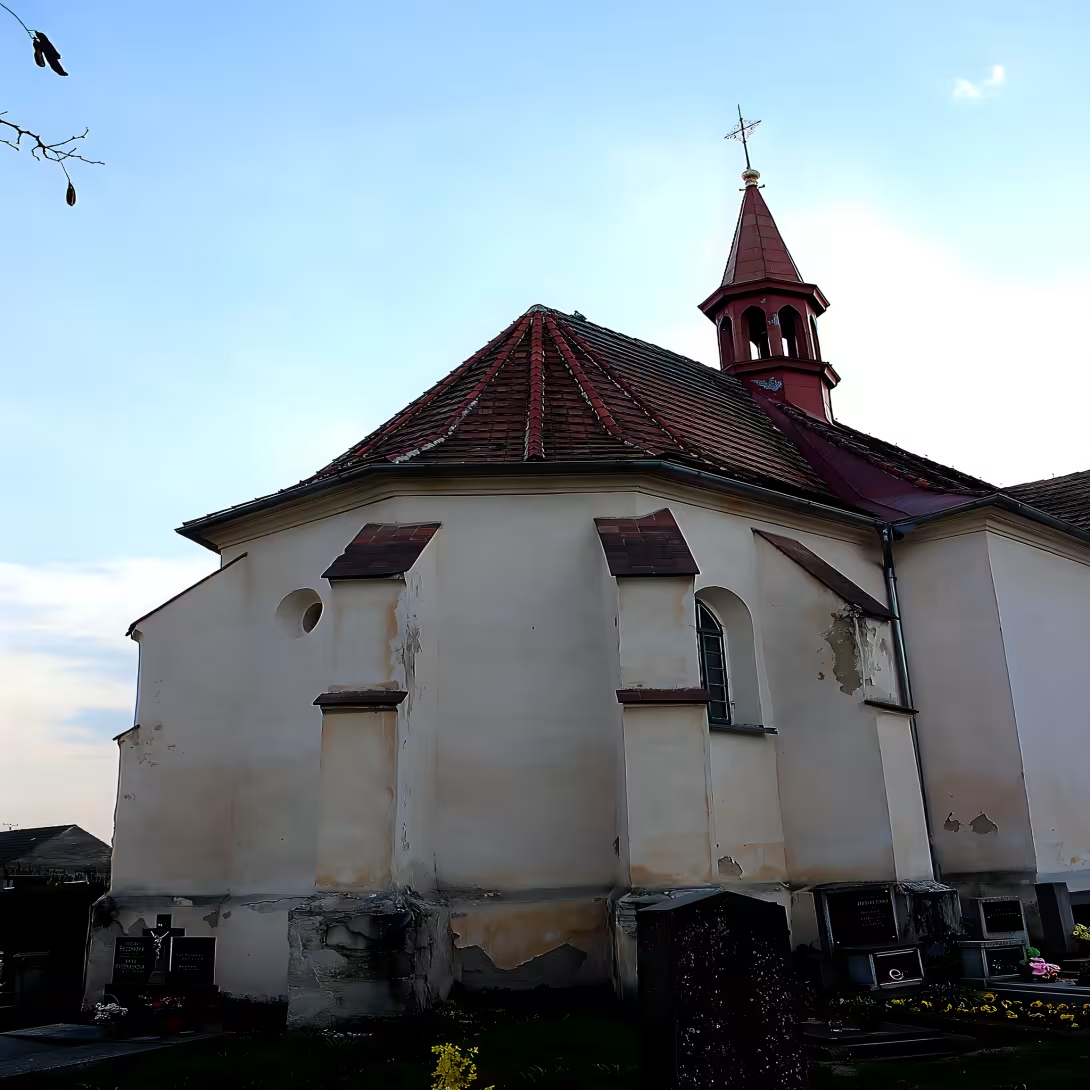
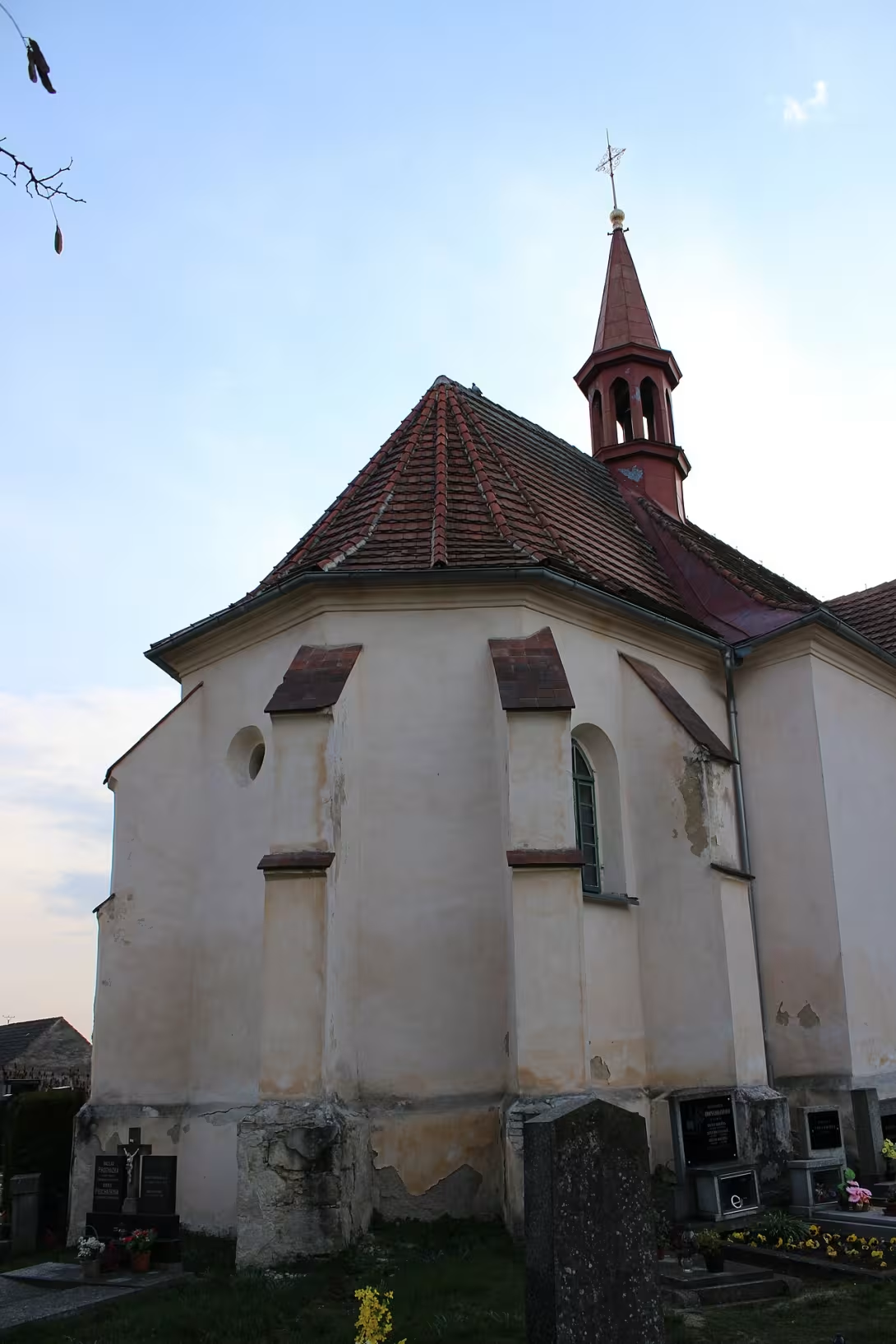
The church of St. James the Elder is one of the Gothic sacral buildings Kadlína and its location in the cemetery on the high rise south of the village is characterized by the historical center of духовlife of the village. It is a Roman Catholic parish church whose spiritual tradition continues through the parish Kadlín.
The building dates from the first half of the fourteenth century, which makes it one of the late Gothic churches of eastern Bohemia. It took its present form in 1724 when it was extended and modified, which meant modernising the older building for the parish's needs. Since 1966, the church has been legally protected as a cultural monument.
The architecture of the church speaks of several building stages. It is a one-ship rectangular construction with a five-side finish by a presbytery equipped with armrest. The sacristy on the south side is also rectangular. An interesting thing is the storey attachment of the oratory on the north side of the ship, which is supposed to stand on older foundations. The facade is architecturally rich - it is broken by Pillasters, a rectangular portal with half circle, nothing and ornamental elements. The shield is crowned by side-walled walls, views and window with nothing, the whole element ends with a segment through the ledge. The side facade is illuminated by windows with a semi-circular wedge.
Presbyterial space demonstrates Gothic building skills. The presbytery is glazed with a characteristic cross-rib arch leaning on the needles console and lit by two broken windows and one circular window. The triumphal arc between the ship and the presbytery is bevelled, creating a specific architectural effect. The ship and the sacristy have a flat ceiling, while the space under the oratory is arched with a cross nail. On the north side of the ship, there is a gothic poppy profiled portal, which is a typical element of late goth.
The inner device reflects Renaissance and Baroque aesthetics. The device is rococo and was modified in the nineteenth century. The main altar of Rococo style with panelage carries a picture of initiation - St. James - and is supplemented by statues of St. Prokop and St. Vojtěv. Side altars have Rococo paintings of St. John Nepomuk and Virgin Mary. The historical relief is a tin baptism with reliefs dating from 1607, which is proof of continuity of liturgical equipment since the seventeenth century.
The church is not isolated - the cemetery is surrounded by traditional understanding of the sacral space. Near there is a wooden bell tower built on a suspect, which was used to summon believers and signal time. There is also a morgue in the cemetery, which complements a set of cemetery structures and services.
Then and now
Drag the slider to compare how the landmark may have looked when it was built with the view today.
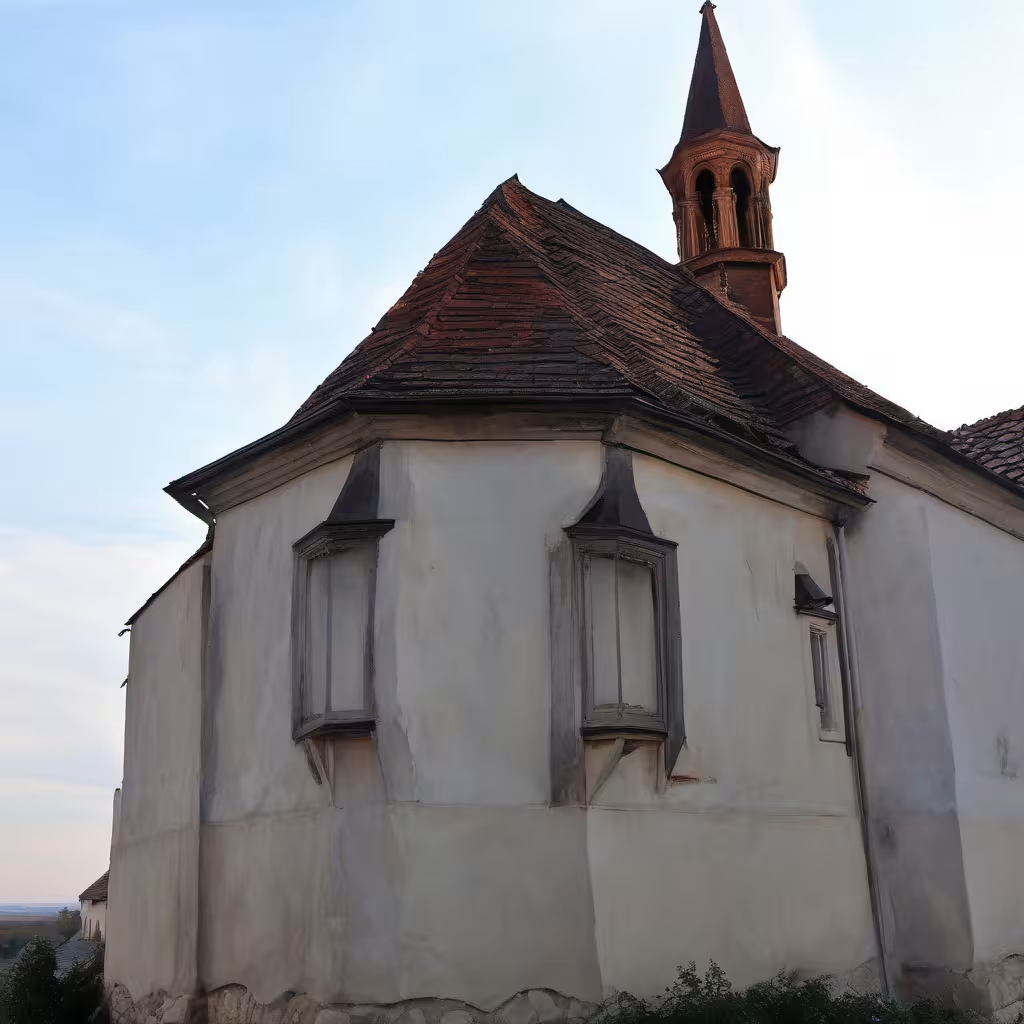
The historical appearance on the left is an AI-generated visualisation and serves as inspiration only.
Historical milestones
- 1966
- Protected as a cultural monument.
Architectural development
The original Gothic building from the first half of the 14th century was extended and modified in 1724, bringing baroque elements to its architecture. The church has a one-ship rectangular structure with five-side presbytery and headrest. On the north side of the ship is a storehouse of the orator, which stands on older foundations.
Historical events
- 1724
- The church was extended and modified.
- 1966
- Protected as a cultural monument.
Points of interest
- The church of St. Jacob the Elder is a Gothic sacral building from the first half of the 14th century. - In 1724 the church was extended and modified, which meant modernizing the older building. Since 1966, the church has been legally protected as a cultural monument. - The architecture shows several construction phases with one-ship rectangular construction and five-side finish by presbytery. - The inner device reflects Renaissance and Baroque aesthetics, including Rococo altars and tin baptists from 1607.
Guide
This guide is narrated by a synthetic voice generated by artificial intelligence.
Show guide text
This text was created by artificial intelligence and has not been editorially reviewed. It may contain inaccuracies.
The Roman Catholic parish Church of Saint James the Greater stands on an elevation south of Kadlín, in the middle of a cemetery. It is a Gothic structure from the first half of the 14th century. In 1724, the church was extended and renovated. Since 1966, it has been protected as a cultural monument.
The church has a single rectangular nave. It is connected to the presbytery, which is the space around the main altar. The presbytery is terminated with five sides and reinforced with buttresses. From the south side, a rectangular sacristy adjoins the church. On the north side of the nave stands a two-story annex with an oratory, probably built on older foundations.
The facade is divided by pilasters, a rectangular portal, a window with a semicircular arch, and niches. The gable is bordered by side wings, has a window and a niche in it. At the top it is closed by a cornice broken by a segment. The side walls have windows with semicircular arches. In the presbytery there are two pointed windows and one circular one.
Inside, the presbytery is vaulted with a cross rib vault, whose ribs rest on pyramidal corbels. The triumphal arch between the presbytery and the nave is beveled. The nave and sacristy have flat ceilings. The space under the oratory is covered with a cross ridge vault. On the north side of the nave is also a Gothic pointed portal with profiling.
The furnishings of the church are Rococo and were renovated in the 19th century. On the main altar, which is Rococo and paneled, is an image of Saint James and statues of Saint Prokop and Saint Adalbert. On the side altars are Rococo paintings of Saint John of Nepomuk and the Virgin Mary. Older than the Rococo furnishings is a tin baptismal font with reliefs from 1607.
In the cemetery near the church stands a wooden bell tower on a stone base and also a mortuary chapel.
Tips for visitors
The best time to visit is the period with good weather, especially morning hours, when light is ideal for observing gothic details of the sacral building. The quieter moments for the tour are usually found outside the main religious holidays.
The monument can be reached by car and public transport; Please check the current traffic connections in the Internet search engine.
For photography we recommend using the location of the church on the high rise, which offers beautiful views of Gothic architecture, especially in low sunlight during the golden hour. Take comfortable shoes with you, because the road to the monument can be difficult in the field.
As part of a short walk around you can see a wooden bell tower on a suspect or a morgue in a cemetery. For families with children it is advisable to prepare a short story about the history of the church to be a walk around the sights for the smallest more interesting.
Frequently asked questions
Can the monument be visited?
Religious buildings are usually open mainly during services; at other times a visit is normally arranged with the parish or the operator. We have not verified specific times.
Where is the monument?
Location: Kadlín, Středočeský kraj. The map on this page shows the exact spot.
Why is the monument protected?
It is listed in the Central List of Cultural Monuments of the Czech Republic as a cultural monument (register no. 23165/2-1417).
For kids
Imagine going back to the past, to a time when life wasn't as fast and full of technology as it is today. Instead of cars and trains, strollers were driven by horses or donkeys. People only communicated orally, no one could call or text.
Businesses nearby
Do you run a restaurant, accommodation, shop, museum, rental, wellness or other visitor service near this monument? Show yourself directly to the people heading to it — this is how they will see you in the app and on the web:
Nearby
There is a wooden bell tower near the church.
There's a morgue in the cemetery, too.
Accommodation nearby
Themed route
Thematic cruise route: Kostel svatého Jakuba Staršího (Kadlín)
1. Church of St. Jacob the Elder - Main destination, church Start your visit in the centre of the village of Kadlín at the church of St. Jacob the Elder. This Baroque temple is one of the oldest and most important sacral buildings in the region. Its history dates back to the 13th century, which makes the visit not only spiritually interesting, but also historically interesting.
2. Wooden bell tower on suspicion - Bell tower Near the church is a unique wooden bell tower built on suspicion. Its architecture and location are exceptional, which makes it an ideal place to photograph and explore the history of the construction area.
3. Hřbitov with morgue - Cemetery A visit to the cemetery, where there is also a morgue, offers a view of local traditions and history. Marnice is an important monument that contributes to the atmosphere of the place and provides insight into the past of the village.
This route allows you to explore not only the main church but also the surrounding attractions, which additionally enrich the visit.
Seasonal recommendations
In the spring, the church surrounds the awakening nature and fresh greenery, creating an optimistic atmosphere. Soft morning light gently hits the facade and highlights the details of the construction. We recommend to dress in layered clothes because spring weather is usually unstable, and schedule a visit to the morning hours when the air is the cleanest.
The summer season brings intense sun and rich green trees that provide a pleasant shade around the monument. The atmosphere is playful and full of energy, while sharp light creates significant shadows on architecture. Due to the higher attendance in the high season it is advisable to come first thing in the morning, choose light breathtaking clothes and not forget enough fluids.
In autumn, the surroundings of the church turn into golden and brown tones, giving the place a nostalgic and peaceful touch. A fog wound and a low sun create a mysterious mood that is ideal for contemplation. The practical shoes are moisture-resistant and warmer jacket, the best time to observe the monument is late afternoon.
In winter the monument is majestic, especially if the landscape is covered with snow, which will dampen all sounds. The atmosphere is quiet and valiant, which is especially felt in advent time.
Visualizations and artistic views


The visualisations are generated by artificial intelligence and serve as inspiration.
Photos from the area
Real photos taken near the monument


Zdroj a licence jsou uvedeny u každého snímku.
View from the area
This animation was generated by artificial intelligence from a real photograph of the surroundings. The motion and details are not real footage of the location.
Tips from visitors
No tips yet. Be the first!
Log in and add your tip.
Sources and literature
Photos: Jan Polák / CC BY-SA 3.0, rozlišení zvýšeno umělou inteligencí — Wikimedia Commons. The author and licence also appear when you hover over the image.
Faktickým podkladem tohoto textu byl článek na Wikipedii, jehož autory jsou přispěvatelé Wikipedie. Článek je dostupný pod licencí CC BY-SA 4.0.
Location on the map





Příběhy a pověsti
Legendy, pověsti a příběhy spjaté s touto památkou
Fotografie návštěvníků
Zatím žádné fotografie. Buďte první, kdo přidá fotografii z návštěvy!
Log in a přidejte svou fotografii nebo hodnoťte.
Za ověřenou návštěvu v aplikaci získáte víc bodů — poznáme podle GPS, že jste na místě.
Reviews and comments