



Kostel svatého Jakuba Staršího (Kratonohy) Church
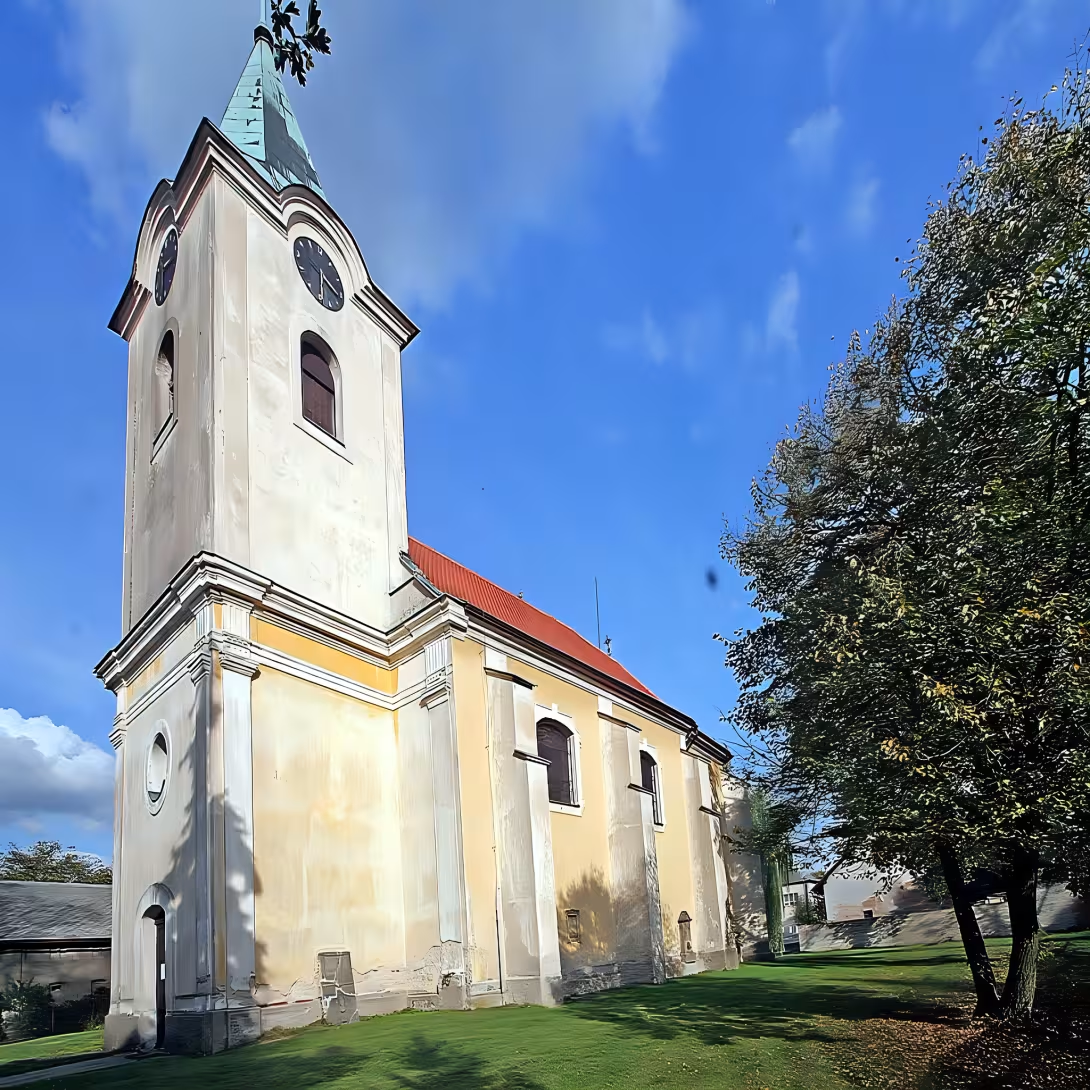
The Church of Saint James the Elder in Kratonohy stands as an impressive example of architectural evolution from Gothic to Baroque styles within the Czech lands. Located in the village of Kratonohy, this church is not only a significant cultural monument but also reflects historical and artistic transformations over centuries. Originally constructed in the 14th century as a Gothic structure, it underwent substantial Baroque renovations between 1707 and 1710 under the influence of Jan Václav Michna z Vacínova and his Spanish wife. The church is notable for its rich stucco decorations and symbolic frescoes that reflect cultural influences from emblematic books of its time.
The origins of the Church of Saint James the Elder date back to the 14th century when it was built as a Gothic church. During this period, Bohemia was part of the Holy Roman Empire, experiencing significant developments in Gothic architecture. The original structure featured a single-nave rectangular design with a lower three-sided presbytery on its northern side, accompanied by a sacristy and an oratory for the lord on the upper floor.
In the early 18th century, under Habsburg rule, the church underwent transformation into Baroque style. This renovation was spearheaded by Jan Václav Michna z Vacínova between 1707 and 1710. The Baroque renovations included changes to both the interior and exterior of the church, such as the addition of a bell tower in the western façade completed in 1707. The stucco decorations and frescoes within the church were inspired by emblematic books, featuring personifications of divine and human love, which added layers of symbolic meaning to its artistic elements.
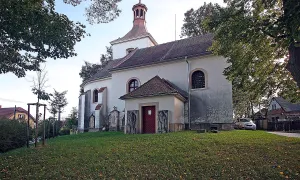
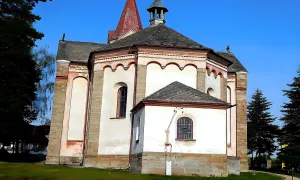
The architectural form of the Church of Saint James the Elder is a blend of Gothic and Baroque styles. Its exterior features stepped buttresses with three on each side of the nave and four at the corners of the presbytery's closure. The windows are segmentally closed, adorned with shutters featuring hooks and drops, while those in the presbytery are oval-shaped. The western façade is divided by corner pilasters supporting a cornice with a high frieze, above which rises another story of the tower with corner lisenas and semicircularly arched windows on each side. This level also houses clocks that extend to the main cornice's height.
Inside, the church is characterized by its rich stucco decoration and unique frescoes. The vaulting includes a barrel vault in two fields with lunettes for the nave and a conch with lunettes for the presbytery. A triumphal arch connects these spaces, featuring an alliance coat of arms painted within elaborately decorated cartouches that display the heraldic symbols of Jan Václav Michna z Vacínova and his wife, Marie Karoliny von Wopping.
The church's interior furnishings are predominantly Baroque, likely influenced by Spanish styles. The main altar is a stucco grotto featuring a statue of Saint James the Greater at its center, flanked by statues of Saints Peter and Paul. Two side altars date from around 1700 and mid-18th century, dedicated to Saint Anne and Our Lady of Karlov. A pulpit shaped like an open whale's mouth adds to the church’s distinctive interior design. The baptismal font dates back to 1604.
Today, the Church of Saint James the Elder remains a protected cultural monument, offering visitors insight into its historical significance and architectural beauty. Its blend of Gothic and Baroque elements, along with its richly decorated interiors, make it an intriguing site for those interested in the evolution of church architecture in the Czech Republic. The church's connection to notable figures like Jan Václav Michna z Vacínova adds a layer of historical intrigue, inviting visitors to explore not just a building but a narrative woven through time.
Then and now
Drag the slider to compare how the landmark may have looked when it was built with the view today.
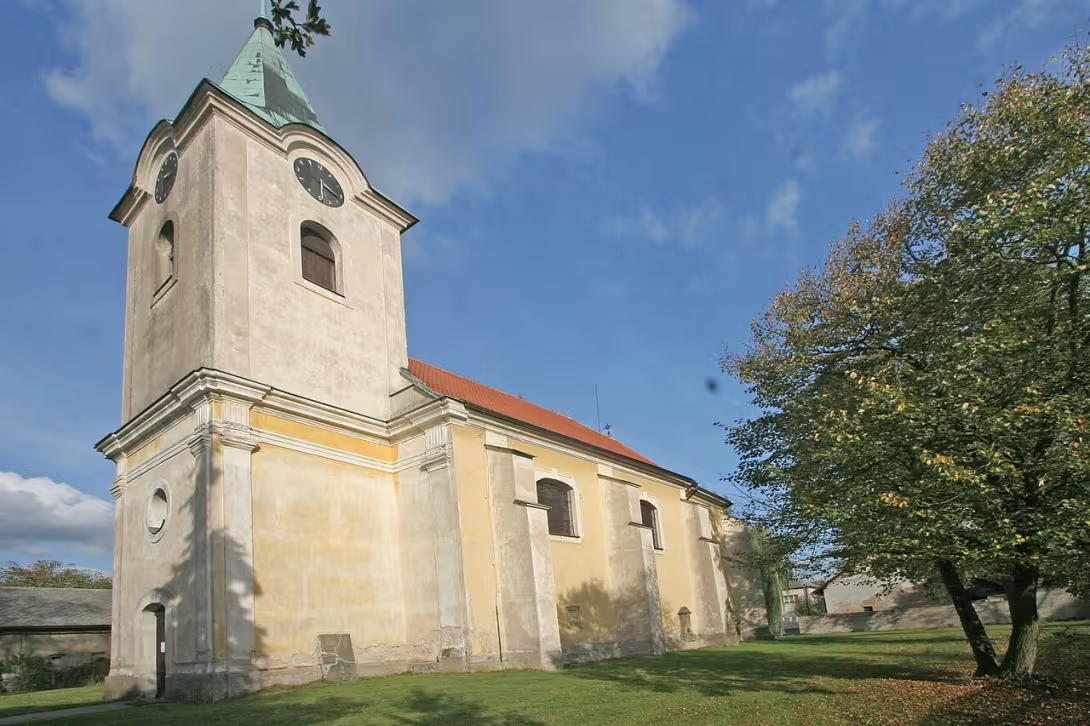

The historical appearance on the left is an AI-generated visualisation and serves as inspiration only.
Historical milestones
- 14th century
- Original construction as a Gothic church.
- 1707-1710
- Baroque renovations by Jan Václav Michna z Vacínova.
Architectural development
The church began as a Gothic structure in the 14th century, characterized by its single-nave rectangular design with a lower three-sided presbytery. In the early 18th century, it was transformed into Baroque style under Jan Václav Michna z Vacínova, featuring stucco decorations and frescoes inspired by emblematic books. The western façade includes a bell tower from 1707, while the interior boasts a richly decorated vault with unique frescoes.
Historical events
14th century: Original construction as a Gothic church.
1707-1710: Baroque renovations by Jan Václav Michna z Vacínova.
Points of interest
- The Church of Saint James the Elder features unique frescoes that are inspired by emblematic books from its era, incorporating symbolic representations of divine and human love. - During its Baroque transformation in the early 18th century, the church's interior was significantly influenced by Spanish artistic styles, likely due to Jan Václav Michna z Vacínova’s Spanish wife, Marie Karoliny von Wopping. - The church's western façade is distinguished by a bell tower added during the Baroque renovations in 1707, which includes clocks that extend up to the main cornice's height, adding both functional and aesthetic value. - The alliance coat of arms of Jan Václav Michna z Vacínova and his wife, Marie Karoliny von Wopping, is prominently displayed within elaborately decorated cartouches on the triumphal arch inside the church. - Despite its Baroque renovations, the church retains elements of its original Gothic architecture, such as stepped buttresses and segmentally closed windows with distinctive shutters featuring hooks and drops.
Guide
This guide is narrated by a synthetic voice generated by artificial intelligence.
Show guide text
This text was created by artificial intelligence and has not been editorially reviewed. It may contain inaccuracies.
The Church of Saint James the Greater in Kratonohách on the Hradec region is protected as a cultural monument. At its core it is a Gothic structure from the 14th century. Between 1707 and 1710 it was rebuilt in the Baroque style by Jan Václav Michna z Vacínova together with his Spanish wife. At that time its dedication was also changed. Previously the church belonged to All Saints.
It is a single-nave rectangular building with a lower presbytery closed off with three sides. A sacristy stands on its northern side, above which is a manor's oratory on the upper floor. The western façade features a prismatic tower from 1707. It is topped with a pyramidal roof made of copper sheet with a cupola and a forged cross. The clock on the tower extends all the way to the main cornice, which forms a semicircular arch around it. Old tombstones with coats of arms are built into the outer walls. The oldest one, on the southern side of the tower, dates from 1580.
The most valuable is the interior decoration. The vault is covered with rich stucco decoration featuring iconographically exceptional frescoes. Their subjects derive from emblematic books, that is collections of allegorical images with moral instruction. The paintings in the nave and presbytery draw from the book Amoris divini et humani antipathia, whose author is Michel van Lochom. Usually two figures appear in them. The one with a halo represents divine love. The other, with hair gathered in a bun, is the human soul, called Anima. The scenes on the triumphal arch are taken from the work Idea de un Príncipe político-cristiano by Spanish author Diego de Saavedra Fajardo. At the top of the arch is painted an alliance coat of arms. The Michna coat of arms joins with that of his wife Marie Karolina von Wopping.
The interior furnishings are predominantly Baroque, probably of Spanish origin. The main altar has the form of a stucco cave. In the middle stands a statue of Saint James, with statues of Saint Peter and Paul on the sides. The left side altar from around 1700 is dedicated to Saint Anne. The right altar to the Virgin Mary Karlovská dates from the middle of the 18th century. The pulpit has the unusual shape of an open whale's mouth. The baptismal font is from 1604. The choir gallery from around 1710 is supported by two caryatids, that is statues of female figures.
Colored stained glass was created at the beginning of the 20th century by Veselý. The present organ was built in 1905 by Josef Kobrle, an organ builder from Lomnice nad Popelkou. It replaced the Baroque instrument by Pavel František Horák from 1773.
Tips for visitors
The best time to visit the Church of Saint James the Elder in Kratonohy is during late spring or early autumn, when the weather is pleasant for exploring outdoor sites. These seasons offer comfortable temperatures and beautiful natural lighting that enhances the architectural details of the church. Additionally, visiting outside of peak tourist season means fewer crowds, allowing you to appreciate the site's serene atmosphere more fully.
This flexibility in travel options ensures that you can plan your trip according to your preferred mode of transportation.
When visiting the Church of Saint James the Elder, consider bringing comfortable walking shoes as there may be some uneven paths leading to and around the church. A camera is also recommended to capture the stunning transition from Gothic to Baroque architecture. Additionally, carrying a light jacket or sweater can be useful, as temperatures might drop slightly in shaded areas or during evening visits.
Photography enthusiasts will find several spots around the Church of Saint James the Elder ideal for capturing its architectural beauty. The best lighting is typically found early in the morning or late afternoon when the sun casts soft shadows that highlight the intricate details of the structure. Try to capture the church from different angles, including a view from across the fields, which can provide a picturesque backdrop.
For families with children visiting Kratonohy, there are several activities and sights within a 30-minute drive. The nearby town of Hradec Králové offers various family-friendly attractions such as parks and museums that engage both young and old. Additionally, the natural landscapes around Kratonohy provide opportunities for leisurely walks or picnics in scenic settings.
Frequently asked questions
Can the monument be visited?
Religious buildings are usually open mainly during services; at other times a visit is normally arranged with the parish or the operator. We have not verified specific times.
Where is the monument?
Location: Kratonohy, Královéhradecký kraj. The map on this page shows the exact spot.
Why is the monument protected?
It is listed in the Central List of Cultural Monuments of the Czech Republic as a cultural monument (register no. 26950/6-635).
Businesses nearby
Do you run a restaurant, accommodation, shop, museum, rental, wellness or other visitor service near this monument? Show yourself directly to the people heading to it — this is how they will see you in the app and on the web:
Events nearby

Zdroj akcí: otevřená data měst a obcí ČR (Národní katalog otevřených dat) a kalendář akcí Národního památkového ústavu.
Accommodation nearby
Themed route
Tematická výletní trasa: Kostel svatého Jakuba Staršího (Kratonohy)
1. Kostel svatého Jakuba Staršího (Královský kostel) - Typ: Náboženská památka - Proč stojí za návštěvu: Tento barokní kostel je centrem duchovního života v Kratonohách. Jeho bohaté historie a architektura přitahují návštěvníky, kteří se zajímají o kulturní dědictví regionu. Kostel nabízí pohled na unikátní interiér s bohatými freskami a sochami.
2. Obecní úřad Kratonohy - Typ: Historické stavení - Proč stojí za návštěvu: Toto historické budování, nacházející se nedaleko kostela, je významnou částí místní správy a kultury. Jeho architektonický styl odráží minulost obce a poskytuje vhled do historie místní samosprávy.
3. Staré nádvoří - Typ: Historické místo - Proč stojí za návštěvu: Staré nádvoří, nacházející se v blízkosti kostela a obecního úřadu, je ideálním místem pro relaxaci. Toto místo nabízí klidnou atmosféru k procházce nebo sedění na venkovním pohovku, zatímco si užíváte přírodního prostředí a historického okolí.
4. Stará škola - Typ: Historická budova - Proč stojí za návštěvu: Tato budova, nacházející se v blízkosti kostela a obecního úřadu, je připomínkou minulých generací. Je zajímavá pro ty, kteří chtějí pochopit historii místního vzdělávání a architekturu raného 20. století.
5. Starý pivovar - Typ: Kulturní památka - Proč stojí za návštěvu: Tento starobylý pivovar je důležitou součástí kulturního a hospodářského dědictví Kratonoh. Navštívte ho, abyste se dozvěděli o historii piva v regionu a možná si užili místní speciality.
Tato trasa nabízí komplexní pohled na kulturní a historické aspekty Kratonoh, s důrazem na hlavní památky a místa, která přispívají k jejich bohatému dědictví.
Seasonal recommendations
Spring: Visiting the Church of Saint James the Elder during spring offers a unique experience as nature awakens around Kratonohy. The surrounding landscape bursts with vibrant colors, and wildflowers create a picturesque backdrop for this historic site. The gentle warmth of early spring sunshine enhances the church's architectural details, casting long shadows that add depth to its façade. This season is ideal for appreciating the blend of history and nature without the crowds typical of peak tourist seasons. Visitors should dress in layers as temperatures can vary from cool mornings to warmer afternoons. Arriving earlier in the day allows you to enjoy the serene atmosphere before any potential increase in visitors.
Summer: The summer months bring a lively atmosphere to the Church of Saint James the Elder, with longer daylight hours perfect for exploring both the church and its lush surroundings. The warm weather encourages outdoor activities and makes it an ideal time to explore nearby hiking trails or picnic areas. However, this is also the peak tourist season, so expect larger crowds. To make the most of your visit, consider arriving early in the morning when it's cooler and less crowded. Light, breathable clothing is recommended, along with sun protection such as hats and sunscreen.
Autumn: Autumn transforms Kratonohy into a stunning tapestry of reds, oranges, and yellows, providing a magical setting for visiting the Church of Saint James the Elder. The crisp air and mellow sunlight create an inviting atmosphere that enhances the church's historical charm. This is one of the best times to visit if you prefer fewer crowds and want to enjoy the natural beauty without the summer hustle. As temperatures begin to drop, wearing layers will keep you comfortable throughout your exploration. Late afternoon visits can be particularly rewarding as the golden light casts a warm glow over the landscape.
Winter: Winter offers a serene and contemplative experience at the Church of Saint James the Elder. The church stands out against the stark beauty of the snow-covered surroundings, creating an almost ethereal atmosphere. Winter's shorter days mean that visits are best planned for early in the day to make the most of daylight hours. Visitors should dress warmly with coats, hats, and gloves to stay comfortable during their visit. Additionally, be aware that opening times may vary due to weather conditions, so it’s advisable to check ahead before planning your trip.
Visualizations and artistic views


The visualisations are generated by artificial intelligence and serve as inspiration.
Photos from the area
Real photos taken near the monument


Zdroj a licence jsou uvedeny u každého snímku.
Tips from visitors
No tips yet. Be the first!
Log in and add your tip.
Sources and literature
Photos: Petr1888 / CC BY-SA 3.0, rozlišení zvýšeno umělou inteligencí — Wikimedia Commons. The author and licence also appear when you hover over the image.
Faktickým podkladem tohoto textu byl článek na Wikipedii, jehož autory jsou přispěvatelé Wikipedie. Článek je dostupný pod licencí CC BY-SA 4.0.
Location on the map
Příběhy a pověsti
Legendy, pověsti a příběhy spjaté s touto památkou
Fotografie návštěvníků
Zatím žádné fotografie. Buďte první, kdo přidá fotografii z návštěvy!
Log in a přidejte svou fotografii nebo hodnoťte.
Za ověřenou návštěvu v aplikaci získáte víc bodů — poznáme podle GPS, že jste na místě.
Reviews and comments