



kostel svatého Jakuba Většího (Kněžice) Church
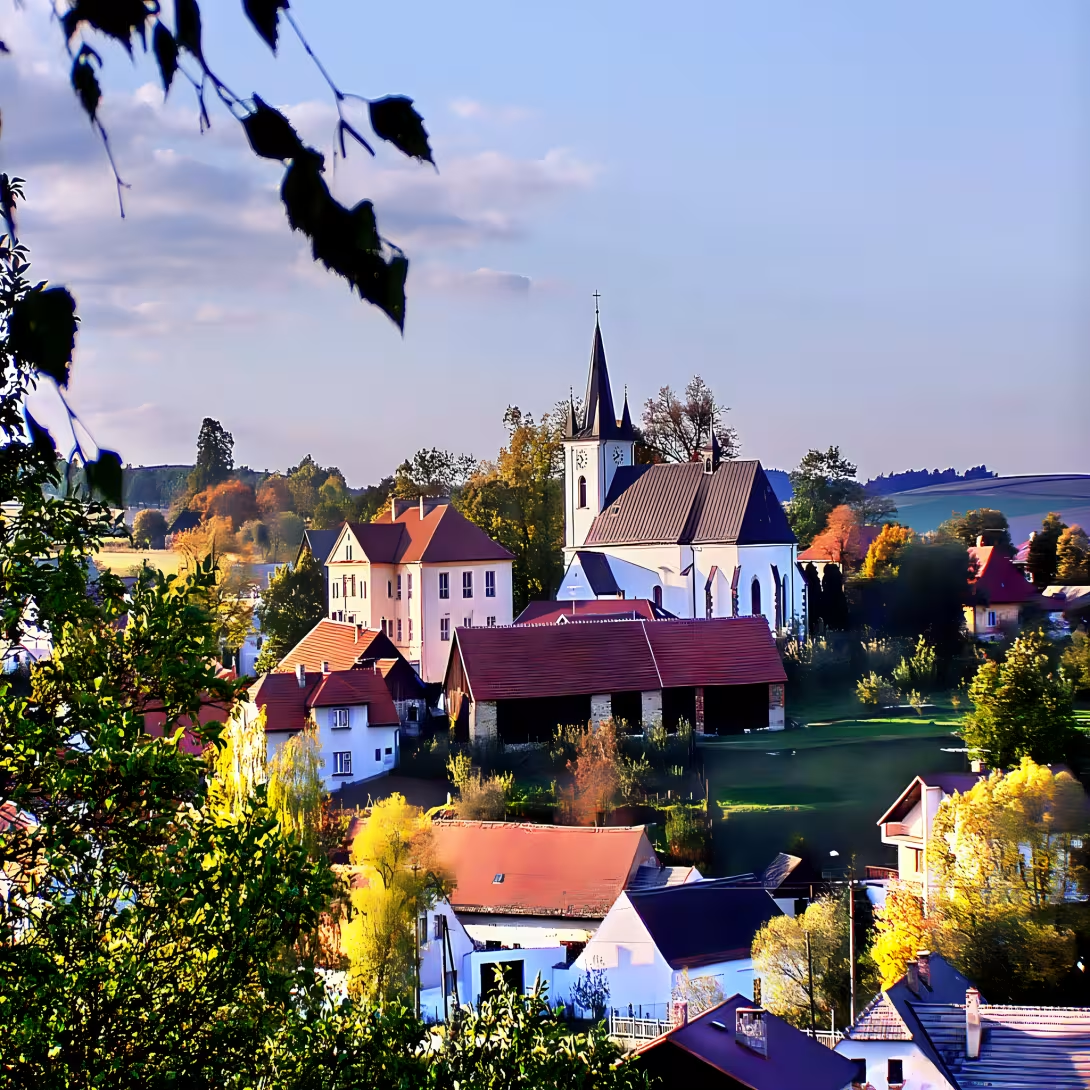
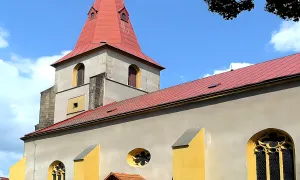
St. Jacob the Great Church in Kněžice is a proof of the rich historical tapestry of the Czech Republic. This Romanesque-Gothic church is located in the centre of the village and serves as a parish church for the Roman Catholic community and is recognized as a cultural monument. His architectural journey began at the end of the Romanesque core in the 13th century, later strengthened by Gothic renovation in the second half of the 14th century.
The origin of St. James the Great Church can be traced back to the 1940s, when the Czechs were part of the Holy Roman Empire under King Ottokar II. The church was probably sanctified around 1279, reflecting the expansion of Christianity and the developing religious landscape of the region. By 1570, due to lack of spiritual and Protestant influence, she became embarrassed, but returned to Catholic hands in the early 17th century.
At the end of the 14th century the church began architecturally as a Romanesque construction with significant Gothic modifications. In 1707 extensive renovations were carried out, including lifting ship walls to match the height of the presbytery and construction of the wooden bell tower. In this period some windows were also walled up while others were enlarged. By 1838 a stone tower was added, which further strengthens its architectural importance.
There have been various administrative changes throughout its history. In 1769 an exposition was established in Kněžice and was appointed chaplain to serve the community. The interior church evolved from having only one altar in 1665 on three to 1726, with significant supplements such as the image of the transfiguration of Christ on the presbytery wall.
Today, the Church of St. Jacob the Great remains an important part of the cultural and religious life of Kněžice. It is a symbol of resilience and continuity that has survived centuries of change while maintaining its historical and architectural integrity. Visitors are invited to explore this remarkable monument which offers a unique view of the rich past and the lasting faith of the region.
The journey church from its origin Romanesque through Gothic renovation and subsequent restoration underlines its importance as a religious place and cultural landmark. Its preservation as a protected monument ensures that future generations can appreciate its historical value and architectural beauty. Whether painted by history, architecture or spirituality, St. Jacob the Great Church in Kněžice is a destination worth visiting.
Then and now
Drag the slider to compare how the landmark may have looked when it was built with the view today.
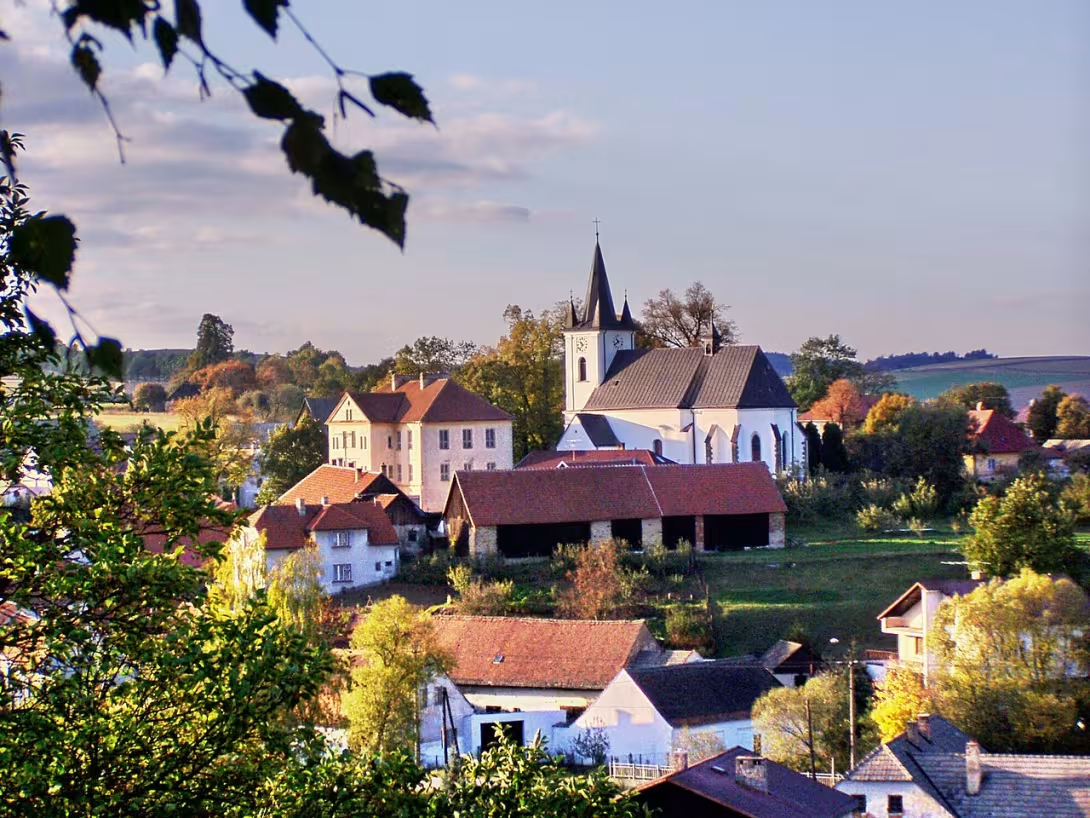

The historical appearance on the left is an AI-generated visualisation and serves as inspiration only.
Historical milestones
- 1279
- the church was probably dedicated to Saint James.
- 1570
- The parish collapsed due to a lack of spiritual and Protestant influences.
- 1707
- Significant renovations have been carried out, including lifting of ships' walls and construction of wooden belfry.
- 1838
- A stone tower was added to the church.
Architectural development
the church began as a Romanesque structure with later Gothic modifications in the 14th century. By 1707 she had undergone a major reconstruction including wall modifications and the addition of wooden belfry. In 1838, a stone tower was built.
Historical events
the church was probably built in 1340 and dedicated to Saint James around 1279. By 1570, due to lack of spiritual and Protestant influences, she became embarrassed, but returned to Catholic hands at the beginning of the 17th century.
In 1707 significant renovations were carried out, including lifting ship walls and building a wooden tower for bells. In 1838 a stone tower was added.
Points of interest
- The Church of Saint James Greater was probably sanctified around 1279, before its construction in the 1340s, suggesting an earlier religious presence or dedication ceremony which meant the spiritual importance of the site.
- Despite the fact that the church was embarrassed by 1570 due to Protestant influence and lack of clergy, it returned to Catholic hands at the beginning of the 17th century, reflecting broader religious shifts during the period of counter-reformation in Bohemia.
- In a unique architectural adaptation, the church underwent significant changes in 1707 when its ship's walls were raised to match the height of the presbytery, and some windows were walled up while others were expanded, showing evolving aesthetic preferences and structural needs over time.
- Adding the stone tower in 1838 not only strengthened the architectural persistence of the church, but also symbolized the resilience of the community and the commitment to maintaining its place of worship in the midst of changing times.
- Initially with one altar in 1665, the church expanded its religious offers by adding two other altars by 1726, including an image of Christ's transfiguration on the presbyter wall, illustrating emerging liturgical practices and artistic manifestations within the community.
Guide
This guide is narrated by a synthetic voice generated by artificial intelligence.
Show guide text
This text was created by artificial intelligence and has not been editorially reviewed. It may contain inaccuracies.
Welcome to the historical church of St. James the Great in Kněžice! As you stand on this quiet hill in the heart of the village, take a moment to absorb the quiet atmosphere around you. This novel-Gothic masterpiece is more than just an architectural jewel; It's proof of centuries of spiritual and cultural evolution.
The Church of Saint James Greater is likely to hold back its roots in 1279, when Saint James was sanctified, suggesting an earlier religious presence calling this site spiritually significant. Although the church itself was not built until 1340, this early devotion suggests a long-term connection with faith and community.
As you look at the structure, notice how its Romanesque nucleus is moving smoothly into the Gothic elements. The late Romanesque portal is particularly remarkable - proof of the craftsmanship of an era where these structures were not just a place of worship, but also symbols of a common identity. Although architects remain unknown, their work continues to speak through these permanent stones.
Throughout history, this church has witnessed a period of prosperity and neglect. By 1570, he was embarrassed by the lack of spiritual and Protestant influences - a reflection of the turbulent religious changes that occurred throughout Europe at that time. But the resistance is embedded in its walls; significant renovations were carried out until 1707, including lifting of ship walls and construction of wooden belfry. The addition of the stone tower in 1838 further strengthened its highness on this hill.
While specific historical figures associated with Kněžice may not be widely documented, their influence persists in every corner of this sacred space. The journey church in time - the period of decomposition and restoration - is a narrative that shares many such historical monuments throughout the Czech Republic.
Here is an interesting burden: despite its early consecration, construction of the church was completed much later, suggesting a complex socio-political dynamic that delayed its physical realization. This delay adds a layer of mystery to his history and invites you to wonder what stories these walls might tell if they had voices.
As your visit comes to an end, I urge you to take a moment to explore the surroundings and think about the rich tapestry of history that is built here. Thank you for joining me in examining the Church of St. Jacob the Great. May your journey Kněžice be as enlightening as inspiring. Have a good trip!
Tips for visitors
The best time to visit St. Jacob's Church in Kněžice is at the end of spring or early autumn when the weather is mild, making it ideal for exploring the hilly grounds location and enjoying panoramic views of the surrounding countryside. These seasons also offer softer lighting conditions that increase architectural details of the church. In addition, a visit on a working day can provide a calmer experience compared to weekends.
Always check the current plans to plan your trip effectively.
When visiting, it is advisable to bring comfortable walking shoes because the terrain leading to the church is slightly hilly. The camera is recommended for capturing stunning architecture and imaging; early morning or late afternoon light provides the best conditions for photography. Don't forget your hat and sunscreen if you plan on staying at noon.
For families with children, Kněžice offers a pleasant environment for exploring outside the church. The village itself has charming streets that are ideal for peaceful walks. Although there may be no specific attraction within 30 minutes of Kněžice, the surrounding area of Vysočina is known for its natural beauty and outdoor activities such as hiking or cycling, which can be pleasant family walks.
Near, within 30 minutes of driving or driving, you can visit other historical sites in Vysočina region.
Frequently asked questions
Can the monument be visited?
Religious buildings are usually open mainly during services; at other times a visit is normally arranged with the parish or the operator. We have not verified specific times.
Where is the monument?
Location: Kněžice, Kraj Vysočina. The map on this page shows the exact spot.
Why is the monument protected?
It is listed in the Central List of Cultural Monuments of the Czech Republic as a cultural monument (register no. 27766/7-2789).
Businesses nearby
Do you run a restaurant, accommodation, shop, museum, rental, wellness or other visitor service near this monument? Show yourself directly to the people heading to it — this is how they will see you in the app and on the web:
Nearby
ITEX Show interactive overview of the surroundings - restaurants, accommodation, rentals and other places within a 15 km radius.
Data: OpenStreetMap contributors, 15 km radius.
‡ Historical monuments
- Museum live and not living in nature in the vicinity of the Priest (0.6 km)
- Karel Figdlik (2.7 km)
- victims of World War I (3.6 km)
- sv Josef (3.9 km)
- sv. Juliana from Collalta (3.9 km)
- Pieta (3.9 km)
- sv Antonín Paduan (3.9 km)
- sv Jan Nepomucký (3.9 km)
Restaurant and catering
- U Milánka (10.0 km)
- U Lojzy (10.2 km)
- Kredenc (10.8 km)
- denafil (14.7 km)
- U Pezna (14.8 km)
- Cuba & Parizek (14.8 km - Masaryk Square 21)
- U has (14.8 km)
- Havel (14.8 km)
Accommodation
- Chaloupes (2.2 km)
- Guesthouse Under the Capsule (3.7 km)
- Vidlák (7.0 km)
- Mlyn hotel (9.7 km)
- Mlyn hotel 2 (9.9 km)
- Padrtovn (11.6 km)
- Hotel Vivaldi (11.8 km)
- Guesthouse Dyje (11.8 km - 41)
› Rental and sports
- Motocross and enduro track GreenRacing Vílanec (11.0 km)
- Swimming pool Luka above Jihlava (12.3 km)
- Swimming pool Luka above Jihlava (12.4 km)
- RCA Old (13.3 km - Pikharta 562)
- Sportbowling (13.8 km)
- Sale kol (14.0 km)
- KOLOFIX (14.1 km - Brtnický 2531)
- Natural swimming pool Malvina Trešt (14.1 km)
© Tourism and nature
- Malin (4.1 km)
- Klenuté studia (4.6 km)
- Zza lipkou (4.7 km)
- Krcupka (5.0 km)
- Pramen (7.5 km)
- pramen Moravian Dyje (11.1 km)
- Petrovic mill (12.0 km)
- Okrisise (13.2 km)
Accommodation nearby
Trips and activities nearby
Guided tours, tickets and activities nearby from GetYourGuide
Affiliate link: if you buy from the partner, we may receive a commission. The price for you does not change.
Search tours and activities →Themed route
Thematic cruise route: Kněžice
1. Church of St. James Vetší (Kněžice) - Church - You will begin your journey at the church of St. James Vetěší, which is an irrevocable duke and architectural center of Kněžice. This Baroque centre with proud rich history and art elements, which are designed to transfer to the city centre and tourist facilities.
2. St. Anne's Chapel - Chapel - Shortly after the church's demands, they are conditional on the chapel of St. Anne, which is placed in the main city's blisters. This chapel offers a quiet atmosphere and beautiful eateries that are an ideal place to relax or meditate.
3. Local Business - Historical Project - Let's go to the historic booths, which are of general interest, located in the centre of the Priestess. This building is an example of regional architecture and providing insight into the administrative traditional community.
4. Priest Park - Park - Be sure to visit the Priest Park, which is an ideal place for relaxation and short walks around the national church and other historical monuments. The park offers pleasant products with possible products that are given for this purpose.
This route allows you to prozumat not the main spiritual unit Kněžice, but also other historical and natural attractions that are part of one Member State.
Seasonal recommendations
Spring: Visiting St. Jacob the Great Church during spring offers a unique experience when nature wakes up around Kněžice. The landscape is decorated with flowering wild flowers and fresh greenery, creating a picturesque background to explore this historic place. Soft morning light increases the architectural details of the church, making it an ideal time for photographic enthusiasts. Visitors should be prepared for occasional showers, so wearing layers and wearing waterproof jackets is appropriate. While the crowds are usually mild, arriving at the beginning of the day can provide a calmer experience.
Summer: Summer brings living life to the church of St. Jacob the Great, with lush surroundings that create an atmosphere for visitors. Long hours of the day allow enough time to explore both the church and its gardens. However, it is also the tip of the tourist season, so expect larger crowds and plan accordingly by arriving early or visiting during the working days if possible. Comfortable walking shoes and light clothes are recommended due to warm temperatures, and water transfer helps to remain hydrated as you enjoy the sunny environment.
Autumn: Autumn at St. James's Church offers a stunning view of autumn leaves with vibrating colors increasing the historical charm of Kněžice. The colder weather is comfortable for peaceful exploration without summer heat. This is an excellent time to appreciate the architecture of the church against the background of the golden and crimson leaves. Visitors should dress in layers because temperatures can vary all day long, and wearing a light jacket may be necessary for cooler evenings.
Winter: Winter transforms St. Jacob the Great's church into a calm and charming destination. The surrounding landscape is often snowy, adding magical quality to the historic place. While the church may have shorter opening times due to winter conditions, it offers a calm atmosphere away from the summer crowds. Visitors should dress warmly in layers and wear solid shoes to navigate a potentially icy path. Wearing gloves and hat can improve comfort during this cold season, which is the perfect time for those looking for peace in the middle of winter wonderland.
Visualizations and artistic views


The visualisations are generated by artificial intelligence and serve as inspiration.
Photos from the area
Real photos taken near the monument

Zdroj a licence jsou uvedeny u každého snímku.
Tips from visitors
No tips yet. Be the first!
Log in and add your tip.
Sources and literature
Photos: Original uploader was Josef Kalčík at cs.wikipedia / CC BY-SA 3.0, rozlišení zvýšeno umělou inteligencí — Wikimedia Commons. The author and licence also appear when you hover over the image.
Faktickým podkladem tohoto textu byl článek na Wikipedii, jehož autory jsou přispěvatelé Wikipedie. Článek je dostupný pod licencí CC BY-SA 4.0.
Location on the map


Příběhy a pověsti
Legendy, pověsti a příběhy spjaté s touto památkou

Fotografie návštěvníků
Zatím žádné fotografie. Buďte první, kdo přidá fotografii z návštěvy!
Log in a přidejte svou fotografii nebo hodnoťte.
Za ověřenou návštěvu v aplikaci získáte víc bodů — poznáme podle GPS, že jste na místě.
Reviews and comments