



Kostel svatého Jakuba Většího (Košťálov) Church
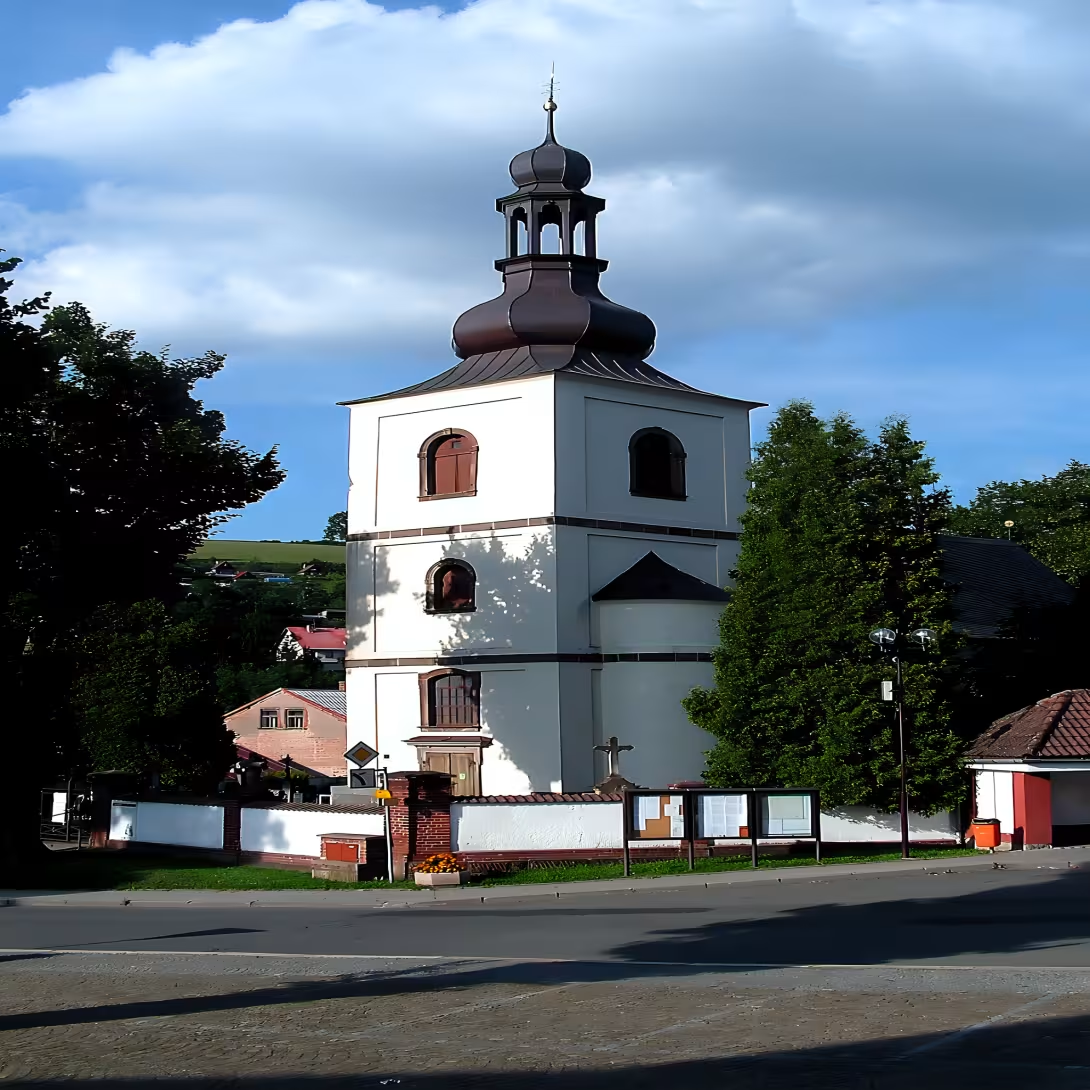
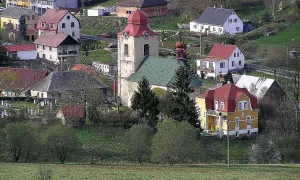
The Church of Saint James the Greater in Košťálov is a cultural monument at the heart of the village within Semily District, Liberecký kraj. Originally built in the 14th century as a Gothic church, it was transformed into Baroque style during the early 18th century. This architectural evolution reflects broader European trends and local historical developments, making it notable for its blend of styles and historical significance.
The church's origins date back to the 14th century when Bohemia was part of the Holy Roman Empire, a period marked by significant Gothic architectural development. The original structure reflected the religious and cultural priorities of that era. By the early 18th century, Baroque style had become prevalent across Europe, influencing many regional religious buildings, including this church. In 1717, it was rebuilt into its current Baroque form, aligning with contemporary architectural trends.
Architecturally, the Church of Saint James the Greater features a rectangular floor plan typical of Baroque churches, with a prominent bell tower on its western facade. This pyramidal bell tower, added in 1722, houses two bells, one dating back to 1378 and among the oldest in the Czech Republic. The church's interior includes an organ installed in 1836 by Ignác Prediger z Albrechtic and Franz Wenzel, later updated in 1898 by Josef Kobrle for modern musical requirements. Additionally, a Calvary sculpture from 1820 by local sculptor Jan Culík enhances the church's artistic elements.
Throughout its history, various administrators have overseen its spiritual affairs. From 1956 to 1991, R.D. Josef Švejda served as an administrator, followed by R.D. Václav Hušek from 1991 to 2006. Since 2006, R.D. Mgr. Evermod Jan Sládek, O.Praem has been the current administrator excurrendo.
Key events in the church's history include its transformation into Baroque style in 1717 and the installation of an organ in 1836. In 1914, during World War I, the bells were requisitioned for military purposes, a common fate for many religious artifacts at that time. Despite these historical changes, regular religious services are not currently held within its walls. However, the church hosts the Czech Organ Festival annually since 2007, drawing music enthusiasts to this historic site.
Today, the Church of Saint James the Greater stands as a testament to architectural and cultural evolution in Košťálov. While it no longer serves as an active place of worship, its historical significance and artistic features make it a worthwhile visit for those interested in exploring the rich tapestry of Czech history and architecture. Visitors can appreciate the blend of Gothic and Baroque elements, the ancient bells, and the annual organ festival that continues to breathe life into this historic monument.
Then and now
Drag the slider to compare how the landmark may have looked when it was built with the view today.
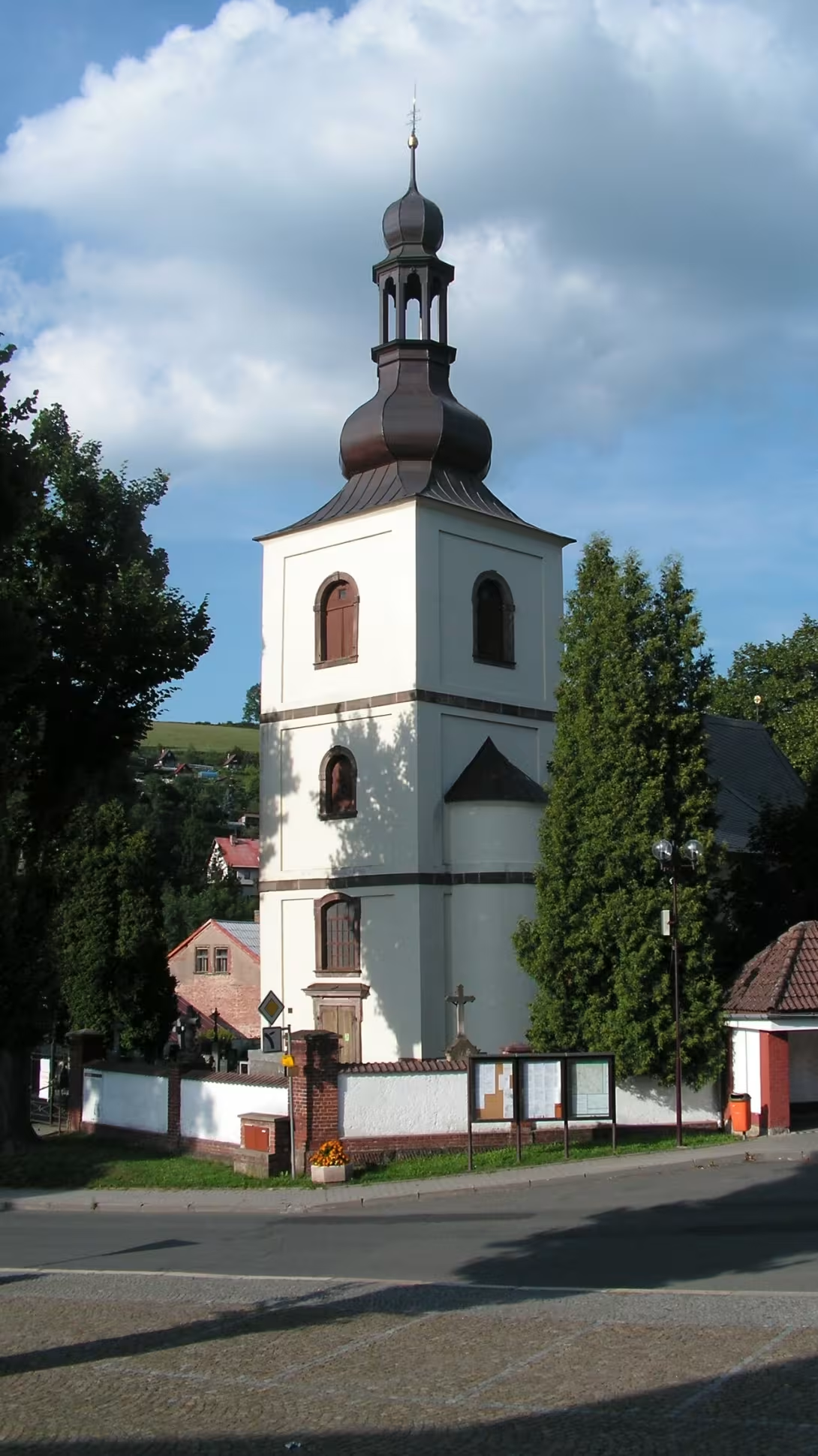

The historical appearance on the left is an AI-generated visualisation and serves as inspiration only.
Historical milestones
- 1378
- The older of two bells dates back to this year, making it one of the oldest bells in the Czech Republic.
Architectural development
Initially built as a Gothic structure, the Church of Saint James the Greater underwent significant Baroque renovations in the early 18th century. A bell tower with two bells was added to the church in 1722. The organ, originally constructed for classical and Baroque music, was later updated by Josef Kobrle in 1898 to suit modern musical requirements.
Historical events
- 1717
- The church was rebuilt in Baroque style.
- 1836
- An organ was installed in the church.
- 1914
- The bells were requisitioned for military purposes.
Points of interest
- The Church of Saint James the Greater houses one of the oldest bells in the Czech Republic, dating back to 1378, which has survived through centuries of historical changes and conflicts. - During World War I in 1914, the church's bells were requisitioned for military purposes, a fate shared by many religious artifacts during that era, highlighting their strategic value beyond spiritual use. - The Calvary sculpture inside the church was created in 1820 by Jan Culík, a local sculptor, adding a unique artistic element to the church's interior and showcasing regional craftsmanship of the early 19th century. - The organ, originally installed in 1836 by Ignác Prediger z Albrechtic and Franz Wenzel, was updated in 1898 by Josef Kobrle to meet modern musical requirements, reflecting ongoing efforts to preserve the church's cultural heritage through music. - Since 2007, the Church of Saint James the Greater has hosted the Czech Organ Festival annually, transforming it into a vibrant hub for music enthusiasts and ensuring its historical significance is celebrated in contemporary times.
Guide
This guide is narrated by a synthetic voice generated by artificial intelligence.
Show guide text
This text was created by artificial intelligence and has not been editorially reviewed. It may contain inaccuracies.
The Church of Saint James the Greater stands in the very center of Košťálov and is surrounded by a cemetery on all sides. It is a Roman Catholic subsidiary church that was built as a Gothic structure and later underwent Baroque modifications.
The Gothic church was founded in the 14th century. In 1717 it underwent Baroque reconstruction, and in 1722 a prismatic tower was added to it, placed in front of the western facade. The tower recently underwent renovation. In 1820 a group sculpture of Calvary by the local sculptor Jan Culík was placed in front of the cemetery wall.
The church is single-naved, has a rectangular floor plan, and a flat ceiling. The pulpit is decorated with paintings of the evangelists.
Two old bells hang in the tower. The older one dates from 1378 and is therefore among the oldest bells in the Czech Republic.
The organ dates from the 1830s. It was built by Ignác Prediger from Albrechtic and Franz Wenzel. It was intended for the then-current classical and Baroque music and mainly served to accompany services in smaller churches. In the second half of the 19th century, its outdated design was no longer satisfactory to most musicians. Therefore, in 1898, organ builder Josef Kobrle from Lomnice nad Popelkou was called upon to modify the instrument according to the requirements of that time.
At the beginning of the 20th century, the church was affected by requisitions, as were many other churches in the Czech lands. The largest organ pipes were confiscated for military purposes and the instrument then gradually deteriorated. Not until 1999 were the organs completely cleaned and restored to their original state.
Regular services are no longer held in the church today. In 2017 and 2018, however, the Czech Organ Festival was held here, which has been organized every year since 2007.
Frequently asked questions
Can the monument be visited?
Religious buildings are usually open mainly during services; at other times a visit is normally arranged with the parish or the operator. We have not verified specific times.
Where is the monument?
Location: Košťálov, Liberecký kraj. The map on this page shows the exact spot.
Why is the monument protected?
It is listed in the Central List of Cultural Monuments of the Czech Republic as a cultural monument (register no. 38115/6-2641).
Businesses nearby
Do you run a restaurant, accommodation, shop, museum, rental, wellness or other visitor service near this monument? Show yourself directly to the people heading to it — this is how they will see you in the app and on the web:
Accommodation nearby
Themed route
Kostel svatého Jakuba Většího (Košťálov)
The entire route focuses on historical and cultural landmarks in the vicinity of the village of Košťálov. The trail begins at the Church of Saint James the Greater, which stands in the center of the village and is known for its unique baroque architecture.
Next, we will visit the Košťálovský kostel svatého Jakuba Většího. This church is a significant cultural landmark worth visiting due to its distinctive architecture and rich history.
The next stop is the Košťálovský cemetery, where many historical gravestones and monuments can be found.
The route concludes at the Košťálovské muzeum, where you can learn about the history and culture of the region.
Seasonal recommendations
Jaro
In the spring season, St. James the Greater Church in Košťálov is surrounded by green nature. Green trees and blooming shrubs create a pleasant atmosphere. The church lighting is mild, allowing for observation of architectural details and artworks. The best time to visit is in the afternoon when it's warmest and driest. We recommend dressing warmly before larger groups of tourists arrive.
Léto
During the main summer season, St. James the Greater Church in Košťálov is visited by many tourists. It's a good idea to arrive early to avoid crowds. The church lighting is stronger, allowing for better observation of the interior. The atmosphere is relaxed and pleasant, suitable for families with children. We recommend bringing an umbrella and water to avoid inconvenience.
Podzim
In autumn, St. James the Greater Church in Košťálov is surrounded by beautiful colorful leaves on trees. The church lighting is mild, allowing for observation of architectural details and artworks. The atmosphere is calm and peaceful, ideal for those seeking tranquility and relaxation. We recommend visiting later in the afternoon to avoid crowds and enjoy the church in peace.
Zima
In winter, St. James the Greater Church in Košťálov is covered in white snow. The church lighting is mild, allowing for observation of architectural details and artworks. The atmosphere is calm and peaceful, ideal for those seeking tranquility and relaxation. Don't forget to bring warm clothing to stay comfortable in the cold.
Visualizations and artistic views


The visualisations are generated by artificial intelligence and serve as inspiration.
Photos from the area
Real photos taken near the monument


Zdroj a licence jsou uvedeny u každého snímku.
Tips from visitors
No tips yet. Be the first!
Log in and add your tip.
Sources and literature
Photos: Jiří Erben / CC BY 3.0, rozlišení zvýšeno umělou inteligencí — Wikimedia Commons. The author and licence also appear when you hover over the image.
Faktickým podkladem tohoto textu byl článek na Wikipedii, jehož autory jsou přispěvatelé Wikipedie. Článek je dostupný pod licencí CC BY-SA 4.0.
Location on the map

Příběhy a pověsti
Legendy, pověsti a příběhy spjaté s touto památkou
Fotografie návštěvníků
Zatím žádné fotografie. Buďte první, kdo přidá fotografii z návštěvy!
Log in a přidejte svou fotografii nebo hodnoťte.
Za ověřenou návštěvu v aplikaci získáte víc bodů — poznáme podle GPS, že jste na místě.
Reviews and comments