



Kostel svatého Jakuba Většího (Lahovice) Church
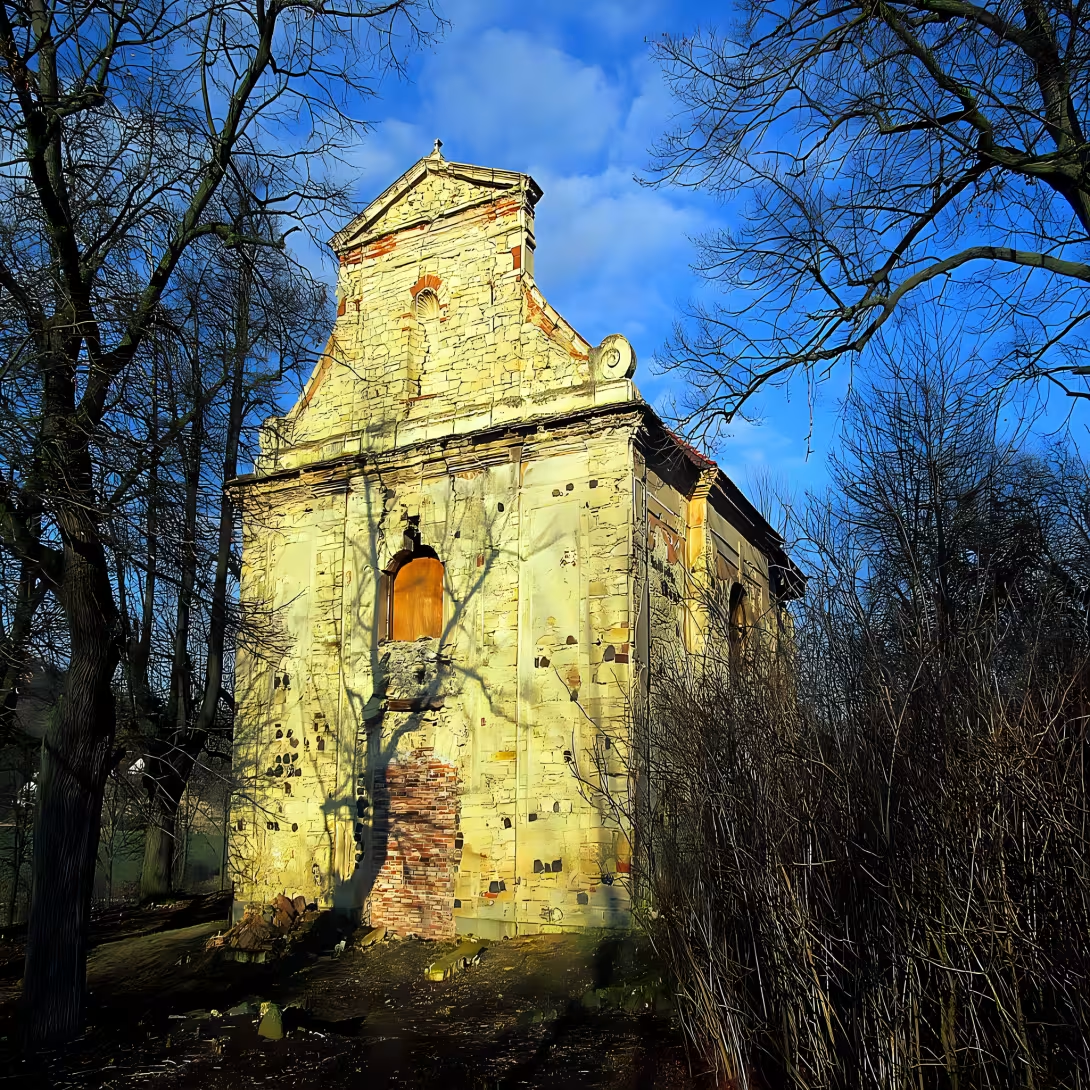
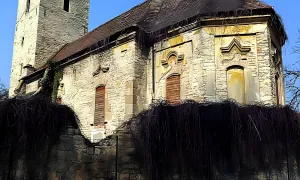
The church of St. Jacob Vetsii is a Roman Catholic filial temple dating back to the second half of the seventeenth century. Its location is isolated from the settlement of the settlement and its character of the former pilgrimage place differs from typical village churches. It is currently in a devastated state and registered as a cultural monument of the Czech Republic; It is also included in the list of endangered monuments.
The construction dates back to 1670 and represents a common baroque solution of this time. During the eighteenth century the temple passed through reconstruction - in 1751 it was first rebuilt. Due to its isolated location, it served as an attractive destination for external visitors, leading to the role of pilgrimage.
The cause of his gradual degradation became a devastating attack in 1956. On the fifth of July of that year seven young men - masons working on the construction of cows in nearby All Men - entered the window. With the axe, they chopped up all the baroque mobiliaries in the interior. The perpetrators were convicted and were obliged to pay back the debt for 16 years; However, only a broken window has been repaired. After this incident, the church was never served mass and the temple gradually fell.
In the 1980s, Ivan Votava from Chomutov attempted corrective action, which for the period from 1980 to 1982 rented a church with the intention of starting repairs and installing an organ in it. But these plans failed at the constant vandalism and theft that forced him to give up his fight. At the end of the 1980s, the church was officially designed for demolition because it was intended to grow up in its place with water. This unfortunate fate was saved by November 1989 and subsequent social changes.
In recent years, efforts have been made to stabilise the construction at least partially. Since 2011, a homeless Pavel has been living here in the nearby chapel. In 2014 there was a clean-up of the raid around the church and with the support of the members of the Mediterranean association the roof of the chapel was repaired. Some reconstruction work was started when the fallen part of the roof, including the sandbox, was removed, thus at least partly slowing down further degradation of the building.
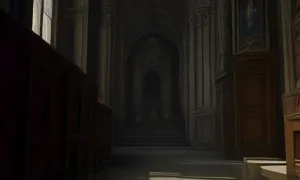
Architecturally, it's a simple one-ship rectangular plan. The presbytery is closed and supplemented by a rectangular side sacristy. The facade is a членeno pilaster and portal, closed with a shield with nothing. The outside walls are newly членené with lizene frames. The windows are closed with a compressed arc. The ship has a flat ceiling, while the presbytery is glazed with valenas on the pilasters and also the sacristy has a flat ceiling. The crust rests on two pillars. Next to the church stands a small chapel - a simple baroque building with a shield with nothing.
The original rich Baroque facility existed only fragmentally at the end of the 1980s. The construction persists in its degraded state, remaining a testament to the fate of many Czech ecclesiastical monuments of later times.
Then and now
Drag the slider to compare how the landmark may have looked when it was built with the view today.
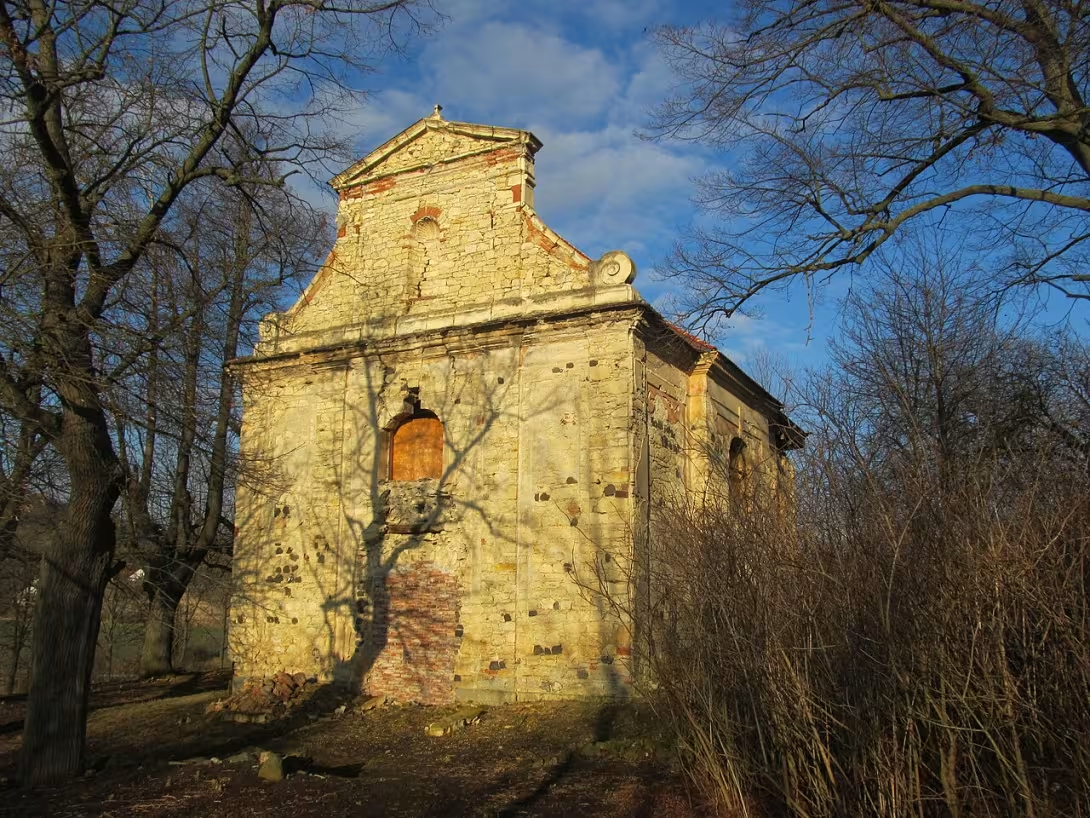

The historical appearance on the left is an AI-generated visualisation and serves as inspiration only.
Historical milestones
- 1670
- The creation of a Baroque church
- 1751
- Rebuilding the temple
- 1956
- Vandalism and the destruction of baroque mobility
- 1980-1982
- Attempts to repair and install organ
- 1989
- Saving the church from demolition thanks to social changes
- 2014
- Cleaning of the raid and repair of the chapel roof
Architectural development
The church was built in 1670 and rebuilt in 1751. The architecture includes a one-ship rectangular building with a triangular presbytery, Lizene walls and a valenously glazed presbytery. The original Baroque facility was in ruins in the late '80s.
Historical events
- 1956
- Seven young men entered the church through the window and split up the Baroque mobility.
- 1980
- Ivan Votava of Chomutov rented the church with plans to repair it and build the organ.
- 1989
- Thanks to the political coup, the church was saved from demolition.
Points of interest
- It differs from typical village churches by its isolated location and character of a former pilgrimage place. - In July 1956, seven young men destroyed all the baroque mobility in the interior. After this incident, no Mass was served in the church. - At the end of the 1980s, the church was designed for demolition due to the planned construction of a water tower. He was rescued by social changes in November 1989. Between 1980 and 1982, Ivan Votava tried to repair the church and install an organ in it. Plans have failed in theft and vandalism. Since 2011, there's been a homeless Pavel in the neighboring chapel.
Guide
This guide is narrated by a synthetic voice generated by artificial intelligence.
Show guide text
This text was created by artificial intelligence and has not been editorially reviewed. It may contain inaccuracies.
The Church of Saint James the Greater near Lahovice in the Louny region stands in isolation south of the village. Today it is a subsidiary church, but in the past processions were directed here because it was a pilgrimage site. It was built in 1670 and underwent renovation in 1751.
It is a single-nave rectangular structure with a presbytery enclosed on three sides and a rectangular sacristy on the side. The façade is divided by pilasters and a portal, and at the top it is closed by a pediment with a niche. The walls are decorated with pilaster frames and the windows are topped with flattened arches. The nave and sacristy have flat ceilings, while the presbytery is vaulted with a barrel vault on pilasters. The gallery rests on two pillars. Right next to the church stands a small Baroque chapel, also topped with a pediment with a niche.
Since the Second World War, the church has been deteriorating. A turning point came on the fifth of July 1956. Seven young men, who worked as bricklayers on the construction of a cowshed in Všechlapy, broke into it through a window. They split all the Baroque furnishings with axes. The court sentenced them and they paid damages for another sixteen years. However, only the broken window was repaired and mass was never held here again.
Between 1980 and 1982, Ivan Votava from Chomutov rented the church. He wanted to repair it and install an organ in it. But due to constant vandalism and thefts, he gave up. The original Baroque furnishings were in ruins by the end of the eighties.
By the end of the eighties, the church was designated for demolition. A water tank was supposed to be built on its site. It avoided being torn down only thanks to the revolution in November 1989.
Since 2011, a homeless man named Pavel has been living in the neighboring chapel. In 2014, he cleared the encroaching vegetation around the church and, with the help of members of the Středohoří association, repaired the chapel roof. Some rescue work on the church also began. The collapsed part of the roof with the sanctus bell was removed. The presbytery is being held by a concrete ring and covered with a temporary flat roof.
The church continues to be listed as a cultural monument of the Czech Republic and also appears on the list of endangered monuments.
Tips for visitors
For the best experience of visiting the Baroque church we recommend to arrive during bright days, when sunlight will highlight the architecture of the building beautifully. Due to its isolated location south of the village, it is ideal to choose a quiet time when you can enjoy in the room the history of this former pilgrimage place.
You can transport by car or use public transport to the memory. Please check in advance with Internet search engines or with the carrier the current parking possibilities near the best transport links to Lahovice.
Since the church is located in a remote area, remember to take with you enough drinking water and shoes suitable for walking in nature. For families with children it may be interesting to observe the historical nature of the surroundings, while it is advisable to have prepared little delicacies to maintain a good mood during walks.
If you are interested in photography, you can get the best views from the south side, from where the church is well visible. The most suitable light for capturing baroque details is usually in the morning or afternoon.
In the vicinity of the monument there are no other targets available to visit.
Frequently asked questions
Is Kostel svatého Jakuba Většího (Lahovice) open to the public?
The church is accessible, but due to its condition it is recommended to visit with caution. The interior details and architectural elements are particularly interesting.
How do I get to the place by car / public transport?
The best way is to use a passenger car because public transport does not come directly to Lahovice. The nearest public transport stop is in the neighboring city.
How much is the entrance fee and is it paid on the spot?
No admission fee, no church visit. However, contribute to the maintenance box if you want it.
Is the tour suitable for children and seniors?
The tour is suitable for everyone, but due to the condition of the building, caution is recommended. The seniors should be prepared to walk on an uneven surface.
How long does the tour take?
The tour of the church takes about 30 minutes if you focus on external and external details and architecture.
What are the opening times and booking is required?
The church is not closed, so you can visit at any time. Reservation is not necessary.
What's interesting in the immediate vicinity?
The surrounding area is a picturesque landscape park and historic paths that are suitable for short walks. Visit Hlumec nad Cidlinou for other historical experiences.
For kids
Imagine going back 356 years to the baroque world where everything was full of secrets and beauty. In the small village of Lahovice stood the stunning church of St. James the Greater, as the witch palace of miracles. It was a baroque jewel that stood isolated over an ordinary village and was considered a pilgrimage place where people gathered with open hearts and prayers.
Businesses nearby
Do you run a restaurant, accommodation, shop, museum, rental, wellness or other visitor service near this monument? Show yourself directly to the people heading to it — this is how they will see you in the app and on the web:
Nearby
➜ Zobrazit interaktivní přehled okolí – restaurace, ubytování, půjčovny a další místa v okruhu 15 km.
Data: OpenStreetMap contributors, okruh 15 km.
🏰 Historické památky
- Oltářík (6.3 km)
- Mirošovický zámek (7.2 km)
- Doly (7.3 km)
- Kostel sv. Vavřince (7.3 km)
- Skalka (9.0 km)
- Ostrý (10.9 km)
- Husitská bašta (11.5 km – Komenského 115)
- svaté Alžběty (11.6 km)
🍽️ Restaurace a stravování
- Ponorka (7.1 km)
- Penzion Kocourov (10.0 km)
- U Radnice (10.1 km)
- U Sumbala (10.5 km – Komenského náměstí 25)
- Na Václaváku (10.7 km – Třebízského 63)
- U Černých (11.1 km)
- U Jíchů (11.2 km)
- Merlot (11.8 km – Žatecká 186)
🏨 Ubytování
- Sklenik (7.5 km)
- Sklenik (7.6 km)
- Laura (11.4 km)
- Alena (11.6 km)
- U Radnice (11.7 km)
- Caramell (11.7 km)
- U Daliborky (11.7 km)
- Apartmány Rossa (11.7 km – Pražská 78)
🚲 Půjčovny a sport
- Zelená hala (11.1 km – Tyršova 374)
- Volleyball (11.2 km)
- Sport center (hockeyball, florball, football) (11.2 km)
- Kola Fiala (11.2 km – Říční 1120)
- Atletický stadion Bílina (11.4 km)
- Tenisové kurty Bílina (11.4 km – Kyselská 410)
- Fotbalový stadion Bílina (11.5 km)
- Jiskra fitness (11.7 km – Sídliště Za Chlumem 821)
🥾 Turistika a příroda
- Lipská hora (7.6 km)
- Bořeň (10.0 km)
- Košťál (10.2 km)
- Košťál (10.2 km)
- Holý vrch (10.4 km)
- Košťálov (rozc.) (10.4 km)
- Boreč (11.7 km)
- Milešovka (12.3 km)
Accommodation nearby
Trips and activities nearby
Guided tours, tickets and activities nearby from GetYourGuide
Affiliate link: if you buy from the partner, we may receive a commission. The price for you does not change.
Search tours and activities →Themed route
1. Church of St. Jacob the Greater, sacral monument. The tour of the interior allows you to admire historical elements and religious architecture. 2. Church tower, sightseeing point. From a height it offers an interesting view of the whole village and surrounding landscape. 3. Tanks by the church, immediate area. This place serves to observe the details of the building and offers peace of rest.
Seasonal recommendations
The spring season offers a fine, scattered light that beautifully highlights the texture of the walls even in their current, damaged condition. Nature begins to bloom around the monument, giving new life to the place. I recommend arriving in the morning when the air is freshest. Due to the variable weather, prepare for layered clothing and firmer shoes to protect you from any mud on the road.
In the summer months the sun is high and the light is very intense, which can create strong shadows. In the main summer season it is best to arrive very early in the morning to avoid the greatest heat and potential visitors. Don't forget enough fluids and sun protection. Due to the emergency condition of the building, be careful when searching and follow the specified routes.
Autumn moons bring a melancholy atmosphere to the surroundings, which perfectly connects to the infested state of the church. Morning fog and golden leaf colours create ideal conditions for photography. It is advisable to visit the memory in the afternoon when the light is softer. Prepare a waterproof jacket and shoes with good grip, because wet leaves can be slippery.
Winter time is characterized by silence and grit, where bare branches of trees and grey skies underline the seriousness and neglect of the building. In advent time or during freezing days it is necessary to pack thoroughly in warm layers. Since the day is short, plan a visit around noon to use the most light. Be very careful on the frost and snow near the monument.
Visualizations and artistic views


The visualisations are generated by artificial intelligence and serve as inspiration.
Photos from the area
Real photos taken near the monument


Zdroj a licence jsou uvedeny u každého snímku.
Tips from visitors
No tips yet. Be the first!
Log in and add your tip.
Sources and literature
Photos: Gortyna / CC BY-SA 4.0, rozlišení zvýšeno umělou inteligencí — Wikimedia Commons. The author and licence also appear when you hover over the image.
Faktickým podkladem tohoto textu byl článek na Wikipedii, jehož autory jsou přispěvatelé Wikipedie. Článek je dostupný pod licencí CC BY-SA 4.0.
Location on the map
Příběhy a pověsti
Legendy, pověsti a příběhy spjaté s touto památkou
Fotografie návštěvníků
Zatím žádné fotografie. Buďte první, kdo přidá fotografii z návštěvy!
Log in a přidejte svou fotografii nebo hodnoťte.
Za ověřenou návštěvu v aplikaci získáte víc bodů — poznáme podle GPS, že jste na místě.
Reviews and comments