



Kostel svatého Jakuba Většího (Louchov) Church
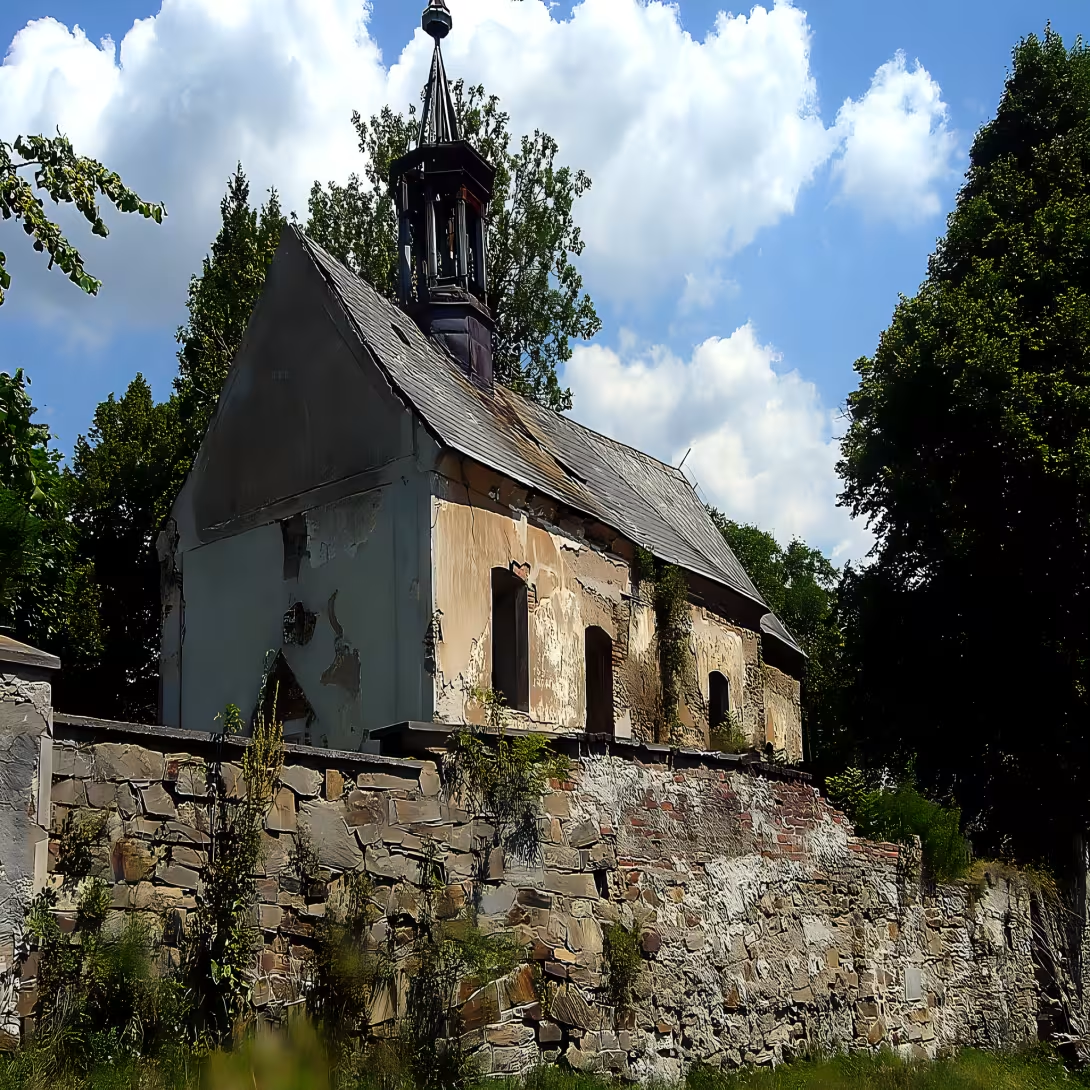
The Church of St. James the Greater in Louchov is a Roman Catholic church located in the village of Louchov, part of the Domašín municipality in the Ústí nad Labem Region. Dating back to the 13th century, it is one of the oldest preserved churches in the Ore Mountains. The church boasts a rich history, unique architectural features, and significant events that have shaped its development over the centuries.
Founded in the second half of the 13th century, likely in the late 1360s, King Přemysl Otakar II donated the Louchov estate and the village of Vernéřov to the Saxon Cistercian monastery in Grünhain. The church remained in the monastery's possession until the early 16th century, when it was pawned to the Šumburkové family. In 1446, the Šumburkové sold Louchov and half of the town of Přísečnice to the Hasištejnskí z Lobkovic family. A Gothic renovation took place, adding a massive wall and defensive features, making it one of the fortified churches. The interior was renovated in the Baroque style in 1720.
The church is a single-nave building with an oblong floor plan, featuring a slightly lopsided presbytery on the east side. The presbytery is connected to a vaulted sacristy on the north side. The interior measures 12.3 meters by 6.3 meters, with a trussed roof. The western part of the nave and the north wall feature remnants of two wooden galleries. The presbytery has a vaulted ceiling and a Gothic pointed window on the east wall. The church is accessible through a portal in the south wall with the remains of a vestibule.
The church has undergone significant changes in ownership and administration over the centuries. It was owned by the Saxon Cistercian monastery in Grünhain, the Šumburkové family, and the Hasištejnskí z Lobkovic family. The church contains a tomb (kenotaph) of the founder of the Lobkovic family, Mikuláš I. Chudý z Lobkovic, and Bohuslav Hasištejnský z Lobkovic. Originally buried in the Church of St. Nicholas in Přísečnice, which was demolished and submerged in the Přísečnice reservoir.
The church has been the site of several significant events. The first written record dates back to 1352, when it was mentioned as a poor and exempt from papal tithe. The Catholic parish in Louchov ceased to exist in 1623 due to the spread of Protestantism in the Ore Mountains. A new Catholic locum tenens was established in Louchov in 1794 as part of the ecclesiastical reforms of Joseph II. The parish was re-established in 1853, and the church was renovated.
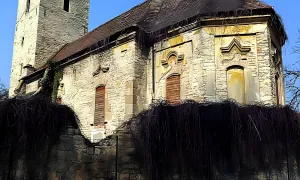
Today, the church is in a poor state, with a collapsed roof, damaged plaster, and cracks in the walls. The current owner is Aleš Olbram Hoffmann. Despite its current state, the Church of St. James the Greater in Louchov remains an important historical monument and a significant cultural site in the Ore Mountains. Its rich history, unique architecture, and the events that have shaped its development make it a fascinating destination for those interested in history and architecture. Visitors can explore the church and learn about its significance in the region's history.
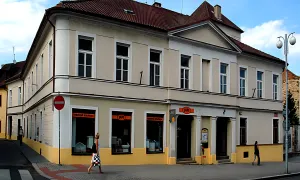
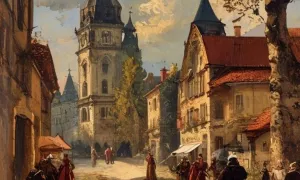
Then and now
Drag the slider to compare how the landmark may have looked when it was built with the view today.
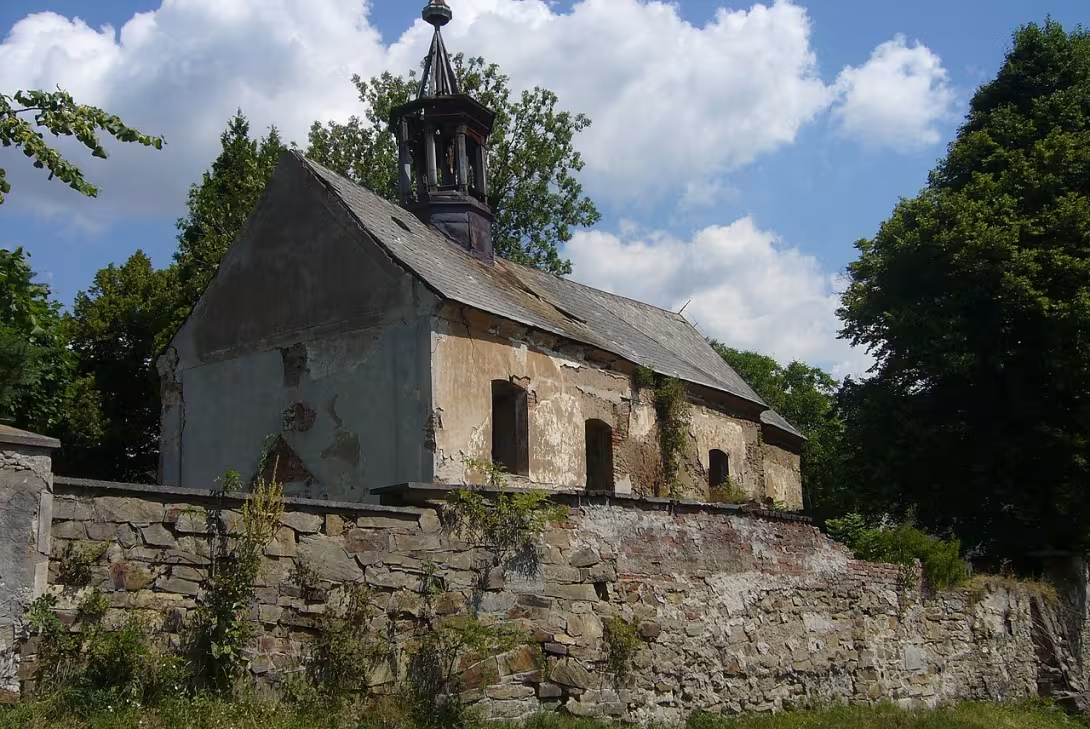
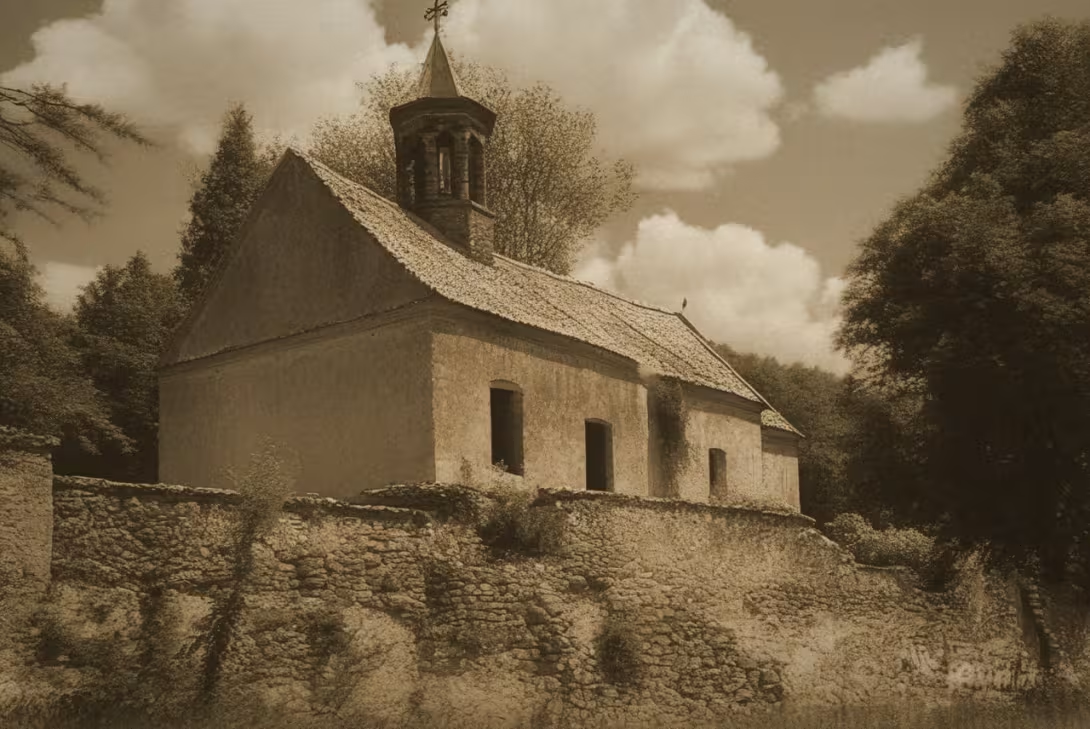
The historical appearance on the left is an AI-generated visualisation and serves as inspiration only.
Historical milestones
- 1352
- The church is first mentioned in written records as a poor and exempt from papal tithe.
- 1623
- The Catholic parish in Louchov ceased to exist due to the spread of Protestantism in the Ore Mountains.
- 1794
- A new Catholic locum tenens was established in Louchov as part of the ecclesiastical reforms of Joseph II.
- 1853
- The parish was re-established, and the church was renovated.
Architectural development
The church underwent a Gothic renovation, during which a massive wall and active defense features were added, making it one of the fortified churches. The interior was renovated in the Baroque style in 1720.
Historical events
Founded in the second half of the 13th century, probably in the late 1360s, when King Přemysl Otakar II donated the Louchov estate and the village of Vernéřov to the Saxon Cistercian monastery in Grünhain.
The church was owned by the monastery until the early 16th century, when it was pawned to the Šumburkové family.
In 1446, the Šumburkové sold Louchov and half of the town of Přísečnice to the Hasištejnskí z Lobkovic family.
In 1490, Bohuslav Hasištejnský z Lobkovic inherited Louchov as part of the family's property division.
Owners
Saxon Cistercian monastery in Grünhain, Šumburkové, Hasištejnskí z Lobkovic, Bohuslav Hasištejnský z Lobkovic
Points of interest
– The Church of St. James the Greater in Louchov was originally a fortified church, thanks to a Gothic renovation that added a massive wall and defensive features, making it one of the fortified churches in the region.
– The church contains a tomb (kenotaph) of the founder of the Lobkovic family, Mikuláš I. Chudý z Lobkovic, and Bohuslav Hasištejnský z Lobkovic, who was originally buried in the Church of St. Nicholas in Přísečnice, which was demolished and submerged in the Přísečnice reservoir.
– The parish in Louchov ceased to exist in 1623 due to the spread of Protestantism in the Ore Mountains, but a new Catholic locum tenens was established in Louchov in 1794 as part of the ecclesiastical reforms of Joseph II.
– The church was renovated in the Baroque style in 1720, which changed the interior of the church significantly, and it has undergone many other changes in ownership and administration over the centuries.
– The church has a unique architectural feature – a slightly lopsided presbytery on the east side, which is connected to a vaulted sacristy on the north side.
Guide
This guide is narrated by a synthetic voice generated by artificial intelligence.
Show guide text
This text was created by artificial intelligence and has not been editorially reviewed. It may contain inaccuracies.
The Church of Saint James the Greater, also called James the Elder, is one of the oldest preserved churches in the Ore Mountains. It stands in Louchov, a part of the municipality of Domašín in the Chomutov district, in the churchyard area at a crossroads in the southern part of the village. It is protected as a cultural monument.
The church was built in the second half of the thirteenth century, which was confirmed by an architectural historical survey. It was probably in the late sixties when King Přemysl Otakar II. donated the Louchov manor together with the village of Vernéřov to the Saxon Cistercian monastery in Grünhain. The church stood near an important trade route that apparently ran through here until the middle of the fourteenth century.
The monastery put the church and the village in pawn to the lords of Šumburk already in the first half of the fourteenth century. In 1446 they sold Louchov together with half of the city of Přísečnice to the Hasištejnský family from Lobkovic. When the family property was divided in 1490, it was acquired by Bohuslav Hasištejnský from Lobkovic.
In the church there is a cenotaph, that is a symbolic grave, of the founder of the Lobkovic family Mikuláš Chudý from Lobkovic and also of Bohuslav Hasištejnský from Lobkovic. Both men were originally buried in the Church of Saint Nicholas in Přísečnice, only five kilometers away. It was very similar to the Louchov church, but today it is demolished and its location lies at the bottom of the Přísečnice water reservoir.
The first written mention of the parish church dates from 1352. It was already described as very poor and was exempt from papal tithes. With the spread of Protestantism in the Ore Mountains, the parish ceased to exist in 1623. During the church reforms of Joseph II., a new Catholic curacy was established here in 1794 and the parish was restored in 1853.
The massive wall probably arose during the late Gothic reconstruction. Together with preserved elements of active defense, the church therefore belongs among fortified churches. During the Baroque period the nave was extended and in 1720 the interiors also took on a Baroque appearance.
It is a single-nave structure on a rectangular ground plan. To the east it is closed by a slightly trapezoidal presbytery with a barrel vault and a Gothic pointed window. From the north a sacristy adjoins it, also vaulted with a barrel vault. The nave with a wooden ceiling measures inside 12.3 by 6.3 meters. Remains of two wooden galleries have been preserved in it. The entrance is formed by a portal in the southern wall, near which are the remains of an antechamber.
The church furnishings have not been preserved. It included a wooden sculpture of the Holy Grave by Ernst Hollitzer. After years of neglect, the church is in poor condition. In 2011 the roof collapsed, the plaster is damaged and cracks are appearing in the masonry. In 2020 the church was owned by Aleš Olbram Hoffmann.
Tips for visitors
The best time to visit the Church of St. James the Greater in Louchov is during the summer months when the weather is warm and sunny, making it ideal for outdoor activities in the surrounding Ore Mountains.
It's a good idea to bring comfortable walking shoes, as you'll want to explore the church and its surroundings. Don't forget to bring your camera to capture the beautiful architecture and stunning views of the Ore Mountains.
The best spots for photography are around the church's exterior and interior, particularly during the golden hour when the light is soft and warm. Be sure to capture the intricate details of the church's architecture and the surrounding landscape.
If you're looking for things to see nearby, head to the village of Domašín, which is just a short walk from the church. You can also explore the Ore Mountains, which offer plenty of opportunities for hiking and outdoor activities.
Frequently asked questions
Can the monument be visited?
Religious buildings are usually open mainly during services; at other times a visit is normally arranged with the parish or the operator. We have not verified specific times. According to the heritage register the structure is in poor condition – do not enter it and take care nearby.
Where is the monument?
Location: Louchov, Ústecký kraj. The map on this page shows the exact spot.
Why is the monument protected?
It is listed in the Central List of Cultural Monuments of the Czech Republic as a cultural monument (register no. 33762/5-493).
Businesses nearby
Do you run a restaurant, accommodation, shop, museum, rental, wellness or other visitor service near this monument? Show yourself directly to the people heading to it — this is how they will see you in the app and on the web:
Nearby
The church is situated in the Ore Mountains, near the village of Domašín.
Accommodation nearby
Themed route
Louchovská trasa
1. Kostel svatého Jakuba Většího (Louchov) - hlavní cíle této trasy, je dominantou obce Louchov. Kostel je významnou sakrální stavbou v regionu a jeho architektura je pozoruhodná. Zajímavá je jeho historie a umělecká výzdoba.
2. Domašín - nedaleké vesnici, která leží v těsné blízkosti kostela. Můžete se zde projít a prohlédnout si místní architekturu a atmosféru.
3. Ore Mountains - hřeben, na kterém se nachází obec Louchov. Hřeben nabízí krásné výhledy na okolní krajinu a je ideálním místem pro pěší túry a cyklistiku.
Seasonal recommendations
Jaro
In the spring season, St. James the Greater Church is surrounded by blooming trees and flowers, creating a pleasant atmosphere. The church lighting is natural, thanks to sunlight. If you wish to visit the church, we recommend coming early in the morning or late afternoon during the spring season to avoid crowds from excursions and tours. Don't forget to wear warm clothing, as temperatures can still be chilly.
Summer
In the main summer season, St. James the Greater Church is visited by many tourists and visitors. The church lighting is natural, thanks to sunlight. If you wish to visit the church, we recommend coming early in the morning or during the first half of the day to avoid crowds. Don't forget to wear comfortable shoes and warm clothing, as you will likely be walking on pavement and exposed to the sun.
Autumn
In the autumn season, St. James the Greater Church is surrounded by beautiful colorful leaves, creating a pleasant atmosphere. The church lighting is natural, thanks to sunlight. If you wish to visit the church, we recommend coming early in the morning or late afternoon during the autumn season to avoid crowds from excursions and tours. Don't forget to wear warm clothing, as temperatures can be cold.
Winter
In winter, St. James the Greater Church is enveloped in mist and snow, creating a cozy atmosphere. The church lighting is artificial, thanks to outdoor lights. If you wish to visit the church, we recommend coming early in the morning or late afternoon during the winter season to avoid crowds from excursions and tours.
Visualizations and artistic views


The visualisations are generated by artificial intelligence and serve as inspiration.
Photos from the area
Real photos taken near the monument


Zdroj a licence jsou uvedeny u každého snímku.
Tips from visitors
No tips yet. Be the first!
Log in and add your tip.
Sources and literature
Photos: Salim2 / CC BY-SA 3.0, rozlišení zvýšeno umělou inteligencí — Wikimedia Commons. The author and licence also appear when you hover over the image.
Faktickým podkladem tohoto textu byl článek na Wikipedii, jehož autory jsou přispěvatelé Wikipedie. Článek je dostupný pod licencí CC BY-SA 4.0.
Location on the map
Příběhy a pověsti
Legendy, pověsti a příběhy spjaté s touto památkou
Fotografie návštěvníků
Zatím žádné fotografie. Buďte první, kdo přidá fotografii z návštěvy!
Log in a přidejte svou fotografii nebo hodnoťte.
Za ověřenou návštěvu v aplikaci získáte víc bodů — poznáme podle GPS, že jste na místě.
Reviews and comments