



Kostel svatého Jakuba Většího (Rovná) Church
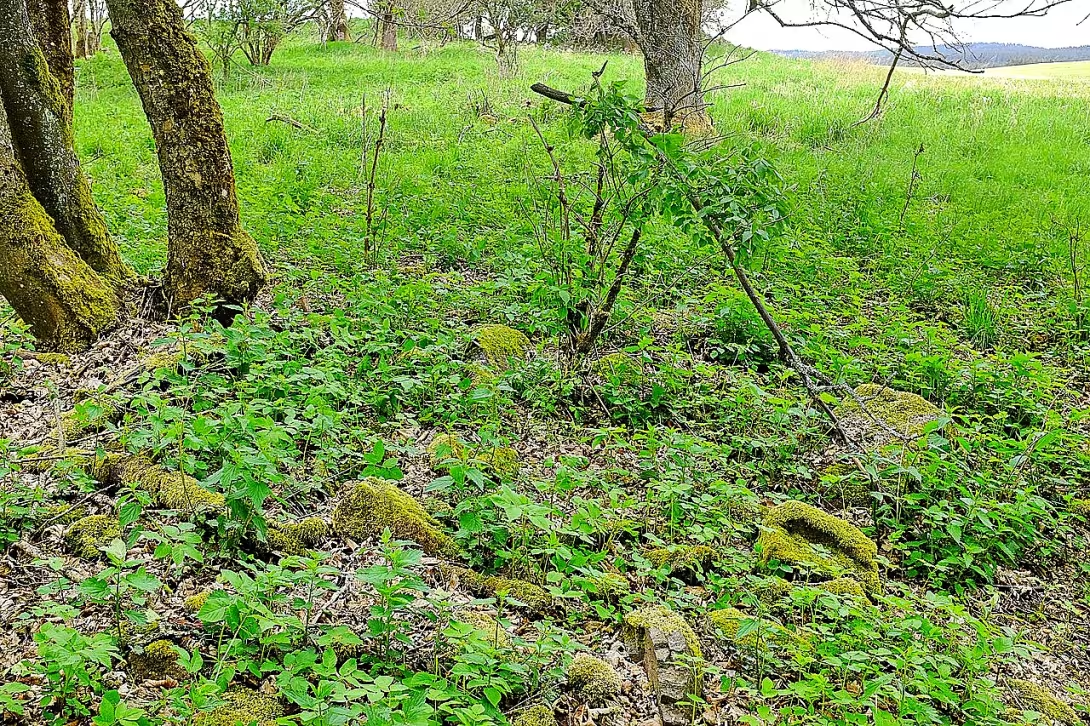
Objekt se nedochoval — na místě dnes nestojí. Následující text popisuje jeho historii, ne současnou návštěvu.
The Church of St. James the Greater in Rovná is a former parish church that stood on the northwestern edge of the completely destroyed village of Vranov. Built in the early 13th century, the church was initially a Romanesque structure that was later rebuilt in the Baroque style. The first written record dates back to 1236. Its unique Baroque main altar with a Calvary scene and rich history spanning over seven centuries make it notable.
Originally a filial church to the parish church of St. Wenceslaus in Loket, the church was donated to the Order of the Cross with the Red Star in Prague by King Wenceslaus I in 1246. The church underwent renovations in the 18th century and smaller repairs in the 19th century. After World War II, the church was abandoned and eventually demolished in 1957.
The church's original Romanesque building was rebuilt in the Baroque style, featuring a single nave with a flat roof and a polygonal presbytery. A wooden bell tower and sacristy with a high-pitched roof were also part of the structure. The interior boasted a Baroque main altar, side altars, and a pulpit.
The church was owned by the Order of the Cross with the Red Star in Prague from 1246 until it was rebuilt in the 18th century. The parish was re-established in 1732 after being abandoned during the Thirty Years' War. The church was eventually demolished in 1957.
The church's unique Baroque main altar with a Calvary scene was a distinctive feature. The church was built on the site of a former Romanesque church. After World War II, the church was abandoned and eventually demolished in 1957.
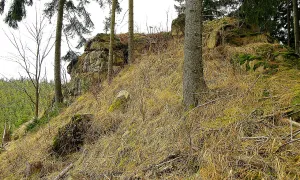
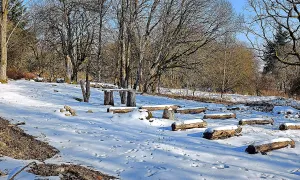
Today, the site of the church serves as a reminder of the village of Vranov, which was completely destroyed after World War II. The surrounding landscape is now part of the Prameny Military Training Area. The church's history and architecture make it a significant cultural and historical landmark, worth visiting for those interested in the history of Bohemia and the evolution of Baroque architecture.
Then and now
Drag the slider to compare how the landmark may have looked when it was built with the view today.
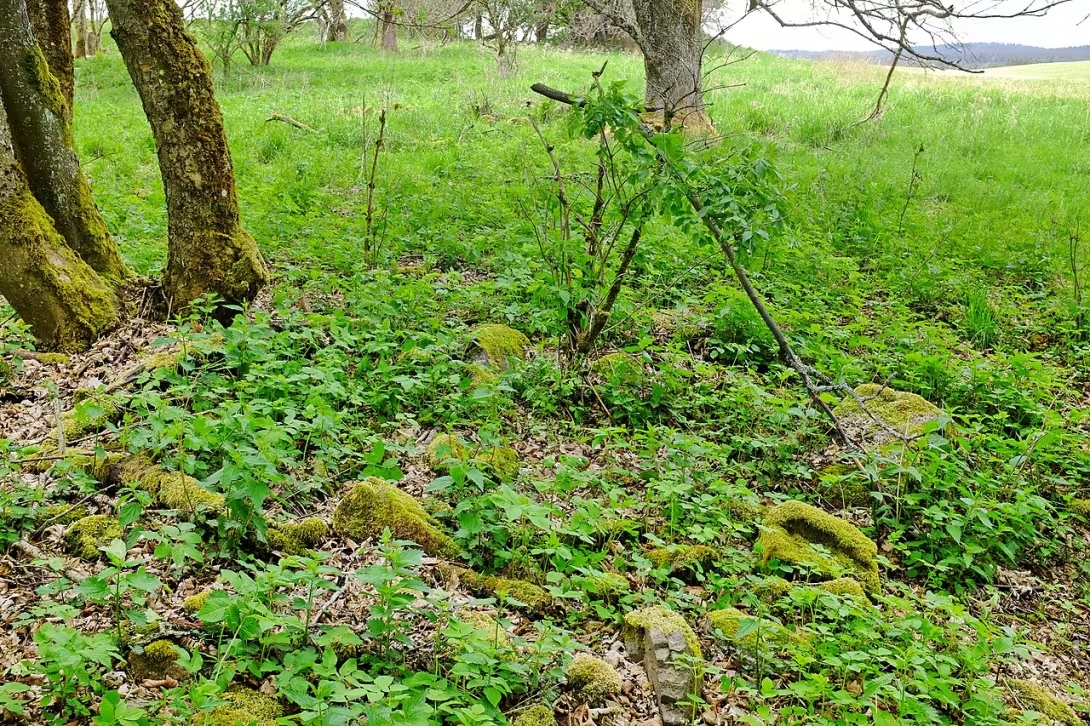

The historical appearance on the left is an AI-generated visualisation and serves as inspiration only.
Historical milestones
- 1236
- First written record
- 1246
- Donated to the Order of the Cross with the Red Star
- 1732
- Parish re-established
- 1750
- Renovations in the 18th century
- 1957
- Demolished
Architectural development
The church was originally a Romanesque building that was rebuilt in the Baroque style. It had a single nave with a flat roof and a polygonal presbytery. The church had a wooden bell tower and a sacristy with a high-pitched roof. The interior featured a Baroque main altar, side altars, and a pulpit.
Historical events
- 1236
- First written record of the church
- 1246
- King Wenceslaus I donated the church to the Order of the Cross with the Red Star in Prague
- 1732
- The parish was re-established after being abandoned during the Thirty Years' War
- 1957
- The church was demolished
Points of interest
– The church was built on the site of a former Romanesque church.
– The church's unique Baroque main altar with a Calvary scene was a distinctive feature.
– The church was owned by the Order of the Cross with the Red Star in Prague from 1246 until it was rebuilt in the 18th century.
– The church was eventually demolished in 1957, after being abandoned following World War II.
– The site of the church serves as a reminder of the village of Vranov, which was completely destroyed after World War II.
Guide
This guide is narrated by a synthetic voice generated by artificial intelligence.
Show guide text
This text was created by artificial intelligence and has not been editorially reviewed. It may contain inaccuracies.
Welcome in front of the Church of Saint James the Greater in Rovná. You are standing before one of the oldest landmarks in this area. The church is located on a site where once stood the village of Vranov, which was completely destroyed. What you see today is the remains of a former parish church built in early Gothic style in the 13th century. The first written mention of the church appeared in 1236.
Let's step back into the past. In 1246, the church was donated to the Order of the Knights of the Cross with the Red Star from Prague. This order had the church until the 18th century, when it was rebuilt in Baroque style.
Now pay attention to the church façade. Notice its unique Baroque main altar with Calvary. It is truly a remarkable detail that will captivate you.
The Church of Saint James the Greater also has an interesting history. It was built on the site of an older Romanesque church. Although not much is known about this Romanesque church, it is intriguing that the church in front of which you now stand stands on the same spot.
Let's return to the present. The Church of Saint James the Greater was destroyed in 1957. Only its remains remain, which you can see today.
Explore the church and experience the atmosphere that prevails here. The Church of Saint James the Greater is truly a unique landmark offering a glimpse into the history and culture of this area. I hope this church has captivated you and that you decide to explore other interesting sites in this region.
Businesses nearby
Do you run a restaurant, accommodation, shop, museum, rental, wellness or other visitor service near this monument? Show yourself directly to the people heading to it — this is how they will see you in the app and on the web:
Events nearby

Zdroj akcí: otevřená data měst a obcí ČR (Národní katalog otevřených dat) a kalendář akcí Národního památkového ústavu.
Nearby
The church was located in the village of Vranov, which was completely destroyed after World War II. The surrounding landscape is now part of the Prameny Military Training Area.
Visualizations and artistic views


The visualisations are generated by artificial intelligence and serve as inspiration.
Photos from the area
Real photos taken near the monument


Zdroj a licence jsou uvedeny u každého snímku.
Tips from visitors
No tips yet. Be the first!
Log in and add your tip.
Sources and literature
Photos: Lubor Ferenc / CC BY-SA 4.0 — Wikimedia Commons. The author and licence also appear when you hover over the image.
Faktickým podkladem tohoto textu byl článek na Wikipedii, jehož autory jsou přispěvatelé Wikipedie. Článek je dostupný pod licencí CC BY-SA 4.0.
Location on the map
Příběhy a pověsti
Legendy, pověsti a příběhy spjaté s touto památkou
Fotografie návštěvníků
Zatím žádné fotografie. Buďte první, kdo přidá fotografii z návštěvy!
Log in a přidejte svou fotografii nebo hodnoťte.
Za ověřenou návštěvu v aplikaci získáte víc bodů — poznáme podle GPS, že jste na místě.
Reviews and comments