






Kostel svatého Jana Evangelisty (Dlouhá Lhota) Church
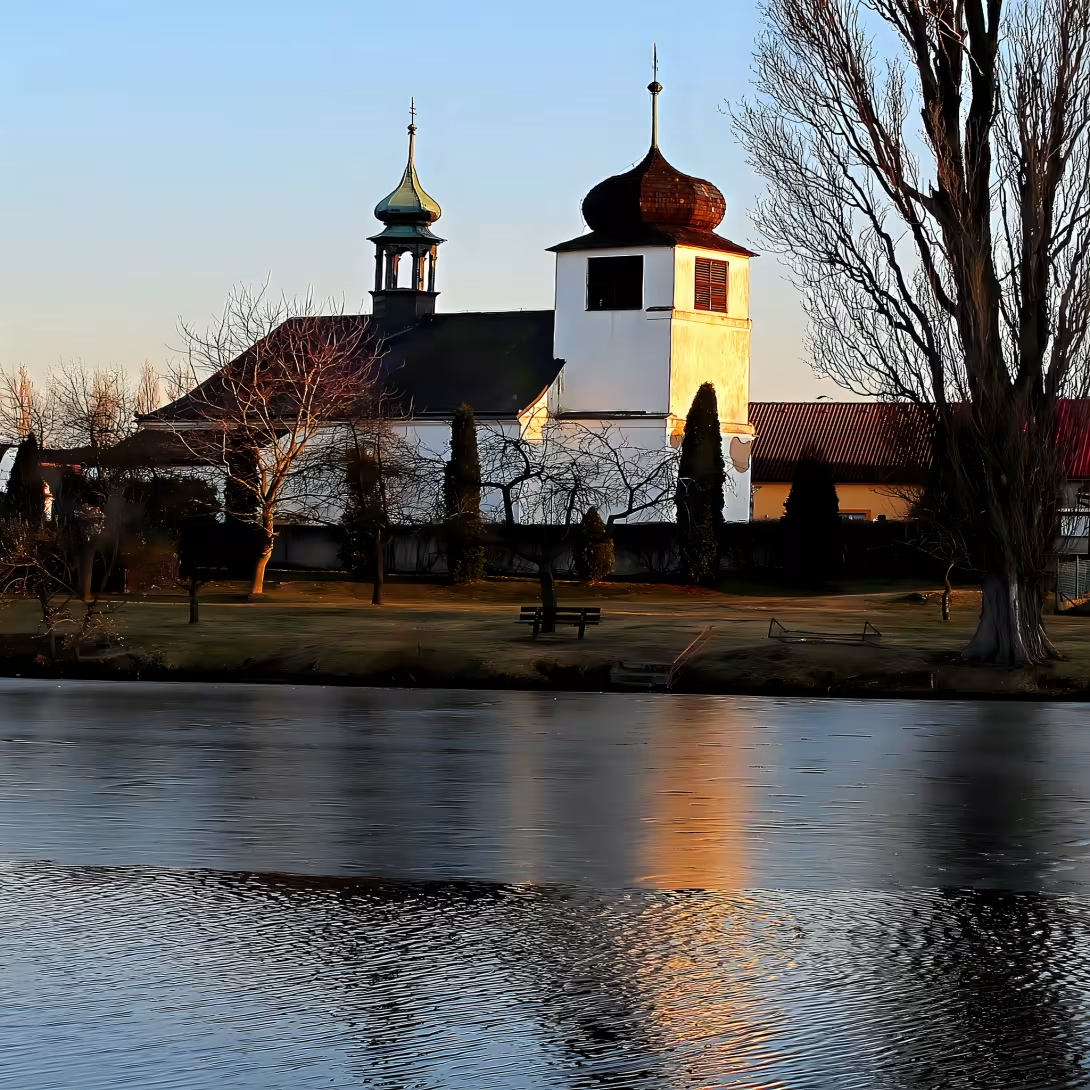
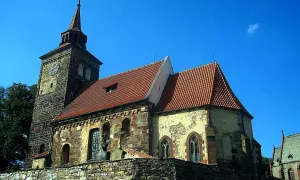
The church of St. John Evangelist is turned off in the landscape of the district Příbram in the village Dlouhá Lhota. Originally a chapel of Gothic style was built in the middle of the fourteenth century and represents an interesting example of medieval sacral architecture of Czech countries. It gradually changed and evolved along with the needs of the local community.
The historical development of the building reflects changing times and liturgical requirements. In the sixteenth century, the church was enlarged, suggesting an increase in the local population and increased demands on the service space. Radical modifications took place in 1897, which significantly changed the interior and exterior appearance of the building. These transformations are typical of sacral structures, which had to adapt to both liturgical needs and technical possibilities of individual times.
The architectural value represents a side folding wing Gothic altar from the end of the 14th century. This element is among the oldest parts of the construction and speaks of the Gothic skill of medieval craftsmen. Today, his replica is placed in the church, while the original artifact is protected. The interior also includes marked tombstones from the years 1545 and 1673, which tell about important persons buried in the church. The organ from 1890 and the bell on the tower from 1994 are later additions to the liturgical equipment.
The last repair of the church took place in 1991. In 1993, the church was robbed, which represented a serious interference with its cultural assets. Today the church falls under the administration of Dobří parish, which ensures its maintenance and continues the tradition of worship in this Gothic space. Although the object has been tested by historical tests, it remains an active sacral location and an important element of the cultural identity of Long Lhota.
Then and now
Drag the slider to compare how the landmark may have looked when it was built with the view today.
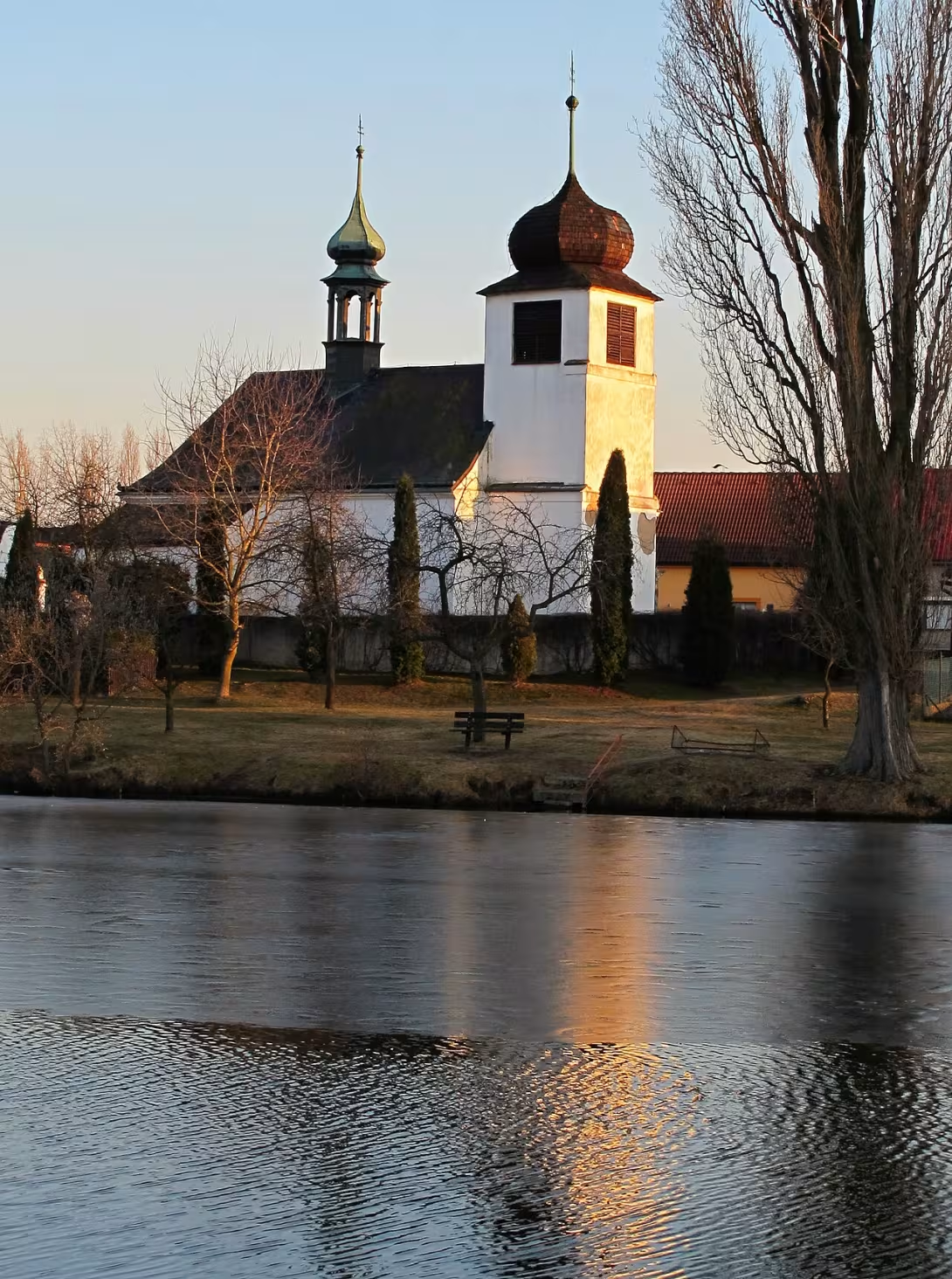
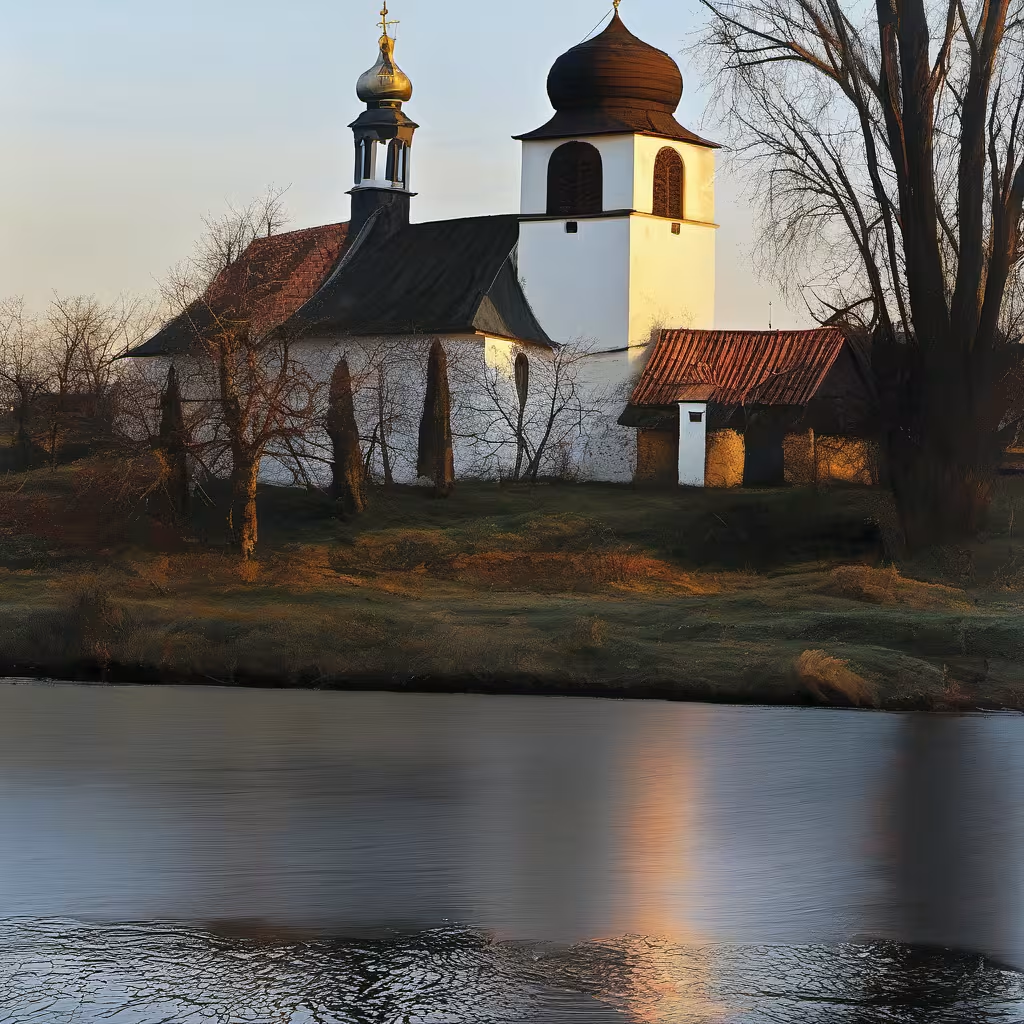
The historical appearance on the left is an AI-generated visualisation and serves as inspiration only.
Historical milestones
- 1450
- Establishing the original Gothic chapel.
- 1545
- The insertion of a tombstone with a birth mark.
- 1897
- Radical reconstruction of the church.
- 1993
- Robbing a church.
Architectural development
The original building from the middle of the 14th century was a single boat with a priesthood and a prism tower. In the 16th century there was an extension, while medieval building elements were preserved. In 1897 the church was rebuilt in a historical style, the original Gothic folding wing altar from the end of the 14th century was replaced by a replica. The tower was equipped with a bell from 1994.
Historical events
- 1450
- The completion of the original Gothic chapel, which later became a church.
- 1545
- The insertion of the first preserved mark tombstone.
- 1897
- Radical reconstruction of the church in historical style.
- 1993
- Robbing a church.
Owners
The sequence of owners with years if available, otherwise zero.
Points of interest
- The church of St. John Evangelist in Long Lhota was created as a Gothic chapel in the middle of the 14th century.
- The original Gothic folding wing altar from the end of the fourteenth century is one of the oldest preserved elements of the church, today there is a replica of it.
- In the sixteenth century, the church was extended, indicating the growing need for local residents.
- The interior preserved marked tombstones from 1545 and 1673, reminiscent of prominent figures buried in the church.
Guide
This guide is narrated by a synthetic voice generated by artificial intelligence.
Show guide text
This text was created by artificial intelligence and has not been editorially reviewed. It may contain inaccuracies.
Welcome to the church of St. John the Evangelist in Long Lhota!
You're standing in front of a place that's been testifying for over 500 years. In front of you is a simple but deeply historical structure that has turned from the Gothic chapel to the church as we know it today. Notice the enclosed area with a stone wall that protects this memory from time. The tower rises in the background - its original Gothic shapes still partially manifest, although the church has undergone many changes in the past. Now let's take a look at his history and the secrets that are hidden here.
This church was created in the middle of the 14th century as a Gothic chapel, probably as part of a local parish centre. At that time Dlouhá Lhota was a small village, but its church became an important place not only for the locals, but also for the passengers who were coming here on the old paths. The Gothic Chapel of the time was often simple but full of symbolism - and that was the church. The original folding wing altar from the late 14th century, which stood here, was one of the oldest preserved elements of its kind. Unfortunately, the original altar is no longer in the church today, but his replica reminds you of his appearance. Notice how the former atmosphere of the medieval cult was preserved in the interior.
In the 16th century, the church became a place where various layers of society met. There was an insertion of a tombstone with a birth mark, which today resembles important families that were buried here. These stone monuments were often decorated and bore names or symbols that told stories of life and death. At that time, the first signs of Renaissance influence began to appear, which manifested itself in adjustments to the interior and exterior of the church.
But the most radical changes came in 1897, when the church underwent extensive reconstruction. The architects then tried to adapt the construction to new needs and aesthetic trends. Although the church changed, some original elements, especially in the priesthood and tower, were preserved. Today, you can see two periods intermingling here - Gothic and modern. The tower above the village is one of the most distinctive elements of the church. Look at its shapes - despite later modifications, the original Gothic style is still partly manifested.
But the church didn't just have a quiet history. It was robbed in 1993, which meant the loss of many valuable items. Since then, the church has undergone several repairs, the last of which was in 1991. Despite these events, however, it remains a place that radiates peace and sanctity. The church area is supplemented by a morgue, which served as a final resting place for the locals. Notice how the original atmosphere has been preserved here, which reminds us that the church has always been the center of the community.
One of the most interesting elements of the church is its original folding wing altar. This type of altar was very popular in Gothic times because it made it easy to compose and store paintings or statues. The original altar from the end of the fourteenth century was one of the oldest preserved of its kind, and although it is no longer in the church, its replica allows you to imagine what his appearance was. Note how the altar was constructed - folding wings made it possible to adapt to various liturgical needs. This detail shows how the church in the past was adapted to everyday life and religious ceremonies.
The church of St. John Evangelist in Long Lhota is a place that hides many secrets and stories. Although his history is not as well known as the larger temples, that is what gives him a unique atmosphere. You are standing here in front of a place that witnessed changes that have taken place in Czech villages for centuries. Notice how different ages intersect here - from goth to modern-day adjustments. Every stone, every wall tells its story.
If you want to get to know the history of this church in more detail, I recommend you to visit the local museum or consult the locals. They can tell you other stories and attractions that have happened here. Dlouhá Lhota and its church are places worth exploring. Note how the quiet atmosphere, which is typical of the Czech village, has been preserved here. This church is not only a monument to the past, but also a place that can take you to another time.
Before leaving, take another look at the church and its surroundings. Feel the atmosphere that exists here, which is the result of many years of history. The church of St. John the Evangelist in Long Lhota is a place worth visiting and understanding its meaning. Thank you for sharing this moment with us and for choosing to discover the beauty of our history. May your trip through Czech monuments bring you many new experiences!
Tips for visitors
{'paragraph': 'The best time to visit St. John's Evangelist church is during spring and summer months when outdoor light is favourable for photography. The sunny afternoon after the 15th hour offers soft shadows and golden light that emphasizes the Gothic details of the church. In winter the visit is quieter, but some parts of the area may be frozen or covered with snow, which affects access to the surrounding nature.'}
{'paragraph': 'Parking is possible around the village Dlouhá Lhota. It is recommended to arrive by car because public transport to this remote location is not very common. You can find out more about the parking lots and traffic possibilities on the official site of the sights or in local information centres. If you are travelling by bus, it is recommended to find connections to the nearby town of Dobří.'}
{'paragraph': 'Take comfortable shoes when visiting because the path to the church can lead to uneven terrain. In the summer months, it is advisable to carry enough water and sun protection such as a hat or sunglasses. For photography, bring a macro-shot lens to capture details of Gothic architecture and surrounding nature.'}
{'paragraph': 'The best places for photography are the entrance portal of the church and its interior, where the original Gothic decoration is preserved. Outdoor photos are the most successful at sunset, when light illuminates the tower and façade. In the interior it is advisable to use the natural light from the windows to avoid shadows. In the vicinity of the church there are beautiful views of the fields and forests, ideal for panoramic pictures.'}
{'paragraph': 'Around the church is worth visiting Dobří Chateau, which is located about five kilometers from Long Lhota. It is a ruin with a rich history that offers interesting views and the opportunity to learn about medieval architecture. Another interesting thing is the church of St. Wenceslas in Dobří, which is located in the city centre and is famous for its historic frescos. It is advisable for nature lovers to visit the surrounding forests and the fields where you can observe local flora and fauna.'}
{'paragraph': 'For families with children, a visit to St. John's Evangelist Church is interesting thanks to the possibility of learning history and architecture. Children can look at the Gothic chapel and find out what the construction looked like centuries ago. In the vicinity of the church you can walk on natural paths where children can collect stones or observe birds. In the vicinity of Dobří you can visit the chateau ruins where children can play adventure treasure hunting or see stories from the past.'}
For kids
Imagine going back to the past. The place you're going is a small, forested ridge in the heart of Bohemia. It is at the very end of the village Dlouhá Lhota and it was here that one of the most beautiful medieval buildings in our parts - the church of St. John Evangelist.
It was a church that stood as guardian of the forest and protected the locals from danger. There were people living near him who fed on animals or worked in nearby forests. They were real creators of nature who lived here in harmony with nature.
Businesses nearby
Do you run a restaurant, accommodation, shop, museum, rental, wellness or other visitor service near this monument? Show yourself directly to the people heading to it — this is how they will see you in the app and on the web:
Nearby
In the vicinity of the church there is a village Dlouhá Lhota with typical rural architecture. Within 5 km are significant monuments such as Dobří Chateau (ruins) and St. Wenceslas Church in Dobří. The natural landscape consists mainly of field eels and forest crops.
Accommodation nearby
Themed route
Thematic cruise route: Church of St. John Evangelist and the surroundings of Long Lhota
1.Kostel svatého Jana Evangelisty (Dlouhá Lhota) * Baroque sacral structure * - An impressive single-boat structure with richly decorated interior and historical furniture. The high tower offers views of the surrounding landscape. Important for its architecture and local history.
2. The ruin of Dobří Chateau (approximately 3 km) * Gothic-Renaissance ruins * - impressive ruins with remains of chateau chapel and tower. Ideal for walking with supervision of the surrounding village. It resembles the medieval history of the region.
3. Church of St. Wenceslas (Dobrří) (approximately 4 km) * Renaissance church * - One of the oldest sacral buildings in the area, with a Valen Vault and historical paintings. It serves as an important cultural monument of the village.
4. Rural architecture Long Lhoty * Tradition of folk construction * - Walk down the streets with original estates, stone houses and historic gates. It shows authentic rural life from the last century.
* Recommended order: * Start at St. John's Church, continue at Dobří Chateau, visit St. Wenceslas Church and finish by visiting the village. All targets are close to each other and logically connected.
Seasonal recommendations
Spring During the spring, when nature awakens to life, the church of St. John Evangelist takes on the Long Lhota special magic thanks to the surrounding forest and fields, which are gradually besieged by greenery. The light of the sun, which breaks through the stained glass in the morning, creates in the interior of the church fine, scattered shades of blue and yellow, which provide a peaceful, meditative atmosphere. The surrounding area is still quiet, as tourists begin to visit the sights with the arrival of warmer weather. It is recommended to visit the church early in the morning when the air is fresh and the surrounding area still unusual busy. It is suitable for clothing that protects against possible rain showers, but also allows movement - light jackets or raincoats with warm layers underneath. In this period it is also possible to observe the first flowers of spring plants in the surroundings that add a natural framework to the church.
Summer In the summer months, when the sun stands high in the sky, the church of St. John Evangelist offers visitors not only an historic atmosphere but also an opportunity to explore its surroundings in full daylight. Warm sunlight illuminates stone walls and statues, creating sharp shadows and dramatic contrast between light and shadow. In the main summer season, however, the church becomes a popular destination for tourists and it is therefore advisable to come early in the morning or late in the afternoon to avoid crowds. It is recommended that light but sunlight-resistant clothes - hat or hat and light shoes that allow a comfortable walk around the area. Since the church is often visited by groups in the summer months, it is good to have patience and respect other visitors who come to enjoy a quiet atmosphere.
Autumn The autumn visit of St. John the Evangelist church is unique because nature is growing around it in colours and the forests are surrounded by golden and red shades. The sun, which is rising lower at this time, creates in the interior of the church fine, warm shades that provide a cozy atmosphere. Since the weather is beginning to cool, it is advisable to visit the church in the morning when the air is still fresh and the sun is warm. It is recommended to warm but comfortable clothes that protect against cold wind - for example a sweater or jacket with hood. In this period the surroundings are quieter than in summer, and it is therefore possible to view not only the church but also its surroundings, which offers picturesque views of the surrounding countryside.
Winter In winter months, when nature rests under the snow cover, the church of St. John Evangelist takes on a mysterious atmosphere. The snow, which covers the roof and surrounding trees, creates a white, almost magical framework that gives the monument special charm. The sun, which rises lower at this time, illuminates the church from an angle that highlights its architectural details and creates long shadows. Since the opening hours of the church are shorter in winter, it is advisable to inform yourself in advance of the current times. It is recommended to warm but comfortable clothes that protect against cold - for example warm jackets, gloves and hats. In this period it is also possible to observe how the church is transformed in winter light, which gives the visit a unique experience.
Visualizations and artistic views


The visualisations are generated by artificial intelligence and serve as inspiration.
Photos from the area
Real photos taken near the monument


Zdroj a licence jsou uvedeny u každého snímku.
Atmosphere of the place
This atmospheric visualisation of the place and period was generated by artificial intelligence. It is not real footage of the location.
Tips from visitors
No tips yet. Be the first!
Log in and add your tip.
Sources and literature
Fotografie: Huhulenik / CC BY 3.0, rozlišení zvýšeno umělou inteligencí — Wikimedia Commons. The author and licence also appear when you hover over the image.
Faktickým podkladem tohoto textu byl článek na Wikipedii, jehož autory jsou přispěvatelé Wikipedie. Článek je dostupný pod licencí CC BY-SA 4.0.
Location on the map
Příběhy a pověsti
Legendy, pověsti a příběhy spjaté s touto památkou
Fotografie návštěvníků
Zatím žádné fotografie. Buďte první, kdo přidá fotografii z návštěvy!
Přihlaste se a přidejte svou fotografii nebo hodnoťte.
Za ověřenou návštěvu v aplikaci získáte víc bodů — poznáme podle GPS, že jste na místě.
Reviews and comments