






kostel svatého Jana Křtitele (Běstvina) Church
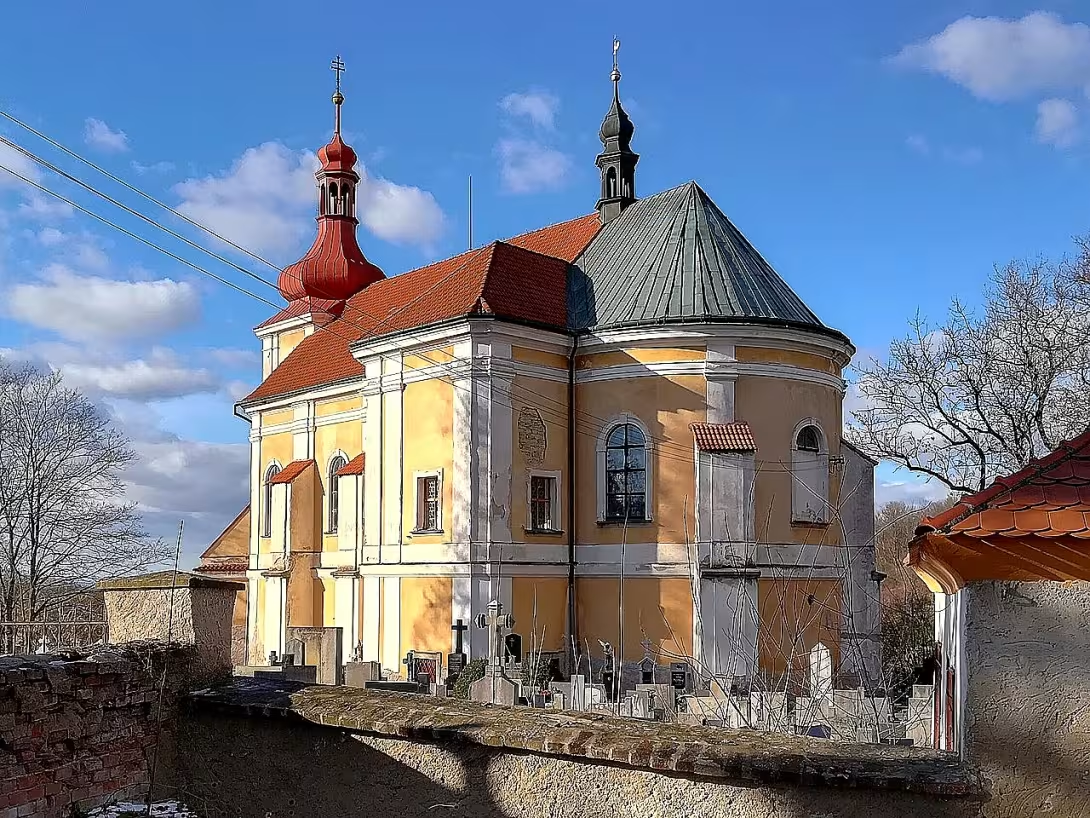
The Church of Saint John the Baptist in Běstvina is a notable Baroque church situated on a hill overlooking the village within the Pardubice Region. First documented as a Romanesque structure in 1137, it transformed significantly into its current form by 1726 under Leopold Count of Birkenštejn's patronage. Recognized as a cultural monument since 1958, it is valued for its historical and architectural significance.
The church traces back to the early 12th century when records first mentioned it as a Romanesque building dedicated to Saint John the Baptist. By the 14th century, it evolved into a Gothic structure before being completely rebuilt in the Baroque style in 1726. This reconstruction marked an important architectural shift, reflecting broader cultural trends within Bohemia during its time under the Habsburg Monarchy.
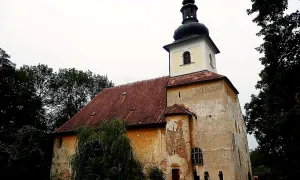
Architecturally, the Church of Saint John the Baptist features a single-nave design with an oblong nave and semi-circular presbytery. The Baroque style is evident in elements such as pilasters and profiled cornices that adorn the church. Its facade includes a two-story bell tower with a dome and lantern topped by a cross, creating a distinctive silhouette against the landscape. Internally, the church boasts rich decorations typical of early 18th-century artistry, including cross-ribbed vaults in areas like the sacristy and oratories.
The reconstruction was commissioned by Leopold Count of Birkenštejn, with historical sources suggesting architects Jan Blažej Santini or Jan Jakub Vögel may have been involved. This period saw significant cultural and architectural developments influenced by the Baroque style across Europe, reflected in the church's design.
An intriguing aspect of this church is its crypt, serving as a winter habitat for little owl bats, making it an important natural site within the region. Additionally, the church's bell tower features distinctive architectural elements such as pilasters and profiled cornices that enhance its aesthetic appeal.
Today, the Church of Saint John the Baptist stands as a testament to Běstvina's rich cultural heritage. Located on a hill with scenic views of the surrounding landscape, it is accessible for visitors who wish to explore its historical and architectural wonders. The church's blend of history, artistry, and natural significance makes it a worthwhile destination for anyone interested in experiencing Baroque architecture in Bohemia.
Visiting this monument offers an opportunity to appreciate not only its architectural beauty but also its role as a cultural and natural landmark. Its preservation allows us to connect with the past while enjoying the serene environment that surrounds it, making it a must-see for those exploring the Pardubice Region.
Then and now
Drag the slider to compare how the landmark may have looked when it was built with the view today.
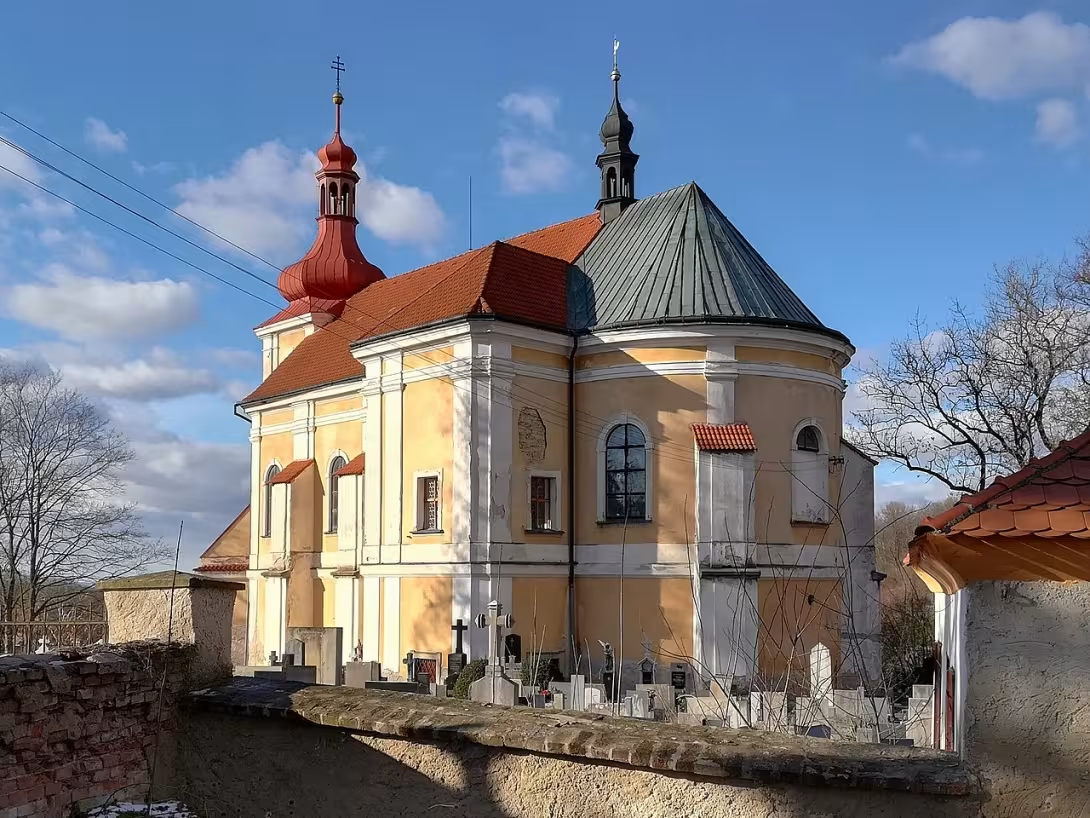
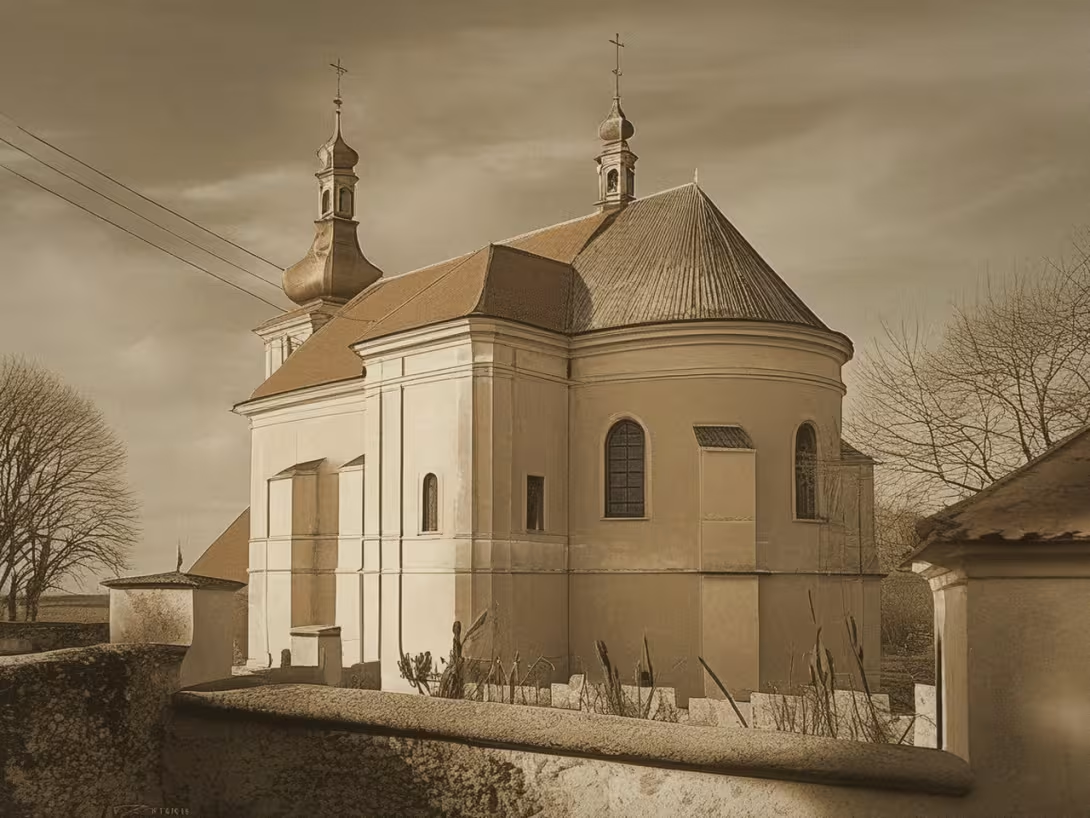
The historical appearance on the left is an AI-generated visualisation and serves as inspiration only.
Historical milestones
- 1137
- The church is first recorded as Romanesque.
- c. 1350
- Conversion to a Gothic structure.
- 1726
- Complete reconstruction in Baroque style.
- 1958
- Designated as a cultural monument.
Architectural development
The Church of Saint John the Baptist underwent significant architectural transformation from its original Romanesque form in the 12th century to a Gothic structure in the 14th century, and finally to its current baroque style in 1726. The reconstruction was led by Leopold count of Birkenštejn, possibly under the guidance of architects Jan Blažej Santini or Jan Jakub Vögel. This transformation included the addition of a bell tower with a dome and lantern topped by a cross.
Historical events
1137: First documented mention of a Romanesque church dedicated to Saint John the Baptist.
1726: Complete reconstruction into baroque style by Leopold count of Birkenštejn.
Points of interest
- The Church of Saint John the Baptist was originally documented as a Romanesque structure in 1137 before evolving into its current Baroque form by 1726, reflecting significant architectural transformations over centuries.
- Leopold Count of Birkenštejn's patronage during the church’s reconstruction introduced a prominent example of Baroque architecture to Běstvina, showcasing the influence of Bohemian cultural trends under the Habsburg Monarchy.
Guide
This guide is narrated by a synthetic voice generated by artificial intelligence.
Show guide text
This text was created by artificial intelligence and has not been editorially reviewed. It may contain inaccuracies.
Welcome to the Church of Saint John the Baptist in Běstvina, a remarkable testament to architectural evolution and historical significance nestled on a hill overlooking this charming village. As you stand here, take a moment to absorb the serene atmosphere that envelops this baroque masterpiece. The church's commanding presence is accentuated by its location, offering panoramic views of the surrounding landscape.
The origins of this sacred site trace back to 1137 when it was first documented as a Romanesque structure. Over time, it underwent significant transformations, reflecting the changing architectural tastes and religious influences of each era. By around 1350, the church had evolved into a Gothic edifice, only to be completely reimagined in 1726 into its current Baroque form under the patronage of Leopold Count of Birkenštejn. This period marked a pivotal moment in the church's history, as it embraced new artistic and architectural elements that would define its identity for centuries to come.
As you gaze upon the church, notice its single-nave design with an oblong nave leading into a semi-circular presbytery—a hallmark of Baroque architecture. The exterior is adorned with elegant pilasters and profiled cornices, inviting you to explore further and appreciate the intricate details that contribute to its grandeur.
The story of this church is intertwined with notable historical figures, most prominently Leopold Count of Birkenštejn, whose vision and patronage were instrumental in its transformation during the 18th century. Architects Jan Blažej Santini and Jan Jakub Vögel also played crucial roles in shaping its architectural legacy.
An intriguing aspect of this church is its journey through time—from a Romanesque foundation to a Gothic structure, culminating in its Baroque incarnation. This evolution not only reflects the broader historical and cultural shifts but also highlights the enduring significance of the Church of Saint John the Baptist as a symbol of resilience and adaptation.
As you conclude your visit, allow yourself to reflect on the layers of history embedded within these walls and the stories they hold. We invite you to continue exploring Běstvina and its surroundings, where each corner offers new discoveries waiting to be unveiled. Thank you for joining us on this journey through time at the Church of Saint John the Baptist—a place where history, architecture, and spirituality converge in harmony.
Farewell, and may your explorations inspire a deeper appreciation for the rich tapestry of our shared heritage.
Businesses nearby
Do you run a restaurant, accommodation, shop, museum, rental, wellness or other visitor service near this monument? Show yourself directly to the people heading to it — this is how they will see you in the app and on the web:
Events nearby
Zdroj akcí: otevřená data měst a obcí ČR (Národní katalog otevřených dat) a kalendář akcí Národního památkového ústavu.
Nearby
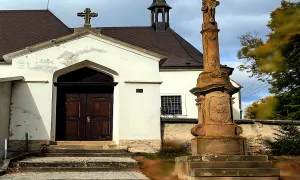
Located on a hill in Běstvina, the church overlooks the village and is surrounded by a cemetery. The area offers scenic views of the surrounding landscape typical of the Pardubice Region.
Accommodation nearby
Trips and activities nearby
Guided tours, tickets and activities nearby from GetYourGuide
Affiliate link: if you buy from the partner, we may receive a commission. The price for you does not change.
Search tours and activities →Themed route
Tematická výletní trasa: Kostel svatého Jana Křtitele (Běstvina)
1. Kostel svatého Jana Křtitele - *Typ:* Historická památka, kostel - *Proč stojí za návštěvu:* Tento barokní kostel je kulturním a historickým srdcem obce Běstvina. Jeho výhled z hory nabízí nezapomenutelné pohledy na okolní krajinu Pardubického kraje, což poskytuje ideální začátek pro vaši trase.
2. Hřbitov u kostela - *Typ:* Historický hřbitov - *Proč stojí za návštěvu:* Hřbitov, který obklopuje kostel, je klidným místem plným historie. Návštěva vám umožní prozkoumat starobylé hroby a památníky, což poskytuje hlubší vhled do minulosti obce.
3. Výhled z kostela - *Typ:* Místnost s výhledem - *Proč stojí za návštěvu:* Vystoupit na věž nebo se přiblížit k okenici kostela nabídne jedinečné pohledy na Běstvinu a její okolí. Tato perspektiva je ideální pro fotografii a poskytuje možnost si užít klidnou chvíli s výhledem, který se může pochlubit krajinnými krásami.
Tato trasa nabízí návštěvníkům přístupné a zábavné prozkoumání kostela svatého Jana Křtitele a jeho okolí, což umožňuje hlubší porozumění historickým a kulturním aspektům obce Běstvina.
Seasonal recommendations
Jaro: In the spring season, St. John the Baptist Church in Běstiny offers a revitalizing experience as nature awakens around it. Flowers and trees begin to bloom, adding colorful harmony and sweet fragrances to the surroundings. Sunny days are ideal for exploration, though rain can be occasional. Visitors should bring clothing suitable for changing weather and perhaps a box with an umbrella. This season is often less crowded, allowing for more peaceful tours.
Summer: Summer brings long sunny days and warm weather around St. John the Baptist Church, making it perfect for those seeking relaxation in a pleasant environment. The humid air can be intense, so clothing made from lightweight materials and sun protection are recommended. Visitors should consider coming early in the day or later in the evening to avoid peak crowd times. The church offers a peaceful refuge from summer heat and is ideal for contemplative moments.
Autumn: In autumn, St. John the Baptist Church in Běstiny brings melancholic beauty as tree leaves change into vibrant colors. This season is particularly captivating for nature lovers and photographers, as the light is softer and the atmosphere more serene. Visitors should be prepared for cooler weather with an umbrella or raincoat, as rain is frequent. This season offers quiet tours without being overwhelmed by crowds.
Winter: In the winter months, St. John the Baptist Church in Běstiny provides a unique atmosphere when covered in snow and illuminated by bright icy rays. Winter brings cold but often calm days that are ideal for quieter visits. Visitors should dress warmly with protection against dampness and perhaps prepare for shorter opening hours of the monument. This season offers peaceful moments to explore the church without large crowds, allowing for contemplative tours in a quiet environment.
Visualizations and artistic views


The visualisations are generated by artificial intelligence and serve as inspiration.
Photos from the area
Real photos taken near the monument


Zdroj a licence jsou uvedeny u každého snímku.
Tips from visitors
No tips yet. Be the first!
Log in and add your tip.
Sources and literature
Fotografie: RomanM82 / CC BY-SA 4.0 — Wikimedia Commons. The author and licence also appear when you hover over the image.
Faktickým podkladem tohoto textu byl článek na Wikipedii, jehož autory jsou přispěvatelé Wikipedie. Článek je dostupný pod licencí CC BY-SA 4.0.
Location on the map

Příběhy a pověsti
Legendy, pověsti a příběhy spjaté s touto památkou
Fotografie návštěvníků
Zatím žádné fotografie. Buďte první, kdo přidá fotografii z návštěvy!
Přihlaste se a přidejte svou fotografii nebo hodnoťte.
Za ověřenou návštěvu v aplikaci získáte víc bodů — poznáme podle GPS, že jste na místě.
Reviews and comments