






Kostel svatého Jana Křtitele (Hlučín) Church
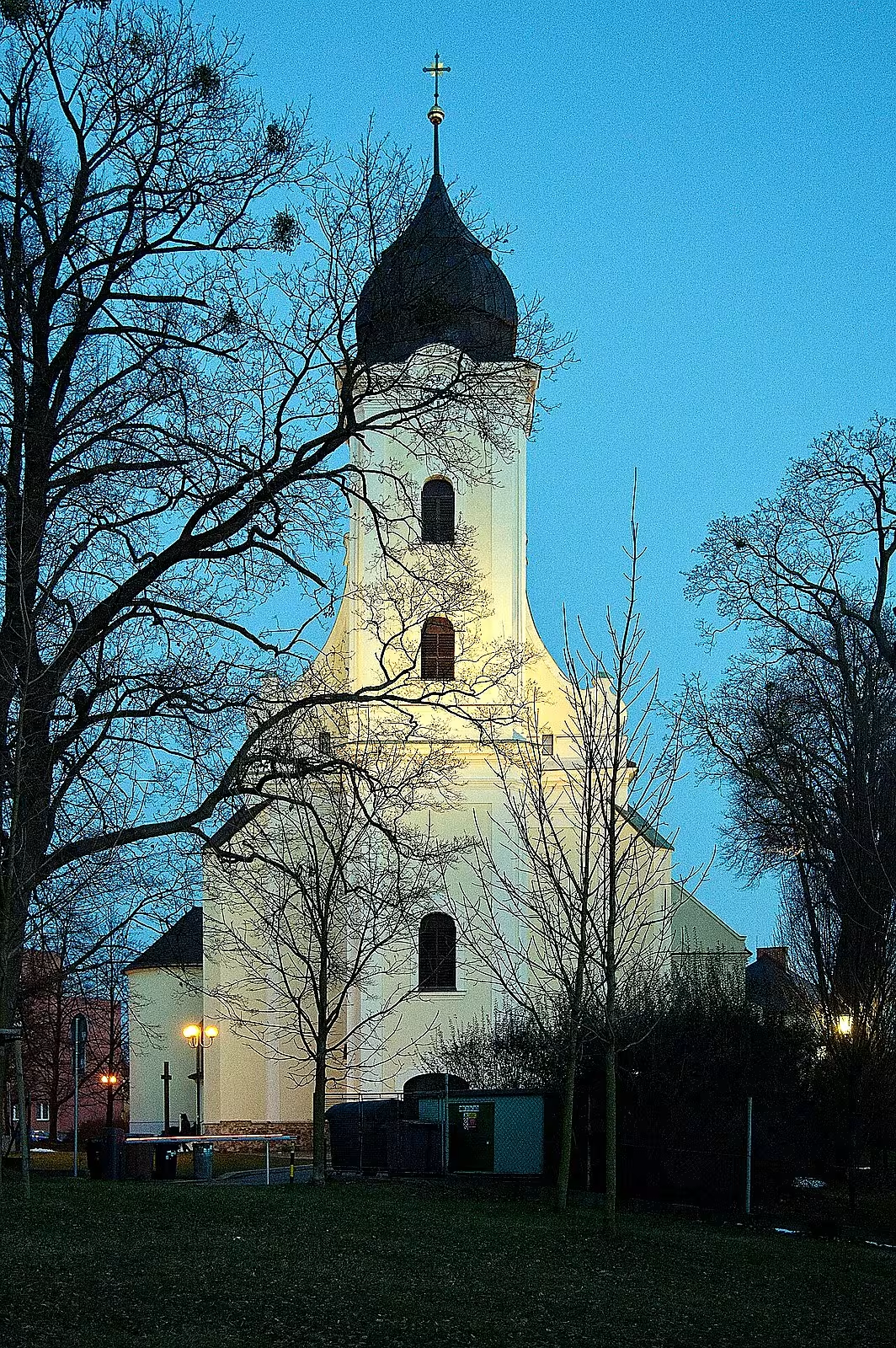
The Church of St. John the Baptist in Hlučín is a historically protected sacred building and one of the main monuments of the city. This church is located at the Church University in the village Hlučín, Moravskoslezský kraj, is remarkable for its architectural diversity and historical importance. The beginning dates back to 1378, where the elements of the Gothic, Renaissance, Baroque and pseudo-gothic style are displayed. St. John the Baptist Church presents cultural and architectural development in Bohemia in the late Middle Ages.
The first mentioned in 1378, specific details of its original construction remain undocumented. It is one of the oldest churches in the region that reflects significant historical transitions from Gothic style to Renaissance style throughout Europe. This transition affected religious architecture in Bohemia during the cultural and architectural dynamic period.
The architecture of the church went through several phases. Initially built by Gothic elements, later included Renaissance Chapel and Baroque modifications of its facade and tower. The presbytery keeps its original Gothic vault from the end of the 15th century, while other parts were rebuilt after the fire in the early 17th century. The church has a single-boat construction with a polygonal tower on the west facade, a lower rectangular chapel on the south side and an apsese chapel on the north side. Its rich architectural history is evident in various styles and important cultural monuments.
During its history, the church experienced several dramatic events that shaped its present form. In 1616-1618, after the fire destroyed part of the construction, was rebuilt with barrel safe and lunnets. During the Thirty Years' War in 1645, Swedish forces damaged and torched the church, although only the roof was consumed by flames. The church underwent further restoration after these events, including the construction of a new tower completed in 1791, which stands at 46.7 metres high.
In the interior there are several remarkable elements reflecting its historical and artistic importance. Among them is a late Gothic picture of crucifixion, which is found in the presbytery. In addition, it will retain a collection of high-quality Renaissance tombstones that add to its cultural value. These elements highlight the role of the church as a repository of regional art and history.
The church of St. John the Baptist is today still accessible to visitors who are interested in discovering its historical and architectural wealth. Its position as a protected monument underlines its importance as a cultural monument in Hlučín. The church is not only a place of worship, but also the will of the historical narrative of the region, which makes it a valuable destination for those who want to understand the interplay between history and architecture.
The Church of St. John the Baptist is a remarkable example of architectural evolution and historical resistance. Its diverse styles and rich heritage make it invaluable cultural property in Hlučín. Visitors are invited to explore this monument where each element tells the story of artistic effort and historical importance.
Then and now
Drag the slider to compare how the landmark may have looked when it was built with the view today.
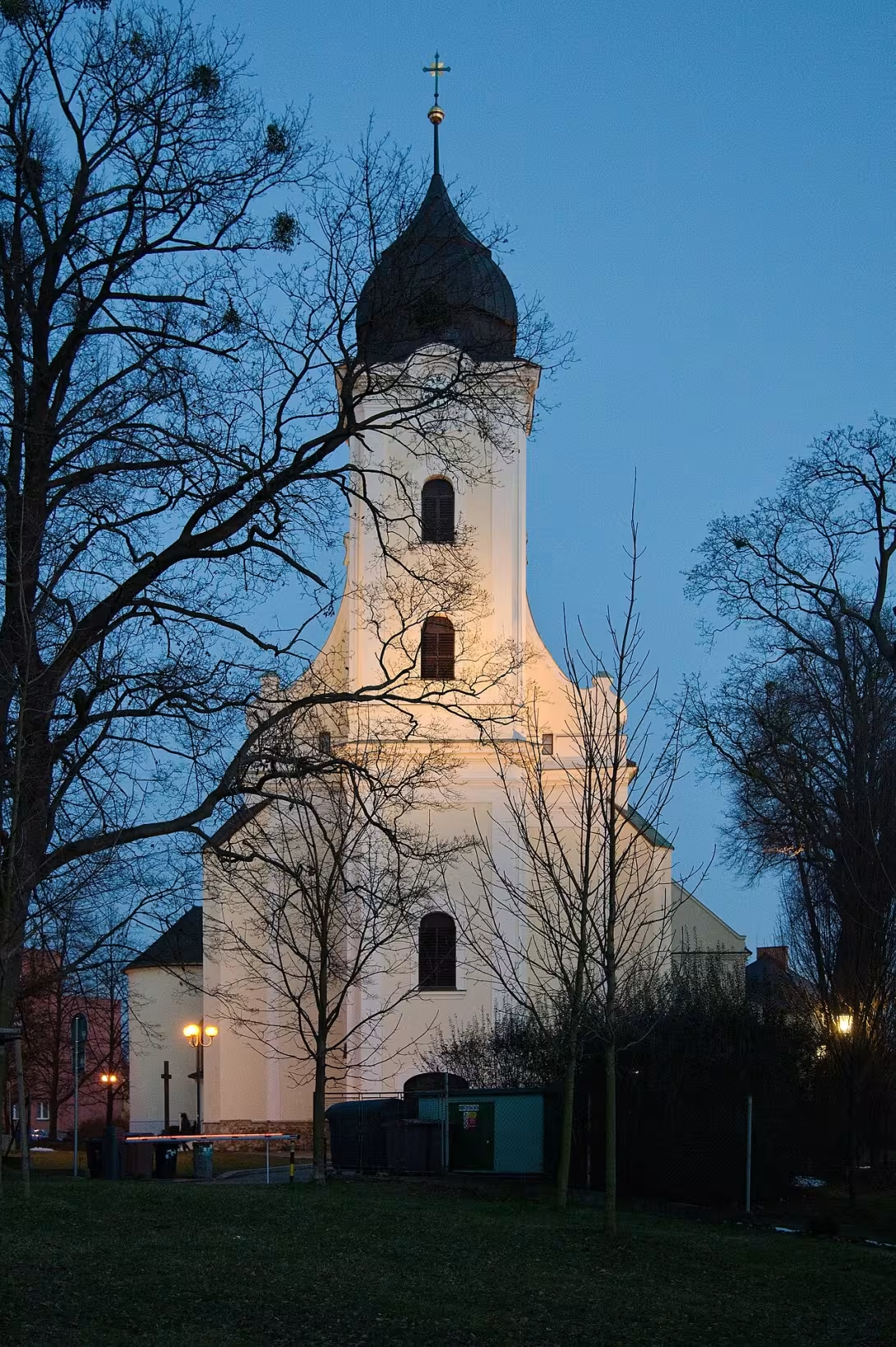
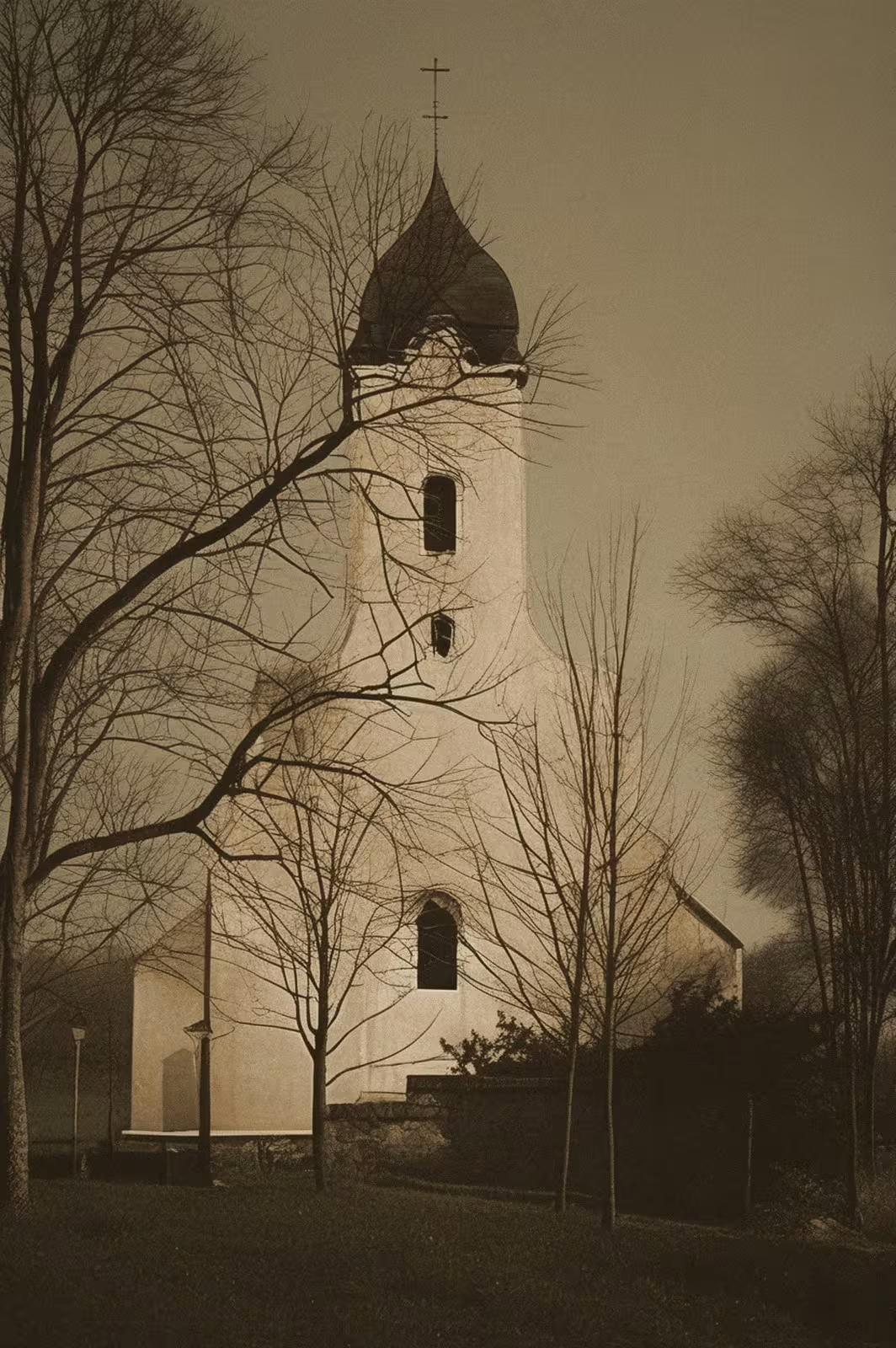
The historical appearance on the left is an AI-generated visualisation and serves as inspiration only.
Historical milestones
- 1378
- First mention of the Church of St. John the Baptist.
- 1616
- The fire destroyed part of the church; it was rebuilt by barrels and lunnets.
Architectural development
The Church of St. John the Baptist has undergone several architectural phases. Initially built in Gothic style, later included Renaissance Chapel and Baroque adaptations to the facade and tower. The presbytery keeps its original Gothic vault from the end of the 15th century, while other parts were rebuilt after the fire in the early 17th century.
Historical events
The first mention of the Church of St. John the Baptist dates back to 1378, suggesting its existence at that time.
In 1616-1618, after the fire destroyed part of the church, was rebuilt with barrel safe and lunnets.
Points of interest
- St. John the Baptist Church is one of the oldest churches in the region, whose origin dates back to 1378, but the specific details of its original construction remain undocumented, leaving many historical speculation and research.
- Despite the damage caused by the fire in the early 17th century and ignited by the Swedish forces during the 1930s "War in 1645, only the roof was consumed by flames, demonstrating remarkable resistance and leading to significant architectural renewal over time.
- The church tower, completed in 1791, stands at an impressive height of 46.7 m, representing a mixture of architectural styles that reflect its historical evolution from Gothic to Baroque influences.
- Inside the church lies a late Gothic picture of the Crucifixion, which is one of its most remarkable artistic features and underlines the rich tradition of the region in religious art during the late Middle Ages.
- The Church of Saint John the Baptist houses an exceptional collection of Renaissance tombstones, adds cultural value and serves as a repository for regional history and art, which is an important place for interested people in historical artifacts.
Guide
This guide is narrated by a synthetic voice generated by artificial intelligence.
Show guide text
This text was created by artificial intelligence and has not been editorially reviewed. It may contain inaccuracies.
Welcome to one of the most important and historically richest places in Hlučín - Church of St. John the Baptist. This church is a real jewel of architecture, which boasts a combination of diverse building styles from the past centuries. As you stand before his impressive facade, you are immediately drawn into his history and beauty.
The church of Saint John the Baptist has roots dating back to 1378 when it was first mentioned. Although the concrete details of its original building remain unclear, it is one of the oldest church buildings in the region. Over the years, the church witnessed many historical events and transformations.
Take a look at his facade where you notice a unique design with a polygonal tower. This architecture is a beautiful blend of Gothic, Renaissance, Baroque and pseudo-gothic elements. Each style contributes to the distinctive appearance of the church and tells the story of its long history.
Let's move on to the next crucial moment in this church's life cycle. In 1616, the fire destroyed part of the church, which led to its reconstruction using the ribbed vaults and lunets. These structural elements have added a new strength and elegance that you can still observe today.
Although specific architects are not known, their work has left a permanent legacy on this site. The Church of St. John the Baptist is not only a state-protected cultural monument, but also the heart of Hlučín, where many generations have gathered in faith and community.
There are several interesting aspects that make this church particularly fascinating. One of them is that although we have limited information about its original design, every detail and structural element contributes to the long-term charm of this place. This ambiguity remains a attraction for historians and visitors.
Now that you've learned something about this magical place, we invite you to further explore. Walk around the church and its surroundings will allow you to feel the atmosphere of the past days and appreciate the efforts of generations who have contributed to this architectural masterpiece.
Thank you for visiting St. John the Baptist. We hope this guide inspired you and prepared for further discoveries inside the walls of Hlučín. Good luck and enjoy every moment of your journey!
Businesses nearby
Do you run a restaurant, accommodation, shop, museum, rental, wellness or other visitor service near this monument? Show yourself directly to the people heading to it — this is how they will see you in the app and on the web:
Nearby
ITEX Show interactive overview of the surroundings - restaurants, accommodation, rentals and other places within a 15 km radius.
Data: OpenStreetMap contributors, 15 km radius.
‡ Historical monuments
- Area No. fortification Hlučín - Darkovice (4.1 km)
- Memorial to World War II victims (6.0 km)
- Mining Museum (6.4 km)
- Saint Urbana (8.8 km)
- bridge Milos Sýkora (10.3 km)
- bridge Milos Sýkora (10.3 km)
- Schloss Witkowitz (10.7 km)
- Museum Vítkovic (10.7 km)
Restaurant and catering
- Wine bar Globus (6.8 km)
- Prima (7.2 km)
- Aura Sareza (7.4 km)
- Krčma u Zvolu (7.5 km)
- McDonald's (7.6 km)
- La Corse (7.6 km)
- Meraki (7.6 km)
- Boombay (7.7 km)
Accommodation
- Home U Lake for seniory (0.6 km)
- Hotel Sareza (7.4 km - Čkalova 18)
- Hotel Max Shimek (7.9 km - Railway station 839 / 186)
- Quality Hotel Ostrava City (8.4 km)
- Hotel Best (10.5 km - Keltickova 1297 / 60)
- Hostel Nerudova 23 (11.1 km - Nerudova 499 / 23)
- Summer Camp (11.8 km)
- House of young smelters (12.3 km)
› Rental and sports
- Sports centre (0.8 km - Tyršova 1668 / 5A)
- Cykla Sport (5.5 km)
- TJ Sokol Hostikovice (5.6 km)
- Sacha Sport (6.0 km)
- Cycloservice Tomáš Binar (6.3 km - Col. Rajmund Prchaly 389 / 106)
- Relax365 (6.4 km - Pustkovecká 4492 / 29F)
- Heliasport (7.5 km)
- Bike Kram (7.9 km)
© Tourism and nature
- Cyclomap Noise (6.4 km)
- Hhej (bus) (6.7 km)
- Opavsko (6.8 km)
- U Huberta (7.8 km)
- halda Ema (11.1 km)
- Rakovec (fork) (11.4 km)
- Valley Polansice (fork) (11.9 km)
- Hýlov (public transport) (12.2 km)
Accommodation nearby
Themed route
Thematic walking tour: Hlučín and St. John the Baptist Church
1. Church of St. John the Baptist (Hlučín) - Type: Historical monument, religious pages - Why Visit: Start your journey with this amazing example of Baroque architecture in the heart of Hlučín. The church is famous for its complex design and historical importance to the local community. Explore the beautiful frescoes of the interior and learn about its role as a central place of worship.
2. Square Hlučín - Type: Urban area, Cultural center - Why Visit: A short walk from the church, the square is a pulsating heart Hlučín. Go through this lively area to experience local life and history. The square often hosts events that reflect the rich cultural traditions of the community.
3. Hlučín City Library - Type: Cultural institutions - Why Visit: Located near the city centre, this library offers a view of the literary heritage of the region. There is an impressive collection of local historical books and documents. Visitors can enjoy exhibitions that highlight the history of Hlučín and its cultural development.
4. Local Crafts - Type: Commercial area - Why Visit: Explore nearby craft shops to discover unique crafts and products of local craftsmen. These shops offer the taste of creativity of the region and provide an opportunity to support local businesses while at the same time finding special souvenirs.
This tour offers a comprehensive experience of Hlučín, focusing on its historical, cultural and community aspects, all within walking distance from each other for a comfortable survey.
Seasonal recommendations
Spring: St. John the Baptist Church in XZ0 The Xxi during spring offers one experience, when the event does not change from a dream blanket. Greens with trees and moving shrubs surround the church in an excellent spring chateau, which every atmospheric calm and a new sense of hope. The sunny morning is ideal for a photo with pastel colours that shrub in the background of historical architectures. The applications should be included in the support report, which could be used. It comes to visit the church in the early afternoon, which is the sun high, but not with the crowd starting to accumulate.
Summer: Summer offers Hlučín and it is the church of St. John the Crusader in the imperfect conditions for visiting. Sunny days with a pulse of direct rays that are designed to cover historical architecture, which means that the ideal products for using procky. In the case of State aid, the conditions laid down in Article 107 (1) TFEU may be met. The dark round is recommended, as you miss as water to deceive the law. Summer equipment for transferring goods around the cube, which means that this device is intended for new industrial activities or picnics near the wall.
Autumn: Autumn in HlučínI offers a single contribution to see the church of St. John the Baptist with a different view. The colour of the sheets relating to the period after the deadline and red, after the expiry of the contract for the historical building. Sun signatures are ideal for shooting with pastel leaf colours in the case of cubes. Inventory bodies should be included in the scope of warmer because they deal with constant cold and wet. Shorter days mean that the church is built at a time when the sun is needed above the horizon in order to be able to see the whole of the beauty.
Winter: The winter value of the Holy Jane Crusader cube encourages one experience with the mother snow and left options that can be used. With cities without leaves, the architecture of the church is full of beauty, while clear highs improve visibility of details. Sunshine days are ideal for your own use, because light can decorate the pantry around the skeleton and create spores full of peace and quiet. Intellectual entities should be included in the scope of warmer, with protective Handkerchiefs and possible shoes suitable for reduced aid. Opening times during winter are often shortened, so it is important to visit the church early in the day and plan a holiday around the Sunrise.
Visualizations and artistic views


The visualisations are generated by artificial intelligence and serve as inspiration.
Photos from the area
Real photos taken near the monument


Zdroj a licence jsou uvedeny u každého snímku.
Tips from visitors
No tips yet. Be the first!
Log in and add your tip.
Sources and literature
Fotografie: Petr Štefek / CC BY-SA 3.0 cz — Wikimedia Commons. The author and licence also appear when you hover over the image.
Faktickým podkladem tohoto textu byl článek na Wikipedii, jehož autory jsou přispěvatelé Wikipedie. Článek je dostupný pod licencí CC BY-SA 4.0.
Location on the map
Příběhy a pověsti
Legendy, pověsti a příběhy spjaté s touto památkou

Fotografie návštěvníků
Zatím žádné fotografie. Buďte první, kdo přidá fotografii z návštěvy!
Přihlaste se a přidejte svou fotografii nebo hodnoťte.
Za ověřenou návštěvu v aplikaci získáte víc bodů — poznáme podle GPS, že jste na místě.
Reviews and comments