






Kostel svatého Jana Křtitele (Olšany u Prostějova) Church
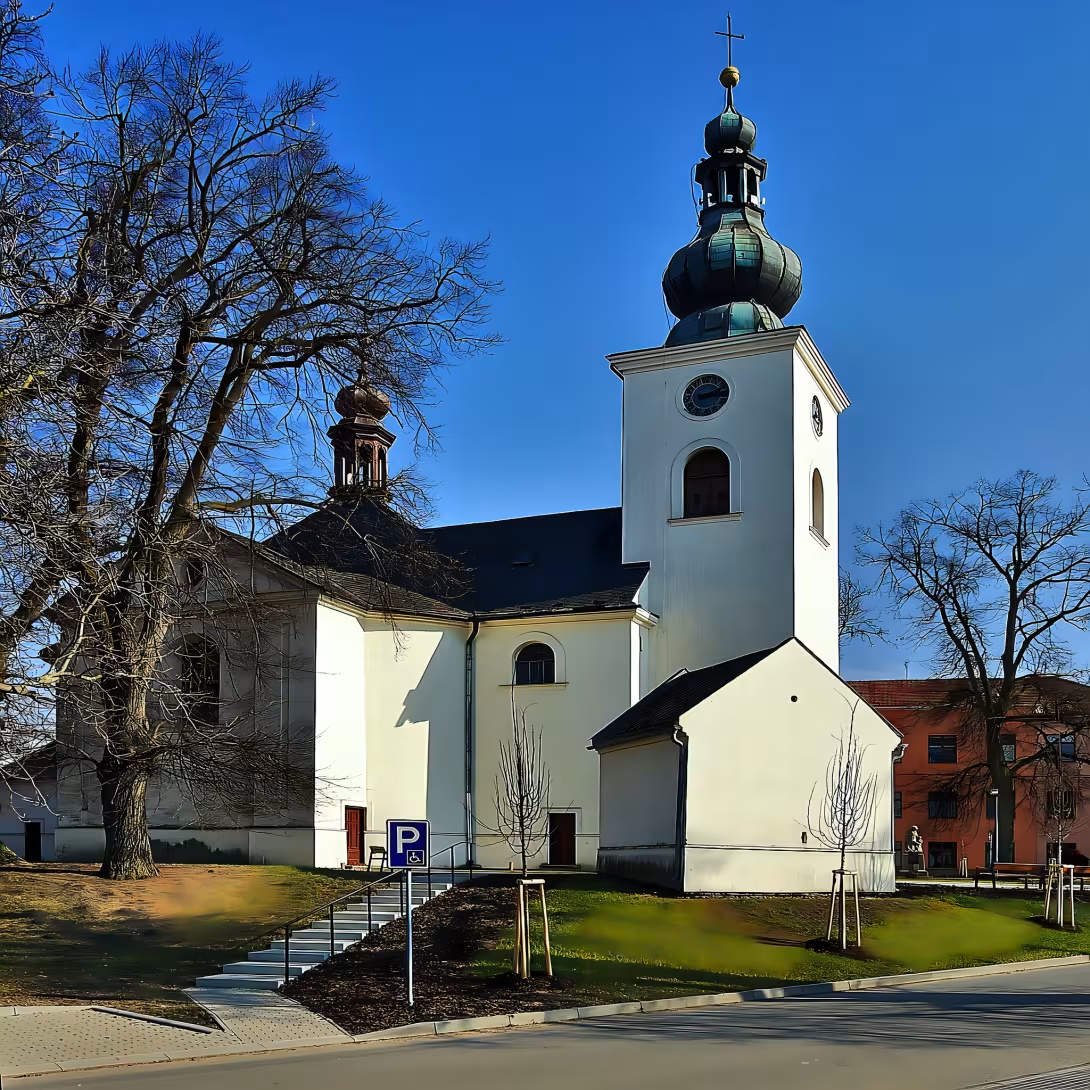
The Church of Saint John the Baptist in Olšany u Prostějova exemplifies Baroque architecture's grandeur and resilience through history. Situated in Olšany village within the Prostějov district, this Roman Catholic parish church is notable for its ornate structure and surrounding sculptures that reflect the region's cultural past. First mentioned in 1373, it has undergone significant transformations over time, mirroring historical events and architectural trends.
The earliest documented mention of a church in Olšany dates back to 1373, during Bohemia's inclusion in the Holy Roman Empire. The Thirty Years' War (1618-1648) profoundly impacted the region, causing widespread destruction, including substantial damage to this church and other local structures. After provisional repairs post-war, major reconstruction occurred between 1713 and 1735, transforming it into its current Baroque style.
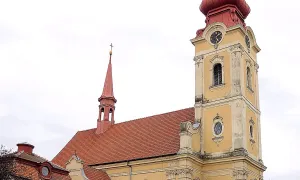
Architecturally, the Church of Saint John the Baptist features a central oval layout with a semicircular closure at the chancel and a four-sided tower on the façade. Originally damaged during the Thirty Years' War, the church underwent provisional repairs before being transformed in 1710 from a circular nave into a cross-shaped layout. However, this structure soon succumbed to fire, necessitating further reconstruction. Between 1713 and 1735, it was rebuilt in Baroque style with significant architectural elements defining its current appearance. Restoration efforts completed between 1999 and 2000 further enhanced the church's significance.
Adjacent to the church stands a parsonage from 1715, notable for its sundials. The churchyard houses sculptures including Saint John of Nepomuk, Saints John and Paul, a Crucifixion group, Madonna, Saints Norbert and Florian, Saints Cyril and Methodius, as well as a cross, reconciliation cross, and a stone boundary marker. These artistic elements contribute to the site's cultural and historical richness.
In 1998, under the Program for the Rescue of Architectural Heritage, significant funds were allocated for its preservation, highlighting the church's importance as an architectural monument. The church is oriented northeast, with its imposing structure dominating the surrounding landscape, a testament to its enduring presence in the region.
Today, the Church of Saint John the Baptist remains a vital cultural and historical site, accessible to visitors who wish to explore its Baroque architecture and rich history. Its significance lies not only in its architectural beauty but also in its resilience through centuries of change. Visitors are invited to experience this remarkable monument, which continues to be an integral part of Olšany's heritage.
Then and now
Drag the slider to compare how the landmark may have looked when it was built with the view today.
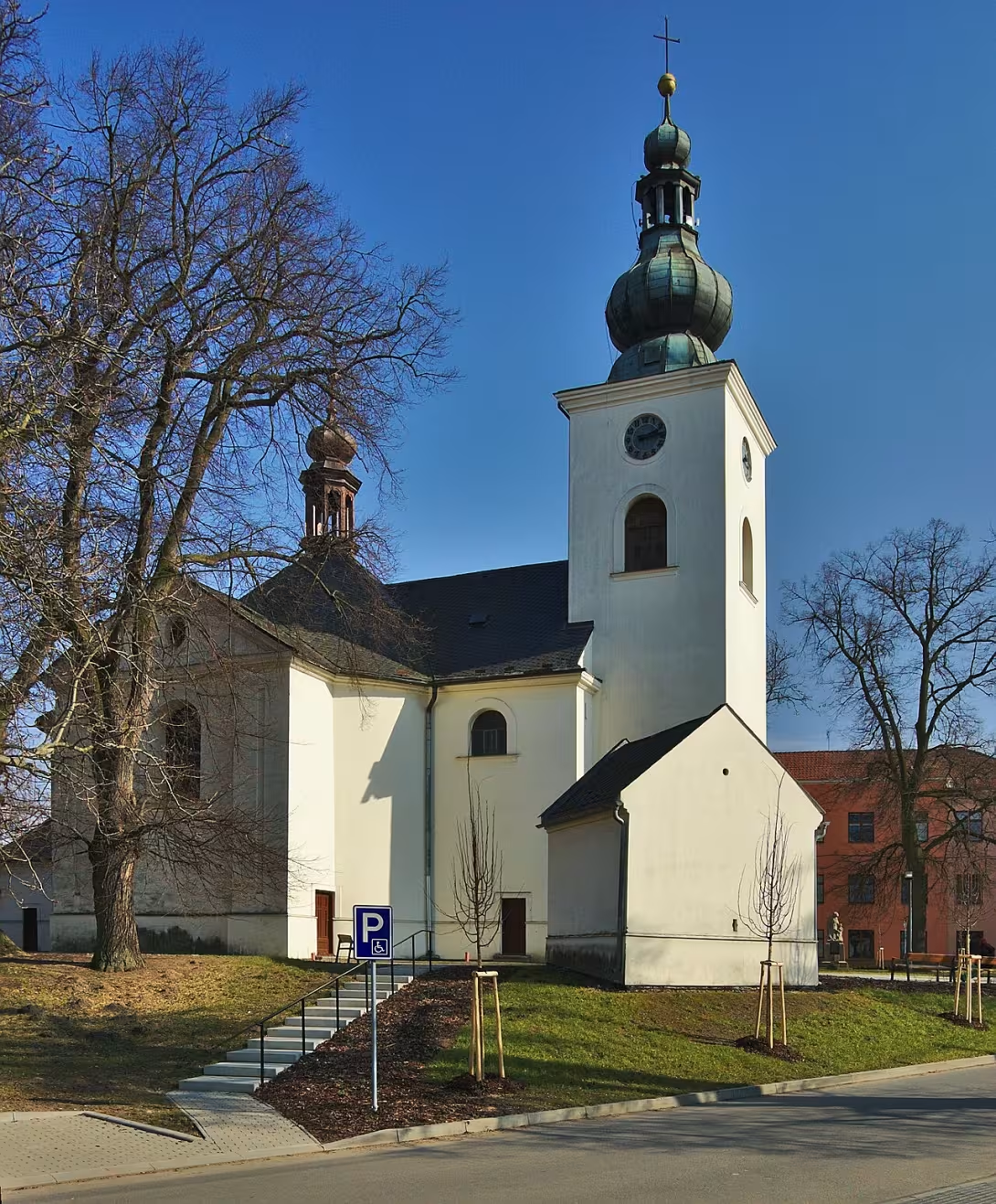

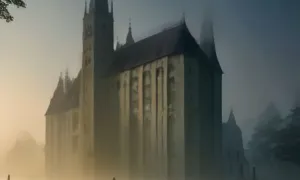
The historical appearance on the left is an AI-generated visualisation and serves as inspiration only.
Historical milestones
- 1373
- First mention of a church in Olšany.
- 1710
- Circular nave transformed into cross-shaped layout.
- 1713-1735
- Reconstruction to Baroque style completed.
- 1999-2000
- Significant restorations carried out.
Architectural development
The church was initially damaged during the Thirty Years' War and underwent provisional repairs. In 1710, a circular nave was transformed into a cross-shaped layout before a fire necessitated further reconstruction. Between 1713 and 1735, it was rebuilt in Baroque style, with significant restorations completed between 1999 and 2000.
Historical events
The first mention of a church in Olšany dates back to 1373.
During the Thirty Years' War, the church suffered considerable damage along with other local structures.
A major reconstruction occurred between 1713 and 1735, resulting in its current Baroque style.
Points of interest
- The Church of Saint John the Baptist in Olšany u Prostějova was first mentioned in 1373 during Bohemia's inclusion in the Holy Roman Empire. - It suffered substantial damage during the Thirty Years' War (1618-1648) and underwent major reconstruction between 1713 and 1735, transforming it into its current Baroque style. - The church features a central oval layout with a semicircular closure at the chancel and a four-sided tower on the façade. - Adjacent to the church stands a parsonage from 1715, notable for its sundials, and the churchyard houses sculptures including Saint John of Nepomuk, Saints John and Paul, a Crucifixion group, Madonna, Saints Norbert and Florian, Saints Cyril and Methodius, as well as a cross, reconciliation cross, and a stone boundary marker. - In 1998, significant funds were allocated for its preservation under the Program for the Rescue of Architectural Heritage, highlighting the church's importance as an architectural monument.
Guide
This guide is narrated by a synthetic voice generated by artificial intelligence.
Show guide text
This text was created by artificial intelligence and has not been editorially reviewed. It may contain inaccuracies.
The Church of Saint John the Baptist is a Roman Catholic parish church in Olšany near Prostějov. The first mention of the church in Olšany dates back to the year 1373.
The most severe blow to the village was dealt by the Thirty Years' War. The church, manor and rectory were all damaged. After the war, the church was only provisionally repaired, and underwent a real reconstruction only at the beginning of the 18th century. In 1710, its circular nave was rebuilt in the shape of a cross, but the entire building soon burned down. Between 1713 and 1735, the church was rebuilt again and still bears baroque elements to this day.
In 1998, eight hundred thousand crowns were allocated for the church's repair from the Architectural Heritage Preservation Program. The most recent repairs took place in 1999 and 2000.
Opposite the church stands a rectory from 1715, decorated with sundials. Around the church there is a cluster of minor monuments. There are statues of Saint John of Nepomuk and Saints John and Paul, a crucifix group and a statue group of the Virgin Mary. These are complemented by statues of Saint Norbert, Saint Florian and Saints Cyril and Methodius. Completing the collection is a cross, a peace cross and a stone boundary marker.
Tips for visitors
The best time to visit the Church of Saint John the Baptist in Olšany u Prostějova is during late spring or early autumn, when the weather is pleasant for exploring and enjoying outdoor activities. These seasons offer comfortable temperatures and beautiful natural surroundings that enhance your experience. Additionally, visiting outside peak tourist months can provide a more tranquil atmosphere to appreciate the church's Baroque architecture without large crowds.
Public transportation options are also accessible, with routes that can be confirmed through a travel planner or local transit websites. This ensures you have flexible and convenient ways to reach the site.
When visiting the church, consider bringing comfortable walking shoes, especially if you plan on exploring nearby areas or taking longer walks. A camera is recommended to capture the intricate details of the Baroque architecture and the serene landscapes around Olšany u Prostějova. Additionally, carrying a light jacket can be useful as weather conditions might change unexpectedly.
For photography enthusiasts, the best spots for capturing the Church of Saint John the Baptist are from its exterior angles during the golden hours—early morning or late afternoon—when natural lighting enhances the architectural details and creates dramatic shadows. Inside, look for areas where light filters through stained glass windows to capture vibrant colors and reflections.
In the vicinity of Olšany u Prostějova, within a 30-minute drive, you can explore other historical sites or natural attractions that complement your visit. These nearby locations provide additional context and enrich your understanding of the region's cultural and historical landscape.
Frequently asked questions
Can the monument be visited?
Religious buildings are usually open mainly during services; at other times a visit is normally arranged with the parish or the operator. We have not verified specific times.
Where is the monument?
Location: Olšany u Prostějova, Olomoucký kraj. The map on this page shows the exact spot.
Why is the monument protected?
It is listed in the Central List of Cultural Monuments of the Czech Republic as a cultural monument (register no. 24736/7-5669).
Businesses nearby
Do you run a restaurant, accommodation, shop, museum, rental, wellness or other visitor service near this monument? Show yourself directly to the people heading to it — this is how they will see you in the app and on the web:
Events nearby

Zdroj akcí: otevřená data měst a obcí ČR (Národní katalog otevřených dat) a kalendář akcí Národního památkového ústavu.
Accommodation nearby
Trips and activities nearby
Guided tours, tickets and activities nearby from GetYourGuide
Affiliate link: if you buy from the partner, we may receive a commission. The price for you does not change.
Search tours and activities →Themed route
Route: Church of Saint John the Baptist and Surroundings
1. Church of Saint John the Baptist (main attraction) - The church is worth visiting due to its unique architecture and rich history. It dominates the village of Olšany u Prostějova, and its baroque façade is remarkable.
2. Cemetery in Olšany - Located near the church, it is interesting for its architectural style of graves and monuments of notable personalities from the village.
3. Chapel of Saint John of Nepomuk - Stands by the road leading into the village and is a small but beautiful baroque chapel worth stopping at.
4. Stone Cross - Located on the village square, it is old and well-preserved. It's a good idea to stop and take in its details.
Seasonal recommendations
Jaro
In the spring season, St. John the Baptist Church is surrounded by blooming trees and flowers, creating a pleasant atmosphere. The church lighting is soft, allowing for observation of its architectural details. The best time to visit the church is in the morning or late afternoon when there are fewer people. We recommend bringing a camera so your memories from the visit won't be forgotten.
Léto
The main summer season brings warm weather and long days for visitors to St. John the Baptist Church. The church lighting is more intense, allowing for observation of its interior details. We recommend arriving early before larger crowds gather, so you can explore the church in peace. Don't forget to bring sunglasses and an umbrella to protect your eyes from damage and prevent rain from getting into your head.
Podzim
In the autumn season, St. John the Baptist Church is surrounded by beautiful fall scenery with trees covered in colors that create a pleasant atmosphere. The church lighting is soft, allowing for observation of its architectural details. The best time to visit the church is in the morning or late afternoon when there are fewer people. We recommend bringing a camera so your memories from the visit won't be forgotten.
Zima
In the winter season, St. John the Baptist Church is illuminated by warm lighting that creates a pleasant atmosphere. We recommend visiting the church during early morning hours or late afternoon when there are fewer people due to shorter opening times. Don't forget to bring warm clothing so you don't get cold.
Visualizations and artistic views


The visualisations are generated by artificial intelligence and serve as inspiration.
Photos from the area
Real photos taken near the monument


Zdroj a licence jsou uvedeny u každého snímku.
Tips from visitors
No tips yet. Be the first!
Log in and add your tip.
Sources and literature
Photos: Jiří Komárek / CC BY-SA 4.0, rozlišení zvýšeno umělou inteligencí — Wikimedia Commons. The author and licence also appear when you hover over the image.
Faktickým podkladem tohoto textu byl článek na Wikipedii, jehož autory jsou přispěvatelé Wikipedie. Článek je dostupný pod licencí CC BY-SA 4.0.
Location on the map
More monuments – Olšany u Prostějova
Show all in the municipality
Příběhy a pověsti
Legendy, pověsti a příběhy spjaté s touto památkou
Fotografie návštěvníků
Zatím žádné fotografie. Buďte první, kdo přidá fotografii z návštěvy!
Log in a přidejte svou fotografii nebo hodnoťte.
Za ověřenou návštěvu v aplikaci získáte víc bodů — poznáme podle GPS, že jste na místě.
Reviews and comments