






kostel svatého Jana Nepomuckého (České Budějovice 7) Church
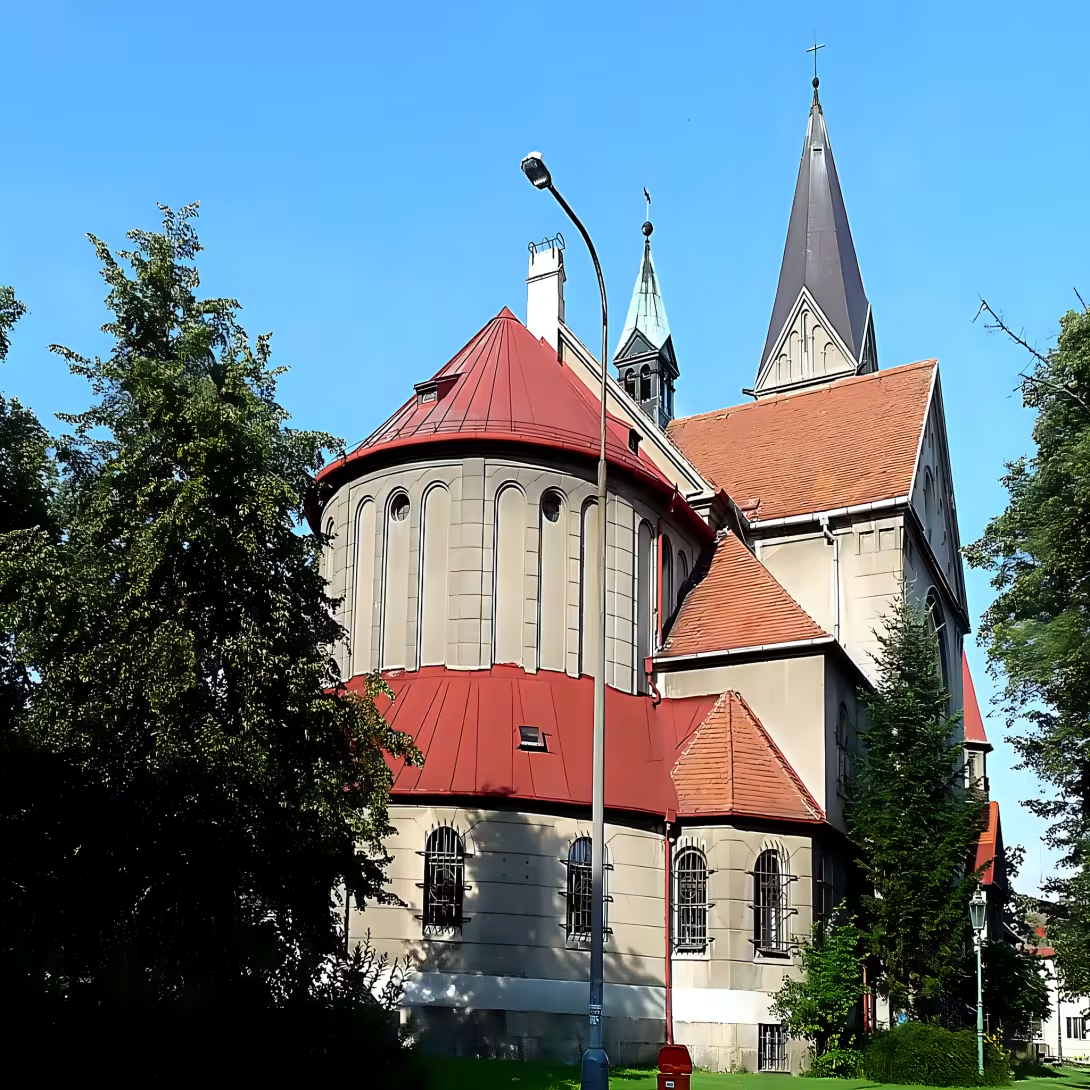
The Church of Saint John Nepomucene in České Budějovice is a notable example of Secessionist architecture from the early 20th century. Situated on Linecké Předměstí, this Roman Catholic church was built between 1914 and 1915 under Anton Möller's design guidance. It forms part of an effort to establish a new cathedral for České Budějovice, showcasing both historical ambition and architectural innovation. The church is distinguished by its unique blend of Neo-Romanesque style with Beuronese elements in the apse and houses a significant baroque painting by Franz Anton Maulbertsch.
The origins of this church lie in early 20th-century efforts to enhance České Budějovice's religious infrastructure. By the late 19th century, Bishop Martin Říha led an initiative to establish a new cathedral for the city. Although initial plans were redirected towards repairing St. Nicholas Cathedral under Bishop Hůlka in 1912, surplus funds enabled the construction of a new church on Linecké Předměstí. World War I posed significant challenges during its construction, affecting material availability and labor resources. Despite these difficulties, the church was consecrated on September 12, 1915.
Architecturally, the Church of Saint John Nepomucene is distinguished by its Neo-Romanesque structure complemented with Beuronese elements in the apse. The design reflects a period when Europe, including Bohemia, experienced cultural renaissance movements such as Art Nouveau that influenced architectural styles and artistic expressions. Inside, visitors can admire a baroque painting of "Apoteóza svatého Jana Nepomuckého" by Franz Anton Maulbertsch, originally from St. Nicholas Cathedral.
The church also houses an organ of significant cultural importance. Initially designed by Heinrich Schiffner in 1912, the project faced interruptions due to World War I and Schiffner's subsequent business dissolution between 1916 and 1917. Josef Růžička completed the organ, which features a pneumatic traktur with three manuals and 49 stops, making it one of the largest instruments in southern Bohemia.
Today, the Church of Saint John Nepomucene remains an important cultural monument accessible to visitors interested in its architectural beauty and historical significance. Its unique blend of styles, coupled with rich interior elements like the Maulbertsch painting and the grand organ, make it a worthwhile destination for those exploring České Budějovice's heritage. The church offers insight into early 20th-century ecclesiastical architecture and serves as a testament to the resilience of cultural projects during challenging times. Visitors are invited to experience this blend of history and artistry, which continues to captivate those who explore its sacred space.
Then and now
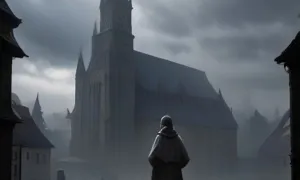
Drag the slider to compare how the landmark may have looked when it was built with the view today.
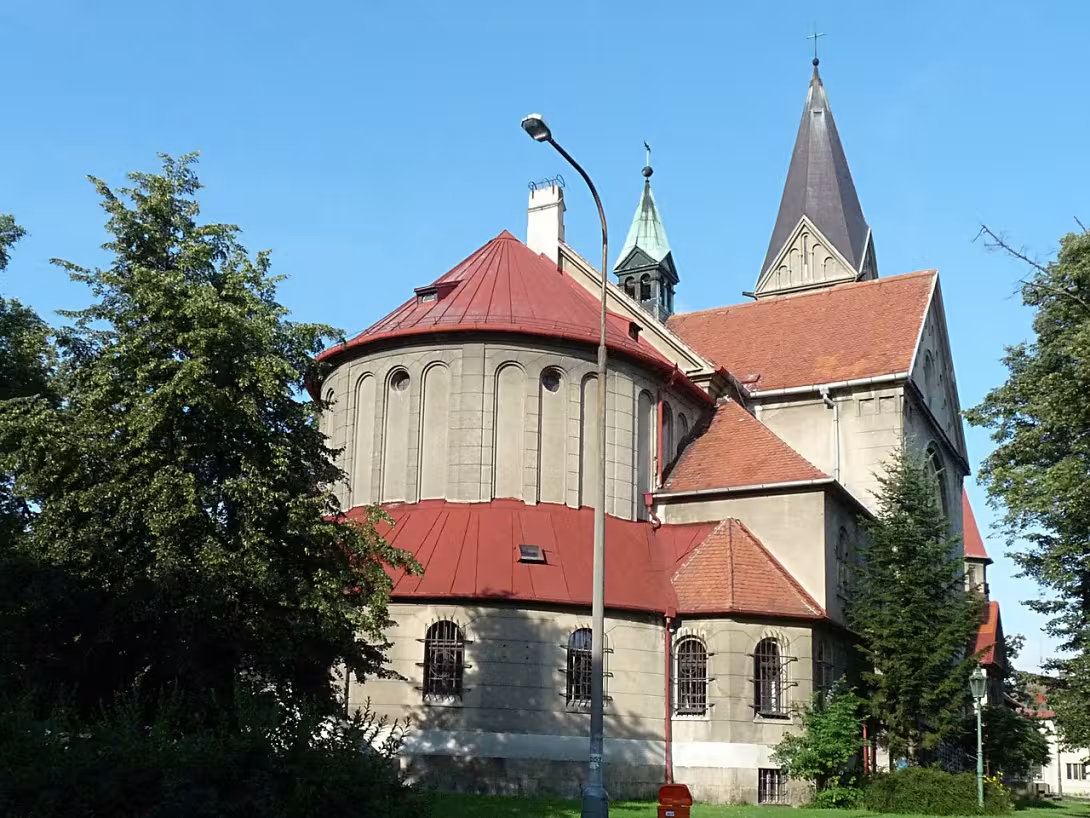

The historical appearance on the left is an AI-generated visualisation and serves as inspiration only.
Historical milestones
- 1912
- Decision made to build the church on Linecké Předměstí.
- 1914-15
- Construction of the Church began, influenced by World War I conditions.
- 1915
- The church was consecrated on 12 September.
Architectural development
The church is built in the Neo-Romanesque style with Beuronese elements. Its construction faced challenges due to World War I, affecting material and labor availability. The interior features a significant baroque painting by Franz Anton Maulbertsch.
Historical events
1912: Decision made to build a new church on Linecké Předměstí after funds were raised for a cathedral project.
1914-15: Construction of the Church began, influenced by World War I conditions.
12 September 1915: The church was consecrated.
Points of interest
- Despite its Secessionist architecture, the Church of Saint John Nepomucene incorporates Neo-Romanesque elements, demonstrating a unique fusion of styles that reflects the diverse architectural influences in early 20th-century Bohemia.
- The church's construction was initially part of an ambitious plan to establish a new cathedral for České Budějovice, highlighting the city's historical aspiration to enhance its religious prominence alongside St. Nicholas Cathedral.
- During World War I, the project faced significant challenges, including material shortages and labor disruptions; yet, it was completed in 1915, showcasing resilience and determination amid global turmoil.
- The baroque painting "Apoteóza svatého Jana Nepomuckého" by Franz Anton Maulbertsch originally belonged to St. Nicholas Cathedral, illustrating the movement of significant artworks within religious institutions during this period.
- The church's organ, completed by Josef Růžička after Heinrich Schiffner's initial design was interrupted by World War I and his business dissolution, stands as one of the largest instruments in southern Bohemia, reflecting both historical craftsmanship and adaptation.
Guide
This guide is narrated by a synthetic voice generated by artificial intelligence.
Show guide text
This text was created by artificial intelligence and has not been editorially reviewed. It may contain inaccuracies.
The Church of Saint John of Nepomuk stands on Linecké Předměstí in České Budějovice. It is a Roman Catholic church built in 1914 and 1915 according to a design by the Varnsdorf architect Anton Möller.
Its construction is connected with the plan for a new České Budějovice cathedral. At the end of the nineteenth century, at the initiative of Bishop Martin Říha, a fund was established for its construction. However, Bishop Hůlka ultimately pushed through only the renovation of the Cathedral of Saint Nicholas, which took place in 1912. From the remaining funds, it was decided to build a new church precisely on Linecké Předměstí. Construction began in 1914 and was immediately affected by the war due to lack of materials and labor. Nevertheless, the church was consecrated on September 12, 1915.
The building is Neo-Romanesque and the semicircular apse displays Beuron style elements. On the main altar is a Baroque painting, the Apotheosis of Saint John of Nepomuk by Franz Anton Maulbertsch. It originally belonged to the Cathedral of Saint Nicholas.
The organ is remarkable. The plans were prepared by the firm of Heinrich Schiffner before the church was built and work on the instrument began in 1912. However, Schiffner sold his workshop in 1916 due to a shortage of commissions during the war, and his successor was Josef Růžička. He had to complete the organ by the turn of 1917 and 1918 at the latest, when the requisition records list them as finished. At that time, there were requests that the front pipes not be confiscated because of the concert qualities of the instrument. For a long time it was believed that Růžička had only completed the third manual. The restoration begun in December 2014, however, showed that the windchest control mechanism actually comes from him.
The original design called for 44 stops. The result is a more powerful Romantic three-manual instrument with 49 stops and pneumatic action. However, sources differ significantly in the number of stops. The organ is a cultural monument. In České Budějovice it is the largest instrument and is also among the largest in southern Bohemia.
The Art Nouveau case was designed by Pantaleon Major and manufactured by the firm of Bohumil Murdoch. It has three sections separated by pairs of cherubs. On the horizontal beams is a Latin text from the ninety-fifth psalm, in translation: Sing to the Lord a new song, praise him all nations, praise him all people. The highest, middle arch bears two kneeling angels who together play the harp. The outlines of the sculptures and ornaments are gilded. Such execution is unique in the Czech Republic.
Tips for visitors
The best time to visit the Church of Saint John Nepomucene is during late spring or early autumn when the weather is pleasant, allowing for a comfortable exploration of its architectural details. These seasons offer mild temperatures and generally clear skies, ideal for appreciating both the interior and exterior design elements without the discomfort of summer heat or winter cold. Additionally, visiting outside peak tourist season can provide a more serene experience, enabling visitors to enjoy the church's tranquil atmosphere.
Public transportation options include buses and trams that connect various parts of the city, making it convenient for those who prefer not to drive.
When visiting the Church of Saint John Nepomucene, consider bringing comfortable walking shoes and weather-appropriate clothing, as you may spend time exploring both inside and outside the church. A camera can be useful for capturing the intricate details of its Secessionist architecture. Additionally, carrying a small umbrella or raincoat is advisable if your visit coincides with unpredictable spring or autumn weather.
For photography enthusiasts, the best spots to capture the Church's beauty are from the front entrance and the surrounding streets that offer different perspectives of its facade. The soft light during early morning or late afternoon can enhance the architectural details and create a warm atmosphere in photographs. Inside, natural lighting through stained glass windows provides unique opportunities for capturing vibrant interior shots.
Nearby attractions within 30 minutes include the historic Old Town of České Budějovice, known for its charming streets and cultural sites, and the Botanical Garden, offering a peaceful retreat with diverse plant collections. These locations provide additional activities and sights to enjoy after visiting the church.
Frequently asked questions
Can the monument be visited?
Religious buildings are usually open mainly during services; at other times a visit is normally arranged with the parish or the operator. We have not verified specific times.
Where is the monument?
Location: Boženy Němcové, České Budějovice 7, České Budějovice, Jihočeský kraj. The map on this page shows the exact spot.
Why is the monument protected?
It is listed in the Central List of Cultural Monuments of the Czech Republic as a cultural monument (register no. 103546).
Businesses nearby
Do you run a restaurant, accommodation, shop, museum, rental, wellness or other visitor service near this monument? Show yourself directly to the people heading to it — this is how they will see you in the app and on the web:
Events nearby
Zdroj akcí: otevřená data měst a obcí ČR (Národní katalog otevřených dat) a kalendář akcí Národního památkového ústavu.
Accommodation nearby
Trips and activities nearby
Guided tours, tickets and activities nearby from GetYourGuide
Affiliate link: if you buy from the partner, we may receive a commission. The price for you does not change.
Search tours and activities →Themed route
Tematická výletní trasa: Kostel svatého Jana Nepomuckého a okolí
1. Kostel svatého Jana Nepomuckého
- Typ: Historická památka, kostel
- Proč stojí za návštěvu: Kostel svatého Jana Nepomuckého je nejznámější a nejvýznamnější architektonickou památkou v Českých Budějovicích. Jeho barokní stavba s bohatou historií a uměleckými prvky, jako jsou fresky a sochy, přitahuje mnoho návštěvníků z celé Evropy.
2. Kostel svatého Vavřince
- Typ: Historická památka, kostel
- Proč stojí za návštěvu: Tento barokní kostel je dalším důležitým kulturním a historickým místem v Českých Budějovicích. Jeho krásná interiér s bohatou dekorací a freskami nabízí pohled na umělecké styly minulosti.
3. Kostel svatého Mikuláše
- Typ: Historická památka, kostel
- Proč stojí za návštěvu: Kostel svatého Mikuláše je jedním z nejstarších sakrálních objektů v městě. Jeho gotický charakter a historie, spojená s legendami o svatém Mikuláši, činí tento kostel fascinujícím pro návštěvníky zájemce o duchovní i kulturní dědictví.
4. Kostel Panny Marie Sněžné
- Typ: Historická památka, kostel
- Proč stojí za návštěvu: Tento barokní kostel je známý svou krásnou architekturou a bohatou historií. Jeho významná role ve společenském životě města a umělecké prvky, jako jsou sochy a malby, přitahují návštěvníky z celého světa.
Tato trasa nabízí pohled na bohatou historii a architektonickou krásu Českých Budějovic prostřednictvím jejich klíčových kostelů. Každý z nich představuje jedinečné umělecké styly a duchovní tradice, které tvoří srdce města.
Seasonal recommendations
Spring: The arrival of spring at the Church of St. John Nepomucene is marked by a soft, gentle light that filters through budding trees and revitalizes the historic architecture with a warm glow. As nature awakens around České Budějovice 7, visitors can enjoy the fresh scent of blooming flowers and the tranquil sounds of birdsong, creating an inviting atmosphere for exploration. During this season, it's advisable to wear layers as temperatures can vary; early mornings may still be cool while afternoons warm up pleasantly. Visiting in late morning or early afternoon is ideal when the sun is out but not too intense, offering a comfortable experience without excessive crowds.
Summer: Summer at St. John Nepomucene Church offers vibrant daylight that accentuates the intricate details of its architecture and illuminates the surrounding landscape with an energetic ambiance. The lush greenery and warm weather make it a popular time for tourists, so arriving early in the morning or later in the afternoon can help avoid larger crowds. Comfortable walking shoes and light clothing are recommended to stay cool during your visit, as the church is often bustling with visitors enjoying the peak tourist season.
Autumn: Autumn brings a stunning display of colors around the Church of St. John Nepomucene, as leaves turn into shades of red, orange, and gold, providing a picturesque backdrop for the historic structure. The cooler temperatures make it an ideal time to stroll through the area without the summer heat, while shorter days mean planning your visit during daylight hours is essential. Layered clothing is recommended to accommodate fluctuating weather conditions, and bringing a light jacket can ensure comfort as the day progresses.
Winter: In winter, St. John Nepomucene Church exudes a serene charm under a blanket of snow or amidst frosty landscapes, with its architecture standing out beautifully against the muted tones of the season. The shorter days mean that visiting earlier in the day is advisable to make the most of available daylight, and the church may have reduced hours during this time. Wearing warm clothing, including hats and gloves, is essential for comfort while exploring the site, as temperatures can be quite cold, especially in the evenings.
Visualizations and artistic views


The visualisations are generated by artificial intelligence and serve as inspiration.
Photos from the area
Real photos taken near the monument


Zdroj a licence jsou uvedeny u každého snímku.
Atmosphere of the place
This atmospheric visualisation of the place and period was generated by artificial intelligence. It is not real footage of the location.
Tips from visitors
No tips yet. Be the first!
Log in and add your tip.
Sources and literature
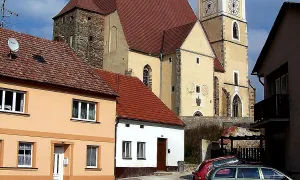
Photos: Jitka Erbenová (cheva) / CC BY-SA 3.0, rozlišení zvýšeno umělou inteligencí — Wikimedia Commons. The author and licence also appear when you hover over the image.
Faktickým podkladem tohoto textu byl článek na Wikipedii, jehož autory jsou přispěvatelé Wikipedie. Článek je dostupný pod licencí CC BY-SA 4.0.
Location on the map
More monuments – České Budějovice 7
Show all in the municipality
Příběhy a pověsti
Legendy, pověsti a příběhy spjaté s touto památkou
Fotografie návštěvníků
Zatím žádné fotografie. Buďte první, kdo přidá fotografii z návštěvy!
Log in a přidejte svou fotografii nebo hodnoťte.
Za ověřenou návštěvu v aplikaci získáte víc bodů — poznáme podle GPS, že jste na místě.
Reviews and comments