



Kostel svatého Jana Nepomuckého (Hřensko) Church
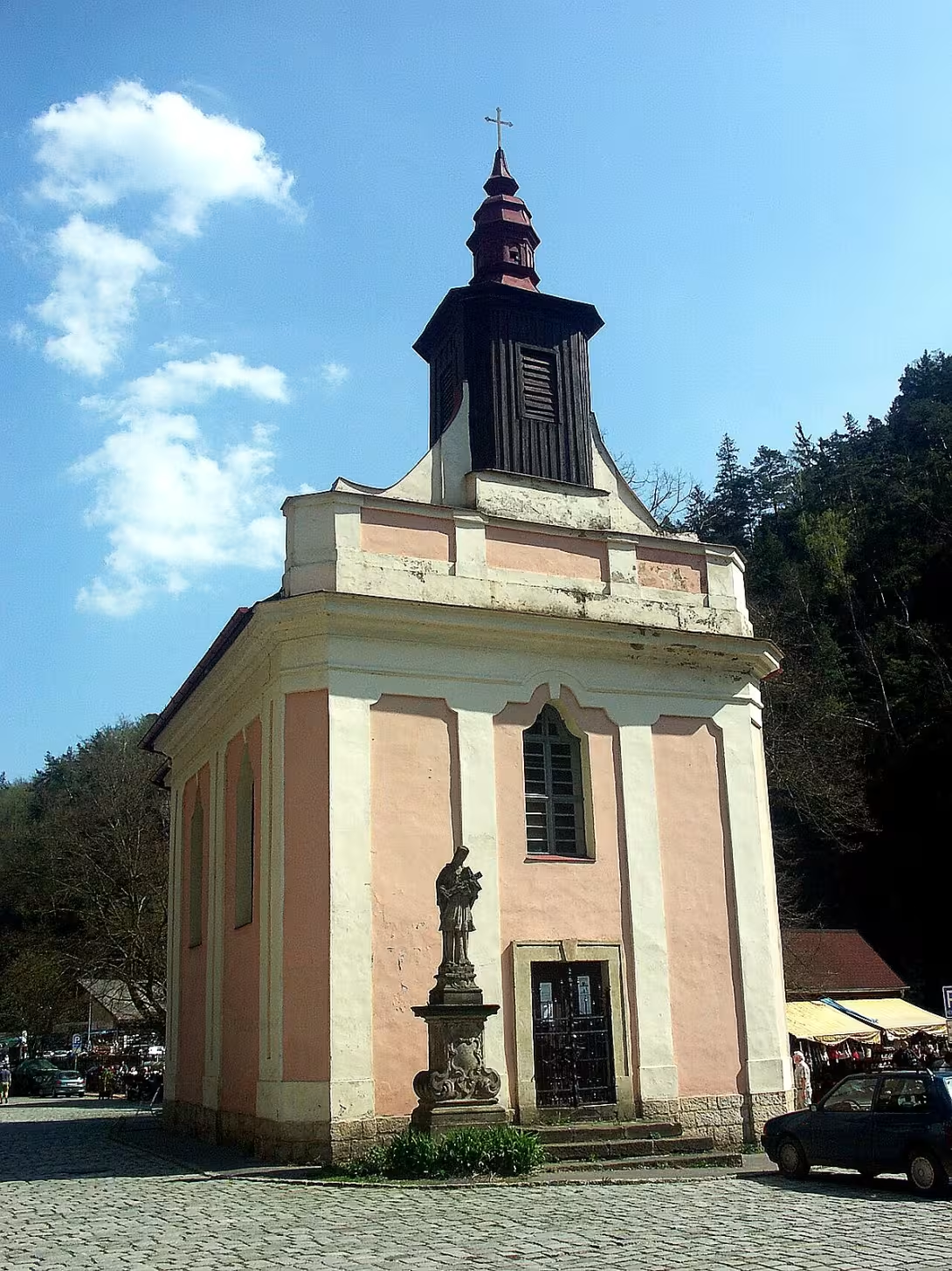
The Church of Saint John of Nepomuk in Hřensko stands as an architectural gem nestled in a deep valley by the Kamenice River. It is the lowest-located church within the Czech Republic, constructed between 1786 and 1787. Commissioned by Emperor Joseph II during his visit to Děčín in 1779, this late Baroque structure was declared a cultural monument in 1966.
The origins of the Church are tied to the Enlightenment era under Emperor Joseph II's reign, known for modernizing the Habsburg Monarchy. The church's construction responded to the emperor’s curiosity and empathy towards the local community's challenging pilgrimage through deep gorges to attend services. This context highlights the church as a symbol of enlightened governance addressing people's needs.
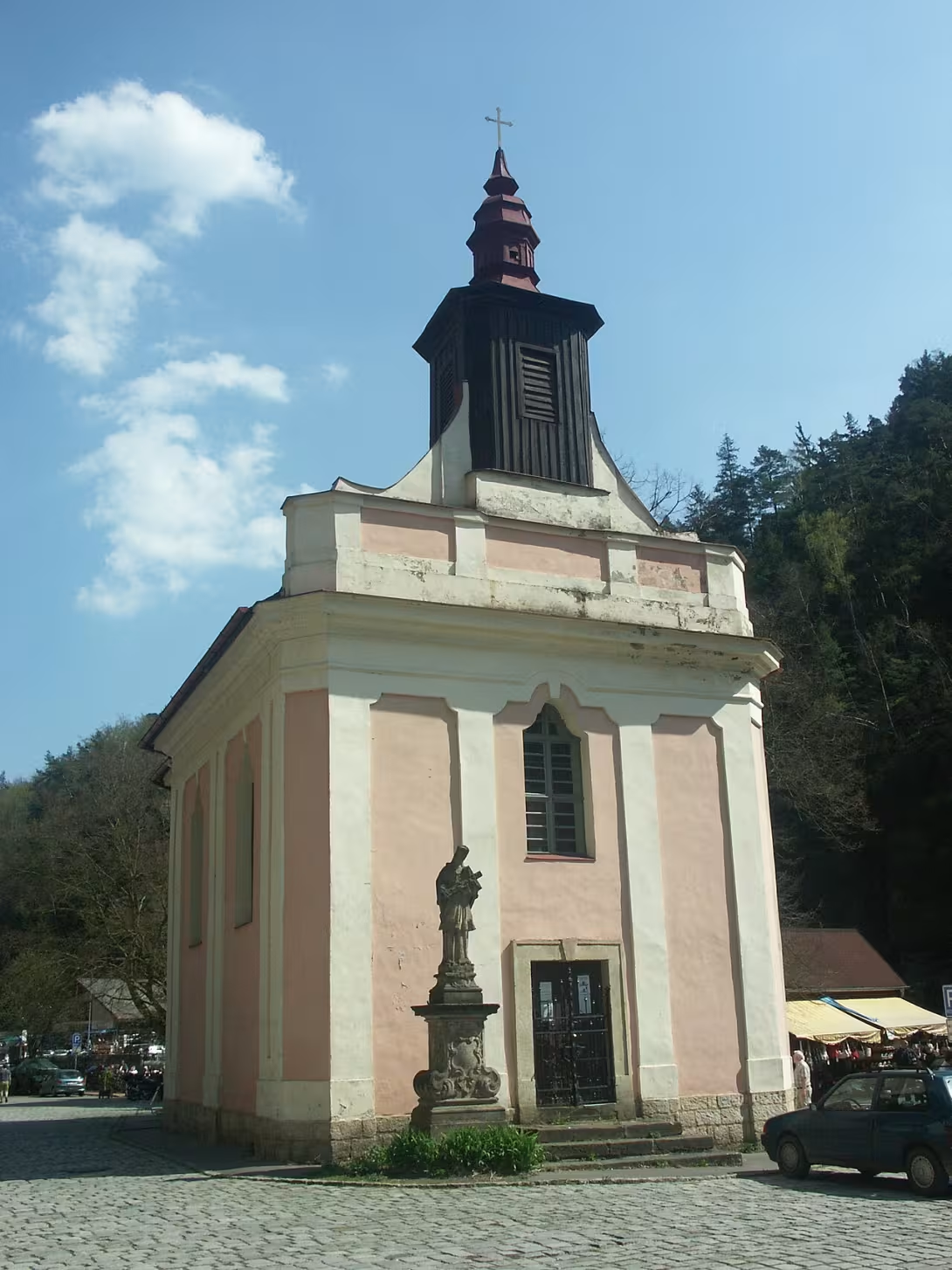
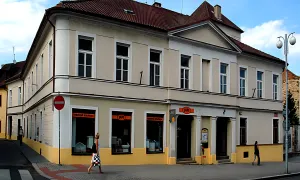
Architecturally, it features a single-nave design with skewed corners, a narrower presbytery enclosed by pilasters, and a small tower above the façade. The main entrance has three lisened frames topped by a casement window with a lunette in the arch, flanked by a divided pediment. Inside, there is a vaulted nave with shallow pilasters supporting pairs of columns, culminating in a flat barrel vault adorned with bands and lunettes above windows. The presbytery boasts a barrel vault with lunettes and a segmented flat ceiling.
Throughout its history, the church has faced challenges from floods that damaged it multiple times, notably in 2002 when water levels nearly reached the windows. These events led to restorations preserving both the structure and its community role. Today, it primarily serves the Vietnamese Catholic community, reflecting cultural exchange and adaptation.
Currently, the Church of Saint John of Nepomuk stands as a testament to resilience and historical continuity. Its architectural beauty and unique location make it an attractive destination for visitors interested in Czech history and culture. As a protected cultural monument, its preservation ensures future generations can experience this piece of regional heritage.
Visitors are encouraged to explore this remarkable site where history and architecture converge amidst Hřensko's serene landscape. Its story is one of architectural achievement, community spirit, and adaptation through centuries, making it a must-see for those interested in the Czech Republic’s cultural tapestry.
Then and now
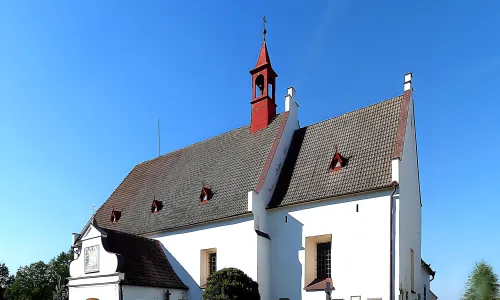
Drag the slider to compare how the landmark may have looked when it was built with the view today.

The historical appearance on the left is an AI-generated visualisation and serves as inspiration only.
Historical milestones
- 1966
- The church was declared a cultural monument.
Architectural development
The Church of Saint John of Nepomuk was constructed between 1786 and 1787. It features a single-nave design with skewed corners, a narrower presbytery enclosed by pilasters, and a small tower above the façade. The church has undergone several restorations following floods, notably in 2002.
Historical events
Commissioned by Emperor Joseph II in 1779
Declared a cultural monument in 1966
Points of interest
- The Church of Saint John of Nepomuk was built in just one year, from 1786 to 1787, showcasing the efficiency and determination of its architects during a time when construction projects often took much longer.
- Despite being constructed as a response to Emperor Joseph II's visit, the church's location is not directly on his main route between Prague and Dresden, suggesting it was specifically built for local accessibility rather than imperial convenience.
- The church’s design includes skewed corners, an unusual architectural feature that may have been influenced by the challenging terrain of its valley setting, requiring creative solutions to maintain structural integrity.
- Throughout history, the church has faced numerous floods, with one in 2002 nearly reaching the windows. This frequent exposure to water damage highlights both the resilience of the structure and the dedication of those who maintain it.
- Today, the Church serves primarily as a place of worship for the Vietnamese Catholic community, reflecting an unexpected cultural adaptation and showcasing how historical sites can evolve to meet contemporary needs while preserving their heritage.
Guide
This guide is narrated by a synthetic voice generated by artificial intelligence.
Show guide text
This text was created by artificial intelligence and has not been editorially reviewed. It may contain inaccuracies.
The Church of Saint John of Nepomuk stands in the middle of Hřesko in the Děčín district, in a deep valley at the mouth of the Kamenice stream. It is the lowest-situated church in the Czech Republic. It has been a cultural monument since nineteen sixty-six.
It was built in seventeen eighty-six and seventeen eighty-seven. Emperor Joseph the Second allegedly gave the impetus for its construction. On his way to Děčín, he stopped here and was very surprised at how difficult a journey through the deep rocky gorge the local believers had to undertake in order to attend services. The church then originally served the woodworking community. It was damaged by floods several times. During one of the most recent, in two thousand and two, the water rose almost to the windows. This is documented by marks in the interior on the right side next to the altar. The church was subsequently restored and today it mainly serves the local Vietnamese Catholic community.
It is a single-nave late baroque building with chamfered corners and a narrower, rounded presbytery, to which a rectangular extension is attached. The façade is divided by three pilaster frames. In its axis is a chasuble window with an arch at the apex and is topped by an attic with pilasters. In the middle rises a low wooden bell tower with chamfered corners. In front of the entrance is a wooden vestibule. The nave and presbytery are covered with barrel vaults with lunettes and the gallery is wooden.
The main altar dates from seventeen ten and was probably transferred here from one of the closed churches. It bears an image of Saint John of Nepomuk. After the flood in two thousand and two, it was reconstructed. The other furnishings from the nineteenth century were destroyed by the flood, so the current fittings are from the beginning of the twenty-first century. In front of the church entrance stands a statue of Saint John of Nepomuk from seventeen fifty-six.
The church also contains a two-manual organ from the nineteen twenties from the workshop of Prague builder Josef Růžička of Břevnov. Its case conceals an older positive organ by Franz Muller of Janov from eighteen seventy-two. Its six stops were used for the new instrument, which has a total of ten stops. For such a small church, its romantic disposition is rather over-dimensioned. The organ is in poor condition. The bellows do not work, the leather parts are crumbling to dust, and the wood of the pipes and the case have been attacked by woodworm. After the flood in two thousand and two, when water reached the pedal board, the organ was inspected by Jan Záhora the Elder, the regenschori of Děčín.
Tips for visitors
The best time to visit the Church of Saint John Nepomucene in Hřensko is during late spring or early autumn. During these seasons, the weather is typically mild, making it ideal for exploring the surrounding natural scenery and enjoying a leisurely walk around the area. Additionally, visiting outside peak tourist season can provide a more tranquil experience, allowing you to appreciate the church's unique architecture without large crowds.
This ensures you have the most current information on how best to reach the church.
When planning your visit, consider bringing comfortable walking shoes and weather-appropriate clothing, as the terrain around the church can be uneven due to its location in deep valleys with rocky crevices. A camera or smartphone for photography is recommended, but remember that flash might not be allowed inside the church. For those interested in capturing the picturesque landscapes, early morning light often provides the best natural illumination.
For families visiting with children, there are several engaging activities to consider. The scenic trails around the church offer a great opportunity for a family walk or hike, allowing kids to explore nature and enjoy the stunning views of the valleys. Additionally, the unique architecture of the church itself can be fascinating for older children interested in history or architecture. Be sure to bring snacks and water to keep everyone energized during your visit.
Nearby attractions within 30 minutes include exploring more of the natural beauty around Hřensko. The area's deep valleys and rocky crevices provide excellent opportunities for nature walks, photography, and simply enjoying the serene environment. These spots are perfect for those looking to extend their visit beyond the church and immerse themselves in the picturesque landscape.
Frequently asked questions
Can the monument be visited?
Religious buildings are usually open mainly during services; at other times a visit is normally arranged with the parish or the operator. We have not verified specific times.
Where is the monument?
Location: Hřensko, Ústecký kraj. The map on this page shows the exact spot.
Why is the monument protected?
It is listed in the Central List of Cultural Monuments of the Czech Republic as a cultural monument (register no. 14404/5-4518).
Businesses nearby
Do you run a restaurant, accommodation, shop, museum, rental, wellness or other visitor service near this monument? Show yourself directly to the people heading to it — this is how they will see you in the app and on the web:
Nearby
Located in Hřensko, the church is nestled in a deep valley by the Kamenice River. The surrounding landscape includes natural features typical of the region, though specific nearby monuments are not detailed.
Accommodation nearby
Trips and activities nearby
Guided tours, tickets and activities nearby from GetYourGuide
Affiliate link: if you buy from the partner, we may receive a commission. The price for you does not change.
Search tours and activities →Themed route
Thematic Walking Tour: The Church of St. John of Nepomuk and Surroundings
1. Church of St. John of Nepomucký (Hřensko) - Historical Landmark Begin your journey at the iconic Church of St. John of Nepomucký, nestled in a picturesque valley by the Kamenice River. This church is renowned for its stunning architecture and historical significance, making it a must-visit for those interested in religious heritage and architectural beauty.
2. Kamenice River - Natural Scenery After exploring the church, take a leisurely walk along the banks of the Kamenice River. The river's serene flow through the valley offers breathtaking natural scenery and provides an excellent opportunity for photography or simply enjoying nature’s tranquility.
3. Kameničky Waterfall - Natural Attraction Continue your exploration by visiting the nearby Kameničky waterfall, a short walk from the church. This charming cascade adds to the region's natural allure and is perfect for those who appreciate the beauty of waterfalls set against lush landscapes.
4. Hřensko Village Center - Cultural Experience Conclude your tour by strolling through the village center of Hřensko. The quaint streets and local architecture offer a glimpse into traditional Czech village life, providing a cultural experience that complements the historical and natural attractions you've explored.
This thematic walking tour offers a balanced mix of history, nature, and culture, all within the charming setting of Hřensko.
Seasonal recommendations
Spring: Visiting the Church of Saint John Nepomuk in Hřensko during spring offers a unique experience as nature awakens around this historic site. The blooming flowers and fresh greenery create a vibrant backdrop, enhancing the church's serene beauty. As daylight extends into the evening, visitors can enjoy the soft natural light that beautifully illuminates the architecture. Spring is generally less crowded than summer, making it an ideal time for those who prefer a quieter visit. It’s advisable to wear layers as temperatures can vary, and carrying a light jacket or sweater might be beneficial if you plan to explore outside in the evening.
Summer: Summer at Saint John Nepomuk's Church presents a lively atmosphere with longer daylight hours that allow visitors to fully appreciate its architectural details under bright sunlight. The surrounding landscape is lush and green, providing a picturesque setting for photography enthusiasts. However, this is also peak tourist season, so it’s wise to arrive early in the morning or later in the afternoon to avoid large crowds. Comfortable walking shoes and light clothing are recommended due to warmer temperatures, along with sun protection such as hats and sunscreen.
Autumn: Autumn brings a magical transformation to the Church of Saint John Nepomuk, as the surrounding foliage turns into shades of red, orange, and yellow, creating a stunning visual contrast against the historic structure. The cooler weather makes it pleasant for walking tours around the area. This season tends to have fewer visitors compared to summer, offering a more peaceful experience. It’s advisable to wear layers that can be adjusted as temperatures fluctuate throughout the day, and carrying an umbrella or raincoat might be wise due to the potential for autumn showers.
Winter: The Church of Saint John Nepomuk in winter exudes a quiet charm with its surroundings blanketed in snow, offering a serene and almost mystical atmosphere. Winter lighting can create dramatic shadows and highlights on the church’s façade, making it an excellent time for photography enthusiasts seeking unique shots. However, be mindful that the site may have reduced hours during this season due to shorter daylight, so checking opening times is essential. Dress warmly in layers, including a coat, hat, gloves, and scarf, as temperatures can be quite cold. It’s also advisable to wear sturdy boots with good traction for walking on potentially icy paths.
Visualizations and artistic views


The visualisations are generated by artificial intelligence and serve as inspiration.
Photos from the area
Real photos taken near the monument


Zdroj a licence jsou uvedeny u každého snímku.
Tips from visitors
No tips yet. Be the first!
Log in and add your tip.
Sources and literature
Photos: Diether / CC BY-SA 3.0 — Wikimedia Commons. The author and licence also appear when you hover over the image.
Faktickým podkladem tohoto textu byl článek na Wikipedii, jehož autory jsou přispěvatelé Wikipedie. Článek je dostupný pod licencí CC BY-SA 4.0.
Location on the map
Příběhy a pověsti
Legendy, pověsti a příběhy spjaté s touto památkou

Fotografie návštěvníků
Zatím žádné fotografie. Buďte první, kdo přidá fotografii z návštěvy!
Log in a přidejte svou fotografii nebo hodnoťte.
Za ověřenou návštěvu v aplikaci získáte víc bodů — poznáme podle GPS, že jste na místě.
Reviews and comments