






kostel svatého Jiří (Čebín) Church
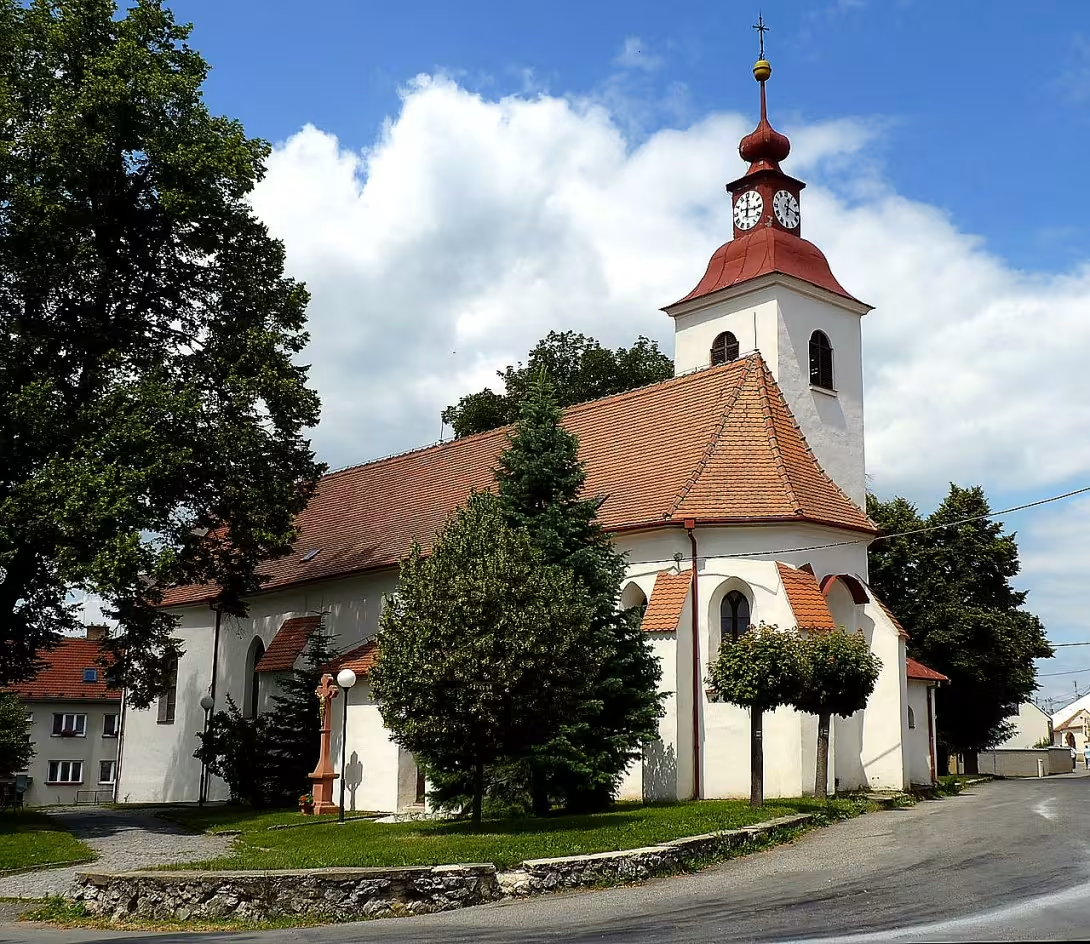
The Church of Saint George in Čebín is a remarkable historical monument showcasing architectural evolution from Romanesque origins through Gothic and Baroque influences. Situated in the village of Čebín within the Brno-venkov district of Jihomoravský kraj, this church is designated as a protected cultural monument of the Czech Republic. Its significance stems not only from its 13th-century roots but also from its architectural diversity and preserved artistic elements, such as significant Gothic frescoes.
The core structure was constructed in the 13th century, reflecting the Romanesque style prevalent at that time. This foundational period is crucial as it marks the beginning of a building that would undergo several transformations over the centuries. By the early 14th century, the church saw significant Gothic additions, including a chancel with cross vaulting and frescoes, characteristic of flourishing architectural styles across Europe during this era.
Following a devastating fire in 1772, the church's architecture evolved further. This event prompted substantial changes, such as an extension to the nave and the introduction of new Prussian vaults in 1803, designed by architect Josef Dewez. These modifications were part of broader Baroque influences that added complexity and beauty to the structure.
Throughout its history, the Church of Saint George has been a focal point for the local community, serving as the parish church for Čebín. Its architectural journey from Romanesque beginnings through Gothic enhancements and Baroque adaptations reflects religious and cultural transformations in the region over time. The preservation of interior elements, particularly the Gothic frescoes, underscores its historical and artistic value.
Today, the Church of Saint George remains a significant site for both its historical importance and architectural beauty. Visitors can explore its rich history and admire the preserved frescoes that offer a glimpse into the past. As a protected cultural monument, it stands as a testament to the enduring legacy of medieval architecture in the Czech Republic. The church is open to visitors who wish to experience this unique blend of styles and historical narratives firsthand.
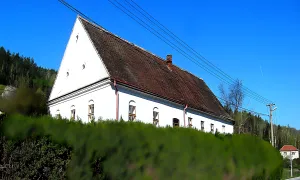
Then and now
Drag the slider to compare how the landmark may have looked when it was built with the view today.
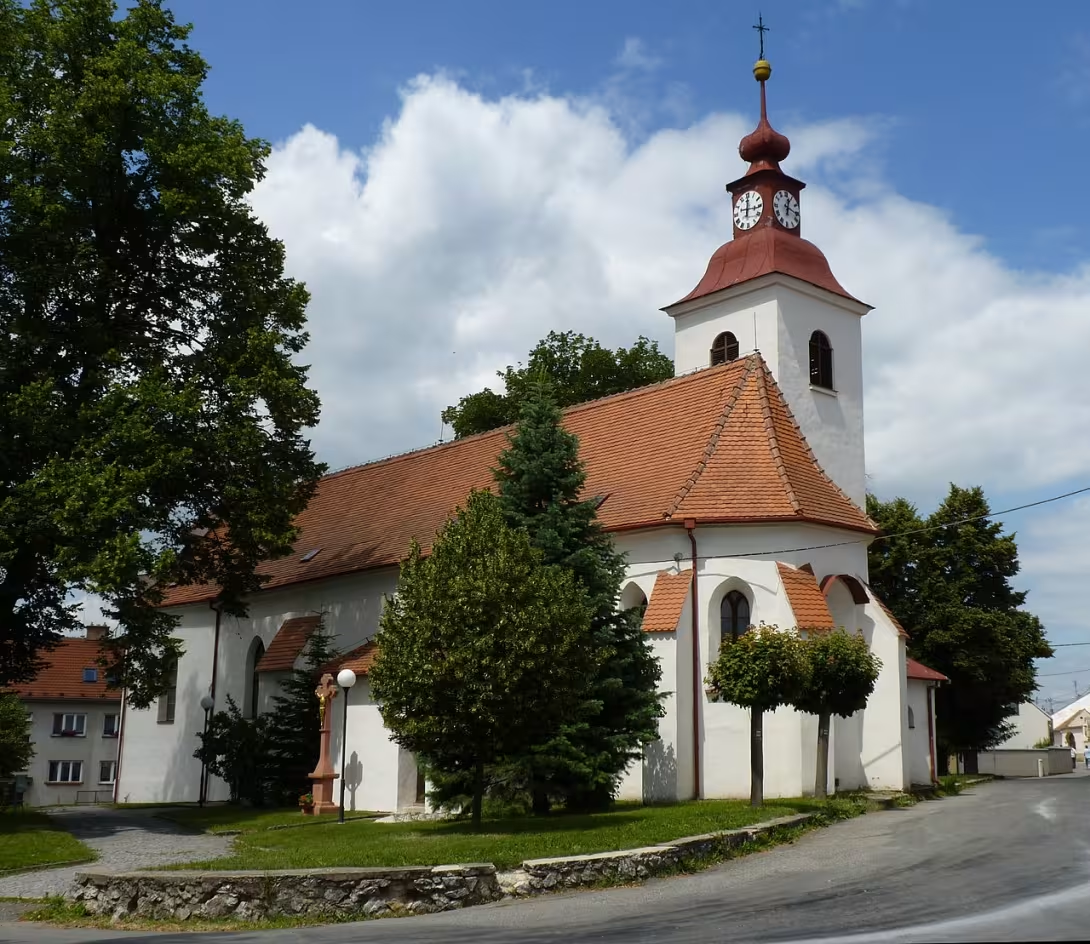

The historical appearance on the left is an AI-generated visualisation and serves as inspiration only.
Historical milestones
- 13th century
- Construction of the Romanesque core of the church.
- 14th century
- Addition of a Gothic chancel with cross vaulting and frescoes.
- 1772
- Significant changes following a fire, including an extension to the nave.
- 1803
- Installation of Prussian vaults under architect Josef Dewez.
Architectural development
The Church of Saint George began as a Romanesque structure with its core from the 13th century. In the early 14th century, it was expanded with a Gothic chancel featuring cross vaulting and frescoes. The church underwent further modifications after a fire in 1772, including an extension to the nave and new Prussian vaults in 1803 under architect Josef Dewez.
Historical events
The core structure of the Church of Saint George was built in the 13th century with its Romanesque origins.
A Gothic chancel with a cross vault and preserved frescoes was added in the first half of the 14th century.
Significant changes occurred after a fire in 1772, including an extension to the nave and new Prussian vaults in 1803.
Guide
This guide is narrated by a synthetic voice generated by artificial intelligence.
Show guide text
This text was created by artificial intelligence and has not been editorially reviewed. It may contain inaccuracies.
The Church of Saint George in Čebíně near Brno is the parish church of the local Roman Catholic parish and is protected as a cultural monument. Its appearance developed gradually from the Middle Ages until the middle of the nineteenth century.
The oldest part is the eastern section of the nave. It is Romanesque and dates from the thirteenth century. In the first half of the fourteenth century, a Gothic chancel was added to it. It is terminated by five sides and vaulted with a cross vault, and paintings from that time have been preserved in it to this day. At the same time, a tower was built in the northern corner between the chancel and the nave, with a sacristy in its ground floor.
Around the middle of the seventeenth century, the sacristy was extended to the east and vaulted. The tower originally had a wooden story with bells. Apparently around sixteen ninety-four, it was replaced with a brick story.
After a fire in seventeen seventy-two, further modifications followed. The largest of these took place in eighteen hundred and three. The nave was then extended to the west, its perimeter walls were raised, and it received Prussian vaults. The project was designed by Josef Dewez, architect of the Provincial Building Directorate in Brno.
The last construction interventions came in eighteen fifty-one. The church then underwent minor neo-Gothic modifications, and a new sacristy was built on the south side of the chancel.
Tips for visitors
The best time to visit the Church of Saint George in Čebín is during late spring or early autumn, when the weather is pleasant and the surrounding countryside is lush with greenery. This period also tends to be less crowded than summer months, allowing for a more serene experience. The natural light during these times enhances the architectural details of this Romanesque church, making it ideal for appreciating its historical features.
Public transport is also accessible, with routes that connect to Čebín.
When planning your visit, consider bringing comfortable walking shoes as you may want to explore the surrounding area of Čebín. A camera or smartphone for photography is advisable, especially if you wish to capture the church’s stunning architecture. Additionally, bring water and perhaps some snacks, particularly if you plan on spending a few hours exploring.
For photography enthusiasts, the best spots are typically around the entrance and the main facade of the Church of Saint George. Early morning or late afternoon light provides the most dramatic shadows and highlights, ideal for capturing the church’s intricate details. Inside, natural light filtering through stained glass windows can create beautiful effects worth photographing.
Nearby attractions within a 30-minute drive include other historical sites in the Jihomoravský region that offer insights into local history and architecture. Exploring these nearby locations can provide a broader context of the area’s cultural heritage, making your visit to Čebín even more enriching.
Frequently asked questions
Can the monument be visited?
Religious buildings are usually open mainly during services; at other times a visit is normally arranged with the parish or the operator. We have not verified specific times.
Where is the monument?
Location: Čebín, Jihomoravský kraj. The map on this page shows the exact spot.
Why is the monument protected?
It is listed in the Central List of Cultural Monuments of the Czech Republic as a cultural monument (register no. 37400/7-666).
Businesses nearby
Do you run a restaurant, accommodation, shop, museum, rental, wellness or other visitor service near this monument? Show yourself directly to the people heading to it — this is how they will see you in the app and on the web:
Events nearby




Zdroj akcí: otevřená data měst a obcí ČR (Národní katalog otevřených dat) a kalendář akcí Národního památkového ústavu.
Accommodation nearby
Trips and activities nearby
Guided tours, tickets and activities nearby from GetYourGuide
Affiliate link: if you buy from the partner, we may receive a commission. The price for you does not change.
Search tours and activities →Themed route
Tematická výletní trasa: Kostel svatého Jiří (Čebín)
1. Kostel svatého Jiří (Čebín) - Typ: Náboženská památka - Proč stojí za návštěvu: Tento barokní kostel je nejen duchovním centrem obce, ale také architektonickou perli s bohatými historickými prvky. Jeho vnitřek nabízí krásné umělecké detaily a poskytuje pohled na místní kulturu.
2. Obecní úřad Čebín - Typ: Historická budova - Proč stojí za návštěvu: Tato historická budova, nacházející se v centru obce, sloužila jako administrativní sídlo již po mnoho desetiletí. Je zajímavá svým architektonickým stylem a nabízí vhled do historie místní správy.
3. Kaple Panny Marie - Typ: Náboženská kaple - Proč stojí za návštěvu: Tato malá, ale významná kaple je místo modlitby a klidu pro místní obyvatele. Její prostor nabízí jednoduchost a duchovní atmosféru, kterou návštěvníci ocení.
4. Místní park - Typ: Zelený prostor - Proč stojí za návštěvu: Park je ideálním místem pro odpočinek a relaxaci po prozkoumání historických památek. Nabízí krásné procházky, zelené plochy a místa na oddechnutí v příjemném prostředí.
Tato trasa nabízí kombinaci náboženských, historických a přírodních atrakcí, které společně osvětlují bohatou kulturu a dědictví obce Čebín.
Seasonal recommendations
Spring: Visiting Church of St. George during spring offers a unique experience as the surrounding landscape bursts into life with vibrant wildflowers and fresh greenery, creating an enchanting atmosphere that enhances the historical beauty of Čebín. The soft, diffused light of early mornings or late afternoons can beautifully illuminate the church's architecture, making it ideal for photography enthusiasts. Visitors should be prepared for occasional showers typical of this season by bringing a waterproof jacket and wearing comfortable walking shoes. This time often sees fewer tourists, allowing for a more peaceful exploration.
Summer: Summer at Church of St. George is characterized by long days filled with warm sunshine that highlights the intricate details of the church's facade. The lush greenery surrounding the site provides a picturesque backdrop, perfect for leisurely walks or picnics in nearby parks. Due to its popularity during this peak tourist season, it’s advisable to arrive early to avoid crowds and ensure ample time for exploration. Comfortable footwear is recommended due to potentially hot pavements, and visitors should stay hydrated by bringing water.
Autumn: Autumn brings a magical transformation to Church of St. George with the changing colors of foliage providing a stunning contrast against the historic structure. The cooler temperatures make it an ideal time for outdoor activities like hiking in the nearby countryside, while the softer light enhances the church's architectural features. Visitors should dress warmly and consider bringing layers as the weather can be unpredictable. This season usually sees moderate tourist traffic, offering a pleasant balance between accessibility and tranquility.
Winter: The winter months envelop Church of St. George in a serene, almost mystical atmosphere as snow blankets the landscape, creating a picturesque scene that complements its historic charm. It's essential to wear warm clothing, including hats, gloves, and insulated boots, and to check in advance for any changes in accessibility or services offered by the church. Despite fewer tourists, the cold can make exploration a brisk affair, so planning ahead is key.
Visualizations and artistic views


The visualisations are generated by artificial intelligence and serve as inspiration.
Photos from the area
Real photos taken near the monument


Zdroj a licence jsou uvedeny u každého snímku.
Tips from visitors
No tips yet. Be the first!
Log in and add your tip.
Sources and literature
Photos: Michal Klajban / CC BY-SA 3.0 — Wikimedia Commons. The author and licence also appear when you hover over the image.
Faktickým podkladem tohoto textu byl článek na Wikipedii, jehož autory jsou přispěvatelé Wikipedie. Článek je dostupný pod licencí CC BY-SA 4.0.
Location on the map



Příběhy a pověsti
Legendy, pověsti a příběhy spjaté s touto památkou
Fotografie návštěvníků
Zatím žádné fotografie. Buďte první, kdo přidá fotografii z návštěvy!
Log in a přidejte svou fotografii nebo hodnoťte.
Za ověřenou návštěvu v aplikaci získáte víc bodů — poznáme podle GPS, že jste na místě.
Reviews and comments