






kostel svatého jména Panny Marie Church
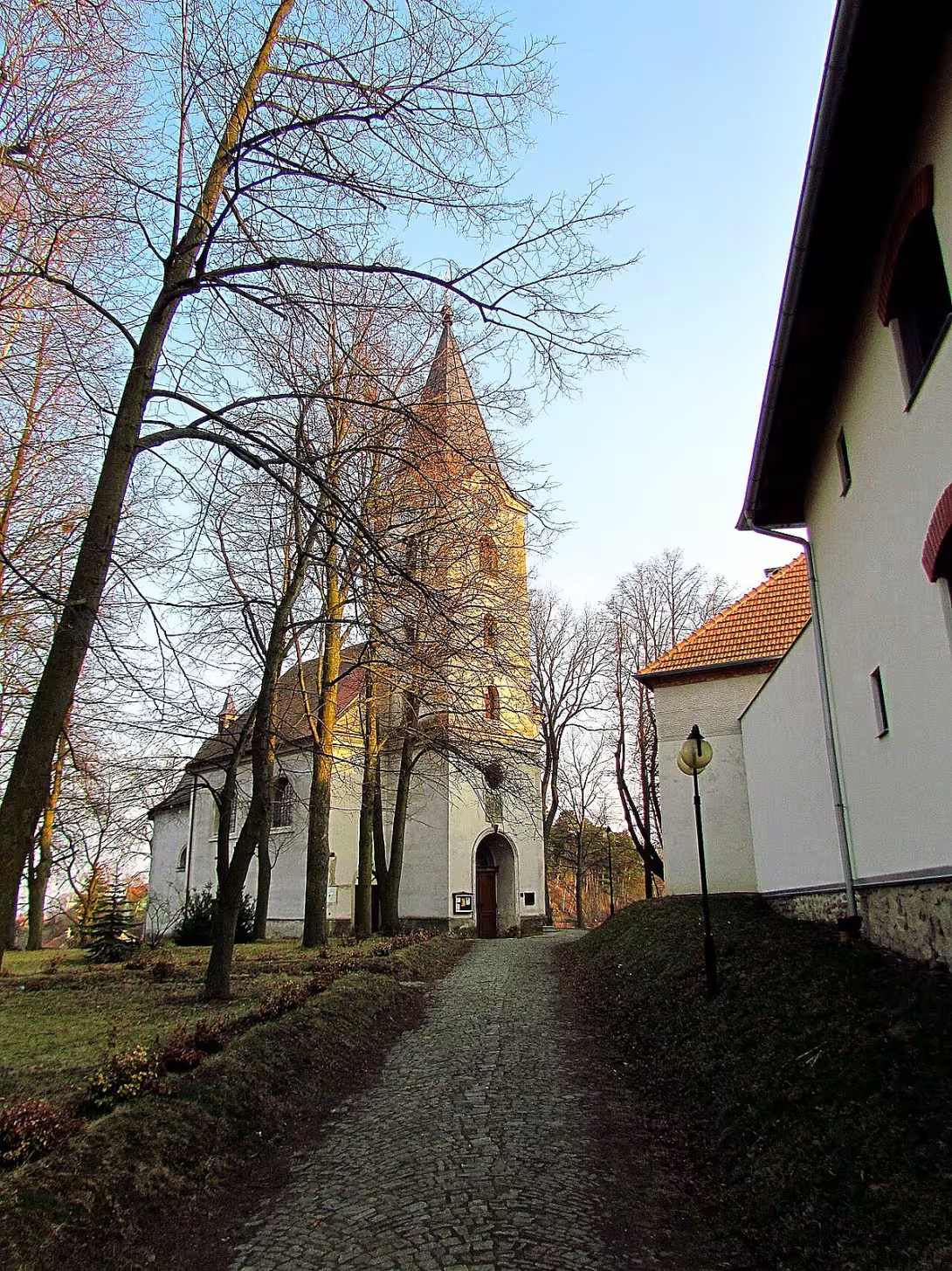
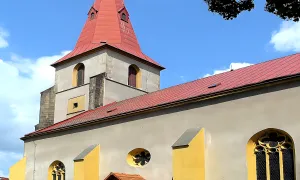
The Church of the Name of Our Lady in Okříšky is a Roman Catholic parish church with significant historical and cultural importance. Situated east of Okříšky Castle in the Vysočina Region, this Baroque structure was built around 1673 on the site of an earlier church from before 1500. Recognized as a cultural monument in the Czech Republic, it features two altars: a wooden main altar and a side altar dedicated to Our Lady of the Holy Sacrament.
The origins of the Church trace back to when Bohemia was part of the Habsburg Monarchy. It replaced an earlier structure from before the 16th century, reflecting Baroque architectural development influenced by Catholic Counter-Reformation ideals during the late 17th century. Initially serving as a Protestant chapel, it transitioned into its current Roman Catholic form after the Ständeaufstand (Stirrings).
Architecturally, the church is noted for its Baroque style, which replaced an earlier building from before the 16th century. Significant renovations occurred over time, including a major rebuild of its tower in the late 19th century due to damage sustained in 1894, leading to its collapse and subsequent reconstruction between 1895 and 1898. The church's interior is adorned with altars and artworks added throughout the early to mid-20th century, such as the main altar installed in 1901 and a side altar from 1905.
Ownership of the church was initially associated with local castle lords who maintained control over its operations and finances until at least the late 19th century. This connection is evident in historical records that mention a zámecký pán (castle lord) having his own private tribune within the church, accessible via a covered bridge from the nearby castle.
Key events in the church's history include the establishment of a fenced cemetery around it in 1691, which served as the primary burial site until 1882. The cholera epidemic during this period necessitated the creation of a new cemetery due to capacity issues. Additionally, the church has been home to various artistic contributions, such as a wooden nativity scene crafted by Jaroslav Čeloud in 1914 and a křížová cesta (way of the cross) purchased in 1908 and reconstituted in 1995.
Today, the Church of the Name of Our Lady stands as a testament to its rich history and cultural significance. It is under the administration of the parish from Přibyslavice since 1991, following several renovations and restorations over the years. Visitors can explore its historical architecture and appreciate the artistic elements that have been added throughout its existence.
The Church of the Name of Our Lady offers a unique glimpse into the architectural and cultural heritage of the region. Its historical significance and well-preserved features make it a worthwhile visit for those interested in exploring the rich tapestry of Czech history and Baroque artistry.
Then and now
Drag the slider to compare how the landmark may have looked when it was built with the view today.
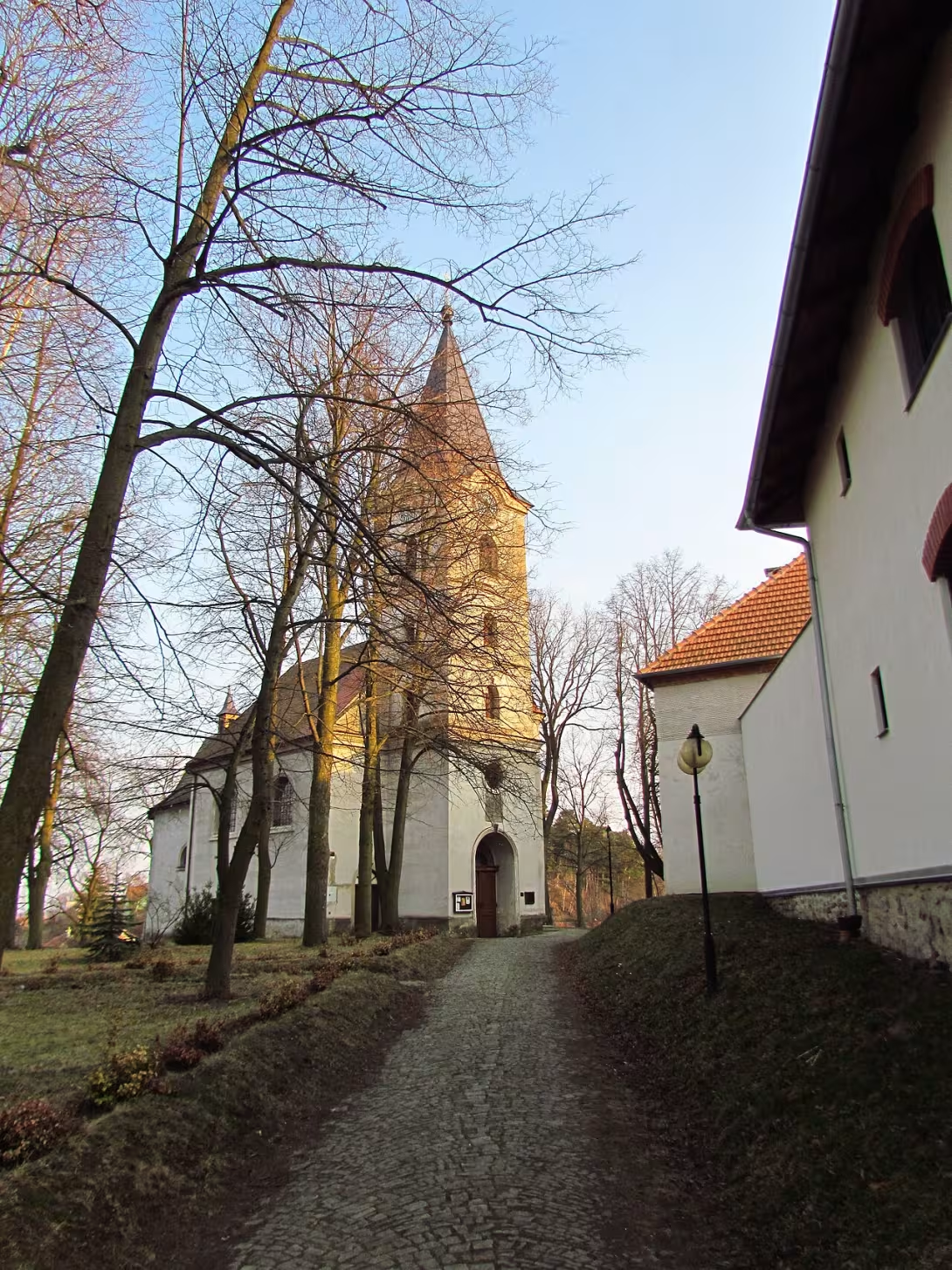

The historical appearance on the left is an AI-generated visualisation and serves as inspiration only.
Historical milestones
- 1673
- Construction of the current Baroque church.
- 1691
- Establishment of a fenced cemetery around the church.
- 1894
- Damage to the church's tower leading to its collapse.
- 1901
- Installation of the main altar in its current form.
Architectural development
The current Baroque structure replaced an earlier building from before the 16th century. Over time, it underwent several renovations, including a significant rebuild of its tower in the late 19th century. The church's interior features include altars and artworks added throughout the early to mid-20th century.
Historical events
In 1691, a cemetery surrounded by a fence was established around the church. This cemetery served as the primary burial site until 1882 when a new one was created due to capacity issues during a cholera epidemic.
The church's tower suffered damage in 1894, leading to its collapse and subsequent reconstruction between 1895 and 1898.
Owners
The church was initially associated with the local castle lords, who maintained control over its operations and finances until at least the late 19th century.
Points of interest
- The Church of the Name of Our Lady initially served as a Protestant chapel before transitioning to its current Roman Catholic form after the Ständeaufstand, reflecting the religious and political shifts in Bohemia during that era.
- A unique feature of the church's history is the presence of a private tribune for the zámecký pán (castle lord), highlighting the intertwined relationship between local nobility and religious institutions, with access provided by a covered bridge from Okříšky Castle.
- The church underwent significant structural changes after its tower collapsed in 1894 due to damage, leading to an extensive reconstruction period from 1895 to 1898 that restored its Baroque grandeur and ensured its continued presence as a historical landmark.
- A distinctive artistic contribution is the wooden nativity scene crafted by Jaroslav Čeloud in 1914, adding to the church's rich collection of artworks and showcasing local craftsmanship during the early 20th century.
- The establishment of a fenced cemetery around the church in 1691 served as its primary burial site until 1882 when capacity issues necessitated the creation of a new cemetery due to a cholera epidemic, illustrating how public health crises influenced community practices.
Guide
This guide is narrated by a synthetic voice generated by artificial intelligence.
Show guide text
This text was created by artificial intelligence and has not been editorially reviewed. It may contain inaccuracies.
Welcome to the Church of the Name of Our Lady in Okříšky, a beacon of history and spirituality nestled in the Vysočina Region. As you stand before this architectural gem, take a moment to soak in its serene presence, surrounded by the gentle landscape that has watched over it for centuries.
This church, with its Baroque elegance, was constructed around 1673 on the foundations of an earlier structure dating back before 1500. Its history is deeply intertwined with the religious and political shifts of Bohemia, initially serving as a Protestant chapel before embracing Roman Catholicism following the Ständeaufstand. This transformation reflects not just a change in architectural style but also a profound shift in the community's spiritual journey.
As you gaze upon its façade, notice the harmonious blend of simplicity and grandeur that characterizes Baroque architecture. Inside, two altars capture your attention: a wooden main altar and a side altar dedicated to Our Lady of the Holy Sacrament. Each piece tells a story, inviting you into a world where faith and artistry converge.
The church's history is marked by resilience; in 1894, its tower suffered damage leading to collapse, yet it stood tall again, embodying the community's enduring spirit. By 1901, the main altar was installed in its current form, adding another chapter to this sacred narrative.
A unique aspect of this church's past is its role as a Protestant chapel before transitioning to Roman Catholicism, a testament to the dynamic religious landscape of Bohemia during that era. This shift not only highlights the church's adaptability but also serves as a reminder of the broader historical currents that have shaped the region.
As you continue your visit, let yourself be drawn into the quiet stories and whispered prayers that echo through these walls. The Church of the Name of Our Lady invites you to explore its depths, to uncover more about its past and perhaps reflect on your own journey.
Thank you for allowing us to guide you through this remarkable place. May your exploration inspire curiosity and wonder as you delve deeper into the history and beauty surrounding you.
Frequently asked questions
Can the monument be visited?
Religious buildings are usually open mainly during services; at other times a visit is normally arranged with the parish or the operator. We have not verified specific times.
Where is the monument?
Location: Okříšky, Kraj Vysočina. The map on this page shows the exact spot.
Why is the monument protected?
It is listed in the Central List of Cultural Monuments of the Czech Republic as a cultural monument (register no. 22881/7-2943). It is protected as part of a larger listed ensemble.
Businesses nearby
Do you run a restaurant, accommodation, shop, museum, rental, wellness or other visitor service near this monument? Show yourself directly to the people heading to it — this is how they will see you in the app and on the web:
Nearby
The Church of the Name of Our Lady is situated east of Okříšky Castle. The surrounding landscape includes rolling hills typical of the Vysočina Region, with other historical sites and natural features within a five-kilometer radius.
Accommodation nearby
Trips and activities nearby
Guided tours, tickets and activities nearby from GetYourGuide
Affiliate link: if you buy from the partner, we may receive a commission. The price for you does not change.
Search tours and activities →Themed route
Tematická výletní trasa: Kostel svatého jména Panny Marie, Okříšky
1. Kostel svatého jména Panny Marie
- Typ: Náboženská památka
- Proč stojí za návštěvu: Tento kostel je umístěn v idylickém prostředí na východ od zámku Okříšky a nabízí pohled na typické krajinné prvky Vysočiny. Je to skvělý příklad architektonického umění, který se harmonicky prolíná s okolními kopcovitými krajinami.
2. Zámek Okříšky
- Typ: Historická památka
- Proč stojí za návštěvu: Zámek, který se nachází nedaleko kostela, je vynikajícím příkladem historické architektury. Jeho zahrady a okolní prostory nabízejí krásné místo k procházkám a poskytují pohled na širší krajinu Vysočiny.
3. Kopcovité krajinné prvky Vysočiny
- Typ: Přírodní atrakce
- Proč stojí za návštěvu: Tato oblast nabízí jedinečný pohled na typickou vysočinskou krajinu s jejími vlnitými kopci a zelenými loukami. Je to ideální místo pro relaxaci, piknik nebo jen pro užívání přírodní krásy.
4. Historické cesty
- Typ: Kulturní památka
- Proč stojí za návštěvu: Starobylé cesty kolem kostela a zámku jsou plné historie, která ožívá při procházce. Tyto stezky byly kdysi důležitými spojovacími pruhy v regionu a dodnes zachycují duši minulosti.
Tato trasa nabídne návštěvníkům příležitost prozkoumat nejen kostel svatého jména Panny Marie, ale i jeho okolní historické a přírodní atrakce.
Seasonal recommendations
Spring: The arrival of spring at the Church of Saint Name of the Virgin Mary in Okříšky is marked by a gentle awakening of nature, with blossoming flowers and fresh greenery surrounding the historic church. This time of year offers a serene atmosphere as visitors can enjoy the soft light filtering through budding trees, enhancing the church's architectural beauty. With fewer crowds compared to summer, it’s an ideal period for those seeking tranquility while exploring the site. Visitors are advised to wear comfortable walking shoes and layers that can be adjusted with the variable spring weather.
Summer: Summer brings vibrant life to the Church of Saint Name of the Virgin Mary in Okříšky, with lush landscapes and long daylight hours perfect for leisurely exploration. This is the peak tourist season, so expect larger crowds, especially during weekends and holidays. The church's surroundings are particularly picturesque at this time, offering a lively atmosphere enhanced by warm sunshine. To make the most of your visit, plan to arrive early in the morning or later in the afternoon to avoid the midday rush, and wear light clothing suitable for warmer temperatures.
Autumn: Autumn transforms the Church of Saint Name of the Virgin Mary into a stunning canvas of reds, oranges, and yellows. The changing leaves create a breathtaking backdrop that complements the historic architecture, making it an enchanting time to visit. While the weather can be unpredictable with cooler days and occasional rain, the milder temperatures compared to winter make it comfortable for outdoor activities like walking through nearby trails. Visitors should dress in layers and carry a light jacket or umbrella to accommodate sudden changes in weather.
Winter: In winter, the Church of Saint Name of the Virgin Mary exudes a quiet charm under a blanket of snow, offering a unique and serene experience. The shorter days mean that visits are best planned for late morning when lighting is optimal for capturing the church's beauty against a frosty landscape. Although it can be colder with limited daylight hours, this season sees fewer visitors, allowing for a more intimate exploration. Visitors should dress warmly in layers, wear sturdy boots, and check opening times as they may vary during the winter months due to weather conditions.
Visualizations and artistic views


The visualisations are generated by artificial intelligence and serve as inspiration.
Photos from the area
Real photos taken near the monument


Zdroj a licence jsou uvedeny u každého snímku.
Tips from visitors
No tips yet. Be the first!
Log in and add your tip.
Sources and literature
Photos: Jiří Sedláček / CC BY-SA 3.0 — Wikimedia Commons. The author and licence also appear when you hover over the image.
Faktickým podkladem tohoto textu byl článek na Wikipedii, jehož autory jsou přispěvatelé Wikipedie. Článek je dostupný pod licencí CC BY-SA 4.0.
Location on the map



Příběhy a pověsti
Legendy, pověsti a příběhy spjaté s touto památkou
Fotografie návštěvníků
Zatím žádné fotografie. Buďte první, kdo přidá fotografii z návštěvy!
Log in a přidejte svou fotografii nebo hodnoťte.
Za ověřenou návštěvu v aplikaci získáte víc bodů — poznáme podle GPS, že jste na místě.
Reviews and comments