



Kostel svatého Josefa (Krásná Lípa) Church
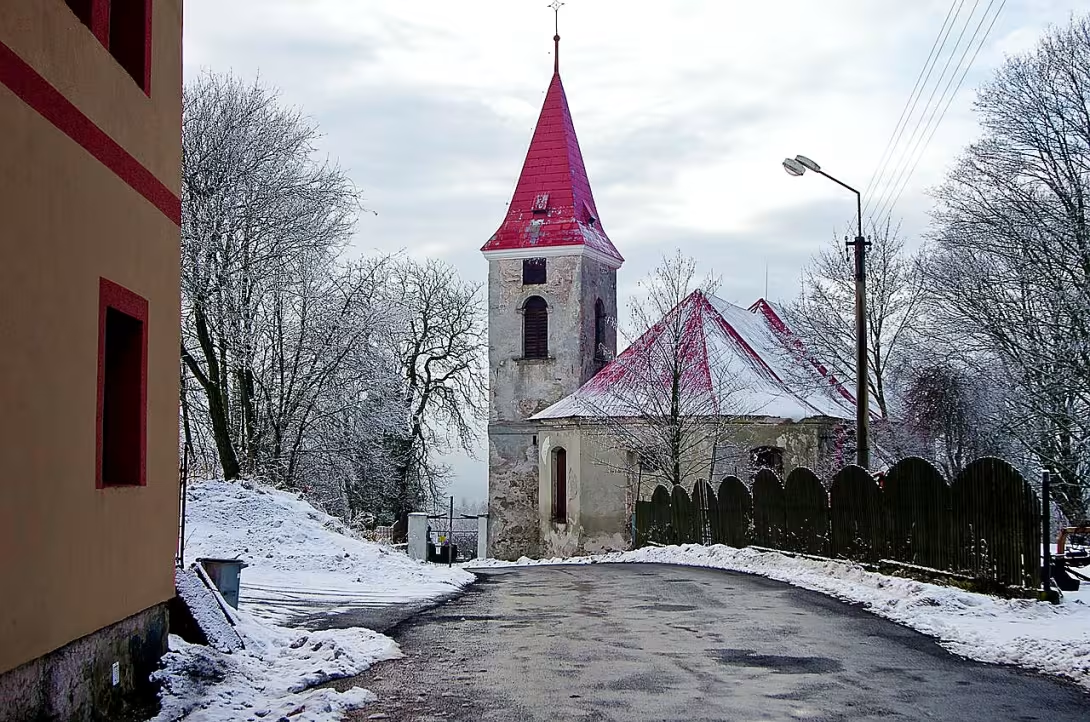
The building of our own church in Beautiful Lip has spread out for centuries. The inhabitants of the oldest times did not have a temple and went to worship in Henry's. Since the middle of the sixteenth century, a chapel dedicated to the Holy Trinity was established in Králová Lípa, where a cemetery was also created. Over time, the chapel was converted into a wooden Baroque church whose existence is evidenced by records from 1731 regarding organ repair. At that time, the church was already dictated to Saint Joseph and the priest from Henry's church led here every third Sunday of the month of service.
In the eighteenth century, more precisely in 1784 or 1785, the church was promoted to a parish church and a parish was established here. The old wooden structure had to be replaced. In 1811 the wooden building was torn down and already on the feast of St. Wenceslas in 1813 a mass was held in the new brick church.
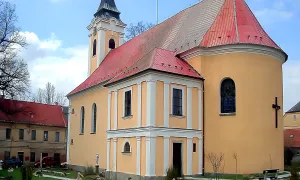
The new temple represents a simple Empire style. It is an oriented construction with a rectangular boat and a decomposed presbytery with a polygonal conclusion. On the south side, a massive prism tower is turned off from the ship's layout. The sacristy on the ground floor is finished with a roof of jellied shape. The outer walls are smooth with segmental and semi-circular windows. Just behind the church, the cemetery is situated in the slope, with stone slabs on top.
The interior is flat-ceiling, the ship is covered by the ceiling on the faboon. The wooden three-arm circle with balustrade is carried by columns and the triumphal arch has a semi-circular shape. The device changed over the years. From 1932, mention of the statue of Madonna with a child in the altar of the evangelical side and St. John Nepomuk in the altar of the epistle side. The 1950s brought loss - a drunk broke into the church and destroyed some statues. The canvas with St. Joseph was also damaged. The current device is the result of long evolution: the side altar of Immaculate Conception has a statue of the Virgin Mary, the altar of the Heart of the Lord has a statue of Jesus, both from the nineteenth century. The Rococo pulpit and the Luisése Organ are from the end of the eighteenth century. The late Baroque main altar carries the oil painting of St. Joseph from the first half of the nineteenth century. Side gates with new sculptures were added to the main altar retrospectively.
After World War II, the church faded and his condition remained very bad. However, the church is secure and has been protected as a cultural monument of the Czech Republic since 1963 along with the fenced wall.
Then and now
Drag the slider to compare how the landmark may have looked when it was built with the view today.
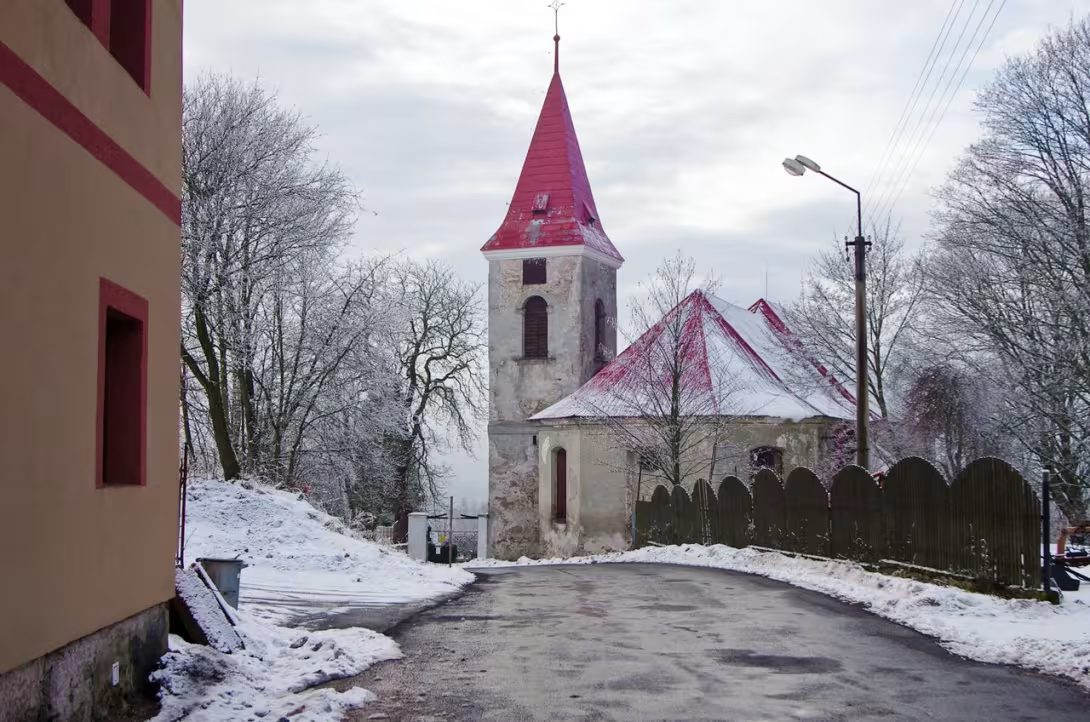
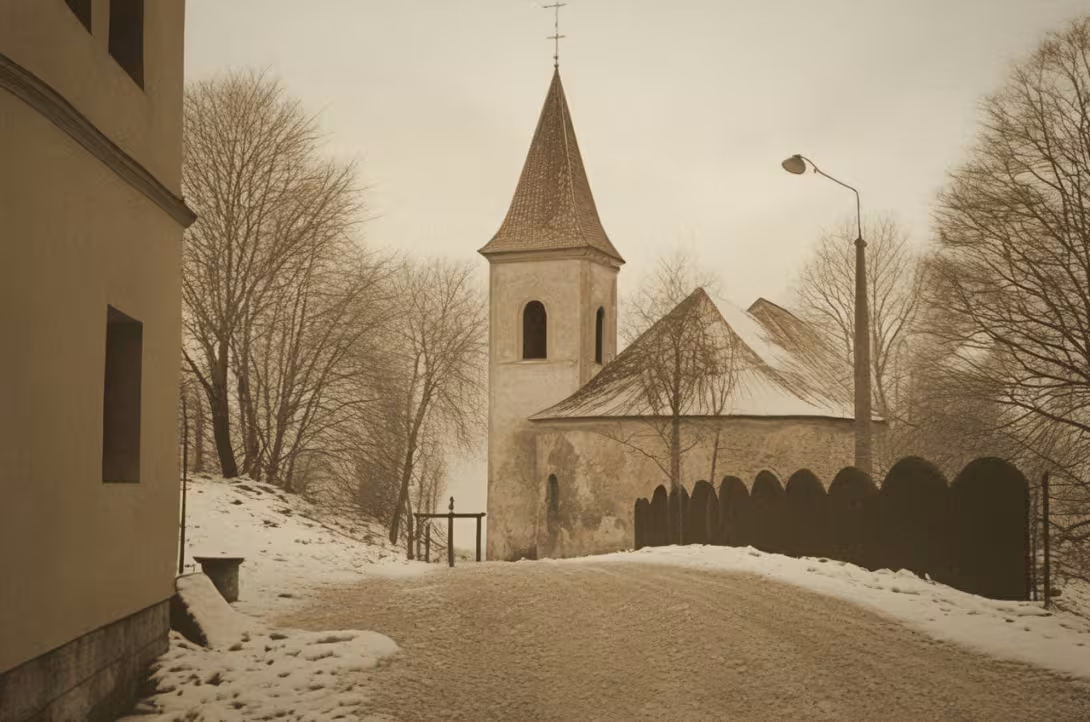
The historical appearance on the left is an AI-generated visualisation and serves as inspiration only.
Historical milestones
- 1784
- The establishment of the parish and the declaration of the church by the parish church.
- 1811
- The demolishing of the original wooden structure.
- 1813
- The construction of a new brick church and the first mass.
- 1963
- The church together with the fenced wall is declared a cultural monument of the Czech Republic.
Architectural development
At the site of the original chapel from the middle of the 16th century a wooden Baroque church was gradually formed. The current brick building in Empire style was built after removing the older wooden structure. The interior contains elements from the end of the 18th century, such as the Rococo pulpit and the Luisése organ.
Historical events
In 1784 or 1785 a parish was established and the church became parochial. In 1811, the original wooden structure was torn down. In 1813 the first mass was held in a new brick church.
Points of interest
It took centuries to build a church in Beautiful Lip. - From around the middle of the sixteenth century there was a chapel dedicated to the Holy Trinity, which later became a wooden Baroque church. - In 1811 the old wooden building was torn down and the new brick church was opened in 1813. - The new temple represents a simple Empire style with oriented construction, a rectangular boat and a decomposed presbytery. - Since 1963, the church has been protected as a cultural monument of the Czech Republic.
Guide
This guide is narrated by a synthetic voice generated by artificial intelligence.
Show guide text
This text was created by artificial intelligence and has not been editorially reviewed. It may contain inaccuracies.
You will find the Church of Saint Joseph in Krásná Lipa, a local part of Šindelová in the Sokolov area. It is a Roman Catholic church that was formerly a parish church. Since nineteen sixty-three, it has been protected as a cultural monument together with its surrounding wall.
The inhabitants of Krásná Lipa attended services in the earliest times in Jindřichovic, where there was only a branch church at that time. It became a parish church only in sixteen twenty-seven. However, from approximately the middle of the sixteenth century, a chapel already stood in Krásná Lipa, and a cemetery next to it. Before the Reformation, it was dedicated to the Holy Trinity. Later it was rebuilt into a wooden baroque church, which already belonged to Saint Joseph. Its existence is documented by records from seventeen thirty-one about organ repairs. Every third Sunday of the month, the priest from Jindřichovic would come here to preach and celebrate mass. The parish house was established in seventeen eighty-four or seventeen eighty-five, and the small church thus became a parish church.
In eighteen eleven, the wooden structure was demolished. Already on the feast of Saint Václav in eighteen thirteen, mass was celebrated in the new stone church. After the Second World War, the church deteriorated and its condition is very poor, but the building is secured.
The church is a simple Empire-style structure with a rectangular nave and an expansive presbytery, that is, the space around the main altar, with a polygonal apse. On the south side projecting from the nave floor plan is a massive prismatic tower. The sacristy on the ground floor is covered by a pyramidal roof. The outer walls are smooth and the large windows have arched endings. Right behind the church, a cemetery stretches along the slope, surrounded by a plastered wall covered with stone slabs.
Inside there is a flat ceiling. A wooden gallery with a balustrade is supported by several columns, and the triumphal arch is semicircular. The furnishings of the church changed many times over the years. In the nineteen fifties, a drunk man broke into the church. He destroyed some original statues and also damaged an image of Saint Joseph. A statue of the Virgin Mary was therefore later placed in the side altar of the Immaculate Conception, and a statue of Jesus was placed in the altar of the Sacred Heart. Both statues date from the nineteenth century.
From the end of the eighteenth century comes a rococo pulpit, and the organ is approximately from the same period. The late baroque main altar from the end of the eighteenth century bears an oil painting with Saint Joseph, most likely from the first half of the nineteenth century. At one time, the church also contained a baroque carving of the Virgin Mary, a wooden crucifix, and a rococo stations of the cross on the gallery railing.
Tips for visitors
The best time to visit is in the morning or late afternoon, when the light best highlights the Empire architecture of the building. In these hours, the atmosphere of the monument is the quietest.
You can reach the monument by car and public transport.
Take comfortable shoes with you, because the terrain around you can be challenging. Families with children should be cautious when moving near the slope near the cemetery.
For photography are the best places around the building itself, from where you can capture both the church and the cemetery located just behind it in the slope.
Frequently asked questions
Can the monument be visited?
Religious buildings are usually open mainly during services; at other times a visit is normally arranged with the parish or the operator. We have not verified specific times.
Where is the monument?
Location: Krásná Lípa, Karlovarský kraj. The map on this page shows the exact spot.
Why is the monument protected?
It is listed in the Central List of Cultural Monuments of the Czech Republic as a cultural monument (register no. 32427/4-712).
For kids
Imagine going back to the time when St. Joseph's Church was still young and full of life. This was over 500 years ago when people gathered around this place to pray and celebrate religious holidays.
How did it look here? Who lived here? What happened here? At that time Krásná Lípa was a small town where there were people who lived from the ground and caught fish in a nearby river. They were people who liked nature and liked it. As the day came when the church of St. Joseph was to be built, people gathered around where it stands today.
Businesses nearby
Do you run a restaurant, accommodation, shop, museum, rental, wellness or other visitor service near this monument? Show yourself directly to the people heading to it — this is how they will see you in the app and on the web:
Nearby
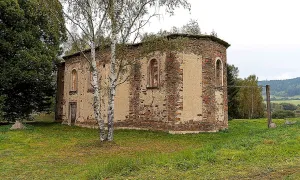
The cemetery is located just behind the church building in the slope.
Accommodation nearby
Trips and activities nearby
Guided tours, tickets and activities nearby from GetYourGuide
Affiliate link: if you buy from the partner, we may receive a commission. The price for you does not change.
Search tours and activities →Themed route
Thematic cruise route: Kostel svatého Josefa (Krásná Lípa)
1. Church of St. Joseph - * Type: * Religious monument - * Why is it worth visiting: * This church is an architectural work that attracts attention to its history and location. It is an ideal place for those who are interested in religious monuments and their importance in society.
2. Cemetery - * Type: * Funeral ground - * Why is it worth a visit: * Located just behind the church of St. Joseph and offers quiet rooms to relax. It's a place where you can explore historical graves and monuments that resemble the history of the village.
3. Chapel in the cemetery - * Type: * Small religious structure - * Why is it worth visiting: * The chapel is part of the cemetery and provides a place for peaceful meditation or prayer. It is an ideal place for those who want to record quiet moments near the church.
4. Church tank - * Type: * Open space - * Why is it worth a visit: * The tank is an ideal place to relax and enjoy beautiful green spaces. Here you can enjoy a quiet moment, perhaps even with family or friends, in the immediate vicinity of the church.
5. Church Tower - * Type: * Architectural element - * Why is it worth visiting: * The tower offers not only a view of the surroundings, but also an opportunity to explore the history and architecture of the church from a different angle. It is an ideal place for photography and for those who like high-rise views.
This route offers a comprehensive view of the main religious monument of the village Krásná Lípa and its surroundings.
Seasonal recommendations
Spring brings awakening surroundings and a fine, scattered light that highlights the texture of damaged walls. The atmosphere is fresh, but it may be wet. We recommend to come in the morning when light is most suitable for observing details. Get dressed in a straight line to be ready for constant temperature changes.
In the summer months the area is full of thick green and the sun creates sharp shadows on the facade. In the main summer season the attendance rate is higher, which is why it is best to arrive early in the morning to avoid crowds even the greatest heat. Prepare your hat and enough water for a pleasant passage around.
Autumn season offers a melancholy atmosphere that matches the imperfect state of the monument. Fog and colored leaves give the place a mystery. Due to the damp surface and slippery terrain, we recommend choosing fixed shoes. The best time to visit is an early afternoon when the light is still sufficient.
Zimą works in a freezing environment very raw and lonely. Snow and frost can highlight any crack in the structure. Due to short days, plan to visit at the brightest part of the day. It is necessary to have very warm clothes and shoes with good grip due to the risk of slipping on ice.
Visualizations and artistic views


The visualisations are generated by artificial intelligence and serve as inspiration.
Photos from the area
Real photos taken near the monument


Zdroj a licence jsou uvedeny u každého snímku.
Atmosphere of the place
This atmospheric visualisation of the place and period was generated by artificial intelligence. It is not real footage of the location.
Tips from visitors
No tips yet. Be the first!
Log in and add your tip.
Sources and literature
Photos: Lubor Ferenc / CC BY-SA 3.0 — Wikimedia Commons. The author and licence also appear when you hover over the image.
Faktickým podkladem tohoto textu byl článek na Wikipedii, jehož autory jsou přispěvatelé Wikipedie. Článek je dostupný pod licencí CC BY-SA 4.0.
Location on the map
Příběhy a pověsti
Legendy, pověsti a příběhy spjaté s touto památkou
Fotografie návštěvníků
Zatím žádné fotografie. Buďte první, kdo přidá fotografii z návštěvy!
Log in a přidejte svou fotografii nebo hodnoťte.
Za ověřenou návštěvu v aplikaci získáte víc bodů — poznáme podle GPS, že jste na místě.
Reviews and comments