






Kostel svatého Josefa (Petrovice) Church
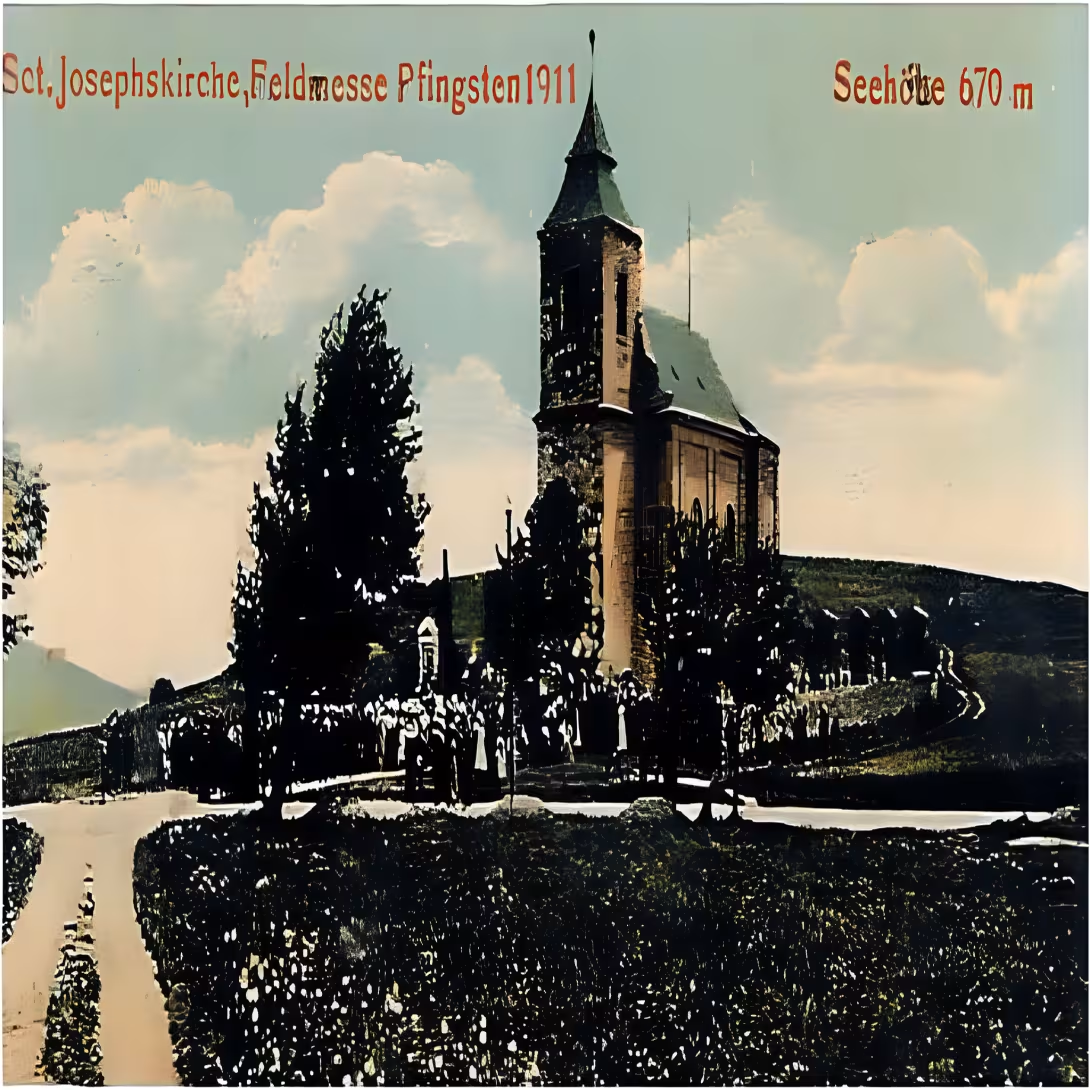
Objekt se nedochoval — na místě dnes nestojí. Následující text popisuje jeho historii, ne současnou návštěvu.
The Church of Saint Joseph in Petrovice, Nakléřov, stands as a testament to early Baroque architecture and religious history within the Czech Republic's Ústí nad Labem region. Constructed between 1679 and 1683, this church served as a parish for the local Roman Catholic community until its demolition in 1975. Its historical significance is preserved through a simple wooden cross erected on its former site by German expellees after World War II.
The origins of the Church of Saint Joseph are rooted in the late 17th century when Bohemia was part of the Habsburg Monarchy, experiencing significant religious and political changes. The Baroque period saw architectural developments that emphasized grandeur and drama, characteristics reflected in this church's design. Initially, a wooden church existed here, established by the von Lundwitz family in 1330 but succumbed to local climatic conditions. A new structure was built in 1382, dedicated to God, the Blessed Virgin Mary, and Saint George, only to be destroyed during the Thirty Years' War in 1639.
Architecturally, the Church of Saint Joseph exemplified early Baroque style with its single-nave layout and barrel vault. The church underwent a major rebuild in 1697 and featured significant artistic elements such as a new main altar installed in 1699 by Michael Leibner, showcasing an image of the Holy Family. Its design included pilasters and lunettes, typical of Baroque architecture, with facades divided by lisenas and windows featuring half-circular arches topped with volute pediments.
Ownership and administration of the church saw various changes over time. The original construction was commissioned by Count Rudolf Václav ze Schönfeldu between 1679 and 1683. Over the years, it served as a vital religious site until its unfortunate demolition in 1975. This decision came from the Ústí nad Labem District National Committee, which intended to replace it with a monument honoring the Red Army—a project that never materialized.
Key events in the church's history include its consecration on November 9th, 1683, and its eventual demolition in 1975. The latter was met with protests from the Krajské středisko státní památkové péče a ochrany přírody (KSSPPOP), although these efforts were unsuccessful. Post-World War II, the church faced further challenges as it could not host services due to Soviet military occupation and was later repurposed as a storage facility for a military base.
Today, visitors can find only a wooden cross at the site of the former Church of Saint Joseph. This modest marker stands in memory of the German expellees who once called this place home. Despite its absence, the church's legacy endures through historical records and the enduring symbol of the cross. The site offers a poignant reminder of the region’s complex history and serves as an invitation to reflect on the cultural and architectural heritage that once flourished here.
Then and now
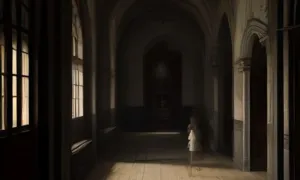
Drag the slider to compare how the landmark may have looked when it was built with the view today.
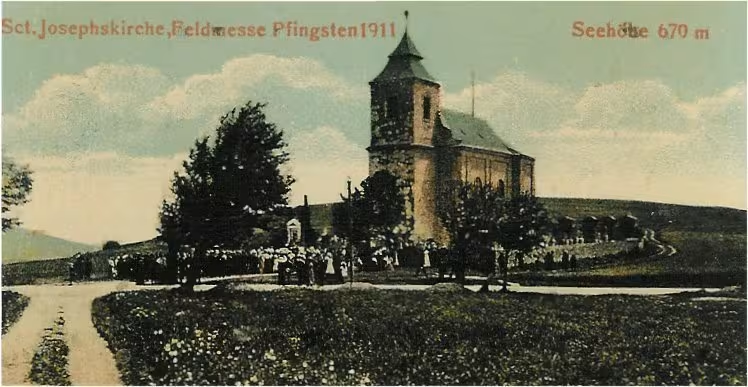
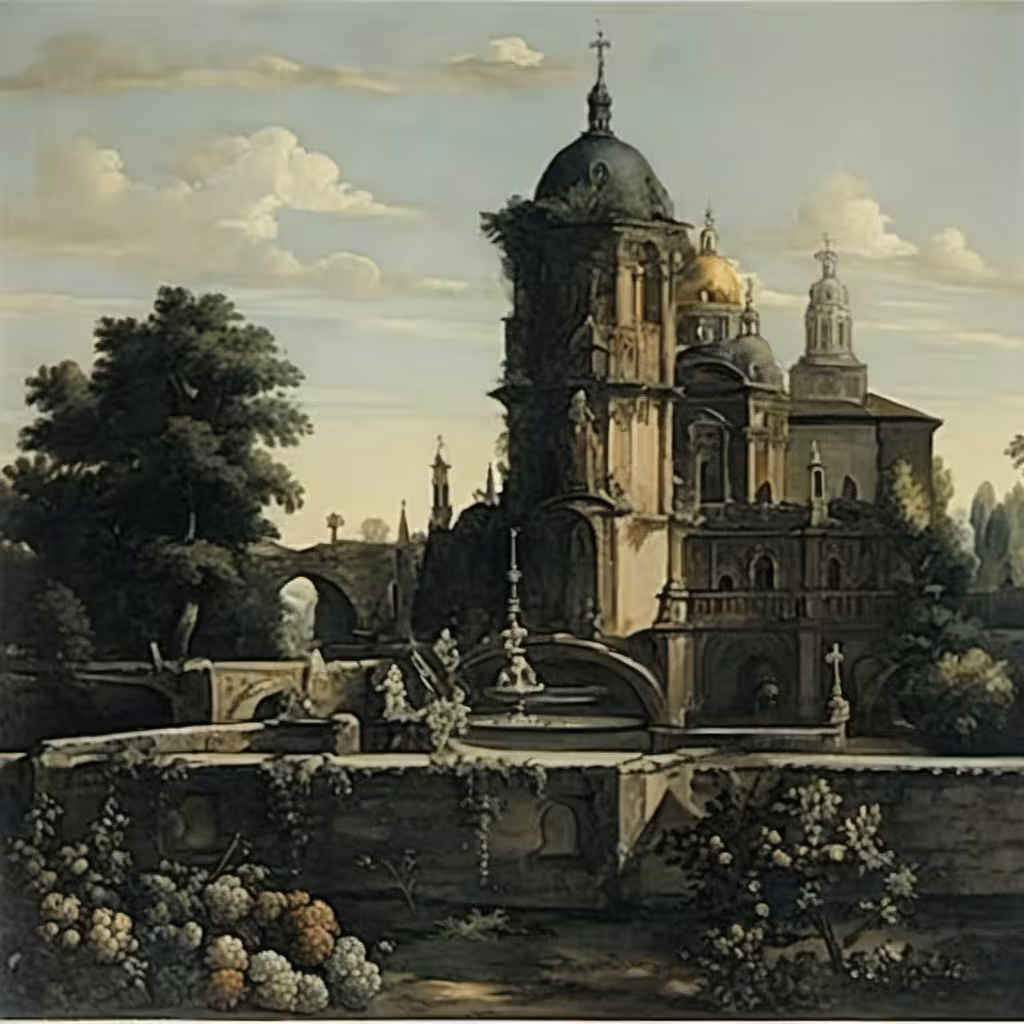
The historical appearance on the left is an AI-generated visualisation and serves as inspiration only.
Historical milestones
- 1330
- Vznik první dřevěné kaple založené rodinou von Lundwitz.
- 1382
- Postavení nového kostela věnovaného Bohu, Panně Marii a sv. Jiřímu.
- 1639
- Zničení kostela během třicetileté války.
- 1679
- Počátek výstavby Kostela svatého Josefa.
- 1683
- Konsekrace Kostela svatého Josefa dne 9. listopadu.
- 1697
- Větší rekonstrukce kostela.
- 1699
- Instalace nového hlavního oltáře od Michaela Leibnera.
- 1975
- Demolice Kostela svatého Josefa.
Architectural development
Constructed between 1679 and 1683 in an early Baroque style, the Church of Saint Joseph featured a single-nave layout with a barrel vault. It underwent significant changes over time, including a major rebuild in 1697 and the installation of a new main altar in 1699. The church's architecture included pilasters and lunettes, typical of Baroque design.
Historical events
- 1683
- The church was consecrated on November 9th.
- 1975
- The church was demolished by decision of the Ústí nad Labem District National Committee to make way for a planned monument, which was never built.
Points of interest
- The Church of Saint Joseph was initially replaced by a wooden church in 1330 due to the destruction caused by local climatic conditions, highlighting the challenges early structures faced in this region.
- Despite its Baroque grandeur, the church's history is marked by repeated destruction and rebuilding; it was first destroyed during the Thirty Years' War in 1639 before being rebuilt in 1679–1683, reflecting the turbulent historical context of Bohemia under Habsburg rule.
- The artistic contributions to the Church of Saint Joseph included a main altar installed in 1699 by Michael Leibner, featuring an image of the Holy Family, showcasing the church's role as a center for religious art and expression during its time.
- After World War II, the church was repurposed as a storage facility due to Soviet military occupation, illustrating how geopolitical changes directly impacted local heritage sites in the region.
- The decision to demolish the church in 1975 by the Ústí nad Labem District National Committee was intended to make way for a monument honoring the Red Army, but this project never came to fruition, leaving only a wooden cross as a reminder of its existence.
Guide
This guide is narrated by a synthetic voice generated by artificial intelligence.
Show guide text
This text was created by artificial intelligence and has not been editorially reviewed. It may contain inaccuracies.
Welcome to the site of the Church of Saint Joseph in Petrovice, Nakléřov. As you stand here today, your eyes are drawn to a simple wooden cross that marks where this historical church once stood. Erected by German expellees after World War II, it serves as a poignant reminder of the rich history and cultural shifts that have shaped this land.
The origins of this sacred site date back to 1330 when a wooden chapel was first established by the von Lundwitz family. This humble beginning faced challenges from local climatic conditions, leading to its replacement in 1382 with a new church dedicated to God, the Virgin Mary, and Saint George. However, the ravages of time and conflict were relentless; during the Thirty Years' War in 1639, this structure too was destroyed.
It wasn't until 1679 that construction began on what would become the Church of Saint Joseph, completing its grandeur by 1683. This early Baroque masterpiece served as a parish church for the local Roman Catholic community until its demolition in 1975. Although it no longer stands, the spirit and legacy of this architectural wonder live on through stories and memories.
As you stand here, imagine the intricate details that once defined its architecture: the harmonious blend of form and function characteristic of Baroque design. Picture a church whose walls echoed with prayers and hymns, whose doors opened to welcome countless souls seeking solace and community.
Among those connected to this site was Rudolf Václav ze Schönfeldu, a historical figure who played a role in the region's ecclesiastical history. His contributions are part of the tapestry that makes Petrovice a place of enduring significance.
A fascinating aspect of this church’s story is its resilience through repeated destruction and reconstruction, reflecting both the challenges and the determination of those who sought to preserve their faith and heritage here.
As we conclude our journey at this site, I invite you to reflect on the layers of history that have unfolded in this place. Consider exploring the surrounding area of Nakléřov, where more stories await discovery. Thank you for joining me today; may your visit inspire a deeper appreciation for the rich tapestry of our shared past.
Businesses nearby
Do you run a restaurant, accommodation, shop, museum, rental, wellness or other visitor service near this monument? Show yourself directly to the people heading to it — this is how they will see you in the app and on the web:
Visualizations and artistic views


The visualisations are generated by artificial intelligence and serve as inspiration.
Photos from the area
Real photos taken near the monument

Zdroj a licence jsou uvedeny u každého snímku.
Tips from visitors
No tips yet. Be the first!
Log in and add your tip.
Sources and literature
Photos: autor neuveden / Public domain, rozlišení zvýšeno umělou inteligencí — Wikimedia Commons. The author and licence also appear when you hover over the image.

Příběhy a pověsti
Legendy, pověsti a příběhy spjaté s touto památkou
Fotografie návštěvníků
Zatím žádné fotografie. Buďte první, kdo přidá fotografii z návštěvy!
Log in a přidejte svou fotografii nebo hodnoťte.
Za ověřenou návštěvu v aplikaci získáte víc bodů — poznáme podle GPS, že jste na místě.
Reviews and comments