



kostel svatého Klimenta (Hostěnice) Church
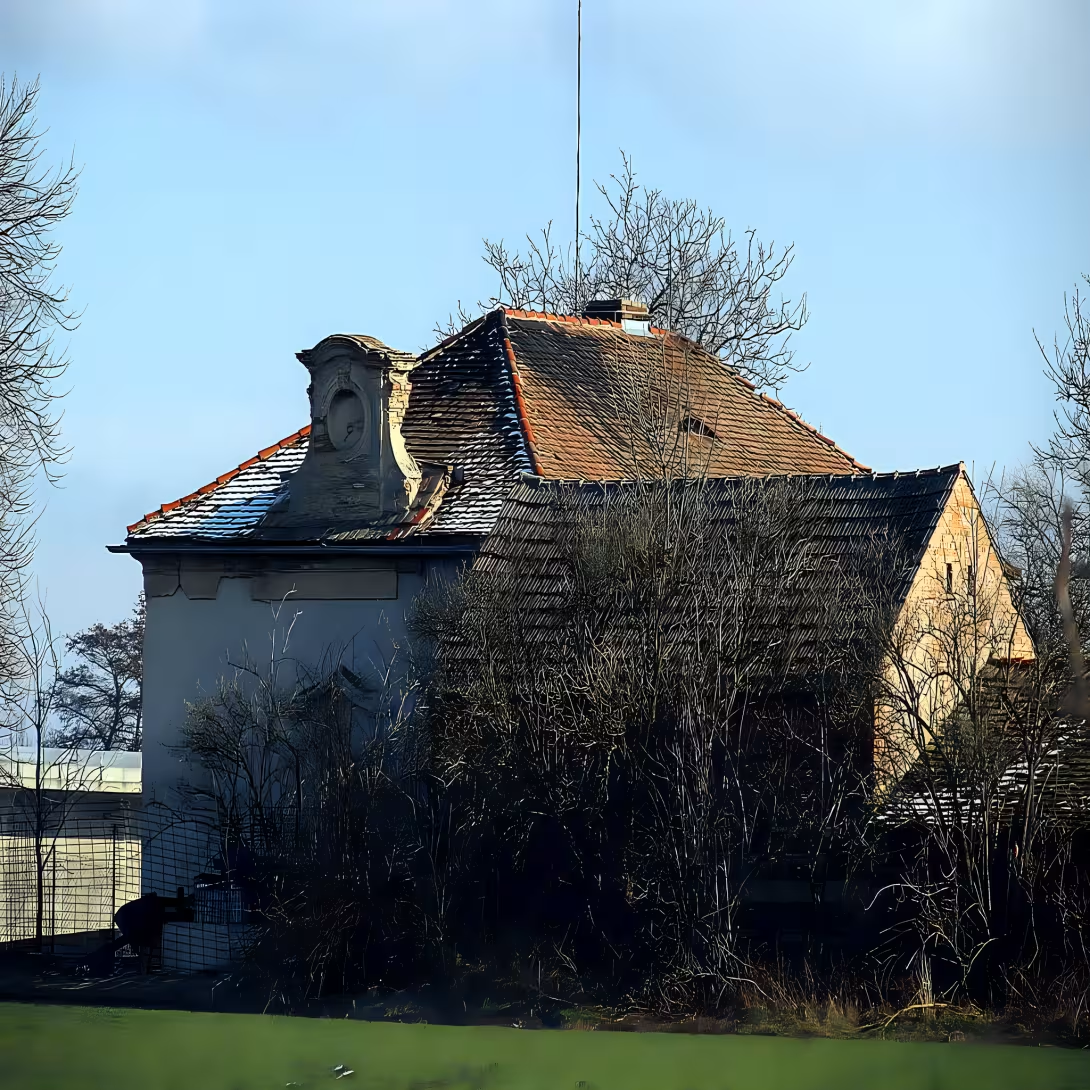
The Church of Saint Clement in Hostěnice stands as a testament to the rich medieval history of the Czech Republic. Situated about 2 km south of Doksany near the Ohře River, this historical monument was founded in the 10th century by disciples of Saints Cyril and Methodius. Initially serving as a parish church for the now-extinct village of Mury, it played a significant role in spreading Christianity in the region.
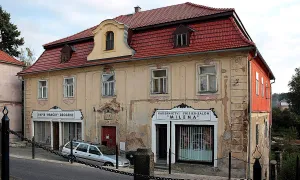
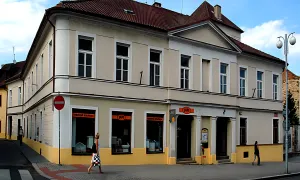
Despite its transformation into a residential house following secularization during the Josephinian reforms, the Church retains cultural and historical significance. Architectural elements from a baroque reconstruction at the end of the 17th century add to its allure.
The church's origins are deeply rooted in the Christianization efforts led by Saints Cyril and Methodius during the late 10th century. This period marked significant cultural and religious transformations across Central Europe as Christianity spread from Byzantium into Slavic territories. The church likely served both a spiritual and communal role for Mury's inhabitants, with its dedication to Saint Clement of Rome underscoring its connection to early Christian tradition.
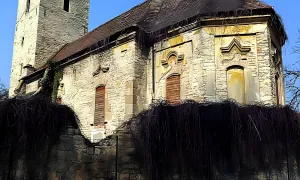
Architecturally, the Church underwent significant changes at the end of the 17th century when it was reconstructed in baroque style. It features pilasters with semi-circular windows that are now bricked up and remnants of a baroque pediment on the roof. These elements highlight the architectural evolution from its original medieval form to a more ornate baroque structure. Despite its conversion into a residential house, these historical details remain visible.
Throughout its history, the Church experienced dramatic changes in ownership and purpose. Initially serving as a religious site, it was secularized during the Josephinian reforms, leading to its sale into private hands. This transition marked a shift from its original spiritual function to an entirely secular one, reflecting broader societal changes of that period.
The church's designation as a cultural monument in 1958 underscores its historical and architectural importance. This recognition ensures its preservation for future generations, highlighting the enduring legacy of Saints Cyril and Methodius' missionary work and the subsequent baroque transformation. Today, it serves as an intriguing example of adaptive reuse, where a once-sacred space now functions as a residential building while retaining its historical essence.
Visitors to Hostěnice can explore this unique monument, appreciating its blend of medieval origins and baroque architectural elements. Its proximity to Doksany and the Ohře River makes it an accessible site for those interested in Czech history and architecture. The Church offers a tangible connection to the past, inviting exploration and reflection on its historical journey from a religious center to a cherished cultural monument.
In conclusion, the Church of Saint Clement in Hostěnice is not only a remarkable piece of architectural heritage but also a symbol of the region's rich history. Its transformation over centuries reflects broader historical narratives, making it a worthwhile destination for anyone interested in exploring Czech medieval and baroque history. Visitors are encouraged to experience this unique site firsthand, where history continues to resonate through its walls.
Then and now
Drag the slider to compare how the landmark may have looked when it was built with the view today.
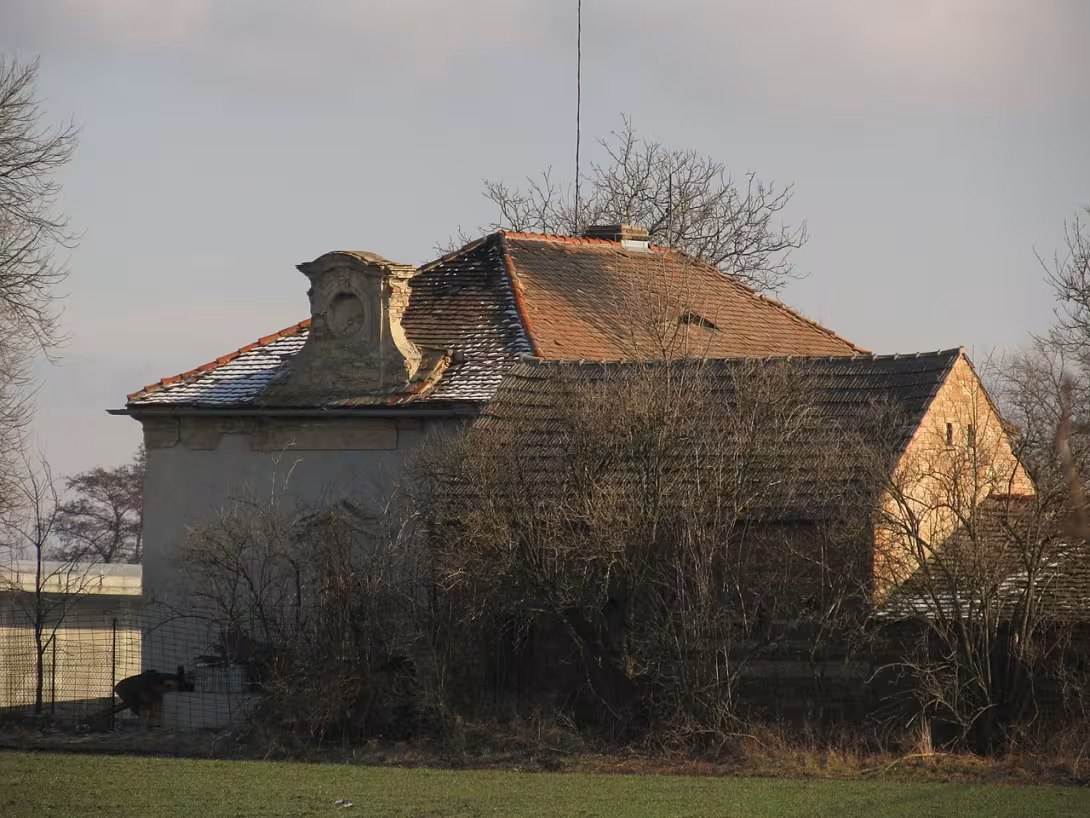

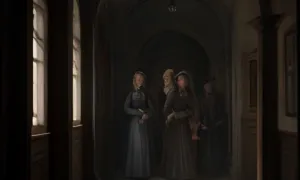
The historical appearance on the left is an AI-generated visualisation and serves as inspiration only.
Historical milestones
- 10. století
- Založení kostela svatého Klimenta.
- konec 17. století
- Barokní rekonstrukce kostela.
- Josefinská reformy (1780–1790)
- Sekularizace a přeměna na obytný dům.
- 1958
- Označení jako kulturní památka.
Architectural development
The church was originally established in the 10th century, with its origins linked to the spread of Christianity by Saints Cyril and Methodius. It underwent significant changes at the end of the 17th century when it was reconstructed in baroque style. The building features lisenes with semi-circular windows that are now bricked up, and remnants of a baroque pediment on the roof.
Historical events
Founded in the 10th century by disciples of Saints Cyril and Methodius.
Secularized during the Josephinian reforms and converted into a residential house.
Guide
This guide is narrated by a synthetic voice generated by artificial intelligence.
Show guide text
This text was created by artificial intelligence and has not been editorially reviewed. It may contain inaccuracies.
The Church of Saint Clement stands near the village of Hostěnice, approximately two kilometers south of Doksan. Today it no longer serves religious purposes. It is a residential house, which nevertheless still bears traces of its former appearance.
The church was once the parish church of the village of Mury, which later disappeared. Its origins date back to the tenth century according to available records. The settlement is said to have been founded by disciples of Saint Cyril and Methodius on an island on the Ohře River near Hostěnice. Hostěnice was at that time the seat of a people called the Skrčkové. They got their name from the fact that they buried their dead in a crouched position.
At the turn of the tenth and eleventh centuries, approximately five thousand people lived in the region of Český středohoří and Dolní Poohří. Compared to the rest of the country, it was a sparsely populated area. Villages typically had only four or five houses.
The center of the settlement of Mury was precisely this church dedicated to Saint Clement of Rome. The beginnings of Christianity are connected with this pope. Cyril and Methodius found his remains and spread his cult. Their disciples then continued in this work. This is why chapels and churches from the tenth and eleventh centuries are often dedicated to him.
At the end of the seventeenth century, the church was rebuilt. During the Josephine reforms, it was closed and subsequently sold into private hands as a residential house. It continues to serve this purpose in the twenty-first century.
Much from the original structure has been preserved. On the walls, pilaster strips are visible, that is, shallow vertical bands in the masonry, and in them semicircular windows, now bricked up. Part of the pediment remains on the roof, that is, a triangular gable that was created during the Baroque renovation.
Since May third, nineteen fifty-eight, the former church has been protected as a cultural monument.
Tips for visitors
The best time to visit the Church of Saint Clement in Hostěnice is during late spring or early autumn. During these months, you can enjoy mild weather that enhances your experience while exploring the church and its surroundings. The lush greenery surrounding the Ohře River adds a picturesque backdrop, making it ideal for photography enthusiasts.
Always verify current routes and schedules using a transportation app or website for the most accurate information.
When visiting, consider bringing comfortable walking shoes as you'll likely explore both the church grounds and the historical settlement of Hostěnice. A camera is recommended to capture the stunning architecture and serene river views. Additionally, carrying water and some snacks can enhance your visit, especially if you plan on spending several hours exploring.
For photography enthusiasts, the best spots for capturing the Church of Saint Clement are from the eastern side where natural light illuminates its facade beautifully during sunrise or late afternoon. The area near the Ohře River provides excellent opportunities for landscape shots with the church as a focal point. Early morning and late afternoon offer softer lighting conditions ideal for photography.
Nearby, within a 30-minute drive, you can visit the remnants of the village Mury, offering historical insights into the region's past. This site complements your visit to Hostěnice by providing context about the area's medieval history. For families with children, consider planning a picnic near the Ohře River after exploring the church and Mury, as it provides a relaxing way to conclude your day.
Frequently asked questions
Can the monument be visited?
Religious buildings are usually open mainly during services; at other times a visit is normally arranged with the parish or the operator. We have not verified specific times.
Where is the monument?
Location: Hostěnice č.p. 46, Brozany nad Ohří, Ústecký kraj. The map on this page shows the exact spot.
Why is the monument protected?
It is listed in the Central List of Cultural Monuments of the Czech Republic as a cultural monument (register no. 41823/5-1948).
Businesses nearby
Do you run a restaurant, accommodation, shop, museum, rental, wellness or other visitor service near this monument? Show yourself directly to the people heading to it — this is how they will see you in the app and on the web:
Events nearby




Zdroj akcí: otevřená data měst a obcí ČR (Národní katalog otevřených dat) a kalendář akcí Národního památkového ústavu.
Nearby
Located approximately 2 km south of Doksany, the church is situated near the Ohře River. The surrounding area includes the historical settlement of Hostěnice and remnants of the village Mury.
Accommodation nearby
Trips and activities nearby
Guided tours, tickets and activities nearby from GetYourGuide
Affiliate link: if you buy from the partner, we may receive a commission. The price for you does not change.
Search tours and activities →Themed route
Tematická výletní trasa: Kostel svatého Klimenta (Hostěnice)
1. Kostel svatého Klimenta, Hostěnice
- Typ: Historická památka
- Proč stojí za návštěvu: Tento barokní kostel je nejvýraznějším dědictvím obce Hostěnice. Jeho architektura a historie přitahují milovníky starých památek a poskytují pohled na bohatou minulost regionu. Je to ideální místo pro pochopení kulturního významu oblasti.
2. Historické sídlo Hostěnice
- Typ: Historická lokalita
- Proč stojí za návštěvu: V blízkosti kostela se nachází historické sídlo, které představuje původní osídlení obce. Navštívte toto místo pro hlubší pochopení životního stylu a dějin místní komunity, což poskytuje kontext k kostelu svatého Klimenta.
3. Zbytky vesnice Mury
- Typ: Archeologická lokalita
- Proč stojí za návštěvu: Tento historický areál je důležitou součástí kulturního dědictví oblasti. Zbytky vesnice Mury nabízejí jedinečný pohled na minulé osídlení a jeho vliv na regionální historii, což je zajímavé pro ty, kteří se zajímají o archeologii a historická studia.
4. Řeka Ohře
- Typ: Přírodní krajinářský prvek
- Proč stojí za návštěvu: Řeka Ohře, která tekne nedaleko kostela svatého Klimenta, je ideálním místem pro relaxaci a pochopení přírodního prostředí oblasti. Pohled na řeku nabízí klidnou atmosféru a možnost si užít krásy přírody v okolí Hostěnice.
Tato trasa kombinuje historické, kulturní a přírodní prvky oblasti kolem kostela svatého Klimenta, nabízející návštěvníkům komplexní zážitek.
Seasonal recommendations
Jaro: In spring, the Church of Saint Clement in Hostěnice opens up to breathtaking sunlight streaming through baroque stained glass windows and illuminating the interior. This period is characterized by a blooming environment with abundant foliage and flowers, adding an atmosphere of peace and beauty. Visitors should plan their visit for early afternoons when temperatures are pleasant and crowds are few. It's advisable to dress according to the temperature as spring weather can be changeable.
Summer: In summer, Hostěnice becomes a popular destination for tourists seeking refuge from the heat. The Church of Saint Clement offers a peaceful haven with cool interiors and refreshing shade, ideal for relaxation on hot days. During peak summer season, it's recommended to visit in the early afternoon or evening when there are fewer people and temperatures are lower. Wearing light clothing and bringing a sun hat are key for a comfortable experience.
Autumn: In autumn, Hostěnice offers a unique atmosphere with changing leaves that envelop the Church of Saint Clement in a colorful tapestry. This time of year is ideal for photography and appreciating historical structures in peace before winter closure. Visiting during weekdays outside major holidays can help avoid crowds, allowing for a more intimate exploration of the church. Wearing layered clothing is important due to cold mornings and evenings.
Winter: Winter Hostěnice provides a quiet and serene environment where the Church of Saint Clement becomes a refuge from the cold. Visiting in the early afternoon is recommended as evening hours are often closed and temperatures drop quickly. Wearing warm clothing with protective elements against winter winds is essential for a comfortable visit.
Visualizations and artistic views


The visualisations are generated by artificial intelligence and serve as inspiration.
Photos from the area
Real photos taken near the monument

Zdroj a licence jsou uvedeny u každého snímku.
Tips from visitors
No tips yet. Be the first!
Log in and add your tip.
Sources and literature
Photos: Hana Kubíková / CC BY-SA 3.0, rozlišení zvýšeno umělou inteligencí — Wikimedia Commons. The author and licence also appear when you hover over the image.
Faktickým podkladem tohoto textu byl článek na Wikipedii, jehož autory jsou přispěvatelé Wikipedie. Článek je dostupný pod licencí CC BY-SA 4.0.
Location on the map

Příběhy a pověsti
Legendy, pověsti a příběhy spjaté s touto památkou
Fotografie návštěvníků
Zatím žádné fotografie. Buďte první, kdo přidá fotografii z návštěvy!
Log in a přidejte svou fotografii nebo hodnoťte.
Za ověřenou návštěvu v aplikaci získáte víc bodů — poznáme podle GPS, že jste na místě.
Reviews and comments