






Kostel svatého Libora Church
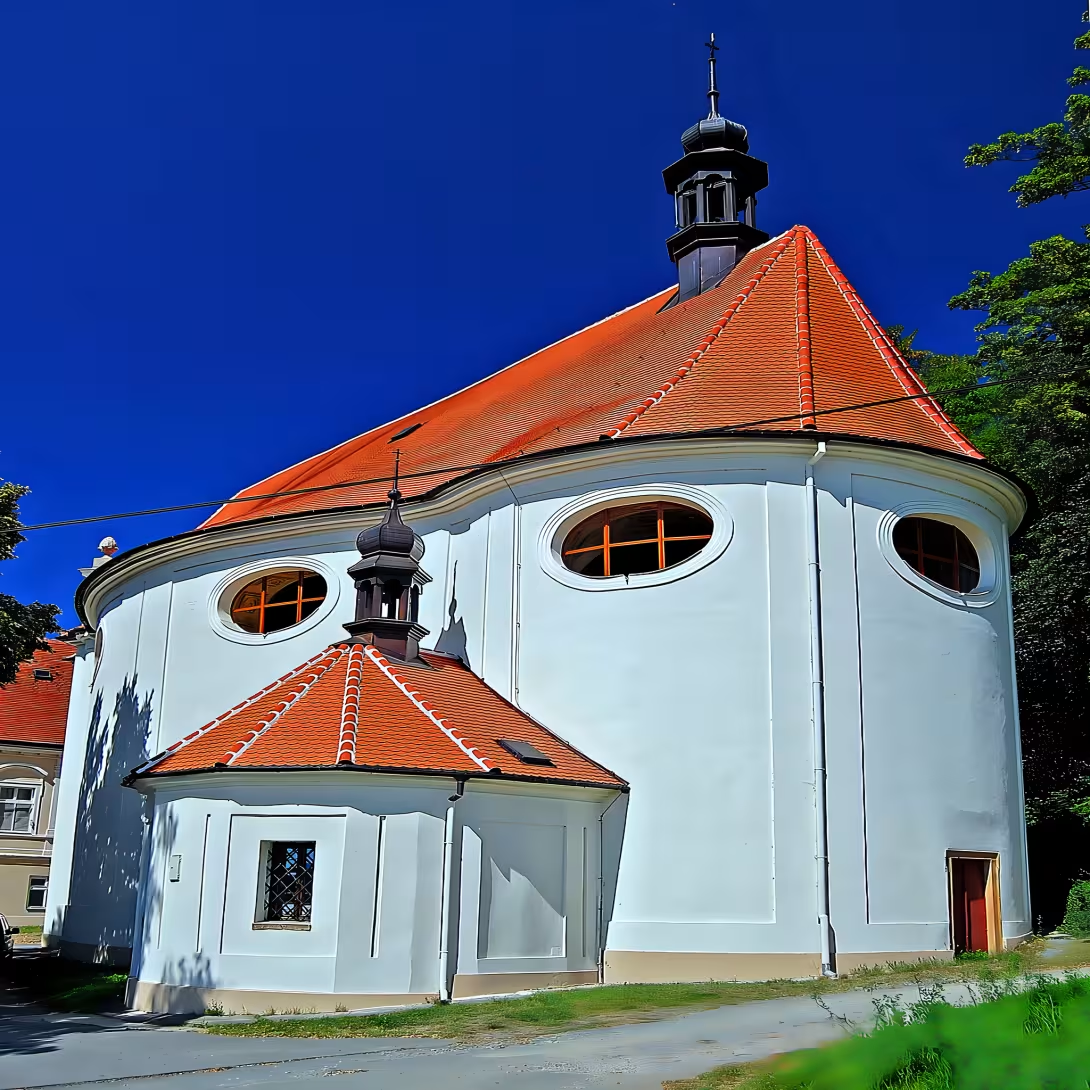
The Church of St. Libor in Jesenec is a significant Baroque monument in central Moravia, protected as a Czech cultural monument. It is the parish church of the Roman Catholic parish of Jesenec, built as a votive chapel in 1673 by Zuzana Kateřina Liborie of Zástřizl. She dedicated it to her patron saint, St. Libor, in gratitude for her miraculous healing by water from a local spring. The church became a pilgrimage site, where the famous Baroque preacher Bohumír Josef Hynek Bilovský preached.
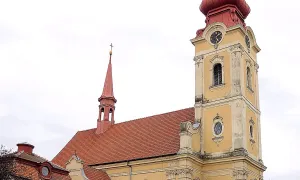
The church was built on the site of a pre-existing castle, and its construction is attributed to the Premonstratensian Order, which took over the Jesenec estate in 1690. The order built a new church on the site in 1710, which was consecrated in 1711. The architectural style of the church is attributed to a follower of Giovanni Pietro Tencalla. The church is an oval, single-nave building without towers, connected to the castle building.
The church features valuable ceiling frescoes and paintings by Karel František Josef Haringer and Anton Schoonjans. Its interior also boasts cenné stropní fresky, notable for their artistic value. The church's interior is a testament to the artistic and cultural achievements of the Baroque period in Moravia.
Throughout its history, the church has had several owners and administrators. It was built by Zuzana Kateřina Liborie of Zástřizl, and later became part of the Premonstratensian Order's estate. In 1784, the order was dissolved, and the estate became part of the Náboženský fond. The church was later administered by the Roman Catholic parish of Jesenec.
The Church of St. Libor in Jesenec is a significant historical site, valued for its architectural and artistic significance as well as its role as a pilgrimage site in the 18th century. Its history is closely tied to the growth and rebuilding of the Catholic Church in Bohemia during the 17th and 18th centuries. Today, the church is a protected cultural monument and a notable example of Baroque architecture in central Moravia.
Located in the Jesenec village, surrounded by the central Moravian landscape, the church remains a must-visit destination for those interested in history, architecture, and art.
Then and now
Drag the slider to compare how the landmark may have looked when it was built with the view today.
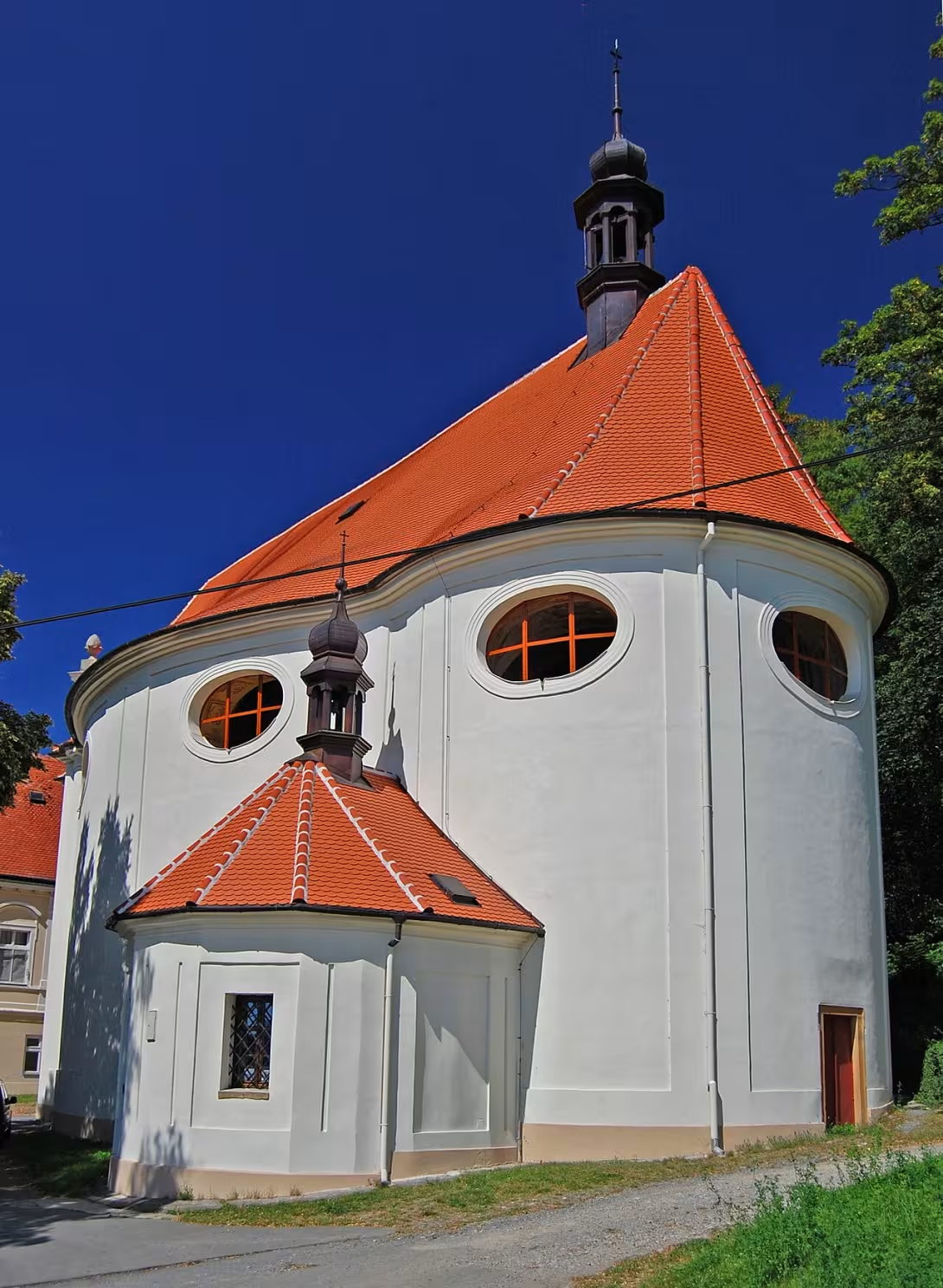

The historical appearance on the left is an AI-generated visualisation and serves as inspiration only.
Historical milestones
- 1673
- Construction of the church as a votive chapel
- 1690
- Premonstratensian Order takes over the Jesenec estate
- 1710
- Construction of the new church
- 1711
- Consecration of the church
- 1784
- Dissolution of the Premonstratensian Order and transfer of the estate to Náboženský fond
Architectural development
The church is an oval single-nave building without towers, connected to the castle building. The architectural style is attributed to one of the followers of Giovanni Pietro Tencalla.
Historical events
- 1673
- Zuzana Kateřina Liborie of Zástřizl built a votive chapel
- 1690
- The Premonstratensian Order took over the Jesenec estate
- 1710
- The Premonstratensian Order built a new church on the site of the original castle
- 1784
- The Premonstratensian Order was dissolved and the estate became part of the Náboženský fond
Owners
Zuzana Kateřina Liborie of Zástřizl, Premonstratensian Order, Náboženský fond
Points of interest
– The church's construction was attributed to the Premonstratensian Order, which took over the Jesenec estate in 1690, and built a new church on the site in 1710.
– The church features valuable ceiling frescoes and paintings by Karel František Josef Haringer and Anton Schoonjans, which are notable for their artistic value.
– The Premonstratensian Order was dissolved in 1784, and the estate became part of the Náboženský fond, which then administered the church.
– The church's history is closely tied to the growth and rebuilding of the Catholic Church in Bohemia during the 17th and 18th centuries.
– The Church of St. Libor in Jesenec is a must-visit destination for those interested in history, architecture, and art, located in the Jesenec village surrounded by the central Moravian landscape.
Guide
This guide is narrated by a synthetic voice generated by artificial intelligence.
Show guide text
This text was created by artificial intelligence and has not been editorially reviewed. It may contain inaccuracies.
The Church of Saint Libor in Jesenec is a significant Baroque monument of Central Moravia and is protected as a cultural heritage site of the Czech Republic. It serves as the parish church of the Roman Catholic parish of Jesenec.
Its origins date back to the year 1673. At that time, Zuzana Kateřina Liborie ze Zástřizl founded a votive chapel dedicated to Saint Libor, her personal patron. It was a form of thanksgiving for the miraculous healing which, according to her, was brought about by water from a local spring. In the year 1690, a year before her death, she transferred the Jesenec estate to the Premonstratensian monastery in Zábrdovice. The revenue from the estate was to be used to build two pilgrimage sites: the church in Jesenec and the Marian church in Křtiny.
The Premonstratensian abbot Engelbert Hájek had a monastic residence, today's castle, built in 1710, possibly on the site of the original fortified manor. At the same time, he had a new church built on the site of the chapel, which was consecrated in 1711. The authorship of the project was traditionally attributed to Jan Blažej Santini-Aichel. However, art historians Mojmír Horyna and Jiří Kroupa convincingly refuted this assumption. They attribute the construction to one of the followers of Giovanni Pietro Tencalla.
The church became a pilgrimage site. The famous Baroque preacher Bohumír Josef Hynek Bilovský also preached here, for example. After the dissolution of the Zábrdovice monastery in 1784, the estate passed to the religious fund. A curacy arose near the church and in 1843 a parish.
The church is an oval single-nave structure without towers and is structurally connected to the castle building. In the interior there are valuable ceiling frescoes and paintings by Karel František Josef Haringer and Anton Schoonjans.
Tips for visitors
The best time to visit the Church of St. Libor in Jesenec is during the spring and summer months when the surrounding landscape is in full bloom. This allows for beautiful photographs of the church amidst the greenery.
It's a good idea to bring a camera to capture the stunning architecture of the church, as well as a pair of comfortable shoes for walking around the surrounding area.
The best spots for photography are around the church's exterior, particularly during the golden hour when the light is soft and warm. Be sure to capture the intricate details of the Baroque architecture.
If you're looking for something to do nearby, consider visiting the nearby village of Hranice, which is about 30 minutes away by car. It features a beautiful castle and a charming town center.
Frequently asked questions
Can the monument be visited?
Religious buildings are usually open mainly during services; at other times a visit is normally arranged with the parish or the operator. We have not verified specific times.
Where is the monument?
Location: Jesenec, Olomoucký kraj. The map on this page shows the exact spot.
Why is the monument protected?
It is listed in the Central List of Cultural Monuments of the Czech Republic as a cultural monument. It is protected as part of a larger listed ensemble.
Businesses nearby
Do you run a restaurant, accommodation, shop, museum, rental, wellness or other visitor service near this monument? Show yourself directly to the people heading to it — this is how they will see you in the app and on the web:
Events nearby
Zdroj akcí: otevřená data měst a obcí ČR (Národní katalog otevřených dat) a kalendář akcí Národního památkového ústavu.
Nearby
The church is located in the Jesenec village, surrounded by the surrounding landscape of central Moravia.
Accommodation nearby
Trips and activities nearby
Guided tours, tickets and activities nearby from GetYourGuide
Affiliate link: if you buy from the partner, we may receive a commission. The price for you does not change.
Search tours and activities →Themed route
Jesenec Village Tour
1. Kostel svatého Libora (Main Attraction): This historic church is a must-visit for its beautiful architecture and peaceful atmosphere. Take a moment to admire its stunning facade and step inside to experience the tranquility within. 2. Jesenec Village Square: The village square is a charming spot to relax and soak up the local atmosphere. Admire the traditional houses and perhaps grab a coffee or snack from one of the local cafes. 3. Jesenec Churchyard: The churchyard surrounding the Kostel svatého Libora is a serene oasis, perfect for a leisurely walk and reflection. Take in the beautiful views of the surrounding countryside and pay respects to the local history. 4. Jesenec Village Hall: This historic village hall is a great place to learn about the local culture and history. Take a peek inside to see if there are any exhibitions or events happening during your visit. 5. Jesenec Village Park: The village park is a lovely spot to unwind and enjoy the fresh air. Take a stroll through the park and enjoy the scenery.
Seasonal recommendations
Jaro
Spring is the ideal time to visit St. Liborius Church. Around the church stretches beautiful green nature and sunny weather creates a pleasant atmosphere. During this period, the church is surrounded by blooming trees and lawns, creating an idyllic view. Given the enjoyable weather, it's advisable to visit the church in spring during the morning or afternoon hours when there are fewer people.
Léto
The main summer season is full of life and energy, making a visit to St. Liborius Church very popular as well. During this period, the church is filled with tourists eager to see its beautiful architecture and experience the atmosphere of this significant landmark. Therefore, it's best to arrive at the church early in the morning or later in the afternoon to avoid larger crowds. Don't forget to bring a sun hat and water so you're well-prepared for a walk around the church.
Podzim
In autumn, St. Liborius Church is surrounded by the beautiful colors of falling leaves. Around the church spreads tranquil nature, and sunlight creates pleasant lighting that illuminates the church's architecture. During this period, the church is less frequented, making it an ideal time for those who wish to experience a peaceful atmosphere. We recommend visiting the church during autumn when the weather is comfortable and not too hot or cold.
Zima
The winter season is ideal for visiting St. Liborius Church because there are fewer people and the church is pleasantly lit. At night, the church is illuminated, creating a pleasant atmosphere and offering the opportunity to see the church in a different light. We recommend visiting the church in winter during the morning hours when it's open and less crowded. Don't forget to bring warm clothing so you're well-protected from the cold.
Visualizations and artistic views


The visualisations are generated by artificial intelligence and serve as inspiration.
Photos from the area
Real photos taken near the monument


Zdroj a licence jsou uvedeny u každého snímku.
Tips from visitors
No tips yet. Be the first!
Log in and add your tip.
Sources and literature
Photos: xkomczax / CC BY-SA 3.0, rozlišení zvýšeno umělou inteligencí — Wikimedia Commons. The author and licence also appear when you hover over the image.
Faktickým podkladem tohoto textu byl článek na Wikipedii, jehož autory jsou přispěvatelé Wikipedie. Článek je dostupný pod licencí CC BY-SA 4.0.
Location on the map

Příběhy a pověsti
Legendy, pověsti a příběhy spjaté s touto památkou

Fotografie návštěvníků
Zatím žádné fotografie. Buďte první, kdo přidá fotografii z návštěvy!
Log in a přidejte svou fotografii nebo hodnoťte.
Za ověřenou návštěvu v aplikaci získáte víc bodů — poznáme podle GPS, že jste na místě.
Reviews and comments