






Kostel svatého Martina (Postupice) Church
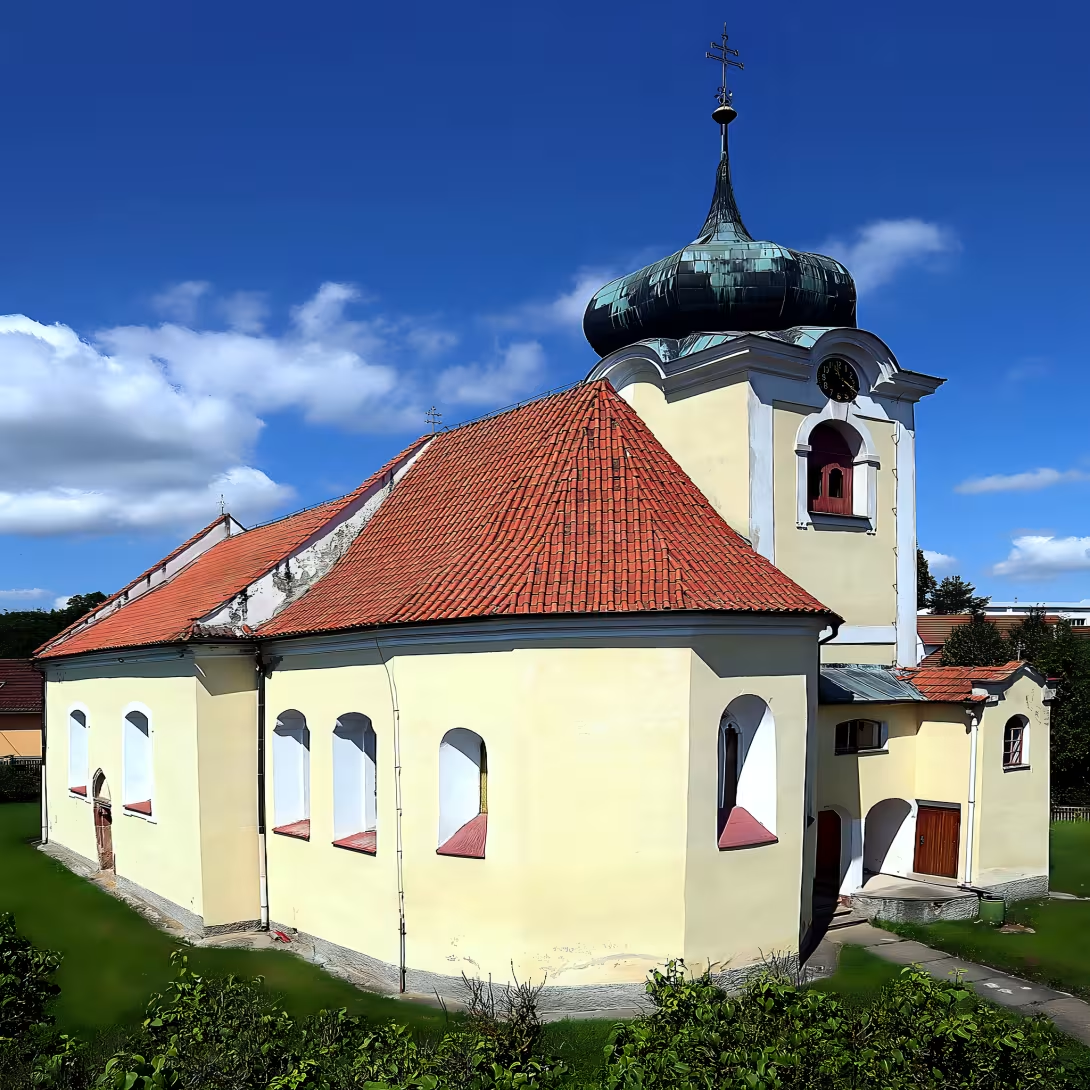
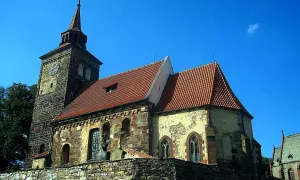
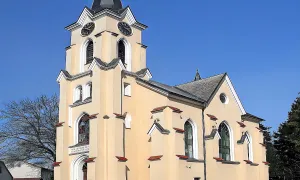
The Church of St. Martin in Postupice is a small yet historically significant baroque church located in the village of Postupice, within the Benešov region of Central Bohemia. Originally constructed in the Gothic style during the 14th century, it was transformed into its current form in 1718. This change marked a shift from medieval origins to an ornate baroque aesthetic, reflecting broader architectural trends.
The Church of St. Martin was first built in the Gothic style during the 14th century when Bohemia was part of the Holy Roman Empire. This period saw a flourishing of Gothic architecture across Europe, characterized by pointed arches, ribbed vaults, and flying buttresses. By the early 18th century, following significant religious and political changes after the Thirty Years' War, the church underwent substantial renovations to adopt its current baroque appearance. The transformation in 1718 was part of a broader movement across Europe where many Gothic structures were updated with baroque elements, reflecting new artistic and cultural sensibilities.
Architecturally, the Church of St. Martin showcases a blend of its original Gothic features and later baroque modifications. While the nave is characterized by two vaulted sections with segmental arches typical of baroque design, the choir retains its original Gothic ribbed vaulting. This combination highlights the church's historical evolution from medieval to early modern styles. The interior was further updated post-Second Vatican Council, ensuring that it met contemporary liturgical needs while preserving its historical essence.
Throughout its history, the Church of St. Martin has been under various administrative changes and ownerships. Initially, in the 14th century, it served as a focal point for religious activities during a time when utraquist beliefs were prevalent in Bohemia. In the 16th century, far-reaching religious reforms led to the appointment of utraquist priests, reflecting the region's shifting religious landscape. By the mid-17th century, after the restoration of Catholicism, the church experienced periods without its own priest and was managed from Benešov. The parish regained autonomy in 1656, with Postupice becoming a central hub for surrounding areas until these were later established as independent parishes.
The Church of St. Martin is home to several notable features that enhance its historical and artistic value. Among them is a large baroque crucifix located in the triumphal arch on the epistle side, which stands out as a significant piece of religious art. The church houses three baroque altars from around 1718, each adorned with important religious imagery. The main altar features an image of Saint Martin sharing his cloak with a beggar, while other altars depict figures such as Saint John Nepomuk and the Virgin Mary. These elements not only enrich the church's aesthetic appeal but also serve as focal points for worship and reflection.
Today, the Church of St. Martin remains an active place of worship and community gathering. Mass is held on Saturdays with Sunday validity during summer at 6:00 PM and in winter at 3:30 PM. The church continues to be a site of religious significance, hosting Marian devotions in May and October. Managed by dp. ThLic. Antoni Kośmidek, the church's administration ensures that it remains accessible to both locals and visitors alike.
Visiting the Church of St. Martin offers a unique opportunity to explore a piece of Bohemia's rich historical tapestry. Its blend of Gothic and baroque elements provides insight into the architectural evolution over centuries, while its religious artifacts continue to inspire devotion. The church stands as a testament to the enduring cultural and spiritual heritage of Postupice, inviting visitors to appreciate its beauty and significance.
Then and now
Drag the slider to compare how the landmark may have looked when it was built with the view today.
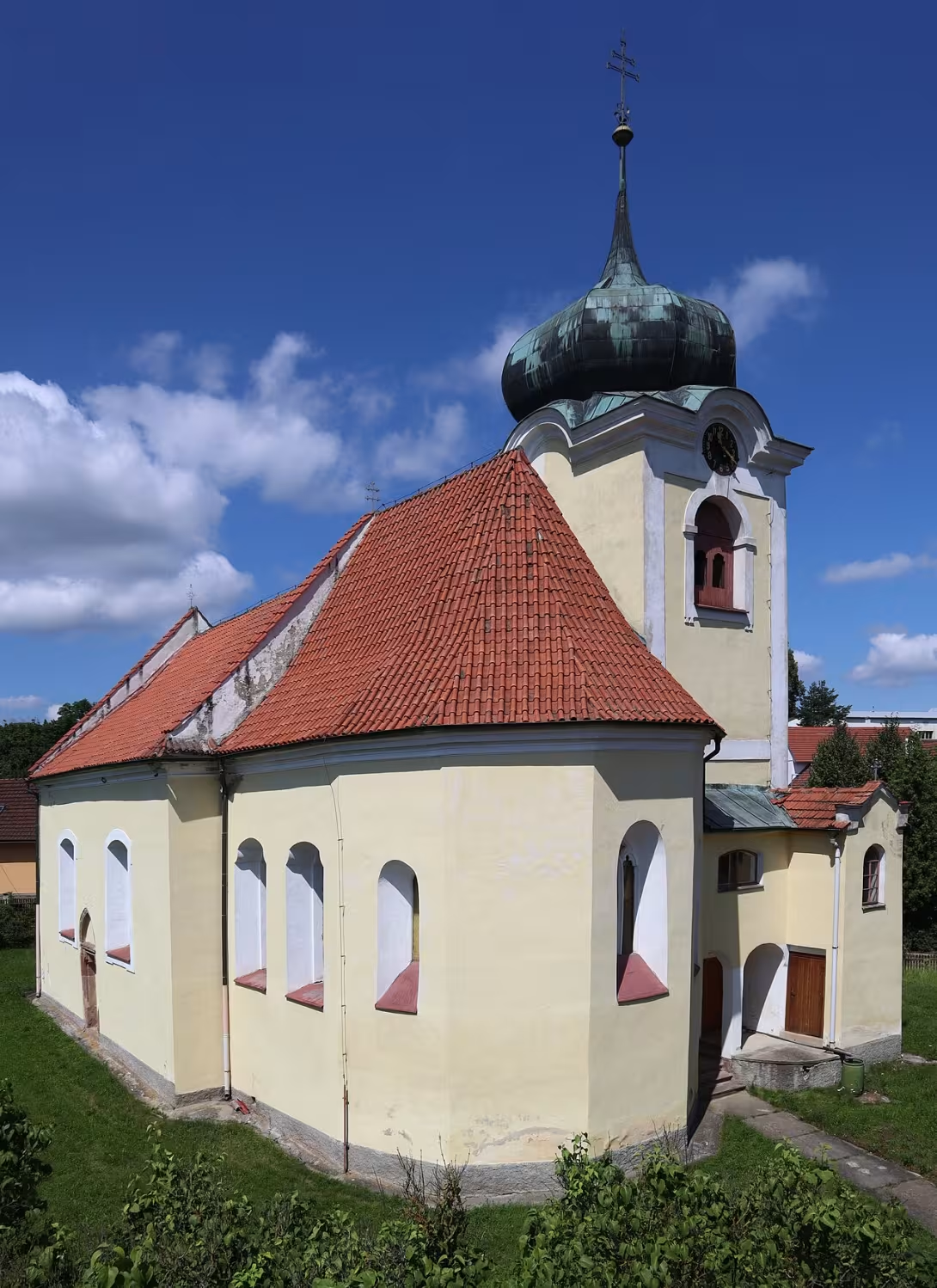

The historical appearance on the left is an AI-generated visualisation and serves as inspiration only.
Historical milestones
- 14. století
- Původní stavba gotického kostela svatého Martina.
- 1718
- Transformace do barokního stylu.
- 16. století
- Nábor utraquistických kněží kvůli náboženským reformám.
- 1656
- Obnova samostatného farářství v Postupicích.
Architectural development
Originally a Gothic structure from the 14th century, the Church of St. Martin was significantly altered in 1718 into its present baroque form. The nave is characterized by two vaulted sections with segmental arches, while the choir retains its original Gothic ribbed vaulting. Additional modifications occurred post-Second Vatican Council to update the interior.
Historical events
The church was originally built in the Gothic style during the 14th century.
In 1718, it underwent significant renovations to adopt its current baroque appearance.
Points of interest
- The Church of St. Martin originally featured Gothic architectural elements like ribbed vaulting in the choir, which were retained even after its transformation to a baroque style in 1718, showcasing an unusual blend of medieval and early modern aesthetics.
- During the 16th century, Postupice experienced significant religious shifts with the appointment of utraquist priests, reflecting the broader impact of Reformation movements across Bohemia, where dual-language (Latin and Czech) liturgies were practiced.
- After the Thirty Years' War, many Gothic structures in Europe, including the Church of St. Martin, underwent renovations to adopt baroque elements, aligning with a period when artistic sensibilities shifted towards more ornate and expressive designs across the continent.
- The church's crucifix located in the triumphal arch is an example of the baroque artistry that became prominent during its 1718 renovation, highlighting how religious art was used to inspire awe and devotion among worshippers at the time.
- In the mid-17th century, following the restoration of Catholicism, the Church of St. Martin experienced a period without its own priest and was managed from Benešov, illustrating how political and religious changes influenced ecclesiastical administration in post-war Bohemia.
Guide
This guide is narrated by a synthetic voice generated by artificial intelligence.
Show guide text
This text was created by artificial intelligence and has not been editorially reviewed. It may contain inaccuracies.
Welcome to the Church of St. Martin in Postupice, a hidden gem nestled in the heart of Středočeský kraj. As you stand before this serene structure, take a moment to absorb its modest yet captivating presence. The church's façade whispers stories from centuries past, inviting you into a world where history and artistry intertwine.
The Church of St. Martin has roots deeply embedded in the 14th century when it was originally constructed in the Gothic style. This early incarnation set the stage for what would become a remarkable transformation. In 1718, the church underwent a significant metamorphosis to embrace the Baroque style, a shift that imbued it with new life and artistic flair. The transition from Gothic to Baroque is evident not only in its exterior but also within its sacred walls.
As you step closer, notice how the architectural elements blend harmoniously. The ribbed vaulting in the choir, a remnant of its Gothic origins, coexists with the elegant Baroque features that define much of the church today. This unusual fusion creates an atmosphere where medieval and early modern aesthetics dance together in perfect harmony.
The history of this sacred site is rich with stories and transformations. In the 16th century, Postupice became a hub for utraquistický kněží, reflecting the broader religious reforms sweeping through Europe at the time. This period marked an era of spiritual diversity and dialogue within the community. Fast forward to 1656, when the church witnessed the revival of its independent parish, reaffirming its role as a cornerstone of local faith and tradition.
One of the most captivating features inside is the Baroque altar painting depicting Saint Martin sharing his cloak with a beggar. This artwork not only highlights the charitable spirit of St. Martin but also serves as a testament to the church's enduring legacy of compassion and community service.
There’s an intriguing layer to this story: despite its transformation, the church retained certain Gothic elements, such as the ribbed vaulting in the choir. This blend of styles is a rare architectural treasure, offering insight into how historical transitions can preserve the essence of the past while embracing new artistic expressions.
As you continue your exploration, let yourself be drawn to the details that speak volumes about this place's history and significance. Each corner holds a whisper from the past, inviting you to listen closely and reflect on the journey this sacred space has undertaken through time.
We invite you to delve deeper into the Church of St. Martin’s rich tapestry of stories and styles. Take your time to wander around its grounds, perhaps finding a quiet spot to sit and contemplate the beauty that surrounds you. As we conclude our tour, thank you for joining us in this exploration of history and artistry.
We hope this visit has inspired you to appreciate not only the Church of St. Martin but also the broader narratives it represents. May your journey through Postupice leave you with a deeper understanding and appreciation of its historical significance. Farewell, until we meet again on another path of discovery.
Tips for visitors
The best time to visit the Church of St. Martin in Postupice is during late spring or early autumn, when the weather is pleasant for walking around the area without the crowds that summer months might bring. These seasons offer a comfortable climate and beautiful natural surroundings, enhancing your experience as you explore this historic site. Additionally, visiting on weekdays can provide a more tranquil atmosphere compared to weekends.
Martin is generally available in Postupice, but it's advisable to check for any restrictions or limitations ahead of time. For those preferring public transport, there are options that connect to nearby towns, making it convenient to reach the church without driving. Always verify current transportation routes and schedules through a reliable travel planner before your visit.
When visiting the Church of St. Martin, consider bringing comfortable walking shoes as you may want to explore both inside the church and its surrounding areas. A camera is recommended for capturing the intricate details of the baroque architecture and the serene landscape. Additionally, carrying a light jacket or sweater can be useful due to variable weather conditions.
For photography enthusiasts, the best spots to capture the Church of St. Martin are from outside during the golden hours—shortly after sunrise or before sunset—when the lighting is soft and warm. The church's façade looks particularly stunning in this natural light. Inside, focus on the rich interior details that highlight its baroque elements.
These spots provide additional context to the region's history and are ideal for extending your visit with more exploration.
For families with children visiting the Church of St. Martin, consider bringing along some snacks and water to keep everyone comfortable during the visit. The church itself may not have specific attractions for young children, but the surrounding area offers opportunities for a leisurely walk or picnic, making it a pleasant outing for all ages.
Frequently asked questions
Can the monument be visited?
Religious buildings are usually open mainly during services; at other times a visit is normally arranged with the parish or the operator. We have not verified specific times.
Where is the monument?
Location: Postupice, Středočeský kraj. The map on this page shows the exact spot.
Why is the monument protected?
It is listed in the Central List of Cultural Monuments of the Czech Republic as a cultural monument (register no. 27537/2-163).
Businesses nearby
Do you run a restaurant, accommodation, shop, museum, rental, wellness or other visitor service near this monument? Show yourself directly to the people heading to it — this is how they will see you in the app and on the web:
Events nearby

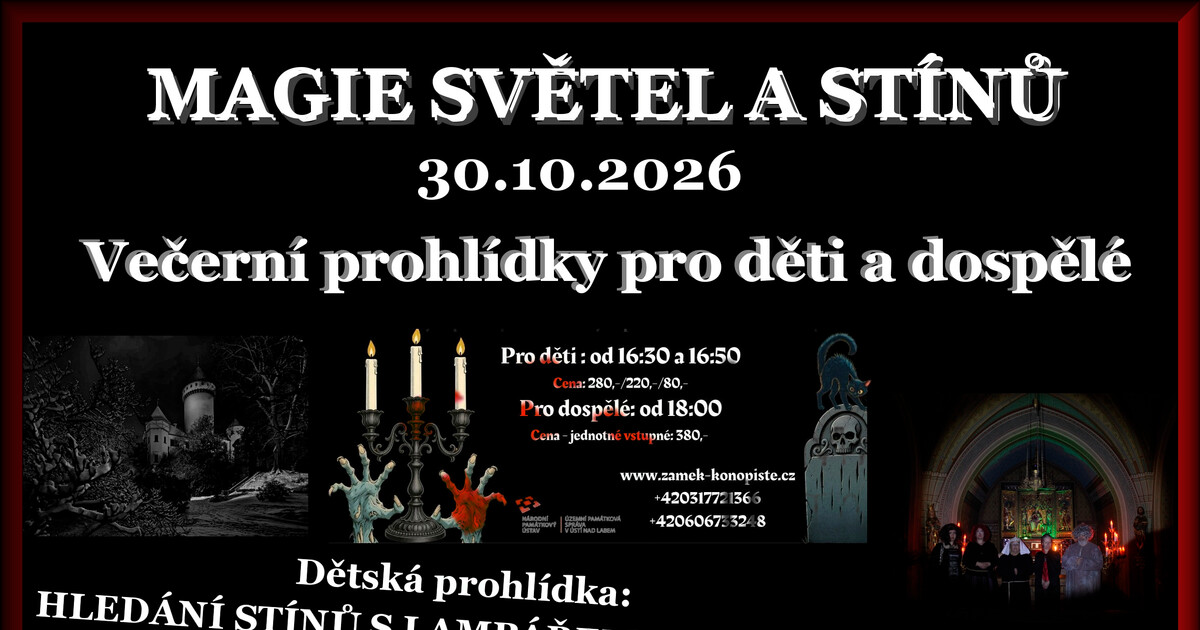

Zdroj akcí: otevřená data měst a obcí ČR (Národní katalog otevřených dat) a kalendář akcí Národního památkového ústavu.
Nearby
The church is located in the village of Postupice, in the Central Bohemian Region. The surrounding landscape is characterized by rolling hills and farmland.
Accommodation nearby
Themed route
Tematická výletní trasa: Kostel svatého Martina (Postupice)
1. Kostel svatého Martina, Postupice
- Typ: Historický kostel
- Proč stojí za návštěvu: Tento barokní chrám je centrem místní historie a kultury v obci Postupice. Jeho architektura a interiér nabízejí pohled do minulosti, zatímco každoročně se zde konají duchovní slavnosti a kulturní akce.
2. Náves v centru Postupice
- Typ: Městské náměstí
- Proč stojí za návštěvu: Náves je živoucím srdcem města, kde se setkávají historie a současnost. Zde najdete starobylé domy a moderní obchody, což vytváří jedinečný atmosférický mix. Je to ideální místo pro relaxaci nebo prohlídku místních trhů.
3. Muzeum Postupice
- Typ: Muzejní expozice
- Proč stojí za návštěvu: Muzeum nabízí cenné poznatky o historii a kultuře obce. Vystavuje trvalou expozici, která se zaměřuje na místní dějiny, umění a tradice, což je skvělý způsob, jak hlouběji pochopit region.
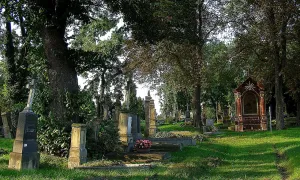
4. Hřbitov u kostela svatého Martina
- Typ: Historický hřbitov
- Proč stojí za návštěvu: Hřbitov je klíčovou součástí historie města, s památkově chráněnými pohřebišti a starobylými hroby. Je to místo úcty k minulosti a nabízí klidné okamžiky pro reflektaci.
5. Park u kostela svatého Martina
- Typ: Místní park
- Proč stojí za návštěvu: Park poskytuje příjemnou zelenou oázdu pro relaxaci a procházku. Je to ideální místo k odpočinku po prozkoumání kostela a dalších historických míst, s malebnými výhledy na okolní krajinu.
Tato trasa nabízí komplexní pohled na kulturní a historické bohatství Postupic, od hlavního kostela po další zajímavosti v centru města.
Seasonal recommendations
Spring: Visiting the Church of Saint Martin during spring offers a picturesque experience as nature awakens with vibrant colors and fresh blooms. The soft, diffused light enhances the architectural details of the church, creating an enchanting atmosphere perfect for photography enthusiasts. This season is generally less crowded than summer, making it ideal for those seeking tranquility. Visitors are advised to wear layers due to fluctuating temperatures and bring comfortable walking shoes if exploring the surrounding areas.
Summer: The Church of Saint Martin in summer basks under bright sunlight, highlighting its historical architecture with a warm glow that accentuates its beauty. This season attracts more visitors, especially during peak tourist times, so arriving early can help avoid larger crowds. Light clothing is recommended to stay comfortable in the heat, and carrying water or sun protection is essential for outdoor exploration.
Autumn: Autumn brings a stunning palette of reds, oranges, and yellows to the Church of Saint Martin, creating a serene and picturesque setting. The cooler temperatures make it an ideal time for walking tours around Postupice, with the crisp air enhancing the overall experience. Visitors should dress in layers as temperatures can vary significantly throughout the day and consider bringing a light jacket or sweater for the evenings.
Winter: Winter transforms the Church of Saint Martin into a serene and magical site, often adorned with snow that adds to its historical charm. The shorter daylight hours mean visiting earlier in the day is advisable to fully appreciate the church's details before closing time. Warm clothing is essential due to cold temperatures, and visitors should be prepared for potential icy paths around the area. Despite fewer tourists during this season, the atmosphere remains peaceful and enchanting.
Visualizations and artistic views


The visualisations are generated by artificial intelligence and serve as inspiration.
Photos from the area
Real photos taken near the monument


Zdroj a licence jsou uvedeny u každého snímku.
Atmosphere of the place
This atmospheric visualisation of the place and period was generated by artificial intelligence. It is not real footage of the location.
Tips from visitors
No tips yet. Be the first!
Log in and add your tip.
Sources and literature
Photos: Palauenc05 / CC BY-SA 4.0, rozlišení zvýšeno umělou inteligencí — Wikimedia Commons. The author and licence also appear when you hover over the image.
Faktickým podkladem tohoto textu byl článek na Wikipedii, jehož autory jsou přispěvatelé Wikipedie. Článek je dostupný pod licencí CC BY-SA 4.0.
Location on the map

Příběhy a pověsti
Legendy, pověsti a příběhy spjaté s touto památkou

Fotografie návštěvníků
Zatím žádné fotografie. Buďte první, kdo přidá fotografii z návštěvy!
Log in a přidejte svou fotografii nebo hodnoťte.
Za ověřenou návštěvu v aplikaci získáte víc bodů — poznáme podle GPS, že jste na místě.
Reviews and comments