






Kostel svatého Matouše (Hradíšťko) Church
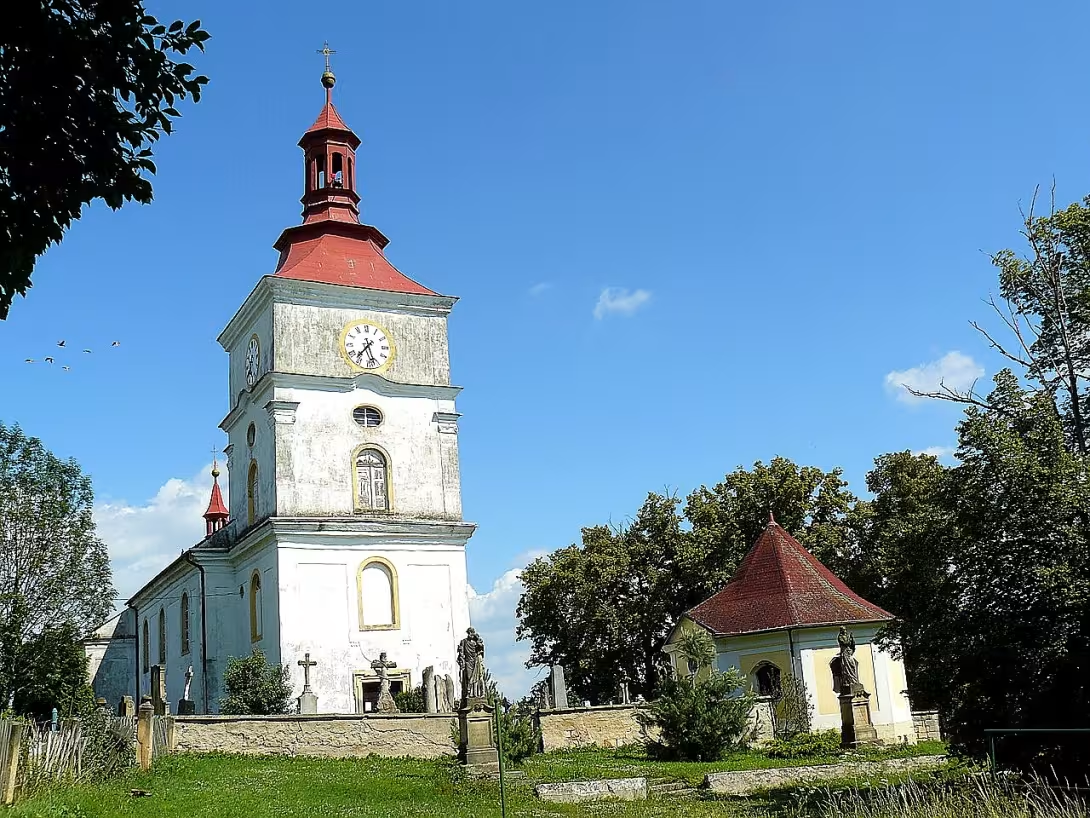
The Church of Saint Matthew in Hradíšťko is a Roman Catholic filial church with significant historical importance. Situated on a high hill overlooking the Cidlina River, this architectural landmark has been protected as a cultural monument since February 22, 1994. Originally mentioned as a chapel in 1384, it underwent major transformations during the early Baroque period between 1674-1677 and later significant late Baroque modifications in 1792.
The origins of the Church of Saint Matthew trace back to its first documented mention in 1384 as a chapel. This period was marked by considerable political and religious changes in Bohemia, setting the stage for the Hussite Wars. By the time it underwent its Baroque transformations in the 17th and 18th centuries, the region had become part of the Habsburg Monarchy, reflecting broader European trends towards Baroque art and architecture.
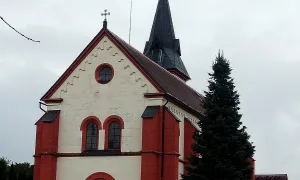
Architecturally, the Church of Saint Matthew is a testament to early Baroque style with its single-nave rectangular layout and three-sided presbytery. The nave features lunette vaulting while the presbytery boasts a barrel vault capped by a conch. Noteworthy are the stucco decorations and paintings from the late 17th century that adorn the church's interior. A prominent feature is the octagonal tower with a belfry and clock, topped by a Latin cross, which adds to its architectural grandeur.
The church has not undergone dramatic changes in ownership or administration as documented; however, it remains an integral part of Hradíšťko’s cultural heritage. Its historical significance is further enhanced by the life-sized sandstone sculptures of Saint Joseph with Jesus and the Virgin Mary located near the western entrance.
Today, while regular religious services are no longer held at the Church of Saint Matthew, its architectural beauty and historical importance make it a worthwhile visit for those interested in Baroque art and history. The church's commanding position on a hill overlooking the Cidlina River adds to its allure as an important cultural monument. Visitors can explore the surrounding cemetery wall, which is partially constructed from sandstone blocks and bricks, and admire the baroque octagonal belfry dating back to the early 18th century. This site offers a unique glimpse into the region's rich historical tapestry, inviting exploration and appreciation of its enduring legacy.
Then and now
Drag the slider to compare how the landmark may have looked when it was built with the view today.
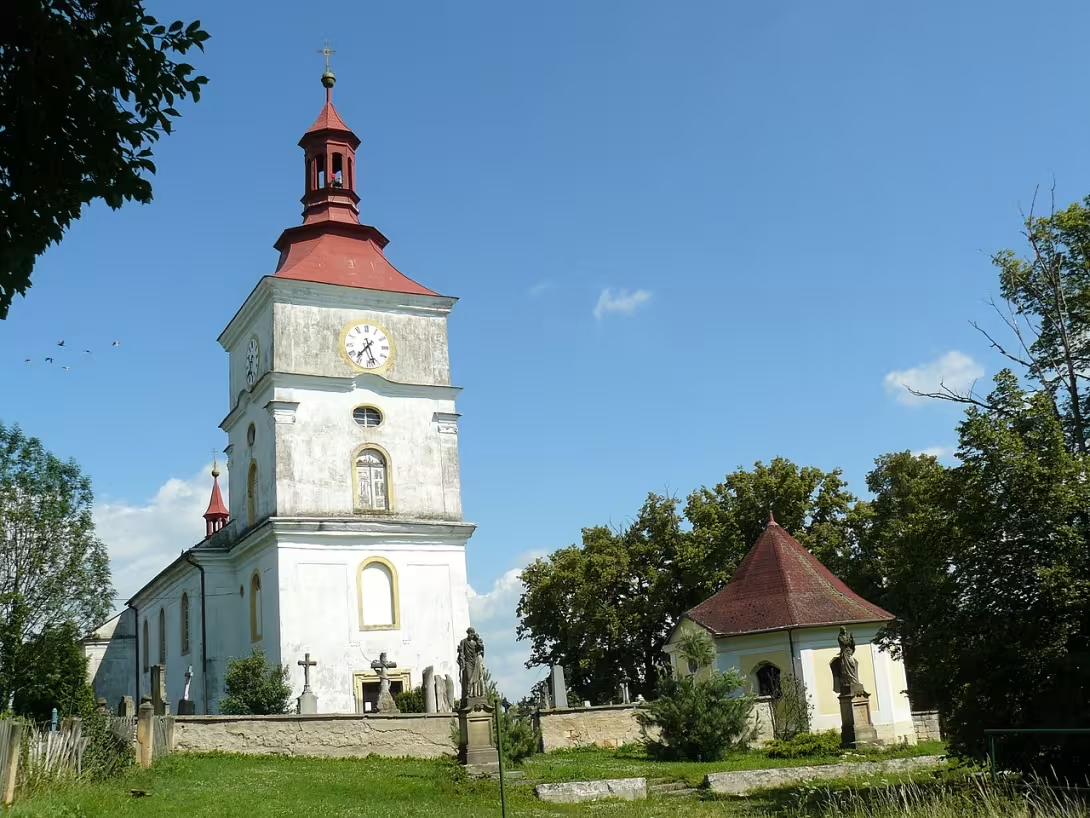

The historical appearance on the left is an AI-generated visualisation and serves as inspiration only.
Historical milestones
- 1384
- First mention of a chapel at this location.
- 1674-1677
- Early Baroque reconstruction completed.
- 1792
- Late Baroque modifications carried out.
Architectural development
The Church of Saint Matthew features an early Baroque architectural style with a single-nave rectangular layout and a three-sided presbytery. The nave is vaulted with lunettes, while the presbytery has a barrel vault with a conch in its closure. Notable for its stucco decorations and paintings from the late 17th century, the church also boasts a prominent octagonal tower with a belfry and clock on top.
Historical events
First documented mention of a chapel on this site in 1384.
Early Baroque reconstruction completed between 1674–1677.
Significant late Baroque modifications carried out in 1792.
Points of interest
- The Church of Saint Matthew's initial mention as a chapel in 1384 places it within the tumultuous period leading up to the Hussite Wars, suggesting its early role may have been influenced by religious reform movements that swept through Bohemia.
- Despite undergoing significant Baroque transformations, the church retained its original single-nave rectangular layout and three-sided presbytery, illustrating how architectural adaptations were harmoniously integrated with existing structures during the 17th and 18th centuries.
- The life-sized sandstone sculptures of Saint Joseph with Jesus and the Virgin Mary near the western entrance are unique artistic elements that contribute to the church's historical narrative, reflecting local religious devotion and craftsmanship from the period when these statues were likely added.
- The octagonal tower with a belfry and clock is not only an architectural feature but also serves as a symbolic beacon of time, marking both literal hours and significant periods in the region’s cultural history since its construction in the early 18th century.
- Although regular religious services are no longer held at the Church of Saint Matthew, it remains a focal point for local heritage events and educational tours, highlighting its ongoing role in preserving regional identity and historical consciousness.
Guide
This guide is narrated by a synthetic voice generated by artificial intelligence.
Show guide text
This text was created by artificial intelligence and has not been editorially reviewed. It may contain inaccuracies.
Welcome to the Church of Saint Matthew in Hradíšťko, a place where history and architecture blend into a captivating story that unfolds before your eyes. As you stand here on this high hill overlooking the Cidlina River, take a moment to absorb the serene beauty and historical significance surrounding you.
This church, with its protective status as a cultural monument since February 22, 1994, is not just an architectural landmark but a witness to centuries of history. Originally mentioned in records dating back to 1384 as a chapel, it has stood through the ebb and flow of time, evolving from a modest place of worship into the grand structure you see today.
Let's delve into its origins. The first mention of this site as a chapel places us in the turbulent period leading up to the Hussite Wars, suggesting that its early role may have been influenced by the religious reform movements sweeping through Bohemia at the time. This context offers a glimpse into the church's initial purpose and significance within the community.
As we move forward in time, between 1674 and 1677, the chapel underwent significant transformation during an Early Baroque reconstruction, marking its evolution not just physically but also spiritually for those who sought solace within its walls. The story continues with further modifications carried out in 1792, embracing the Late Baroque style, which added layers of complexity and beauty to its structure.
While specific architects remain unknown, their vision has left an indelible mark on this landscape. As you look around, take a moment to appreciate the architectural details that define this era—the way light plays across surfaces, the harmonious proportions, and the sense of tranquility that envelops you. These elements speak volumes about the craftsmanship and artistic sensibilities of the time.
Though no key historical figures associated with its construction or history are documented in our records, the church's very existence is a testament to the countless unnamed individuals who contributed to its legacy over centuries—builders, clergy, and community members alike.
Now, let me share something intriguing about this place. Its initial mention as a chapel during a time of religious upheaval hints at stories untold, of faith tested and redefined. Imagine the conversations that might have taken place within these walls, the prayers whispered in times of uncertainty, and the sense of community it fostered.
As we conclude our journey here today, I invite you to linger a little longer, to explore not just with your eyes but with your heart. The Church of Saint Matthew is more than its architecture; it's a living narrative, inviting each visitor to become part of its ongoing story.
Thank you for joining me on this exploration. May the history and beauty of Hradíšťko inspire you long after today.
Tips for visitors
The best time to visit the Church of Saint Matthew in Hradíšťko is during late spring or early autumn, when the weather is pleasant for exploring both the church and its surroundings. These seasons offer a moderate climate that enhances your experience as you walk around the oblong cemetery wall and admire the baroque octagonal belfry. Additionally, visiting outside of peak tourist season can provide a more serene atmosphere, allowing you to appreciate the historical charm without large crowds.
The area is accessible by both car and public transport. For those preferring public transport, various routes can bring you close to the church, though exact line numbers and schedules should be verified through a transportation search tool.
When visiting this historical site, consider bringing comfortable walking shoes as there may be uneven paths around the cemetery wall and belfry area. A camera is also recommended to capture the architectural details of the church and its baroque elements. Since lighting conditions can vary, early morning or late afternoon visits are ideal for photography, providing softer light that highlights the textures of the sandstone blocks and bricks.
For families with children, the Church of Saint Matthew offers a peaceful environment suitable for exploration and learning about local history. The church's historical significance as a cultural monument since 1994 can be an educational experience for older children interested in architecture or history. Nearby attractions within a 30-minute drive include other sites of interest that may appeal to different age groups, though specific recommendations are limited to the immediate vicinity described earlier.
Frequently asked questions
Can the monument be visited?
Religious buildings are usually open mainly during services; at other times a visit is normally arranged with the parish or the operator. We have not verified specific times.
Where is the monument?
Location: Hradíšťko, Královéhradecký kraj. The map on this page shows the exact spot.
Why is the monument protected?
It is listed in the Central List of Cultural Monuments of the Czech Republic as a cultural monument (register no. 10321/6-5729).
Businesses nearby
Do you run a restaurant, accommodation, shop, museum, rental, wellness or other visitor service near this monument? Show yourself directly to the people heading to it — this is how they will see you in the app and on the web:
Nearby
Surrounding the church is an oblong cemetery wall, partially made from sandstone blocks and bricks. The area includes a baroque octagonal belfry dating back to the early 18th century, adding historical charm to the site.
Accommodation nearby
Themed route
Thematic Walking Tour: Hradíšťko Church and Surroundings
1. Kostel svatého Matouše (Hradíšťko) - Church Begin your journey at the heart of this tour, Kostel svatého Matouše, a serene church that stands as a testament to the region's rich history. This sacred site offers visitors an opportunity to appreciate its architectural beauty and spiritual ambiance. The church is not only a place for worship but also a historical monument that reflects centuries-old traditions.
2. Baroque Octagonal Belfry - Bell Tower Just outside the church, you'll find the Baroque Octagonal Belfry, dating back to the early 18th century. This belfry adds an element of historical charm with its intricate baroque design and serves as a significant landmark within the village. Its unique structure makes it a must-see for those interested in architectural history, offering panoramic views of Hradíšťko.
3. Oblong Cemetery Wall - Cemetery Encircling the church is the Oblong Cemetery Wall, constructed from sandstone blocks and bricks. This wall not only defines the sacred space but also tells a story through its materials and craftsmanship. A walk around this perimeter offers insights into local burial traditions and provides a peaceful setting to reflect on history and community.
This tour allows you to explore the historical and architectural significance of Hradíšťko's central landmarks, offering a deep dive into the cultural heritage preserved in this quaint village.
Seasonal recommendations
Spring: Visiting the Church of Saint Matthew in Hradíšťko during spring is a delight, as the landscape around the church bursts into life with blooming flowers and lush greenery. The soft light filtering through budding trees creates a serene atmosphere ideal for reflection and photography. This season often sees fewer visitors than summer, allowing for a more intimate experience of the historical site. It's advisable to wear layers, as temperatures can vary between mild days and cooler mornings or evenings. Arriving early in the day is recommended not only to avoid any unexpected crowds but also to enjoy the peaceful morning light that enhances the church’s architectural details.
Summer: Summer at the Church of Saint Matthew offers vibrant natural beauty with long daylight hours providing ample time for exploration. The lush surroundings are perfect for a leisurely stroll before or after your visit, and the warm weather encourages outdoor activities nearby. However, this is also the peak tourist season, so expect larger crowds, especially on weekends and holidays. To make the most of your visit, arrive early in the morning to avoid the midday rush and ensure you have enough time to appreciate the church's features without feeling rushed. Comfortable walking shoes and light clothing are recommended, along with sunscreen for protection against the sun.
Autumn: Autumn transforms the Church of Saint Matthew’s surroundings into a tapestry of warm colors, with reds, oranges, and yellows creating a picturesque backdrop. The cooler weather makes it an ideal time to explore without the summer heat, and the shorter days mean fewer crowds compared to summer. This season also offers a unique opportunity to experience local harvest festivals or markets in the region, adding cultural richness to your visit. Dressing warmly is essential as temperatures drop, and bringing along a light jacket or sweater will ensure comfort during your exploration of the church and its environs.
Winter: Winter at the Church of Saint Matthew presents a serene and quiet atmosphere, with snow often blanketing the area in a peaceful white cover. The stark beauty of the church against the snowy landscape can be particularly striking under the soft winter light. However, it's important to note that some services or events may have altered schedules due to shorter days and colder weather. Visitors should dress warmly in layers, including hats, gloves, and insulated footwear, as temperatures can be quite low. Planning your visit for a sunny day will enhance visibility of the church’s details, and checking opening times ahead is advisable since they might vary during this season.
Visualizations and artistic views


The visualisations are generated by artificial intelligence and serve as inspiration.
Photos from the area
Real photos taken near the monument


Zdroj a licence jsou uvedeny u každého snímku.
Atmosphere of the place
This atmospheric visualisation of the place and period was generated by artificial intelligence. It is not real footage of the location.
Tips from visitors
No tips yet. Be the first!
Log in and add your tip.
Sources and literature
Photos: Prasopestilence / CC BY 3.0 — Wikimedia Commons. The author and licence also appear when you hover over the image.
Faktickým podkladem tohoto textu byl článek na Wikipedii, jehož autory jsou přispěvatelé Wikipedie. Článek je dostupný pod licencí CC BY-SA 4.0.
Location on the map

Příběhy a pověsti
Legendy, pověsti a příběhy spjaté s touto památkou
Fotografie návštěvníků
Zatím žádné fotografie. Buďte první, kdo přidá fotografii z návštěvy!
Log in a přidejte svou fotografii nebo hodnoťte.
Za ověřenou návštěvu v aplikaci získáte víc bodů — poznáme podle GPS, že jste na místě.
Reviews and comments