



Kostel svatého Matouše (Křešice) Church
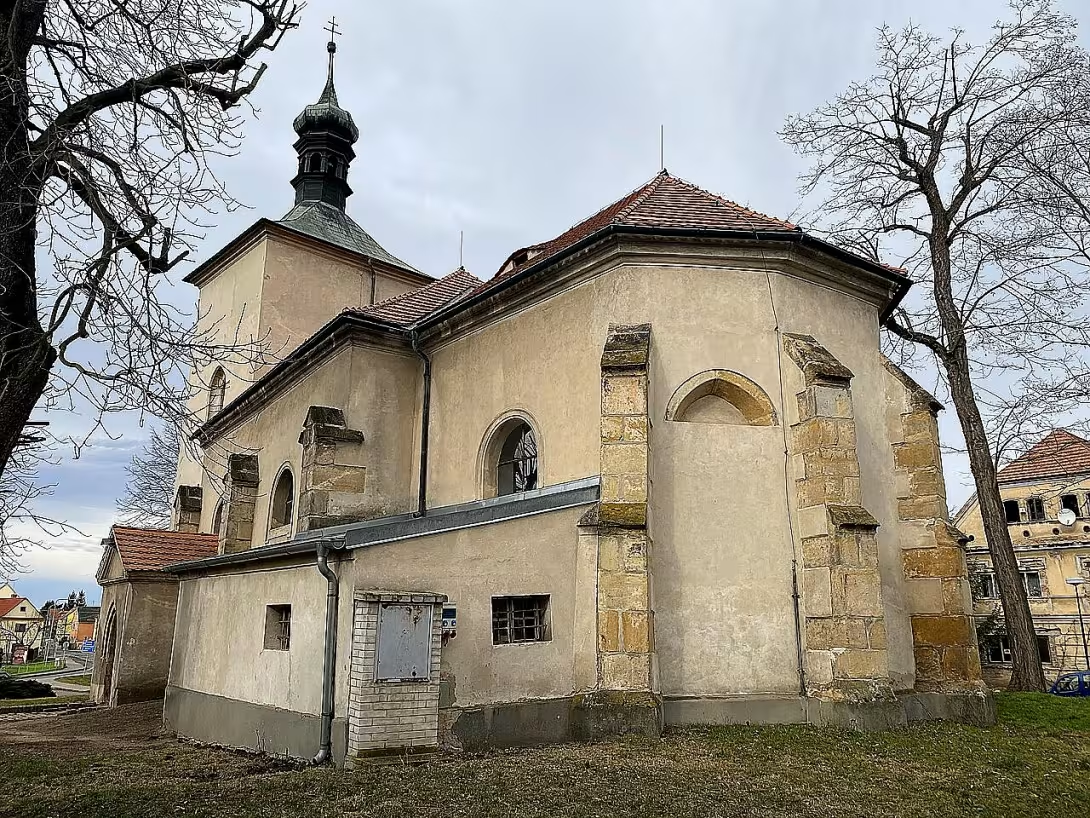
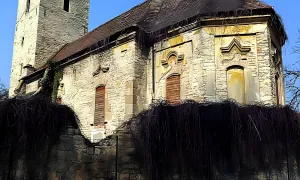
The Church of St. Matthew in Křešice is an exemplary fusion of Gothic and Baroque architectural styles, situated proudly on a picturesque hillside near the River Elbe. Its rich history dates back to the 14th century, earning it cultural monument status since 1964.
Founded in written records from 1384, the church underwent renovations in the late Gothic style around 1500 and was subsequently baroque-ized in 1666. This unique blend of architectural styles gives the Church of St. Matthew its distinctive charm.
The church features a rectangular, single-nave design with a polygonal presbytery. The presbytery boasts ribbed vaults from the 14th century, while the late Gothic sanctuary dates back to around 1500. The nave has a flat ceiling from after 1860. Ornate beauty is added by two pairs of columns with carved reliefs.
The main altar, crafted in 1666, features two pairs of columns with carved reliefs. Titular images of St. Matthew and an angel adorn the main altar, while two baroque side altars date back to the 17th century. The church also houses a late Gothic baptismal font and a Baroque organ with acanthus-leaf carvings from 1715.
During its time of origin, Bohemia was a significant cultural and economic center in Europe. Today, the Church of St. Matthew remains an important cultural landmark, offering visitors a glimpse into the region's rich history and architectural heritage.
The church is currently open to the public, allowing visitors to marvel at its intricate details and ornate beauty. Its unique blend of Gothic and Baroque styles makes it a must-see destination for anyone interested in architecture, history, or culture.
Then and now
Drag the slider to compare how the landmark may have looked when it was built with the view today.
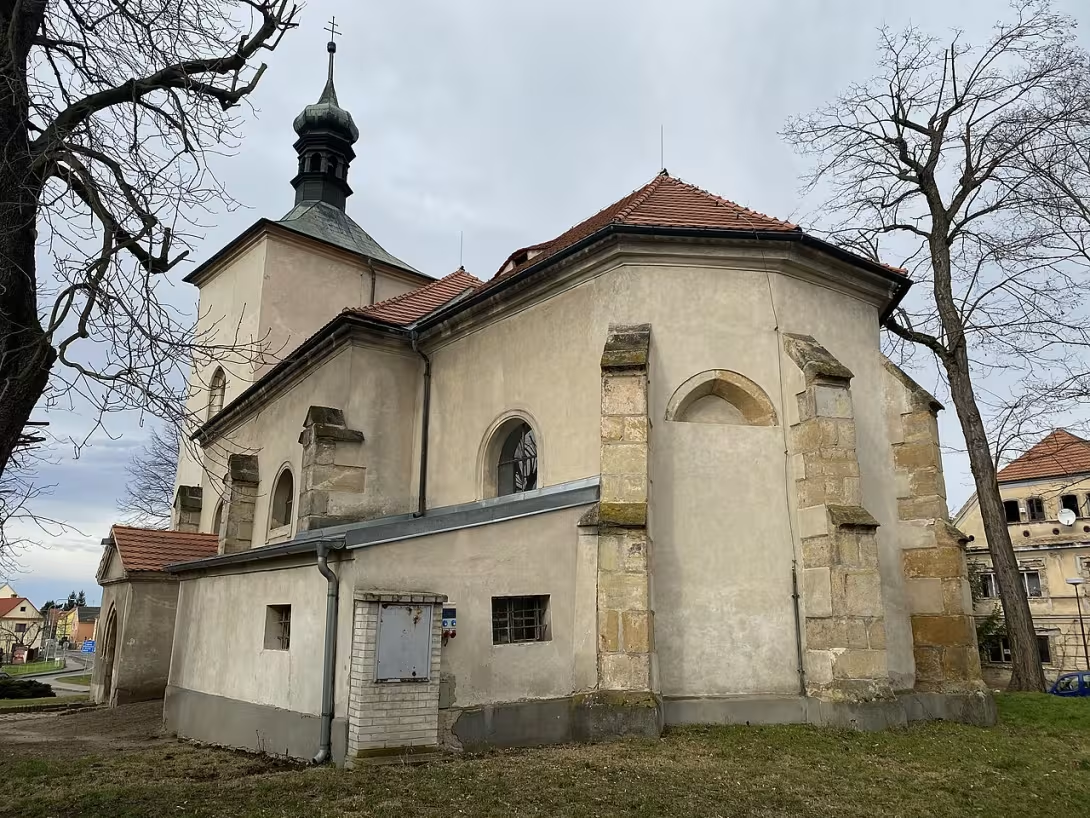

The historical appearance on the left is an AI-generated visualisation and serves as inspiration only.
Historical milestones
- 1350
- Foundation of the Church of St. Matthew
- 1384
- First written records of the church
- 1500
- Late Gothic renovations to the sanctuary
- 1666
- Baroque-ization of the church and creation of the main altar
- 1715
- Construction of the Baroque organ with acanthus-leaf carvings
Architectural development
The church features a rectangular, single-nave design with a polygonal presbytery. The presbytery has ribbed vaults from the 14th century and a late Gothic sanctuary from around 1500. The nave has a flat ceiling from after 1860.
Historical events
First mentioned in written records in 1384
Renovated in the late Gothic style around 1500
Baroque reconstruction in 1666
Points of interest
– The church's unique blend of Gothic and Baroque styles was not just a matter of architectural fashion; it was also influenced by the region's cultural and economic importance during the 14th to 17th centuries.
– One of the most striking features of the church is its baptismal font, which dates back to the late Gothic period and is adorned with intricate carvings of saints and biblical figures.
– The Baroque organ in the church, built in 1715, is not only a masterpiece of craftsmanship but also an important historical artifact that has survived for centuries despite changes in musical tastes and styles.
Guide
This guide is narrated by a synthetic voice generated by artificial intelligence.
Show guide text
This text was created by artificial intelligence and has not been editorially reviewed. It may contain inaccuracies.
The Church of Saint Matthew stands on a small hill in the middle of Křešice, not far from the Labe River. It is a Gothic structure and has been protected as a cultural monument since 1964.
The earliest written mention of the church dates from 1384. Around 1500, it underwent partial late Gothic modifications. The church received its present appearance from a Baroque reconstruction in 1666. At that time, it got a new roof, the tower was heightened, and the present windows were pierced through.
The church has one rectangular nave, which is followed by a narrower polygonal chancel. On its southern side there is a sacristy and a vestibule. The western façade is formed by a prismatic tower. The chancel is supported by flying buttresses, and blocked Gothic windows are still visible on it. The southern vestibule has a late Gothic vault and two portals. The outer portal is decorated with interlacing rods in the jambs, the inner one is semicircular with two moldings.
In the chancel, a ribbed vault from the fourteenth century has been preserved, along with a late Gothic sanctuary, that is, a niche for keeping the sacrament, from around 1500. The ceiling of the nave is younger, created only after 1860. The late Gothic gallery rests on polygonal pillars, has segmental arches and ribbed vaulting. On the ground floor of the tower is a baptismal chapel with a barrel vault with lunettes.
The high altar is Baroque and dates from 1666, the same time as the church's reconstruction. It is decorated with two pairs of columns with boltwork carvings. The titular image of Saint Matthew with an angel was painted by Karel Škréta. He may also be the author of the image in the altarpiece. Two Baroque side altars are from the seventeenth century. They have columned aedicules and in their altarpieces two statues each. The images on them are more recent.
The stone baptismal font is late Gothic. Baroque organ pipes with gilded acanthus wings date from 1715. Also Baroque is the image of Saint Charles Borromaeus from 1705. The pulpit from the end of the eighteenth century is no longer in the church, it was removed after the liturgical reform of the Second Vatican Council. In the tower, a large Renaissance bell from 1612 has been preserved.
Tips for visitors
Best Time to Visit: The Church of St. Matthew is a year-round destination, but the best time to visit is during spring and autumn when the weather is mild and sunny. This allows you to fully appreciate the church's architecture and surroundings without the crowds that come with peak tourist season. What to Bring: Wear comfortable shoes for walking around the church and its surroundings. Don't forget your camera to capture the stunning views of the River Elbe. Photography: The best spots for photography are from the hillside, where you can take in the breathtaking views of the surrounding countryside. The golden hour just before sunset is ideal for capturing the church's architecture and the changing light. What to See Nearby: Within a 30-minute walk or drive, you can visit the picturesque village of Křešice, which offers charming streets, historic buildings, and local cafes.
Frequently asked questions
Can the monument be visited?
Religious buildings are usually open mainly during services; at other times a visit is normally arranged with the parish or the operator. We have not verified specific times.
Where is the monument?
Location: Křešice, Ústecký kraj. The map on this page shows the exact spot.
Why is the monument protected?
It is listed in the Central List of Cultural Monuments of the Czech Republic as a cultural monument (register no. 28173/5-2104).
Businesses nearby
Do you run a restaurant, accommodation, shop, museum, rental, wellness or other visitor service near this monument? Show yourself directly to the people heading to it — this is how they will see you in the app and on the web:
Events nearby

Zdroj akcí: otevřená data měst a obcí ČR (Národní katalog otevřených dat) a kalendář akcí Národního památkového ústavu.
Accommodation nearby
Trips and activities nearby
Guided tours, tickets and activities nearby from GetYourGuide
Affiliate link: if you buy from the partner, we may receive a commission. The price for you does not change.
Search tours and activities →Themed route
Křešice Tour
1. Kostel svatého Matouše (Křešice) - Our main destination, a beautiful Baroque church with an impressive tower and stunning interior. 2. Křešické náměstí - A charming town square surrounded by historic buildings, including the old town hall and several houses from the 17th century. Take a stroll around the square to soak up the atmosphere. 3. Rychlovský mlýn - A picturesque watermill located just outside Křešice, offering a glimpse into the region's industrial past. You can still see the original millstones and machinery.
This route takes you on a journey through the heart of Křešice, exploring its historic center and surrounding countryside. The tour starts at the magnificent Church of St. Matthew, then moves to the charming town square, before ending with a visit to the Rychlovský mlýn watermill.
Seasonal recommendations
Spring
As you visit the Church of Saint Matthew in Křešice during spring, you'll be surrounded by blooming flowers and lush greenery. The warm sunlight casts a gentle glow on the historic building, making it even more breathtaking. To make the most of your visit, try to avoid peak hours (around 11 am) when the church can get quite busy. Wear comfortable shoes and dress in layers for the mild spring weather. The best time to visit is early morning or late afternoon when the sun's rays are soft and gentle.
Summer
In the summer, the Church of Saint Matthew comes alive with vibrant colors and lively atmosphere. The warm sunshine illuminates the intricate stone carvings and stained-glass windows, creating a kaleidoscope of colors. Be prepared for larger crowds during peak tourist season (July-August), so consider visiting early in the morning or later in the evening to avoid the rush. Wear light clothing and comfortable shoes suitable for walking. The best time to visit is around 9 am when the sun's rays are gentle, and the atmosphere is peaceful.
Autumn
As autumn arrives, the Church of Saint Matthew takes on a warm, golden hue, with the surrounding trees displaying vibrant colors. The crisp air carries the scent of ripe fruits and leaves, creating a cozy atmosphere. Try to visit during the week or early morning to avoid larger crowds that tend to gather on weekends. Dress in layers for the mild autumn weather, and wear comfortable shoes suitable for walking. The best time to visit is around 2 pm when the sun's rays are soft, and the atmosphere is peaceful.
Winter
In the winter, the Church of Saint Matthew takes on a serene, snow-covered beauty, with the surrounding landscape transformed into a winter wonderland. The cold air carries the scent of woodsmoke and hot chocolate, creating a cozy atmosphere. Dress warmly in layers, and wear comfortable shoes suitable for walking on potentially icy or snowy surfaces. The best time to visit is around 1 pm when the sun's rays are soft, and the atmosphere is peaceful.
Visualizations and artistic views


The visualisations are generated by artificial intelligence and serve as inspiration.
Photos from the area
Real photos taken near the monument


Zdroj a licence jsou uvedeny u každého snímku.
Tips from visitors
No tips yet. Be the first!
Log in and add your tip.
Sources and literature
Photos: Martin Davídek / CC BY-SA 4.0 — Wikimedia Commons. The author and licence also appear when you hover over the image.
Faktickým podkladem tohoto textu byl článek na Wikipedii, jehož autory jsou přispěvatelé Wikipedie. Článek je dostupný pod licencí CC BY-SA 4.0.
Location on the map
Fotografie návštěvníků
Zatím žádné fotografie. Buďte první, kdo přidá fotografii z návštěvy!
Log in a přidejte svou fotografii nebo hodnoťte.
Za ověřenou návštěvu v aplikaci získáte víc bodů — poznáme podle GPS, že jste na místě.
Reviews and comments