



Kostel svatého Michaela archanděla (Tušimice) Church
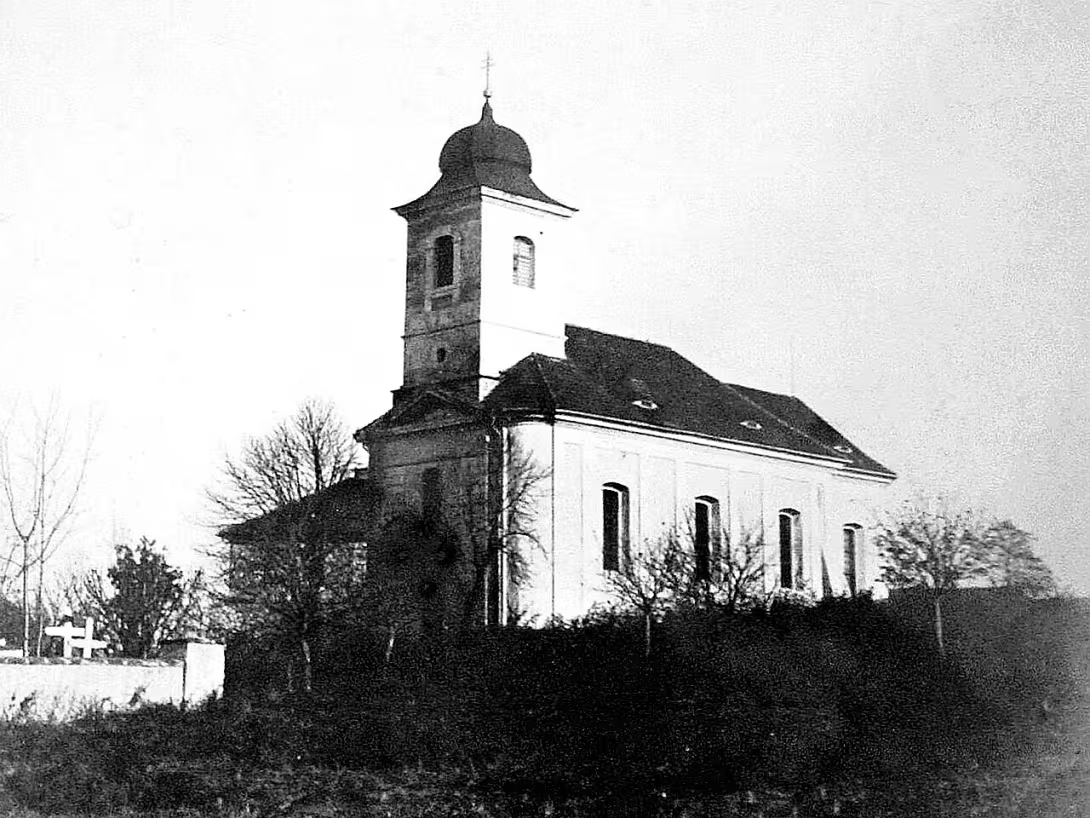
Objekt se nedochoval — na místě dnes nestojí. Následující text popisuje jeho historii, ne současnou návštěvu.
The Church of Saint Michael the Archangel in Tušimice stands as a significant historical monument within the Czech Republic. Located in the village of Tušimice, Kadaň District, Ústecký Region, it was constructed in 1823. This empirical style church replaced an earlier Gothic structure documented as early as 1368. Its importance lies not only in its architectural evolution but also in its role within the local community until its demolition in 1972 due to mining expansion.
The original Gothic church on the site gave way to a new empirical design, reflecting a broader shift in architectural styles during the early 19th century. This period marked a transition from the ornate designs of the Gothic era to the rational and structured forms characteristic of empirical architecture. The Church of Saint Michael the Archangel emerged as part of this movement, embodying the Enlightenment's influence on religious structures across Europe.
Architecturally, the church featured an oblong ground plan with a polygonal presbytery, topped by a distinctive pyramidal tower above its western facade. This design choice underscored the empirical style’s emphasis on symmetry and proportion. Inside, it housed several notable artistic elements, including early baroque altars and a baptismal font from the Chomutov Jesuit college. A striking feature was an early baroque painting by Johann Gruss, created in 1840, which adorned the main altar. Additionally, a late Gothic sculpture of the Mourning Virgin Mary, likely crafted by Ulrich Creutz, found its way to the Chomutov Museum after being moved from the church.
Throughout its history, the Church of Saint Michael the Archangel was under the patronage of significant religious orders. Initially, the Cistercian Order held rights over the site, followed by the Jesuits of Chomutov between 1685 and 1773. These affiliations highlight the church's importance within the ecclesiastical hierarchy and its role in the spiritual life of the community.
In the mid-20th century, the church underwent a dramatic transformation when it was repurposed as a granary during the 1960s. This period marked a significant departure from its religious functions, reflecting broader socio-economic changes in the region. Despite these shifts, the church remained a focal point for the local community until its heritage protection was revoked in 1970. Two years later, in 1972, it was demolished to make way for the expansion of the Nástup brown coal mine.
Today, the site where the Church of Saint Michael the Archangel once stood is no longer accessible as a place of worship or historical visitation. However, its legacy endures through artistic and architectural elements preserved in other locations, such as the Chomutov Museum. The church's history offers a poignant reflection on the intersection of faith, architecture, and industrial progress.
Visiting the area around Tušimice provides an opportunity to explore the broader historical context of this lost monument. While the physical structure no longer exists, its story remains a testament to the dynamic changes that have shaped the region over centuries. The Church of Saint Michael the Archangel serves as a reminder of the cultural and architectural heritage that once flourished in this part of Bohemia, inviting reflection on the past even as it is reclaimed by modern development.
Then and now
Drag the slider to compare how the landmark may have looked when it was built with the view today.
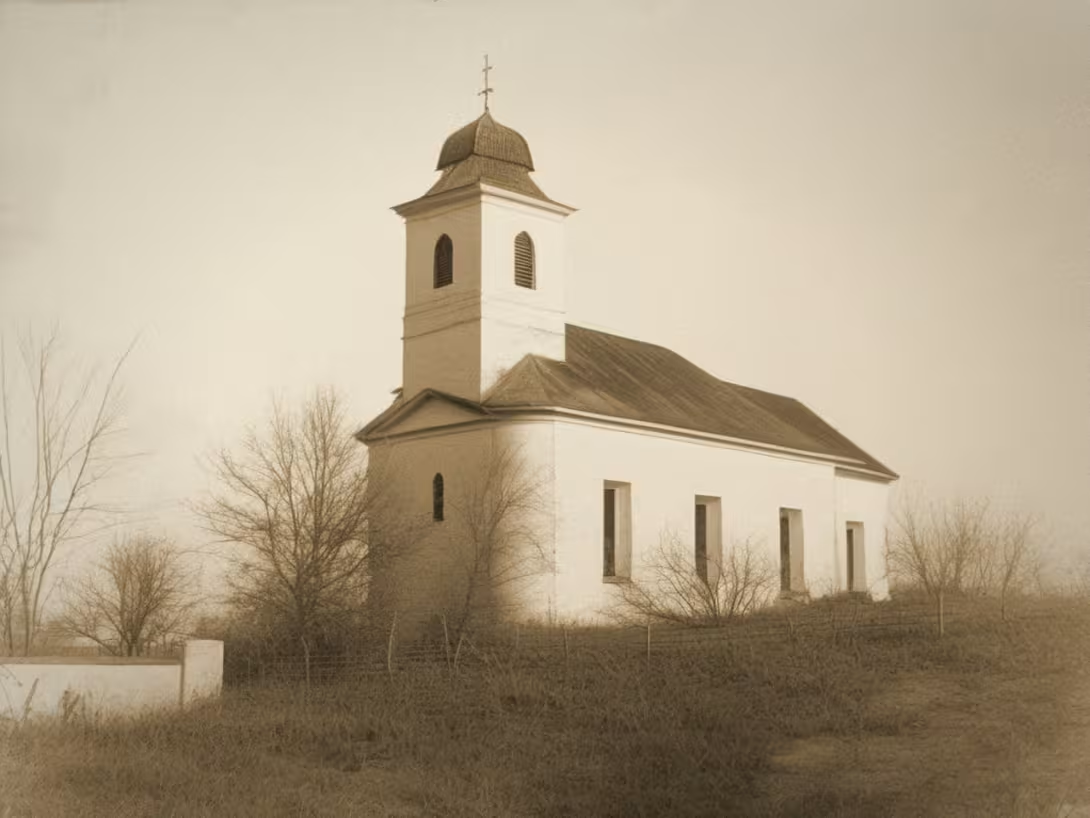
The historical appearance on the left is an AI-generated visualisation and serves as inspiration only.
Historical milestones
- 1823
- Construction of the empirical style church began.
- 1970
- The church's heritage protection was revoked.
- 1972
- The church was demolished.
Architectural development
Constructed with an oblong ground plan and polygonal presbytery, the church featured a pyramidal tower above its western facade. The interior housed early baroque altars and a baptismal font from the Chomutov Jesuit college.
Historical events
The original Gothic church was replaced by an empirical style church in 1823.
The church served as a granary in the 1960s before being demolished in 1972.
Points of interest
- The Church of Saint Michael the Archangel was originally built in a Gothic style before being replaced by an empirical design in 1823, reflecting a broader European architectural shift during the Enlightenment era.
- A significant early baroque painting titled "The Descent from the Cross" by Johann Gruss, created in 1840, once adorned the main altar of the church, showcasing the artistic richness that was housed within its walls.
- The late Gothic sculpture of the Mourning Virgin Mary, believed to be crafted by Ulrich Creutz, found a new home at the Chomutov Museum after being relocated from the church, preserving a piece of its historical artistry.
- Initially under the patronage of the Cistercian Order and later managed by the Jesuits of Chomutov between 1685 and 1773, the church played an important role in the ecclesiastical hierarchy and community life over several centuries.
- In a dramatic shift from its religious origins, the church was repurposed as a granary during the 1960s, reflecting significant socio-economic changes in the region before its eventual demolition in 1972 for mining expansion.
Guide
This guide is narrated by a synthetic voice generated by artificial intelligence.
Show guide text
This text was created by artificial intelligence and has not been editorially reviewed. It may contain inaccuracies.
The Church of Saint Michael the Archangel stood in the town square in Tušimice in the Chomutov region. Today you won't find it anymore. It disappeared along with the entire village when the Nástup brown coal mine expanded.
Originally, a Gothic church stood on this site, already mentioned in 1368. In 1823 it was replaced by a new Empire style building. The patronage rights to the church were held by the Cistercian order and from 1685 to 1773 by the Jesuits from Chomutov. In the sixties of the twentieth century the church served as a granary, yet it remained the parish church of Tušimice parish until its destruction. The monument protection was revoked in 1970 and two years later the church was demolished.
The building had a rectangular ground plan and a presbytery closed off with multiple sides. The western façade was emphasized by rendered bosage, that is plasterwork divided to resemble ashlar masonry. Above the façade rose a prismatic tower.
Inside stood an early Baroque main altar with a painting from 1840 by the Litoměřice painter Johann Gruss. Also early Baroque were two side altars and a baptismal font that came from the Jesuit college in Chomutov. The organ case was made in 1837 by Groebl from Kadaň. Part of the furnishings was preserved. A late Gothic statue of the Mourning Virgin Mary, probably a work by Ulrich Creutz, was transported to the Chomutov museum.
Businesses nearby
Do you run a restaurant, accommodation, shop, museum, rental, wellness or other visitor service near this monument? Show yourself directly to the people heading to it — this is how they will see you in the app and on the web:
Visualizations and artistic views


The visualisations are generated by artificial intelligence and serve as inspiration.
Photos from the area
Real photos taken near the monument

Zdroj a licence jsou uvedeny u každého snímku.
Tips from visitors
No tips yet. Be the first!
Log in and add your tip.
Sources and literature
Photos: autor neuveden / Public domain — Wikimedia Commons. The author and licence also appear when you hover over the image.
Faktickým podkladem tohoto textu byl článek na Wikipedii, jehož autory jsou přispěvatelé Wikipedie. Článek je dostupný pod licencí CC BY-SA 4.0.
Location on the map
Příběhy a pověsti
Legendy, pověsti a příběhy spjaté s touto památkou

Fotografie návštěvníků
Zatím žádné fotografie. Buďte první, kdo přidá fotografii z návštěvy!
Log in a přidejte svou fotografii nebo hodnoťte.
Za ověřenou návštěvu v aplikaci získáte víc bodů — poznáme podle GPS, že jste na místě.
Reviews and comments