



Kostel svatého Mikuláše (Boleboř) Church
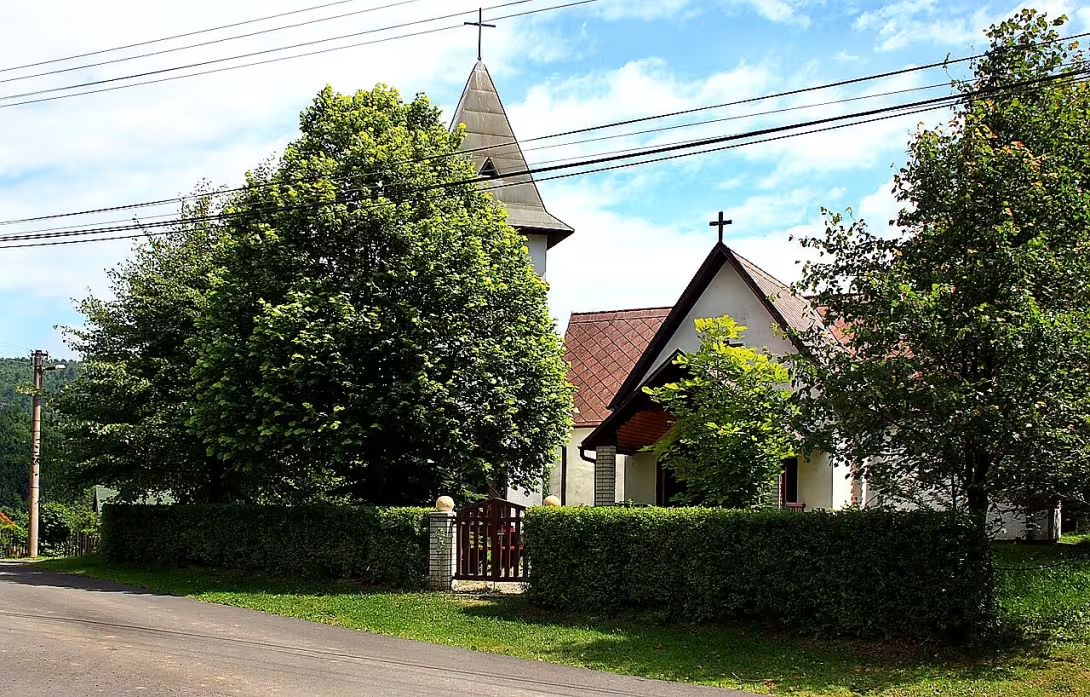
The Church of Saint Nicholas in Boleboři is a Roman Catholic filial church with significant historical and architectural value. This monument is located in the village Boleboř in the Ústí region until 1374, when the older Gothic church was first mentioned. The current Baroque building, designed by architect Jan Kryštof Kosch between 1725 and 1729, replaced this former building. The church also marked itself with a distinctive tower, which stood in front of its western facade. Although it was destroyed in 1947 by fire along with the surrounding buildings, it was demolished in 1959 and then rebuilt. The new building, sanctified on 23 August 1993, continues to serve as an important religious place.
The origin of the Church of St. Nicholas was deeply rooted in Boleboř's history. At first there was a Gothic church since 1374, which reflected the medieval architectural style prevailing in this period. At the beginning of the 18th century, however, this structure was replaced by a baroque design that testifies to the cultural and religious influences that the Czechs pass through the Habsburg monarchy. The decision to build a new church in Baroque style was probably influenced by the emphasis of the era on the noble and artistic expression in Catholicism.
The church of St. Nicholas is architecturally characterized by its baroque elements created under the direction of Jan Kryštof Kosch from 1725 to 1729. The design contains an elliptical ground plan, which was innovative for its time, along with windows and barrels that added aesthetic attraction and structural integrity. The prominent tower, which once stood before the western facade, linked it to the former Gothic structure that burned down in 1947.
Throughout its history, the Church of St. Nicholas has experienced significant changes. The original Gothic church gave way to the Baroque design of Kosche, which marked the shift not only in architectural style but also in cultural context. In 1947 the devastating fire destroyed the church and surrounding buildings, which led to his possible demolition in 1959. This period of loss was followed by a renewal when a new building was consecrated in 1993 to ensure the continuation of the legacy of this sacred place.
Among the key events in the history of St. Nicholas' church are his first mention in 1374, the construction of the Baroque church between 1725 and 1729, the fire which destroyed it in 1947, and his demolition in 1959. The consecration of the new building in 1993 meant an important moment in the rebirth of this religious place. In addition, the Baroque statue of St. Donat from 1744, which complements the historical wealth of the region, is nearby.
Today visitors can explore the church of St. Nicholas in its present form - a modern structure that honours its historical past while serving contemporary spiritual needs. The church remains an accessible and important monument within Boleboře, which offers knowledge of the architectural development and religious heritage of the region. Its history of resistance and renewal makes it a convincing destination for interested people to discover Czech cultural tapestry.
The Church of Saint Nicholas is not only proof of the continuing spirit of his community, but also an invitation to immerse itself in the layers of history that have shaped this sacred place. Visitors are encouraged to explore his architectural beauty, to think about his historic journey and to appreciate his role as a beacon of faith in Boleboř.
Then and now
Drag the slider to compare how the landmark may have looked when it was built with the view today.
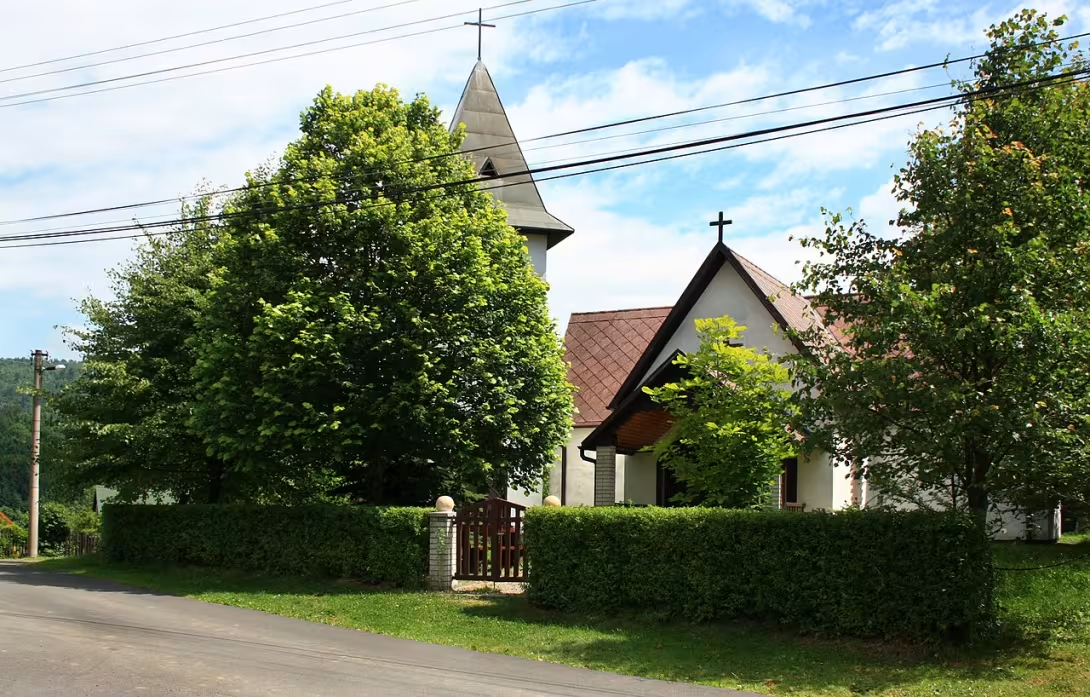
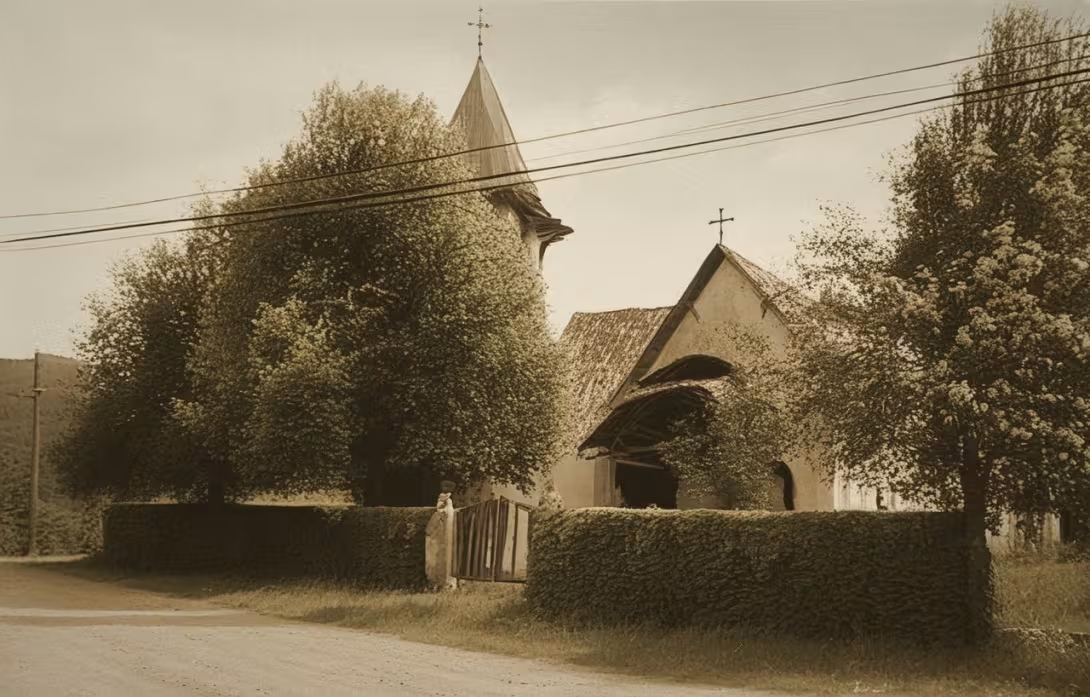
The historical appearance on the left is an AI-generated visualisation and serves as inspiration only.
Historical milestones
- 1374
- The oldest Gothic church in Boleboři is mentioned.
- 1725-1729
- Construction of the Baroque church of St. Nicholas designed by Jan Kryštof Kosch.
- 1947
- the church and surrounding buildings were destroyed by fire.
- 1959
- Demolition debris church.
- 1993
- The sanctification of a new church building.
Architectural development
The Church of Saint Nicholas has undergone significant architectural changes in its history. At first, in 1374 the Gothic church was mentioned, which was later replaced by a Baroque structure designed by Jan Kryštof Kosch between 1725 and 1729. In the new building there was an elliptical plan with windows and barrels. After it was destroyed by fire in 1947, the church was demolished in 1959 and rebuilt as a modern building sanctified in 1993.
Historical events
1374: The oldest Gothic church in Boleboři is mentioned.
1725-1729: Construction of the Baroque Church of St. Nicholas Jan Kryštof Kosch.
1947: the church and surrounding buildings were destroyed by fire.
1959: Demolition ruins church.
1993: The consecration of a new church building.
Points of interest
- The church of Saint Nicholas once performed with a distinctive tower, which stood before its western facade, linked it to a former Gothic structure and added to its unique architectural heritage.
- The Baroque statue of St. Donat from 1744 is nearby, which contributes to another layer of historical scheme around the church.
- Despite being destroyed by fire in 1947 and demolished in 1959, the site saw a remarkable rebirth with the sanctification of the new building on August 23, 1993, symbolizing the resilience and continuity of Boleboř's religious history.
- The original Gothic church mentioned in 1374 reflects the medieval architectural style prevailing in this period and marks an important chapter in the development of ecclesiastical architecture in Bohemia.
- Architect Jan Kryštof Kosch designed a Baroque structure between 1725 and 1729, including innovative elements as an elliptical ground plan which was quite avant-garde for its time.
Guide
This guide is narrated by a synthetic voice generated by artificial intelligence.
Show guide text
This text was created by artificial intelligence and has not been editorially reviewed. It may contain inaccuracies.
Welcome to the historic place of St. Nicholas Church in Boleboři, Ústecký kraj. As you stand here, imagine the rich tapestry of history surrounding this place. Before your eyes is space where centuries converge and leave behind echoes of architectural and spiritual importance.
The story of this place begins with the oldest Gothic church in Boleboři, first mentioned in records from 1374. This original structure laid the foundation for what would become a permanent symbol of faith and resilience. However, between 1725 and 1729 a transformation took place under the guidance of architect Jan Kryštof Kosch. Masterly designed the Baroque church to replace its Gothic predecessor and introduce a new era with its elliptical ground plan, windows and barrels.
If you look around now, imagine the elegant lines and forms that once defined this space. Although the church itself was lost to fire in 1947 and subsequently demolished in 1959, its architectural spirit persists. The history of the site is proof of both origin and loss, which reflects a broader narrative about change and continuity.
Key stories from this place revolve around the period of construction and destruction. Jan Kryštof Kosch stands out as an influential character whose vision brought baroque elegance, which once decorated Boleboř. His work bridged through periods connecting the medieval past with a more modern expression of faith.
One interesting aspect of this site is the distinctive tower that once crowned the western facade. This feature connected a new church with an earlier Gothic structure and connected various architectural periods to a coherent historical story. In addition, the Baroque statue of St. Donat from 1744 stands nearby, adding another layer of historical depth and encouraging reflection on the artistic effort of the time.
To conclude your visit here, take a moment to appreciate how history has shaped this place. The consecration of a new church building in 1993 meant the rebirth of this sacred place, which offers a new chapter and at the same time honours its ancient past.
We invite you to further explore and immerse yourself in the stories Boleboř holds. Thank you for joining us on this journey through time and architecture to the Church of St. Nicholas. Safe travels as you continue your exploration of the rich heritage of the Ústí Region.
Frequently asked questions
Can the monument be visited?
Religious buildings are usually open mainly during services; at other times a visit is normally arranged with the parish or the operator. We have not verified specific times.
Where is the monument?
Location: Boleboř, Ústecký kraj. The map on this page shows the exact spot.
Businesses nearby
Do you run a restaurant, accommodation, shop, museum, rental, wellness or other visitor service near this monument? Show yourself directly to the people heading to it — this is how they will see you in the app and on the web:
Nearby
Near the church, on the southern edge of the village, stands the Baroque statue of St. Donat from 1744. The surrounding landscape is typical of Ústecký kraj in Bohemia.
Accommodation nearby
Themed route
Thematic walking tour: Boleboř and St. Nicholas Church
1. St. Nicholas Church (St. Nicholas Church) - Type: Historical landmark - Why Visit: Start your journey on this amazing example of Baroque architecture, the central work in the village Boleboř. Saint Nicholas Church is famous for its complex design and historical significance and offers visitors a view of the rich cultural heritage of the Ústí Region.
2. Baroque statue of St. Donat - Type: Statue - Why Visit: This Baroque statue from 1744 is located on the southern edge of Boleboře as proof of the artistic craft art of the era. Its location near the church provides an excellent opportunity to appreciate its details and historical context in the countryside of the village.
3. Village Landscape - Type: Scenic view - Why Visit: As you deal with the surroundings, take a landscape that characterizes this part of the Czech Republic in the quintet region. Rolling Hills and traditional architecture offers a quiet background, ideal for reflection on the history of the village and natural beauty.
This tour offers a rich experience thanks to historical and cultural monuments Boleboř with a focus on architectural treasures and picturesque landscapes.
Seasonal recommendations
Spring: Church of St. Nicholas in Boleboři on the spring offers a one-digit command when the sun's rays open green production around the church. Trees and bushes start with a leaf, which knows a lively and spectacular atmosphere. This season is best Light, but the transport to the cold morning and evening. I can look forward to the moderation of the crowd due to the conceived summer allowed, which means that it is a suitable piece of work for a peaceful commitment. It is also interesting to add early bright or ordinary sun which can be designed for architectural details of the skeleton.
Summer: Summer with Church of St. Nicholas in BolebořI graduated in a place full of life and activity. Sunny days that pass until conditions are met that determine the historical nature of the monuments. This season, it is not an improvement to visit early in the morning or late in the afternoon to avoid the top hot crowd in a positive summer trade. Dress with all possible shoes and shorter dresses because the temperature can be known. The summer is also ideal for the use of surrounding waters, such as prochs in forest skies around the church.
Autumn: Autumn offers St. The colors of the leaves are on the Golden, Orange and Red, which passes on to the architectural element of the church a romantic tone. This time of year is ideal for photographers who have a mild light and less disturbed place without summer crowds. Rinse your coat as temperatures can vary from day to day. It is delivered in intermediate corridors, where it is encouraged for liquid products that are light.
Winter: The winter visit of St. Nicholas Church is encouraged by a monument surrounded by snow and glaciers. A freezing morning can be an ideal time for demanding, because light is projected through calm air, which generalizes historical architecture. It is important to go around a warm, apiculture coat and gloves because winter temperatures can be very small. Despite cold conditioning, they encourage critical and appropriate measures to be identified that are ideal for these enterprises.
Visualizations and artistic views


The visualisations are generated by artificial intelligence and serve as inspiration.
Atmosphere of the place
This atmospheric visualisation of the place and period was generated by artificial intelligence. It is not real footage of the location.
Tips from visitors
No tips yet. Be the first!
Log in and add your tip.
Sources and literature
Photos: Pavel Hrdlička (Czech Wikipedia user Packa) / CC BY-SA 3.0 — Wikimedia Commons. The author and licence also appear when you hover over the image.
Faktickým podkladem tohoto textu byl článek na Wikipedii, jehož autory jsou přispěvatelé Wikipedie. Článek je dostupný pod licencí CC BY-SA 4.0.
Location on the map

Příběhy a pověsti
Legendy, pověsti a příběhy spjaté s touto památkou
Příběh: Kostel svatého Mikuláše (Boleboř)
Bylo to v pondělí ráno, kdy Kryštof zjistil, že jeho život byl na pokraji propasti. Města kolem Boleboře byla tichá, pouze ranní brzke šplhaly po prachových …
Číst příběh
Pověst: Kostel svatého Mikuláše (Boleboř)
Podle místní pověsti stávala na místě bolebořského kostela od nepaměti stavba, která si neobyčejně zakládala na svém věku. Nejstarší gotický chrám prý uviděl…
Číst příběhFotografie návštěvníků
Zatím žádné fotografie. Buďte první, kdo přidá fotografii z návštěvy!
Log in a přidejte svou fotografii nebo hodnoťte.
Za ověřenou návštěvu v aplikaci získáte víc bodů — poznáme podle GPS, že jste na místě.
Reviews and comments