






Kostel svatého Mikuláše (Jindřichov) Church
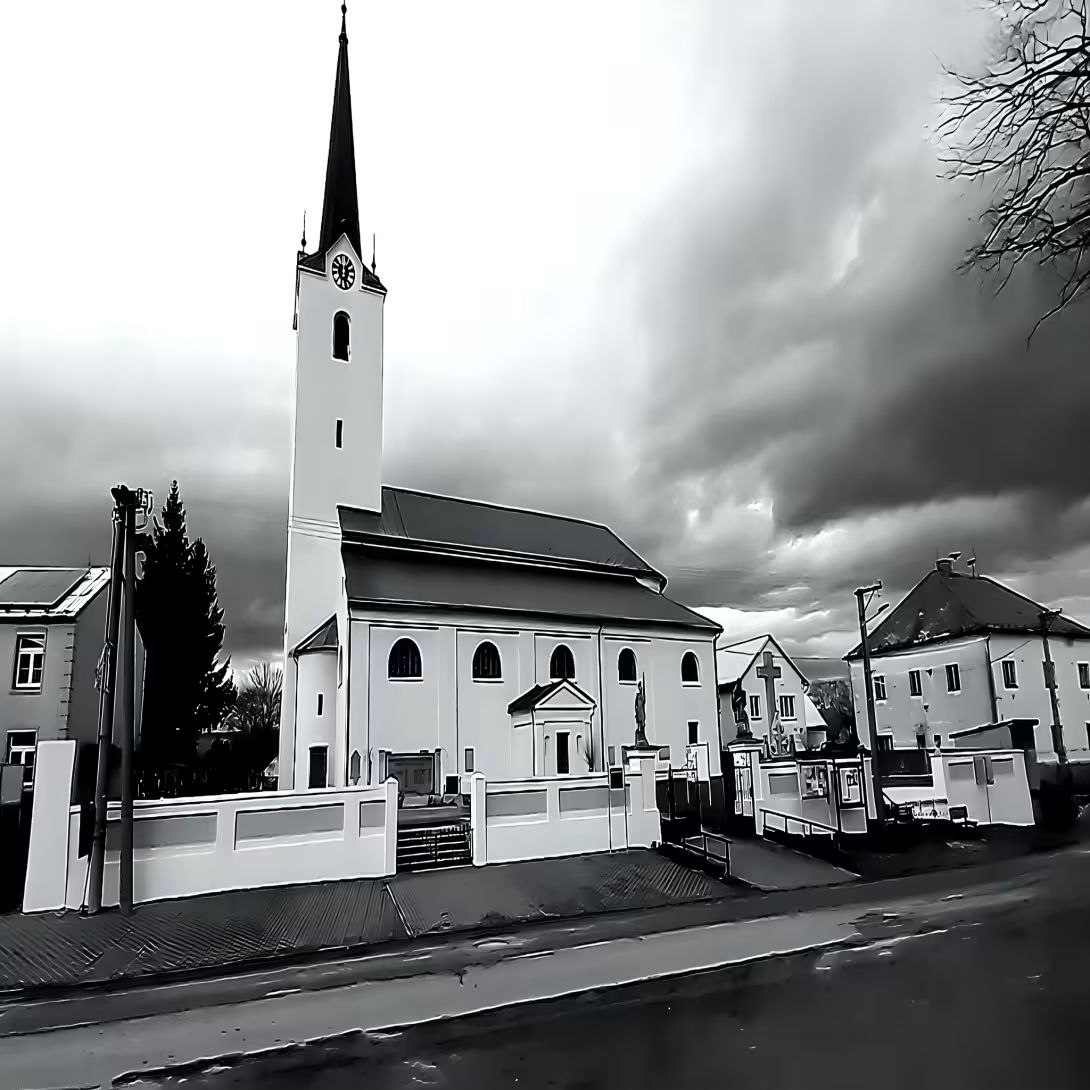
St. Nicholas Church in Jindřichov is a parish temple belonging to the Dean Krnov and a cultural monument of the Czech Republic. It was built in 1671- 1673 by the owner of the Jindřich estate Ludwig Maximilian of Hodice and his wife Izold Pavlin at the site of the original medieval church, which was also dedicated to St. Nicholas. The village Jindřichov itself was founded in 1256.
Construction and restoration accompanied the temple throughout the new age period. In 1804-1811 there were significant modifications; In 1811 the roof was covered with shingles and a tower onion pit with metal. The most serious event was in 1844 when the fire completely destroyed the shingles roof, including the roof, and five bells were destroyed in the tower. In the subsequent repairs, the tower was reduced and roofed newly. Further damage has been caused by the whirlwind for years; their consequences were gradually removed in a way that preserved the original early Baroque character of the building.
Architecturally, it is a three-boat early Baroque church with a semicircular conclusion. The tripod is designed basilically - the wider main ship exceeds the narrower side boats and is connected with high semi-circular smooth arcades. There is a ground-floor hall on the south facade; The facades of side ships illuminate thermal windows separated by pilasters. The high prism tower is built into the west facade. After the fire in 1844, the tower was reduced. In 1871, architect Gustav Merette proposed a new roof tower - a slender needle with a skyline around the perimeter, covered with tin cover, which has been preserved to this day.
The interior of the temple confirms its long development. Until 1690, the tripod was not sealed; In 1690-1691, the main ship and the priesthood were encapsulated in valenas with sections, side ships with cross vaults. The main ship separates the victory arch from the priesthood. The interior was gradually equipped with a series of altars - in the 18th century the tabernacle of the main altar and the side altar with the picture of Madonna was added, in the 19th century there appeared other altars and in 1895 new organ. From the original Baroque equipment, at least one bell was preserved by Olomouc belfry Wolfgang Straub, who carries the reliefs of John the Baptist and St. Martin on horseback.
In the newer period, the temple received ongoing care. During the reconstruction of the tower in 2004 the bell table was cleaned and tower clock installed. In 2015, the facade, plastering and rims were repaired, and in 2016 the roof and roof of the northern side ship were repaired. There is a cemetery spread around the church, which was extended in 1905, and this complex remains an important part of the community's life.
Then and now
Drag the slider to compare how the landmark may have looked when it was built with the view today.
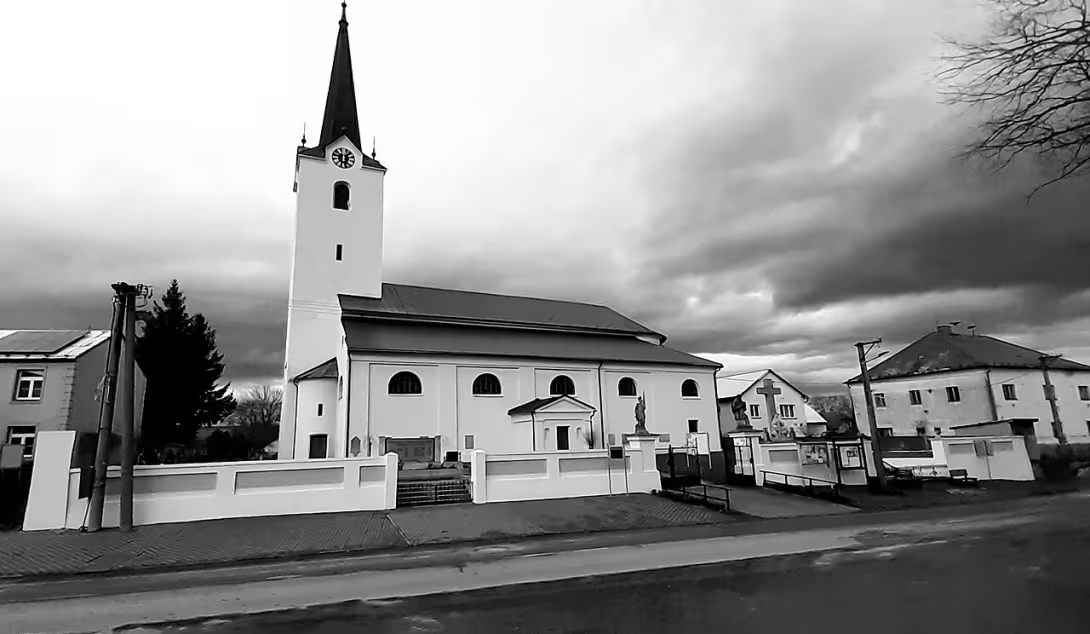
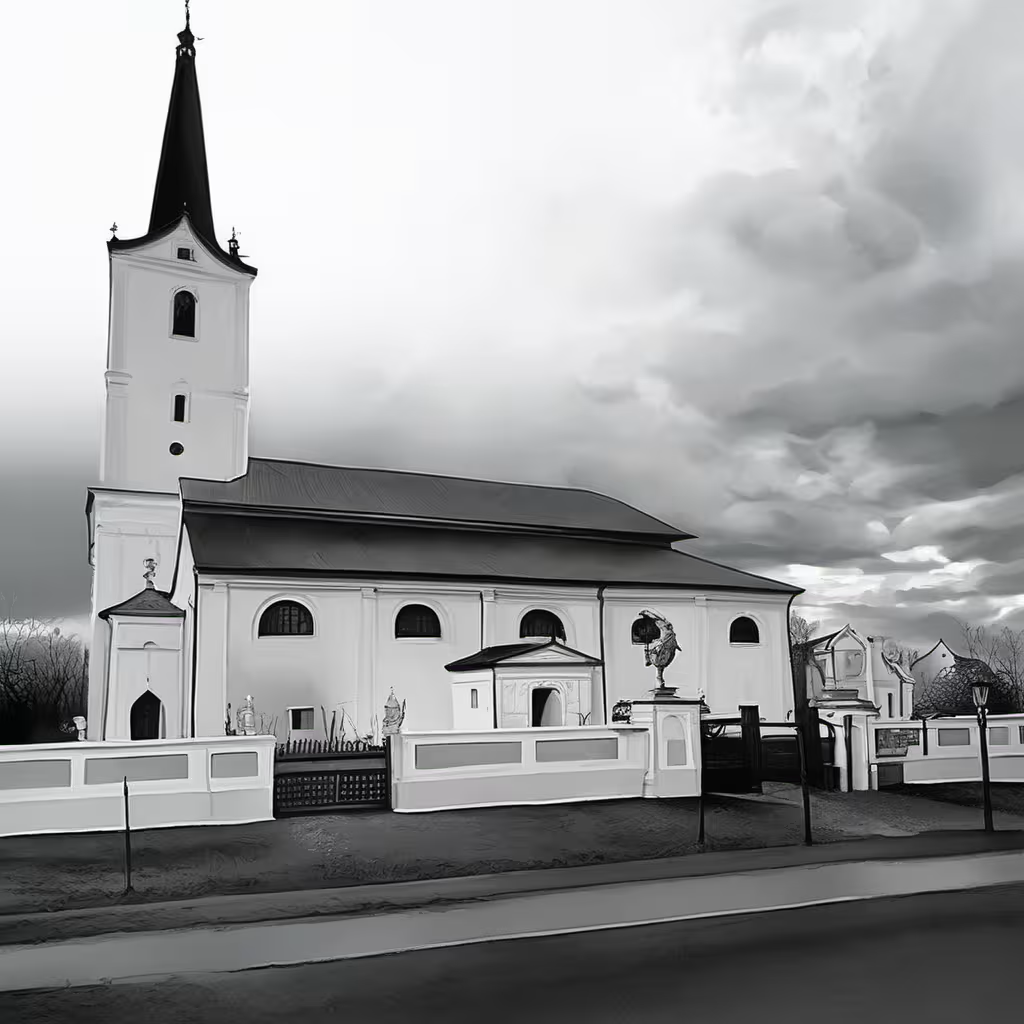
The historical appearance on the left is an AI-generated visualisation and serves as inspiration only.
Historical milestones
- 1256
- The foundation of the village Jindřichov, where there was already a medieval church of St. Nicholas
- 1671-1673
- The position of the early Baroque church in the place of the older medieval church
- 1844
- The destruction of the church by a fire in which the original roof, roof and molten bell boards were destroyed
- 1871
- Completion of the new roof construction of the tower according to the plans of architect Gustav Meretta
- 1905
- Enlargement of the cemetery around the church
Architectural development
The church was built in 1671-1673 as a three-boat basilica with a prism tower on the west front. In the years 1690-1691 the main ship and the priesthood were encapsulated by the arches, while the side ships were encapsulated by the arches. After the fire in 1844, the tower was reduced and a new roof was built in the form of a lean needle. In the 19th century, neo-Baroque modifications of the interior took place, including blinding some holes and replacing the stone floor with an artificial stone.
Historical events
The destruction of the original shingles roof and roof during the fire in 1844, which also melted the bell boards.
Repair and reconstruction in 1804-1811, when the construction of the stairs into the orator was changed and the roof of the tower was covered with sheet metal.
Installation of tower clock in 2004 after reconstruction of tower, financed by public collection of citizens Jindřichova.
Owners
Parish Jindřichov
Points of interest
- St. Nicholas' church was built in 1671-1673 in the place of the original medieval church, which was also dedicated to St. Nicholas.
- In 1844 he was destroyed by a fire that burned down the shingles, including the roofs, and destroyed five bells in the tower.
- After the fire, the tower was reduced and a new roof was given to it, later in 1871, architect Gustav Merette designed a slender needle-shaped tower with tin cover.
- The original Baroque equipment preserved the bell from 1842 with the reliefs of John the Baptist and St. Martin on horseback.
- There is a cemetery around the church, which was extended in 1905.
Guide
This guide is narrated by a synthetic voice generated by artificial intelligence.
Show guide text
This text was created by artificial intelligence and has not been editorially reviewed. It may contain inaccuracies.
Welcome to St. Nicholas Church in Jindřichov!
You are standing in front of one of the most important sacral structures of our landscape, which boasts a long history dating back to the Middle Ages. In front of you is a three-boat church whose early baroque shapes are harmonically intertwined with a deep root in the past. Notice how its high arcades and half-circle culminated priestries are projected into the surroundings - it was the same layout that was typical of the early Baroque architecture. The church tells you the stories of many generations who prayed, lived and remembered with its age and resistance.
Let's look a little deeper into the past. The first mention of St. Nicholas' church in Jindřichov dates back to 1256, when the village itself was founded. There was already an older church, dedicated to the same saint, who was the patron saint of passengers and children. In 1671, however, there was a significant change - a new early Baroque church was built on the site of this medieval church. Its shapes, which you see today, are the result of the careful work of the then builders who wanted to preserve the spiritual centre of the village, but also to adapt it to new aesthetic and functional requirements.
Now pay attention to the architecture itself. There's a three-boat structure in front of you with a basilica plan, which means the main ship is taller and wider than the side. These arcades, which separate the ships, are high and cause the impression of tonnage and nobility. The priesthood, which is half-circled, gives harmony to the whole church and symbolizes the sacred place. Also note how the church coped with the difficult trials of time - in 1844 it was destroyed by a fire in which the original shingles and roofs burned and the bell boards melted. Yet the church survived and preserved its original character after repairs. This is proof of its strength and importance to the local community.
The key stories of this place are closely linked to its resilience and ability to adapt. After the fire of 1844, the tower was reduced and it got a new roof according to the plans of architect Gustav Merett. This change was necessary, but at the same time preserved the church's unique character. In 1905 the cemetery was extended around the church, showing its continued importance as a spiritual centre of the village. Despite all changes and repairs, the church has become a symbol of stability and connection to the past.
The interesting thing is that St. Nicholas' church was built in the place of an older church, which was also dedicated to the same saint. This suggests that this site has been a sacred place since the Middle Ages. Imagine how people prayed here centuries ago, how baptism, weddings and funerals took place here. The church is like a living document of history that captures changes in time and remains a fixed point in the life of the village.
When walking around the church you can also see other details that give the place its unique atmosphere. Look at the facade, which is typical of early Baroque architecture, and perceive its calm and nobility. The church offers you the opportunity to stop and think about how long people live here and what stories have happened here.
If you like this monument, it is certainly worth exploring other parts of Jindřichova. The village is rich in history and traditions, which are reflected in every corner. Stay in touch with our local guides who can tell you more stories and show you the hidden treasures that this area hides.
Thank you for taking a moment to see St. Nicholas' church. Its walls are full of history, and anyone who stops here may feel like a participant in many generations who have lived and prayed here. Be welcome to our cultural heritage and invite us to explore again.
Tips for visitors
{'paragraph': 'The best time to visit St. Nicholas' church is in the morning when there is a quiet and pleasant light for photography. The ideal period is in spring or autumn, when the outside is pleasant temperature and the church is surrounded by greenery or autumn colors. In summer you can expect more visitors, especially during the summer festivities. '}
{'paragraph': 'The church is accessible by car and public transport. The surrounding area can be found parking, which is usually free or for a symbolic amount. If you arrive by bus, stops are nearby, but the current connection is good to check in the traffic search engine. It is recommended to walk because Jindřichov is a small village and the sights are close to each other.'}
{'paragraph': 'When visiting take on comfortable clothes and shoes because the church and cemetery are on uneven terrain. In winter bring suitable shoes against snow and ice. It is also important to take a small towel or handkerchief because there is often a sink or fountain in the church for the halo. Don't forget the mobile phone for photography.'}
{'paragraph': 'Photography is allowed in the church, but it is important to respect the quiet and sacred atmosphere of the place. The best places for photos are the interior of the church with its early Baroque elements, such as arcades and priesthood. External photos are most successful in the morning or afternoon light, when the sun creates pleasant shadows. It is possible to photograph Baroque statues of St. John Nepomuk and St. Florian in the cemetery.'}
{'paragraph': 'In the vicinity of St. Nicholas' church, a cemetery with Baroque statues is worth visiting, which is only in the direct vicinity. If you have more time, you can visit the Dean of Krnov, which is located in the nearby area, but the exact distances and connections need to be established in advance. For families with children it is interesting to explore the surrounding nature or visit the local museum located in Krnov, about 30 minutes drive from Jindřichova. '}
{'paragraph': It is advisable for families with children to use a visit to the church as an opportunity to explain historical and religious traditions. Children can be intrigued by Baroque sculptures in the cemetery or the interior of the church. It is also recommended to visit the church at a time when worship or other cultural events are held here, which may be interesting for children. It is possible to find small parks or playgrounds in the surroundings for a short break. '}
For kids
Imagine going back to the past. The place where you stand today in front of the church of St. Nicholas in Jindřichov was once a small town with wooden houses and a poor agricultural village.
There were people here who lived for a living through agriculture and pasture. They were stubborn people who had to fight against nature and the wars that often hit their city. They had little food, but they had a lot of love for each other.
Businesses nearby
Do you run a restaurant, accommodation, shop, museum, rental, wellness or other visitor service near this monument? Show yourself directly to the people heading to it — this is how they will see you in the app and on the web:
Nearby
- In 1905 the cemetery was expanded and fenced by a wall with Baroque statues of St. John Nepomuk and St. Florian, as stated by the Central List of Cultural Monuments.
- The church falls under the parish administration of the Dean Krnov, which includes a number of other sacral buildings in the region.
Accommodation nearby
Themed route
St. Nicholas Church Type: Sacral monument This church represents the main destination of your journey and the dominant village Jindřichov in the district of Bruntál. It is worth visiting for its historical value and calm atmosphere, which attracts visitors to relax and admire local architecture.
Høbitov at St. Nicholas Church Type: Cultural monument It is located in the immediate vicinity of the church, making it a logical and immediate next stop. In 1905, the cemetery was expanded and fenced by a wall on which are valuable Baroque statues of St. John Nepomuk and St. Florian. These works of art provide a specific historical character and are worth a closer inspection.
Dean Krnov Type: Administrative and sacral unit Although it is an administrative unit, its visit or introduction to its structure gives context to the whole region. St. Nicholas' church falls under the parish administration of this dean, which includes a number of other sacral structures in the surroundings. The tour of this connection helps to better understand the spiritual and cultural connections of individual municipalities in the region.
The route is designed to be as effective and focused on the immediate vicinity of the main target. You start at the church, which is the heart of the village. You can then move to the adjacent cemetery where you can admire Baroque statues and historical walls. Finally, you can take a break and get to know the information about the Dean, which correctly puts these monuments in a wider regional context. The whole route is short and suitable for a walking trip at a quiet pace.
Seasonal recommendations
Spring Spring in Jindřichov surrounds St. Nicholas' church with fine greenery and blooming nature, where the scent of the first flowers spreads and the air is saturated with moisture after spring rains. The sun rises slowly here, but its rays illuminate the church with golden light, which highlights its stone details and creates long shadows on the wall. The atmosphere is calm, almost meditative, as if time was running slower. During this period, the church is an ideal place for walking around the area, where meadows and forests are spread out, which are awakening to life. I recommend visiting him early in the morning when there are fewer visitors, and wearing light but comfortable clothes or umbrella, as the weather can be unpredictable. It is also appropriate to wear shoes with good grip, as they can be slippery after spring rains.
Summer Summer brings to Jindřichova hot sun days when the church of St. Nicholas shines in the sun and its stone walls reflect heat. The atmosphere is lively and full of life, as visitors from around and from other regions come here in the main summer season. The sun is setting here late, which is why it is best to visit the church early in the morning when it is still cold and the crowds have not yet started. It is convenient to wear light, airy clothes and not forget the sunglasses and sunscreen. It's often hot in church during the day, so bring a drink and maybe a hat. In summer evenings there are often concerts or cultural events, which can be an interesting addition to the visit.
Autumn Autumn Jindřichov is surrounded by golden and red leaves, which decompose on the trees and form a soft, brown floor on the ground. The church of St. Nicholas in this period becomes a place where sunlight and shadows meet, creating a magical atmosphere. The air is cold and saturated with the scent of fallen leaves that spread over the wind. It is an ideal time for walking around the woods where you can watch nature prepare for winter. I recommend visiting the church on calmer days when it is not too windy, and wearing warmer clothes because temperatures can be quite low. It is also appropriate to wear shoes with good support, because under fallen leaves can be slippery paths.
Winter Winter Jindřichov is covered with a white blanket of snow that surrounds the church of St. Nicholas and creates a charming view. The sun rises low above the horizon and its rays illuminate the church with a soft, silver light, which gives the place a mysterious atmosphere. The air is cold and clean and therefore this time is ideal for peaceful walks and meditation. Christmas concerts or exhibitions are often held here in advent time, which can be an interesting addition to the visit. I recommend visiting the church in the short hours of light, when there is still light out, and wearing warm, layered clothes as temperatures can be very low. It is also convenient to wear shoes with good fire protection to prevent slippery roads covered with snow.
Visualizations and artistic views


The visualisations are generated by artificial intelligence and serve as inspiration.
Photos from the area
Real photos taken near the monument


Zdroj a licence jsou uvedeny u každého snímku.
Atmosphere of the place
This atmospheric visualisation of the place and period was generated by artificial intelligence. It is not real footage of the location.
Tips from visitors
No tips yet. Be the first!
Log in and add your tip.
Sources and literature
Fotografie: Mikuláš Galuszka / CC BY-SA 4.0, rozlišení zvýšeno umělou inteligencí — Wikimedia Commons. The author and licence also appear when you hover over the image.
Faktickým podkladem tohoto textu byl článek na Wikipedii, jehož autory jsou přispěvatelé Wikipedie. Článek je dostupný pod licencí CC BY-SA 4.0.
Location on the map
Příběhy a pověsti
Legendy, pověsti a příběhy spjaté s touto památkou
Fotografie návštěvníků
Zatím žádné fotografie. Buďte první, kdo přidá fotografii z návštěvy!
Přihlaste se a přidejte svou fotografii nebo hodnoťte.
Za ověřenou návštěvu v aplikaci získáte víc bodů — poznáme podle GPS, že jste na místě.
Reviews and comments