






Kostel svatého Mikuláše a Jména Panny Marie Church
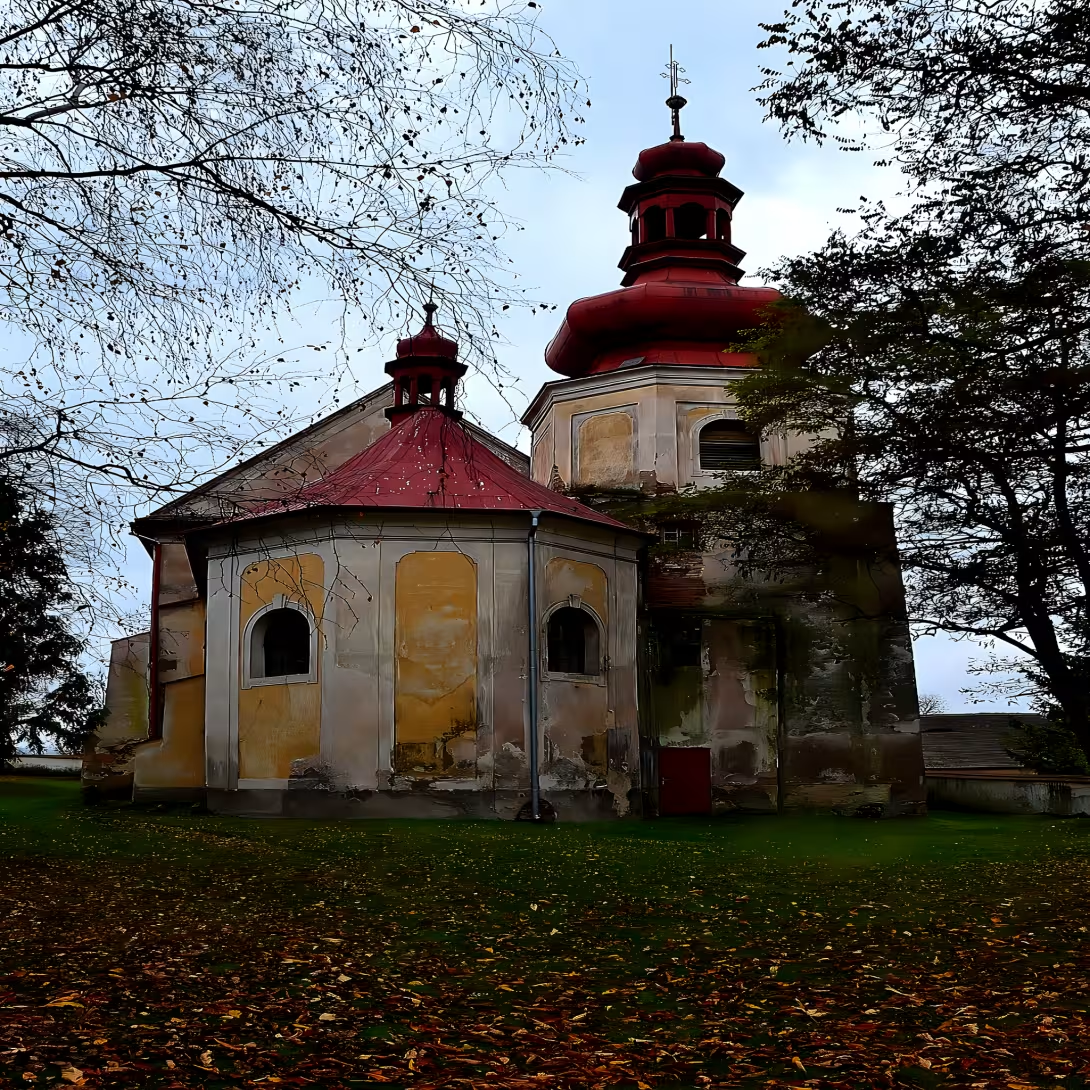
The Church of Saint Nicholas and the Name of the Virgin Mary in Vilémov is a Roman Catholic church with significant historical and cultural importance. Dedicated to both Saint Nicholas and the Name of the Virgin Mary, it stands on a cemetery at the village's southwestern edge. Since 1963, this architectural gem has been protected as a cultural monument, highlighting its regional heritage value.
The church dates back to the late medieval period, specifically documented in the second half of the 14th century. It underwent significant transformation in 1612 when it was rebuilt or newly constructed in Renaissance style. During this era, Protestantism prevailed in Vilémov, and a Protestant pastor served the community. The suppression of the Bohemian Revolt between 1618 and 1620 led to re-Catholicization across the region. By August 26, 1625, the church was reconsecrated by the dean of Kaaden, marking its return to Catholic hands.
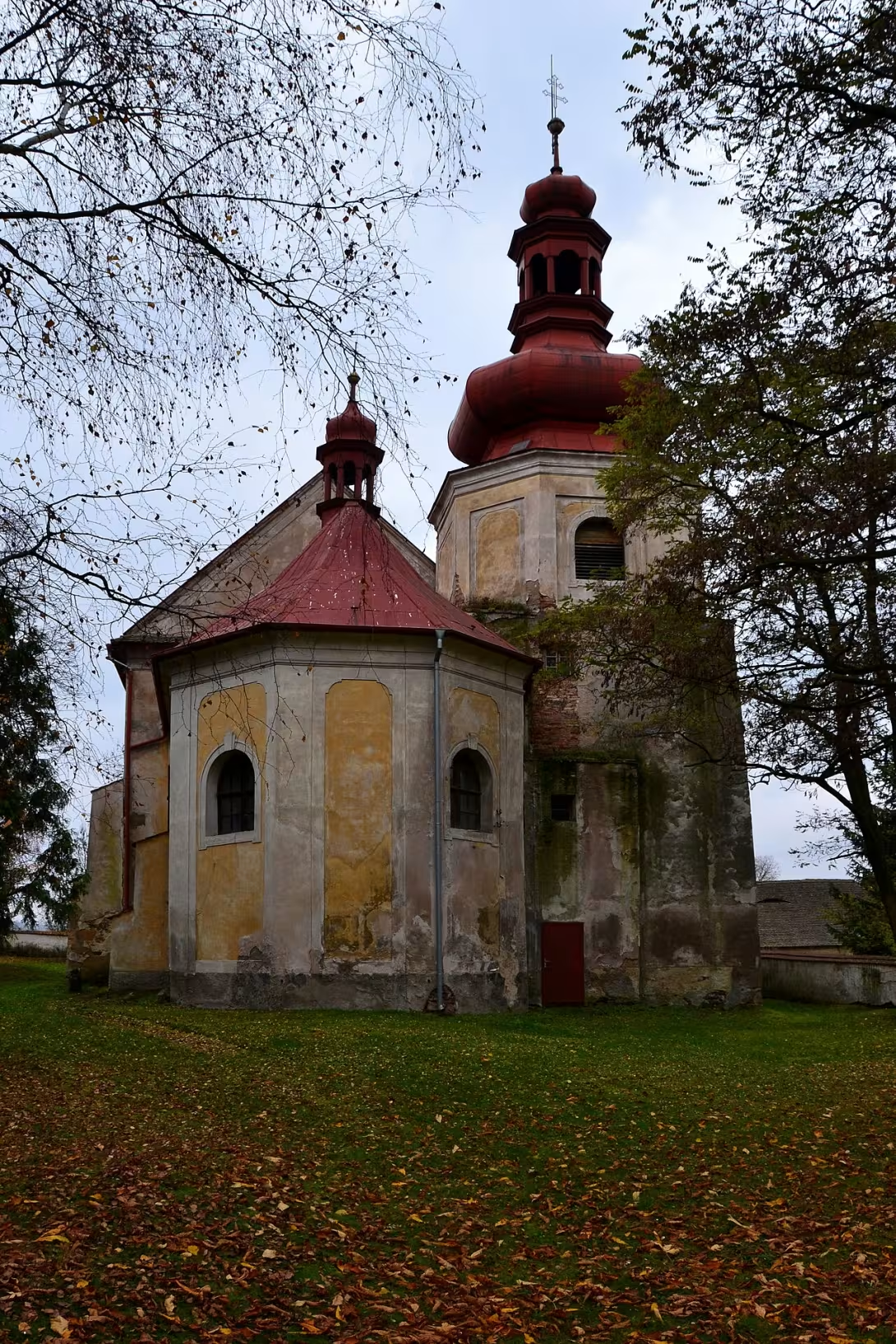
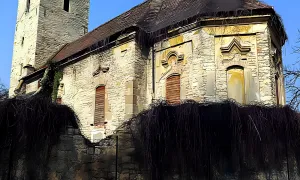
Architecturally, the Church of Saint Nicholas is a single-nave building with an east-oriented polygonal presbytery. Its facade features lisenas and buttresses on the southern side, while an octagonal tower adjoins the northern wall. This tower houses both a sacristy on its ground floor and an oratory above. The interior boasts a barrel vault ceiling and pilasters that divide the nave walls, enhancing its aesthetic appeal. A wooden loft sits above the main entrance on the western side of the nave.
Ownership and administration have changed dramatically over time. In the early 18th century, it belonged to the Račín family from Račín. On September 3, 1711, a fire caused by the then-owner destroyed both the church and the adjacent parsonage. This event led to its reconstruction in Baroque style, largely due to Hraběnka Eleanora Račínová's efforts.
The interior furnishings are predominantly early Baroque, dating back to 1673. The main portal altar features late Gothic sculptures of Madonna, Saint Wenceslas, and Saint Nicholas from the early 16th century, likely crafted by Ulrich Creutz. Two original side altars are dedicated to John the Baptist and Saint Francis. Other Baroque elements include altars devoted to the Crucifixion of Jesus Christ and Saint John Nepomuk, featuring older Baroque sculptures from 1711. The pulpit is richly decorated with original figures of evangelists and four Church Fathers, while Baroque pews are embellished with carved caryatids. Notable items include a stone baptismal font with a Renaissance copper basin from 1598, a Renaissance stone epitaph for Uršula z Doupova, and paintings of Saint John Nepomuk from 1727 and the Annunciation of the Virgin Mary from the early 18th century.
The church's surroundings also hold historical interest. To its south stands a Renaissance cemetery chapel from the latter half of the 16th century. Originally featuring open arcades on its northern side, these were later walled up. Inside was once an epitaph for Vilém z Doupova, created in 1568 by Kaaden master Jörg Mayer, which has since been relocated to a Franciscan monastery in Kaaden due to security concerns. Nearby is a two-story Baroque parsonage with an early 18th-century Pieta sculpture.
Today, the Church of Saint Nicholas and the Name of the Virgin Mary remains a testament to Vilémov's rich religious and architectural history. Its well-preserved structure and historical artifacts make it a worthwhile visit for those interested in exploring the cultural heritage of the Ústecký region. Visitors are invited to experience this remarkable monument, which continues to be an integral part of the community's spiritual life.
Then and now
Drag the slider to compare how the landmark may have looked when it was built with the view today.
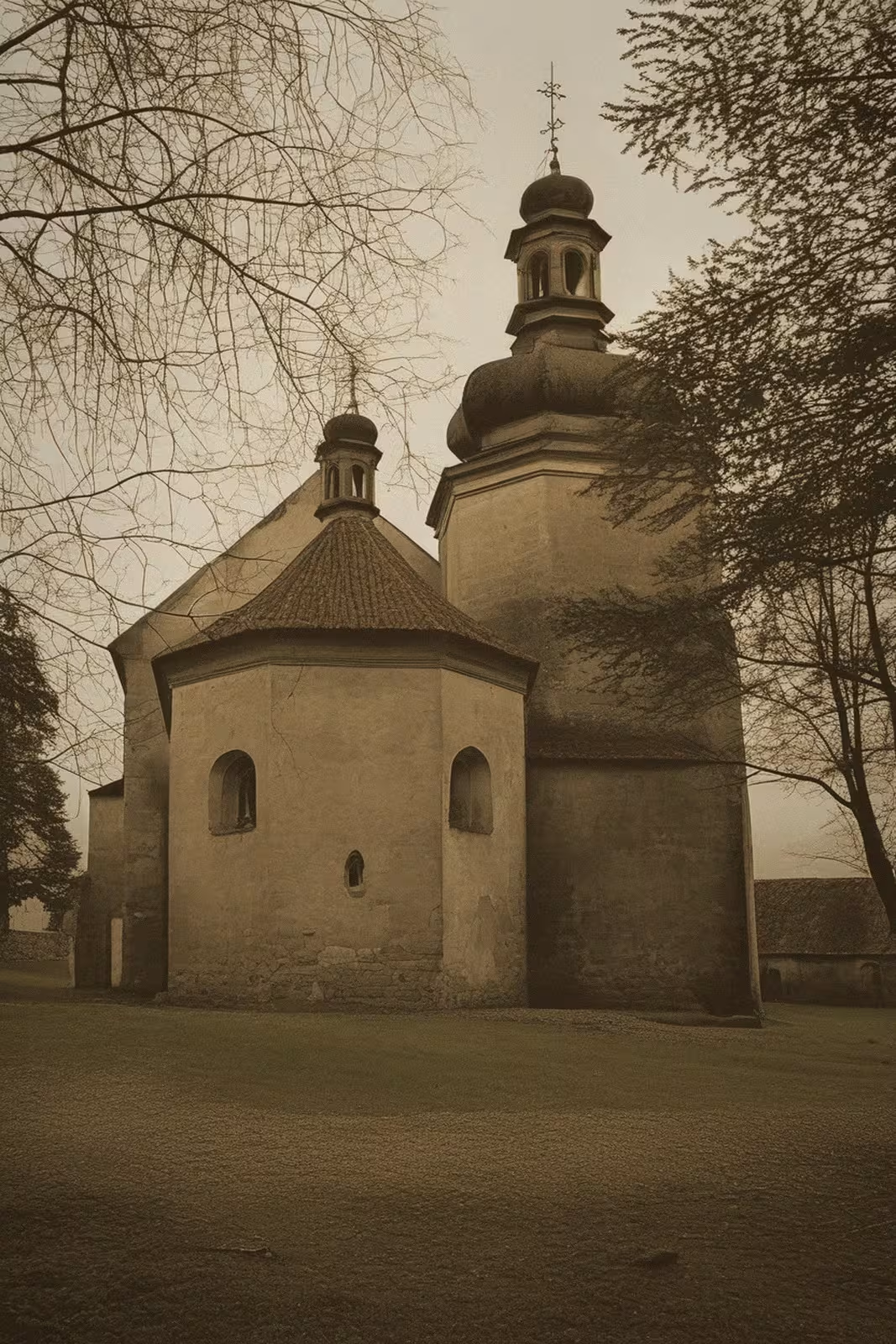
The historical appearance on the left is an AI-generated visualisation and serves as inspiration only.
Historical milestones
- 1612
- The church was rebuilt or newly constructed in Renaissance style.
- 1625
- Reconsecration of the church by the dean of Kaaden after re-Catholicization.
Architectural development
The church is a single-nave building with a polygonal presbytery oriented east. It features a tower attached to the north side, which houses a sacristy on the ground floor and an oratory on the upper level. The interior boasts a barrel vault ceiling and pilasters dividing the nave walls. The main entrance has a wooden loft above it.
Historical events
- 1625
- The church was reconsecrated by the dean of Kaaden following the suppression of the Bohemian Revolt and the subsequent re-Catholicization process.
- 1711
- A fire caused by the then-owner led to the destruction of the church and adjacent parsonage, prompting its baroque reconstruction.
Points of interest
- The Church of Saint Nicholas was originally documented in the late 14th century but underwent a significant transformation to Renaissance style in 1612, reflecting the architectural shifts of that era. - Despite being predominantly Protestant during its reconstruction in the early 17th century, the church returned to Catholic hands after the suppression of the Bohemian Revolt, with reconsecration occurring on August 26, 1625. - A devastating fire on September 3, 1711, destroyed both the church and an adjacent parsonage, leading to a Baroque reconstruction spearheaded by Hraběnka Eleanora Račínová, showcasing her influence in preserving cultural heritage. - The main portal altar features late Gothic sculptures of Madonna, Saint Wenceslas, and Saint Nicholas from the early 16th century, likely crafted by Ulrich Creutz, highlighting the blend of artistic styles present within the church. - A Renaissance stone epitaph for Uršula z Doupova is among the notable interior items, providing a glimpse into the historical figures associated with the church's past.
Guide
This guide is narrated by a synthetic voice generated by artificial intelligence.
Show guide text
This text was created by artificial intelligence and has not been editorially reviewed. It may contain inaccuracies.
The Church of Saint Nicholas and the Name of the Virgin Mary stands in a cemetery on the southwestern edge of Vilémov in the Chomutov district. Since 1963 it has been protected as a cultural monument.
The medieval Church of Saint Nicholas is documented here already in the second half of the 14th century. In 1612 it was reconstructed or newly built in the Renaissance style. At that time Protestantism prevailed in Vilémov and a Protestant pastor was active there. After the suppression of the Estates Revolt between 1618 and 1620, recatholization began in the region. A Catholic priest returned to Vilémov and on August 26, 1625 the church was consecrated by the dean of Kadaň.
At the beginning of the 18th century the estate belonged to the Račín family of Račín. The then owner caused a fire on September 3, 1711, in which the church and the neighboring rectory were destroyed and the parish records were also burned. The Baroque renovation of the church during the 18th century was undertaken by Countess Eleanora Račínová.
It is a single-nave building with a many-sided presbytery facing east. Pilasters divide the façade, and on the south side there are also buttresses. On the north side, at the place where the nave meets the presbytery, a prismatic tower with an octagonal story adjoins. In its ground floor is a sacristy, on the upper floor an oratory. The interior is vaulted with a barrel vault, the walls of the nave are divided by pilasters and above the main entrance is a wooden gallery.
Most of the furnishings are early Baroque and date from 1673. On the main altar stand late Gothic sculptures of the Madonna, Saint Wenceslas and Saint Nicholas from the beginning of the 16th century, probably by Ulrich Creutz. Two original side altars are dedicated to Saint John the Baptist and Saint Francis. Two more, late Baroque, belong to the Crucifixion of Christ and Saint John of Nepomuk and are decorated with older sculptures from 1711. The pulpit is decorated with sculptures of the evangelists and four church fathers, the ends of Baroque pews have carved caryatids. The furnishings also include a stone baptismal font with a tin Renaissance bowl from 1598, a Renaissance epitaph of Ursula of Doupov, a Baroque Pietà and paintings of Saint John of Nepomuk and the Annunciation of the Virgin Mary.
South of the church stands a Renaissance cemetery chapel from the second half of the 16th century. Its north side was formed by arcades, later bricked up. Inside there was once a stone tomb of William of Doupov from 1568 by the Kadaň master Jörg Mayer with the figure of a reclining man in armor. Due to poor security of the chapel, it was moved before 2000 to the Franciscan monastery in Kadaň. North of the cemetery stands a two-story Baroque rectory and next to it a sculpture of Pietà from the beginning of the 18th century.
Tips for visitors
The best time to visit the Church of Saint Nicholas and the Name of the Virgin Mary is during late spring or early autumn when the weather is pleasant, allowing for a comfortable exploration of both the church grounds and its surroundings. During these months, you can enjoy the lush greenery surrounding the cemetery chapel and the parsonage without the discomforts of summer heat or winter cold. Additionally, visiting in the morning often provides softer lighting conditions ideal for photography.
Public transportation options are accessible, and you can find convenient routes by checking a travel planner online. This makes the site easily reachable without needing to navigate busy roads.
When planning your visit, consider bringing comfortable walking shoes, especially if you intend to explore the surrounding area including the Renaissance cemetery chapel and baroque parsonage. A camera or smartphone is recommended for capturing the architectural details of the church and its historical surroundings. Don't forget a hat and sunscreen if visiting during warmer months.
For photography enthusiasts, early morning or late afternoon provides the best natural light to capture the intricate details of the church's architecture and the serene atmosphere of the cemetery chapel. The two-story baroque parsonage also offers unique angles for photographs, especially when lit by the soft glow of the setting sun.
Within a 30-minute drive from Vilémov, you can explore other historical sites such as the Renaissance cemetery chapel and the baroque parsonage with its early 18th-century Pieta sculpture. These nearby attractions offer additional insights into the region's rich cultural heritage and are ideal for extending your visit to include more of Ústecký kraj's historical offerings.
Families with children will find the site engaging, especially if they have an interest in history or architecture. The church grounds provide a peaceful environment for a family walk, while the nearby parsonage can be intriguing due to its artistic sculptures. Consider bringing along some snacks and water for a small picnic by the cemetery chapel, making it a memorable outing.
Frequently asked questions
Can the monument be visited?
Religious buildings are usually open mainly during services; at other times a visit is normally arranged with the parish or the operator. We have not verified specific times.
Where is the monument?
Location: Vilémov, Ústecký kraj. The map on this page shows the exact spot.
Why is the monument protected?
It is listed in the Central List of Cultural Monuments of the Czech Republic as a cultural monument (register no. 18692/5-843).
Businesses nearby
Do you run a restaurant, accommodation, shop, museum, rental, wellness or other visitor service near this monument? Show yourself directly to the people heading to it — this is how they will see you in the app and on the web:
Events nearby
Zdroj akcí: otevřená data měst a obcí ČR (Národní katalog otevřených dat) a kalendář akcí Národního památkového ústavu.
Nearby
South of the church stands a Renaissance cemetery chapel from the second half of the 16th century. Nearby is a two-story baroque parsonage with an early 18th-century Pieta sculpture.
Accommodation nearby
Themed route
Tematická Výletní Trasa: Kostel svatého Mikuláše a Jména Panny Marie
1. Kostel svatého Mikuláše a Jména Panny Marie (Kostel) - Typ: Náboženská památka - Proč stojí za návštěvu: Tento kostel je centrem historického a kulturního dědictví obce Vilémov. Jeho architektura představuje bohatou minulost, která odráží vývoj místní komunity. Navštívte ho pro pohled na jeho krásnou stavbu a pro hlubší porozumění historickému kontextu oblasti.
2. Renesanční hřbitovní kaple - Typ: Historická kaple - Proč stojí za návštěvu: Tato kaple, nacházející se jižně od kostela, je významnou renesanční strukturou z druhé poloviny 16. století. Její umístění a architektura nabízejí vhled do historických náboženských praktik a designu té doby, což ji činí nezbytným prohlédnutím pro milovníky dějin.
3. Barokní fara - Typ: Historické sídlo - Proč stojí za návštěvu: Tato dvoupatrová barokní budova je nejen historicky významná, ale také domovem raně 18. století sochy Pieta. Její elegantní design a umělecké prvky představují bohatství kulturního dědictví obce Vilémov.
4. Socha Pieta - Typ: Umělecká socha - Proč stojí za návštěvu: Tato raně 18. století socha je umístěna v blízkosti barokní fary a představuje důležitý umělecký příspěvek do historie obce. Její detaily a symbolika nabízejí hlubší vhled do náboženských a kulturních tradic té doby.
5. Nádvoří kostela - Typ: Historické nádvoří - Proč stojí za návštěvu: Nádvoří kostela poskytuje klidné místo pro odpočinek a reflexi. Jeho prostor umožňuje návštěvníkům ocenit celkový kontext památky, zatímco si užívají příjemnou atmosféru okolního prostředí.
Tato trasa nabízí komplexní pohled na kulturní a historické bohatství obce Vilémov, zaměřený na klíčové památky v jejím bezprostředním okolí.
Seasonal recommendations
Spring: The spring season at the Church of St. Nicholas and the Name of Our Lady in Vilémov offers a rejuvenating atmosphere as nature awakens from its winter slumber. Visitors can enjoy the vibrant colors of blooming flowers around the church grounds, which provide a picturesque backdrop to the historic architecture. During this time, the weather is generally mild but can be unpredictable with occasional rain showers, so it's advisable to bring an umbrella or a light waterproof jacket. Early mornings are ideal for exploring when the surroundings are quieter and more serene.
Summer: Summer at Vilémov brings long days filled with warm sunshine, making it perfect for leisurely visits to the Church of St. Nicholas and the Name of Our Lady. The lush greenery surrounding the church is in full bloom, creating a vibrant and inviting atmosphere that enhances the beauty of the historic site. This season attracts more visitors, so arriving early in the morning or later in the afternoon can help avoid crowds. Comfortable walking shoes and light clothing are recommended to stay cool during your visit.
Autumn: Autumn at Vilémov is characterized by its stunning display of fall foliage, with vibrant reds, oranges, and yellows enveloping the church grounds. The cooler temperatures make for a pleasant visiting experience as you can enjoy the crisp air while exploring the historic site. This season often sees fewer visitors compared to summer, providing a more tranquil atmosphere. Layered clothing is advisable to accommodate the changing weather throughout the day.
Winter: Winter transforms Vilémov into a serene and picturesque setting with snow-covered landscapes that beautifully frame the Church of St. Nicholas and the Name of Our Lady. The church's architecture takes on an ethereal quality under the soft glow of streetlights, creating a magical atmosphere perfect for photography enthusiasts. However, shorter daylight hours mean it’s best to plan your visit during the day to make the most of the lighting. Warm clothing is essential, and visitors should be prepared for potential closures or reduced opening times due to inclement weather.
Visualizations and artistic views


The visualisations are generated by artificial intelligence and serve as inspiration.
Photos from the area
Real photos taken near the monument


Zdroj a licence jsou uvedeny u každého snímku.
Atmosphere of the place
This atmospheric visualisation of the place and period was generated by artificial intelligence. It is not real footage of the location.
Tips from visitors
No tips yet. Be the first!
Log in and add your tip.
Sources and literature
Photos: Petr Kinšt / CC BY-SA 4.0, rozlišení zvýšeno umělou inteligencí — Wikimedia Commons. The author and licence also appear when you hover over the image.
Faktickým podkladem tohoto textu byl článek na Wikipedii, jehož autory jsou přispěvatelé Wikipedie. Článek je dostupný pod licencí CC BY-SA 4.0.
Location on the map
Příběhy a pověsti
Legendy, pověsti a příběhy spjaté s touto památkou

Fotografie návštěvníků
Zatím žádné fotografie. Buďte první, kdo přidá fotografii z návštěvy!
Log in a přidejte svou fotografii nebo hodnoťte.
Za ověřenou návštěvu v aplikaci získáte víc bodů — poznáme podle GPS, že jste na místě.
Reviews and comments