



Kostel svatého Mikuláše (Nový Jičín) Church
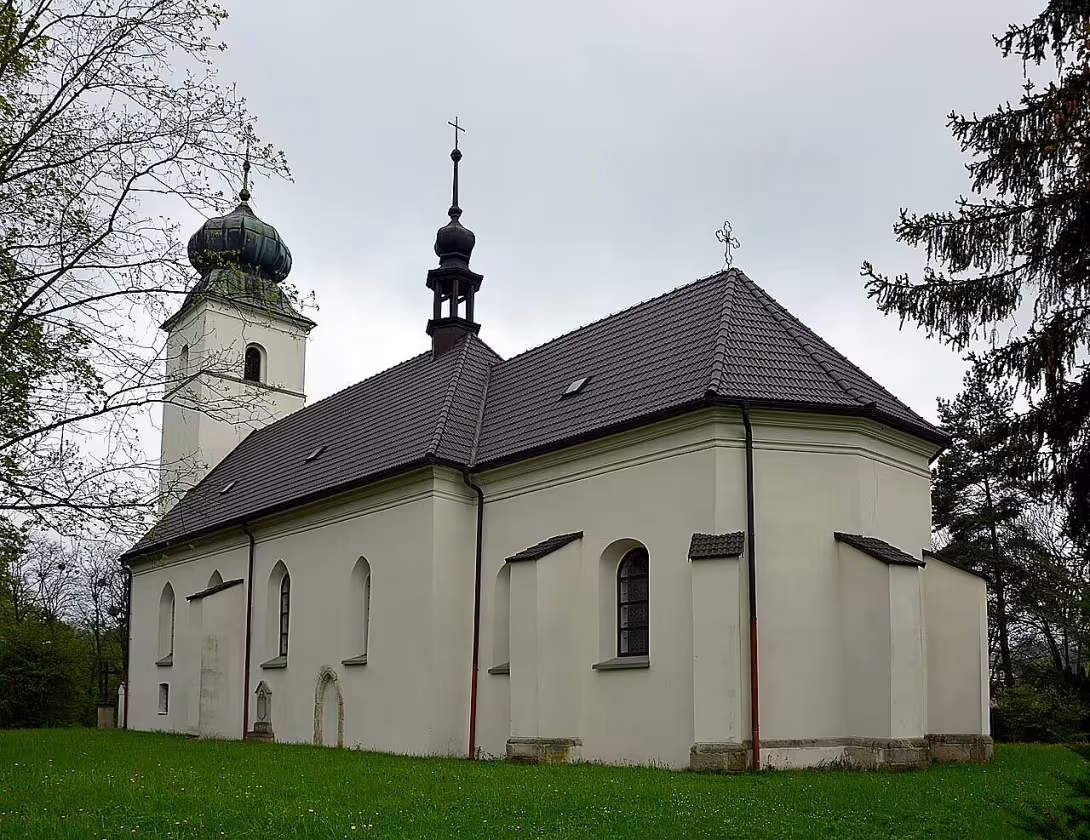
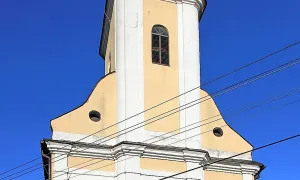
St. Nicholas Church in New Jičín is the oldest Catholic temple in the Žilina district and probably the entire district. It is located on Beskydská Street, on the terrace of the right bank of the river Jichínky, where once stood the cemetery, as evidenced by low walls around the church area and a gravestone near the south wall. This monument is important not only by its history, but also by architectural changes that reflect cultural and religious changes in the region.
The creation of the church dates back to the early 13th century, when probably a wooden temple was built. This original object was later replaced by a stone building with one-handed shape and polygonal presbytery. Historical sources suggest that already in the early stage of building the church presbytery was enshrouded, indicating the advanced engineering technique of that time. The construction has traces of many reconstructions from Gothic to Lutheran use periods to baroque modifications.
The architecture of St. Nicholas' church is characteristic of various historical periods. Originally a simple shape with a receding presbytery was extended and encapsulated in a polygonal manner during the 14th century, which resulted in significant dematerialisation of the building. At this stage, the characteristics of Donator families from Kravař and Šternberk appeared in the clamping vaults, which is evidenced by the connection with important historical figures. In the 16th century, a wooden tower with a copper roof was built, which was later replaced by a walled tower in the 17th century.
The church has undergone several key events and modifications during its history. In 1612, using the Lutheran Church, the ship was extended west. This change reflects the religious change in the region during the reformation. In 1916, two bells were taken for war purposes, which was typical of many churches at the time. Then a new bell was purchased in 1920.
Today the church of St. Nicholas in New Jičín is an attractive destination for visitors interested in history and architecture. It stands on the terrace of the right bank of the river Jichinka and is easily accessible. Its rich history and architectural elements make it an important monument worth exploring.
The Church of St. Nicholas is not only an important cultural and historical place, but also a reminder of the changes that the region has undergone over the centuries. His visit offers a view of the rich past and allows you to enjoy the beauty of architecture that has evolved over the years.
Historical milestones
- 13th Century
- Construction of the original wooden and subsequently stone church.
- 1612
- Expanding the church's ship in the western direction for using the Lutheran.
- 1756
- Restoring the tower, painting the church and creating new windows.
- 1820
- Installation of new organ from Sebastian Staudinger of the Angel Mountain.
Architectural development
The development began with a wooden construction, followed by a stone church with armrest and later a polygonal conclusion. In the 16th century a wooden tower was built, which was replaced by a walled one in the 17th century. In the 18th and 19th centuries the facade was renovated, the organ was installed and the windows were modified.
Historical events
In 1612 the ship was extended in the western direction using the Lutheran Church. In 1916 two bells were delivered for war purposes, then a new bell was purchased in 1920.
Points of interest
- St. Nicholas Church in New Jičín is the oldest Catholic temple in the district of Žilina and probably the entire district. - It is located on Beskyda Street, where once there was a cemetery, as evidenced by a low wall around the church space and a tombstone near the south wall. - The formation of the church dates back to the beginning of the 13th century, when probably a wooden temple was built, which later replaced a stone building with a single-boat shape and polygonal presbytery. - The construction has traces of many reconstructions from Gothic to Lutheran use periods to baroque modifications, with Donator families from Kravař and Šternberk in clamping vaults. - In 1612 the ship was extended in the western direction for the use of the Lutheran Church, reflecting the religious transformation in the region during the reformation.
Guide
Show guide text
This text was created by artificial intelligence and has not been editorially reviewed. It may contain inaccuracies.
Welcome to New Jicin. You are standing in a place that is at the same time a silent witness to many centuries of life. In front of your eyes is the church of St. Nicholas and I welcome you as your guide on this short but rich journey through time. Before you go any further, stop for a moment and just watch. Feel the present, the weight of history that radiates from this place. There's a building in front of you that's not just a wall and a roof, but a living chronicler of the county. Look above all, at the dominant square tower. Its onion roof rises above the surrounding roofs and determines the overall character of this place. It's the first thing that captures every visitor, and rightly so. This tower serves as a beacon of history that has been standing here for an incredibly long time.
But to really understand what you're seeing right now, we need to go back to the past, together with you, until the beginning of the 13th century. Imagine the landscape back then, much wilder and less populated than today's. It was then, in these early thirteenth century, that the first building was created here. But it was not a stone temple as we know it today, but a modest wooden building. It was simple, functional and consistent with the time. Over time, however, the need for durability and the importance of this place led to the wood being replaced by stone. This is how a stone one-legged church with a polygonal presbytery was created, which is the part that forms the sanctuary. This step made the church a solid part of the landscape. It is important to stress that this is not any church. The church of St. Nicholas is probably the oldest Catholic temple in the whole district of Žilina and with high probability in the entire district. When you realize the duration, you will see that you are facing one of the region's most important spiritual pillars.
Now that you know its roots, pay attention to how this building changed over the centuries. The church you see is not the result of one time, but it is a complex mosaic of different styles and epoch. If you look at his face, you can see traces of many reconstructions. You see here a touch of goth that forms the basic skeleton of the entire object. Subsequently, however, the history of the church developed in a very interesting way, when it became part of the Lutheran use. This brought new needs and new ways to perceive space. In 1612 there was a significant expansion of the church ship towards the west, precisely because of this period. This change in form shows how the community around the church was changing and how space had to adapt to new people and their beliefs.
Another major breakthrough came much later, in the eighteenth century. In 1756 the building underwent significant restoration. At that time the tower became a new form and the church was painted, which gave him a new, fresher face. It was during this period that new windows were created, which brought a different light into the interior and changed the atmosphere of the whole space. This Baroque adjustment has given the church the elegance and balance that you perceive today. But history did not stop in the nineteenth century. In 1820, one of the most important cultural events took place in the church when a new organ was installed here by Master Sebastian Staudinger of the Angel Mountain. Even if you can't see the organ from the outside, their presence in the history of this place is irreplaceable and defines the spiritual and musical wealth of this temple.
When you look at this building, you can ask yourself who was all connected to this place. History tells us the names of the people who had no small influence on the fate of this church and its surroundings. The figures associated with this place include Vok III. z Kravař, for example, which shows the ties of the church to the power and nobility families of the time. We must not forget the name of Anna of Sternberg, who is also part of this historical context. And, of course, when we talk about music heritage, we must mention Sebastian Staudinger, whose work in the form of an organ gave the church his unique voice. These people, although they are no longer with us, have left their mark in every stone and in every tone of this place.
Now I want to invite you to focus a little bit more on what's right around you, the church itself. You're standing on Beskyda Street and this street has its own secrets. You may not notice it right away, but this place was a lot different from today. There used to be a cemetery here. If you look at the low wall surrounding the church, or if you notice a tombstone that is located by the south wall, you realize that this place was also the last resting place of many people in the area. This wall and this stone are silent witnesses of the human lives that once took place here, which are now part of the history of this temple. It's a fascinating idea that while you're looking at beautiful architecture, you're standing in a place that has been linked for centuries with eternity and memories of those who have already left.
This combination of sacral space and former cemetery gives the whole place a special, deep atmosphere. It's a place where history touches everyday life, where architecture mingles with the memory of human destiny. So St. Nicholas' church is not only a monument to religious traditions, but it is a comprehensive testimony of how people lived, believed and changed from the 13th century to today.
I hope this short journey has helped you see more than just a building of stone and mortar in St. Nicholas' church. I hope you have seen the layers of time that intertwine here - from wooden shacks to baroque tower and organ music. Now that you know the basics and stories of this place, I suggest you continue your walk around New Ječina. Explore other parts of this city that will surely not disappoint you with their wealth. I wish you the rest of the day and enjoy every moment you spend in this historic environment. Thank you for your attention and goodbye.
Tips for visitors
For the best experiences we recommend a visit during bright days, when sunlight will highlight the details of stone architecture beautifully. For photography are ideal places on the terrace by the river, where you get interesting views of the whole building in natural light.
You can get to the monument easily by public transport or by car.
Take with you especially comfortable shoes suitable for river terrain and drinking water. For families with children it is advisable to prepare small delicacies as the surroundings offer a quiet space for a short rest during the tour.
In the immediate surroundings you can use the terrace of the right bank of the river Jichínka, which provides a pleasant environment for observing historical detail in connection with nature.
Frequently asked questions
Can the monument be visited?
Religious buildings are usually open mainly during services; at other times a visit is normally arranged with the parish or the operator. We have not verified specific times.
Where is the monument?
Location: Nový Jičín, Moravskoslezský kraj. The map on this page shows the exact spot.
Why is the monument protected?
It is listed in the Central List of Cultural Monuments of the Czech Republic as a cultural monument (register no. 1000151963).
Businesses nearby
Do you run a restaurant, accommodation, shop, museum, rental, wellness or other visitor service near this monument? Show yourself directly to the people heading to it — this is how they will see you in the app and on the web:
Nearby
The church is located on the terrace of the right bank of the river Jichinka in Nový Jicin.
Accommodation nearby
Themed route
Travel Path: St. Nicholas Church in New Jičín
1. Church of St. Nicholas * Type: * Historical landmark * Why is it worth a visit: * This Baroque church, built on the terrace of the right bank of the river Jičinka, is the oldest sacral building work in New Jičín. Its rich history and architectural features will attract every visitor.
2. Square by the church * Type: * Public spaces * Why is it worth a visit: * This place serves as a central connecting point in New Jicin, where history and the present meet. The square offers a quiet area for rest while providing a view of St. Nicholas' church.
3. Castle Park * Type: * Green area * Why is it worth a visit: * Located near the church, the chateau park offers a beautiful opportunity for relaxation and walking. Its green spaces are ideal for relaxing after a church tour.
4. Jichinka River * Type: * Natural element * Why is it worth visiting: * The river that flows through the city and surrounds the terrace with the church of St. Nicholas is a beautiful natural element. It is perfect for a short walk or relaxation at the water level.
5. Church courtyard * Type: * Historical courtyard * Why is it worth a visit: * The Tanks of St. Nicholas Church offer a view of its architectural beauty both inside and outside. It is a place where you can enjoy a quiet moment and appreciate the historical context of the monument.
This route allows you to explore not only the church of St. Nicholas, but also its surroundings with rich history and natural beauties.
Seasonal recommendations
Spring brings fresh greenery and fine morning light around the temple, which pleasantly highlights architecture. The atmosphere is full of reversal and awakening nature. We recommend to wear a light jacket or sweater, because the interior of the church is getting colder than outside. Ideal is a visit in the morning when the rooms are quiet and the air is the cleanest.
In the summer months the bright sun and rich colors of surrounding vegetation dominate. The building in sharp light looks very monumental and distinctive. Due to the main tourist season, it is advisable to come first thing in the morning to avoid the biggest groups of visitors. Dress light and breathable fabrics, but do not forget the head cover while walking to the monument.
Autumn, with its golden leaves and frequent fog, gives the place a melancholy and mysterious touch. The evening light is soft and suitable for observing the facade details. It is practical to dress in more layers to handle the weather. The best time to visit is late afternoon when the sun paints the walls into warm tones.
In winter, the church acts calmly and valiantly, especially if the landscape is covered with snow. In Advent time, he rules around expectation and quiet piety. It is necessary to wear warm clothes and firm, slippery shoes. Pay attention to opening times that are usually shorter in this period and plan a visit to clear hours.
Visualizations and artistic views


The visualisations are generated by artificial intelligence and serve as inspiration.
Photos from the area
Real photos taken near the monument

Zdroj a licence jsou uvedeny u každého snímku.
Tips from visitors
No tips yet. Be the first!
Log in and add your tip.
Sources and literature
Photos: Jakub Bartoň / CC BY-SA 4.0 — Wikimedia Commons. The author and licence also appear when you hover over the image.
Faktickým podkladem tohoto textu byl článek na Wikipedii, jehož autory jsou přispěvatelé Wikipedie. Článek je dostupný pod licencí CC BY-SA 4.0.
Location on the map

Příběhy a pověsti
Legendy, pověsti a příběhy spjaté s touto památkou
Fotografie návštěvníků
Zatím žádné fotografie. Buďte první, kdo přidá fotografii z návštěvy!
Log in a přidejte svou fotografii nebo hodnoťte.
Za ověřenou návštěvu v aplikaci získáte víc bodů — poznáme podle GPS, že jste na místě.
Reviews and comments