



Španělská kaple Chapel
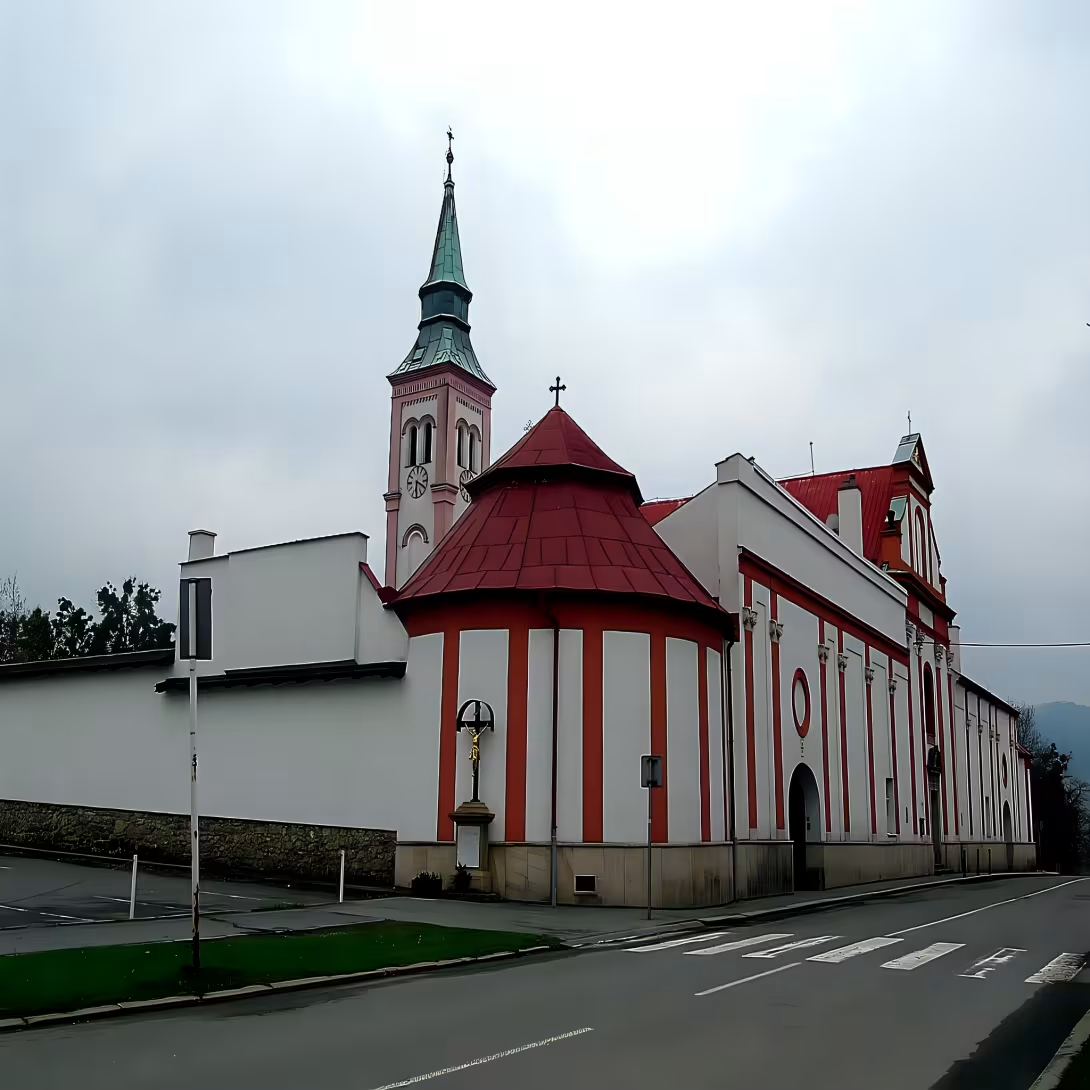
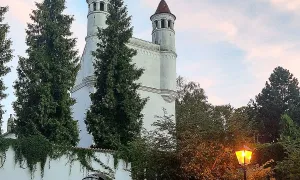
The Španělská kaple, also called the Pilgrimage Chapel of the Virgin Mary of the Painful, is a Baroque shrine in New Jičín with a special story firmly linked to the military history of Moravian history. The chapel is located in Smetana orchards and bears a name from the tragic circumstances of its creation.
Originally, the wooden building was built in 1621 at the site of the burial of Spanish imperial troops fallen in the Battle of Nové Jicin. These troops succumbed to Protestant soldiers Margrave Jan Jiří Krnovsky. The chapel has thus become a place to read to these foreign soldiers and pilgrims of believers.
The fate of the chapel changed radically in the Enlightenment era. In 1787 Joseph decided to cancel the II Chapel and turn it into a salt warehouse. This unusual transformation lasted fifty-four long years. It was not until 1841 that the chapel was consecrated again and services were restored. Believers could return to a place that had deep spiritual meaning for them.
In the 1960s, the chapel underwent construction modifications. Between 1863 and 1864 various works took place, including the addition of the tower. After their completion, the appearance of the chapel was no longer substantially altered.
The chapel is currently part of the Smetana orchard complex in New Jičín. There's a New York County Hospital across from the chapel. Among the interesting elements of the inventory of the chapel are mechanical Bethlehem, which is traditionally exhibited during Christmas holidays.
The visit to the Spanish Chapel offers an opportunity to understand the strata of the history of New Jičín - from the time when the city witnessed European military clashes to the Enlightenment Secularization until today. The Baroque Chapel in the Smetana orchard landscape remains a silent witness to the course of centuries.
Then and now
Drag the slider to compare how the landmark may have looked when it was built with the view today.
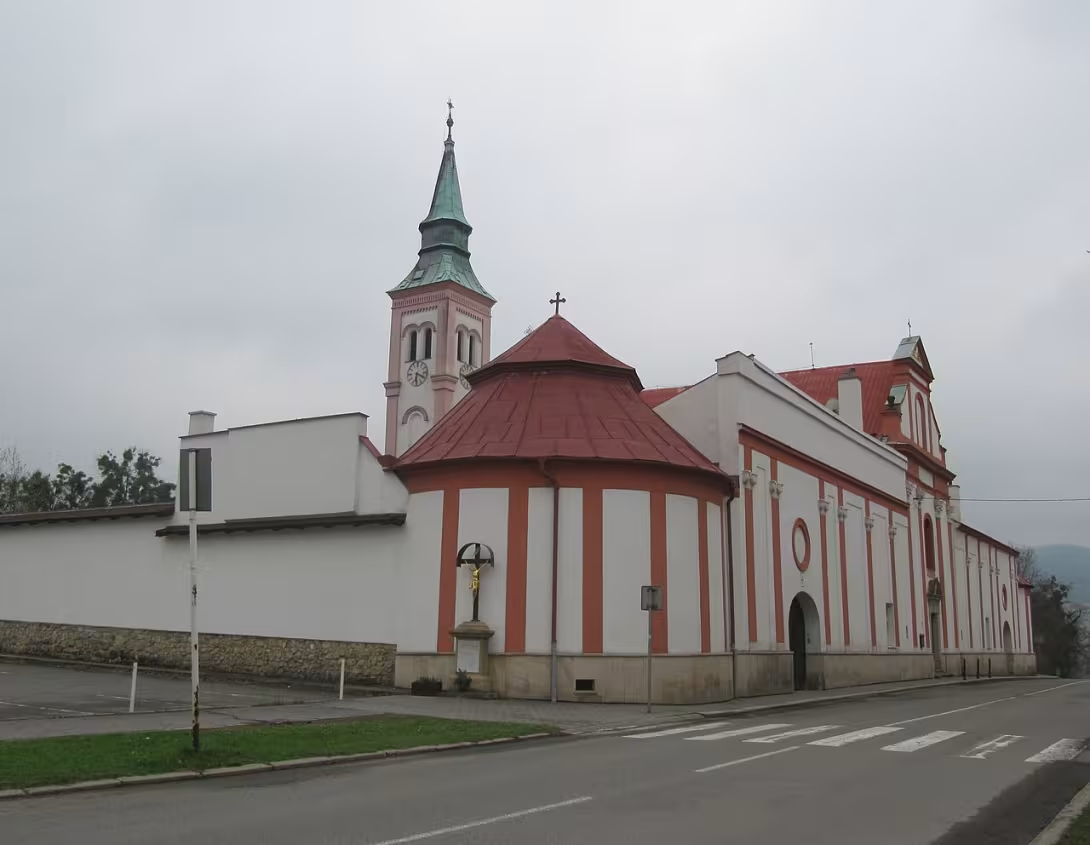
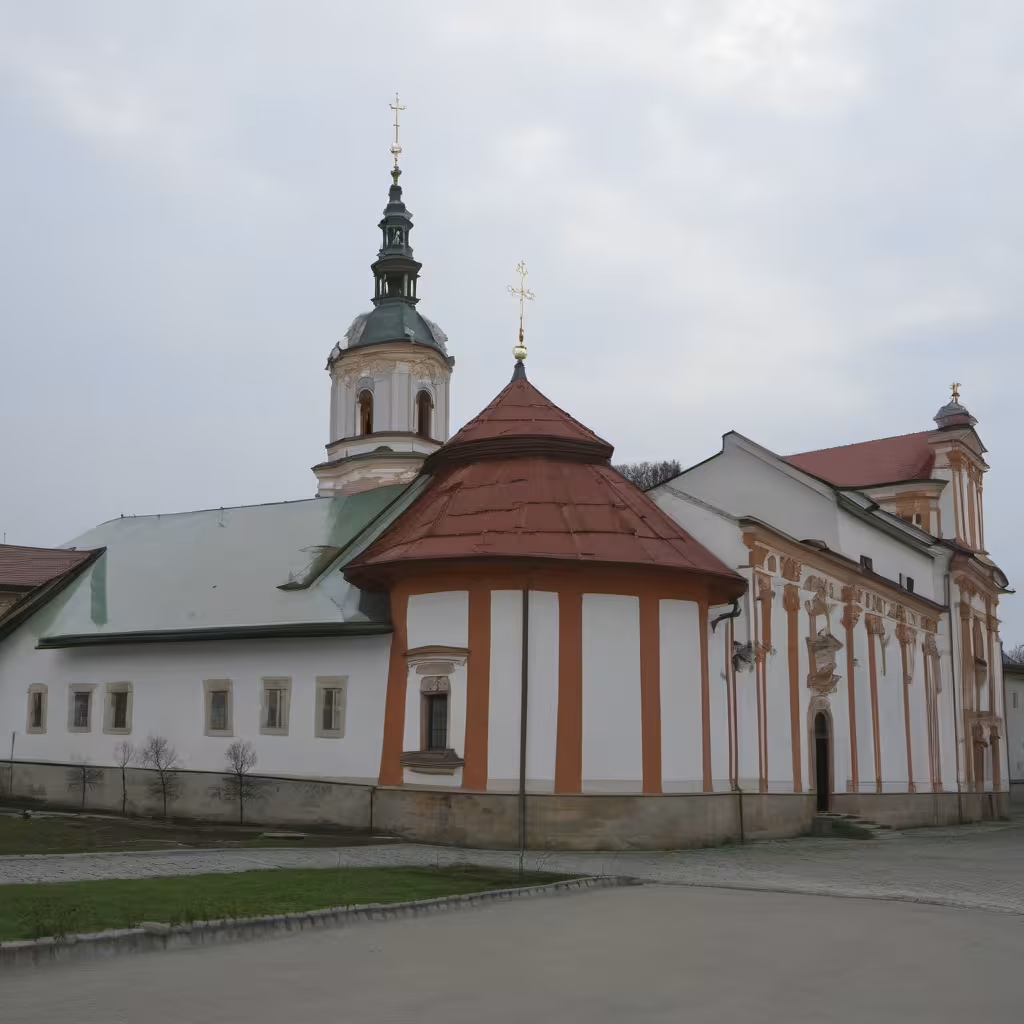
The historical appearance on the left is an AI-generated visualisation and serves as inspiration only.
Historical milestones
- 1621
- Built the original wooden field chapel above the tomb of Spanish imperial soldiers fallen in the Battle of New Jicin.
- 1787
- The chapel was abolished and converted into a salt warehouse at the order of Joseph II.
- 1841
- The chapel was consecrated and restored for worship after the abolition of the salt warehouse.
- 1863-1864
- There were architectural modifications, including tower construction.
Architectural development
The original chapel was wooden, later replaced by a stone Baroque building. In the 19th century, the chapel was extended to a tower and further modifications were made to its present appearance. Materials include stone and wood, typical of Baroque architecture.
Historical events
In 1621 a wooden chapel was built on the site of the battle above the grave of fallen Spanish soldiers. In 1787 Josef II cancelled and converted the chapel into a salt warehouse which worked until 1841. In 1863- 1864 architectural modifications took place in the chapel, including the building of the tower.
Points of interest
- The chapel was built in 1621 as a wooden building at the site of the burial of fallen Spanish imperial soldiers from the Battle of New Jičín.
- In 1787 Emperor Josef II ordered the chapel to be abolished and converted into a salt warehouse, which lasted until 1841.
- In 1863- 1864 the chapel was extended to a tower after which its appearance had not changed.
- In the chapel there is a mechanical nativity, which is exhibited every year during Christmas holidays.
Guide
This guide is narrated by a synthetic voice generated by artificial intelligence.
Show guide text
This text was created by artificial intelligence and has not been editorially reviewed. It may contain inaccuracies.
The Spanish Chapel, in full the Pilgrimage Chapel of Our Lady of Sorrows, is a baroque chapel in Nový Jičín. Its unusual name recalls an event from the time of the Thirty Years' War.
The chapel was built in sixteen twenty-one as a wooden structure. It was erected on the site where soldiers of the Spanish imperial units were buried. They fell in the Battle of Nový Jičín, where they were defeated by the Protestant units of the Krnov Margrave Jan Jiří Krnovský.
In seventeen eighty-seven, Emperor Joseph the Second decided to close the chapel and convert it into a salt storage. It served this purpose until eighteen forty-one. It was then consecrated and shortly after, services began to be held there again.
In the years eighteen sixty-three and eighteen sixty-four, the chapel underwent renovations. Among other things, a tower was added to it. Since then, its appearance has not changed and this is how we know it today.
The chapel now stands in the area of Smetanovy Sady and opposite to it is the Nový Jičín district hospital. Its equipment also includes a mechanical nativity scene, which is displayed at Christmas.
Tips for visitors
The best time to visit the Spanish Chapel is in the morning, preferably on Saturday or Sunday, when the surroundings are quieter and you can see the chapel without disturbing crowd. The Baroque architecture of the chapel is most impressive in the light of the favourable light that falls from the south, especially in the summer months from 9 am to 11 pm. In winter it is ideal to visit in the afternoon, when the sun illuminates the facade from the opposite angle and highlights the details.
Parking near the Spanish Chapel is possible in public parking lots in the centre of New Jičín. The nearest one is located in Smetana orchards, where you can reach on Smetana orfrom the town. Transportation by public transport is also possible - stops are within a few minutes walk from the chapel. The current connection and departure times can be found in the transport search engine.
When visiting the chapel, wear comfortable clothes and shoes, as the way out of the parking lot leads mainly on the sidewalks and lawns. It is also appropriate to take a small umbrella or sunglasses because the area is not completely covered. For photography, prepare a camera or smartphone with sufficient storage space because the chapel offers several interesting composite options.
The best places for photography are the entrance portal of the chapel, where it is possible to capture baroque details, and also the surroundings of the chapel by Smetana orchards, where you can see the overall composition of the building in the context of the green park. It is recommended to take pictures in good light, for example in the morning or afternoon sun, when the shadows are softer and more vivid. The inside of the chapel is also interesting, but the lighting is limited.
In the vicinity of the Spanish Chapel is worth a visit to the chateau in Frýdku - A place located about half an hour by car or public transport. Another interesting feature is the Great Javorina Nature Reserve, which is ideal for hiking and nature walks. It is also advisable for families with children to visit Smetana sets where there is enough room for children's games and rest.
For families with children Španělská kaple is an appropriate stop when walking through Smetana's kit. Children can look at the small chapel and hear the story of its history. It is also possible to relax on benches or play in the open area. It is recommended to bring some small toy or book with you so that children have something to do during the visit.
Frequently asked questions
Is Španělská kaple open to the public?
Španělská kaple is open to the public daily from 9:00 a.m. to 5:00 p.m.
How do I get to the place by car / public transport?
Španělská kaple is located in the centre of Prague, so it is the best way to transport public transport. There are metro stations nearby 'Old Town' and 'Bridge'. The car can be parked on nearby streets or in garages.
How much is the entrance fee and is it paid on the spot?
Payment takes place only on the spot, not in advance.
Is the tour suitable for children and seniors?
Španělská kaple is accessible to all ages, including children and seniors. However, the tour is relatively short, so it is advisable to combine it with other activities in the area.
How long does the tour take?
The tour of the Spanish Chapel takes approximately 30 minutes. If you want to get deeper information about the history and meaning of the chapel, it is good to go with a guide or read pre-available materials.
What are the opening times and booking is required?
The Španělská kaple is open daily from 9:00 to 17:00. Reservation is not required, but it is recommended to book in advance when visiting during peak hours (10:00- 12:00).
For kids
Imagine going back 306 years to when Španělská kaple was still young and full of life. It was a time when the Baroque architects were building their most beautiful work and when the King of Spain gave a sign that he wanted to build a chapel in the center of the city.
How did it look here? Who lived here? What happened here? Španělská kaple was originally wooden, but gradually became a baroque squall. The locals lived around it and participated in the local processions and holidays. It was places where people came to pray and seek comfort.
Businesses nearby
Do you run a restaurant, accommodation, shop, museum, rental, wellness or other visitor service near this monument? Show yourself directly to the people heading to it — this is how they will see you in the app and on the web:
Nearby
The chapel is located in the area of Smetana orchards in the center of New Jicin. In the area there is a Neo Jitchina district hospital and other urban green areas. Within 5 km there are significant sights such as the chateau in Frýdku-Městka or the Great Javorina Nature Reserve.
Accommodation nearby
Themed route
Thematic cruise route: Španělská kaple and around New Jicin
1. Španělská kaple in Smetana orchards * Type: * Baroque sacral building from the 18th century. The chapel is unique with its Spanish style influence and picturesque location in the park, which offers a quiet atmosphere in the middle of the city.
2. Walk through Smetana Set * Type: * City park with historical greenery. Around the chapel is a picturesque promenade with monument protected trees and benches, ideal for relaxation or picnic.
3. Around New China District Hospital * Type: * Urban green area with modern architecture. Although the hospital is not a tourist attraction, its surroundings offer well-maintained pavement and connections with the city centre.
4. Chateau in Frýdku-Mínek (approximately 5 km) * Type: * Renaissance chateau with rich history. Its picturesque courtyard and exhibition in the interior represent an important cultural monument to the Moravian-Silesian region.
* The route is designed to combine a peaceful visit to the chapel with a tour of the surrounding area without turns outside the given places. *
Seasonal recommendations
Spring Spring in the Spanish Chapel offers a unique atmosphere, where soft, scattered sunlight, which penetrates glass surfaces and creates fine, moving shadows on walls and altars. Nature begins to awaken around the monument - primordial flowers like convalines or spring springs reflected in window windows. The air is clean and refreshing, but sometimes there are slight moisture fluctuations in the chapel that can cause temporary fog on the stained glass. The ideal time for visiting is in the morning, when the chapel is mostly attended by families with children, so avoid noon, when school trips are gathered here. It is convenient to dress light, but the headgear - the chapel has no air conditioning, and in spring days it can maintain a pleasant temperature, but with larger crowd, space may seem a little smoother.
Summer Summer brings intense light to the Spanish Chapel, which penetrates the stained glass and emphasizes their colour shades, as if the monument had turned into a unique galerie of light and color. The surrounding area is green and full of life - in the park behind the chapel, trees are decomposed with dense greenery that provide shade, but in the interior itself the heat can be considerable, especially in the main summer season when the most tourists come here. The atmosphere is alive, but also calm - among the crowds are alternating moments when the chapel is emptied and visitors can view the detailed frescoes on the ceiling without interference. The best time to visit is early in the morning or late in the afternoon, when the sun is no longer directly on the windows. Dress light but headgear, because the interior can be warm even immediately after the outside heat. Remember enough water - in summer days there are often short tours that require movement.
Autumn The autumn visit of the Spanish Chapel is like a return to the medieval atmosphere - outside the leaves on the trees around it turns into golden and red shades, while in the interior light becomes softer and more scattered, as if the chapel surrounded by a fine fog veil. The air is colder, but the chapel keeps a pleasant temperature, which creates a sense of comfort. Nature around the monument offers picturesque scenery - parks and gardens turn into colorful mosaics that are reflected in window stained windows. During this period, the chapel is visited mainly by locals and smaller groups, which allows for a more peaceful tour. The best time to visit is the afternoon when the sun is no longer too intense, but the light still illuminates the interior. Put on warmer clothes, but light layers - the chapel may seem warm even in the cold. Watch out for moisture, which may occur in autumn days and cause temporary traces of stained glass.
Winter Winter visit to the Spanish Chapel is like traveling to another world - the outside world is covered with snow or rain, while in the interior the light becomes soft and moderate, as if the chapel surrounded by a mysterious candlelight. The atmosphere is calm and intimate, for in the winter months the least people come here. Nature in the surroundings is sober - the trees stand without leaves, but their shape creates interesting contrasts with the stone elements of the chapel. In advent time, there are sometimes small decorations that give space even more seriousness. The best time to visit is in the afternoon when the chapel is opened for a shorter time, but the light is still sufficient for a tour. Wear warm but comfortable clothes - the interior keeps a pleasant temperature, but it can be cold outside. Don't forget to wear suitable shoes, as in winter months the pavement around the chapel can be slippery. Winter is the perfect time for those who are looking for peace and quiet, which also exists outside the main tourist season.
Visualizations and artistic views


The visualisations are generated by artificial intelligence and serve as inspiration.
Photos from the area
Real photos taken near the monument


Zdroj a licence jsou uvedeny u každého snímku.
Atmosphere of the place
This atmospheric visualisation of the place and period was generated by artificial intelligence. It is not real footage of the location.
Tips from visitors
No tips yet. Be the first!
Log in and add your tip.
Sources and literature
Photos: Palickap / CC BY-SA 3.0, rozlišení zvýšeno umělou inteligencí — Wikimedia Commons. The author and licence also appear when you hover over the image.
Faktickým podkladem tohoto textu byl článek na Wikipedii, jehož autory jsou přispěvatelé Wikipedie. Článek je dostupný pod licencí CC BY-SA 4.0.
Location on the map


Příběhy a pověsti
Legendy, pověsti a příběhy spjaté s touto památkou
Fotografie návštěvníků
Zatím žádné fotografie. Buďte první, kdo přidá fotografii z návštěvy!
Log in a přidejte svou fotografii nebo hodnoťte.
Za ověřenou návštěvu v aplikaci získáte víc bodů — poznáme podle GPS, že jste na místě.
Reviews and comments