



kostel svatého Mikuláše (Šumvald) Church
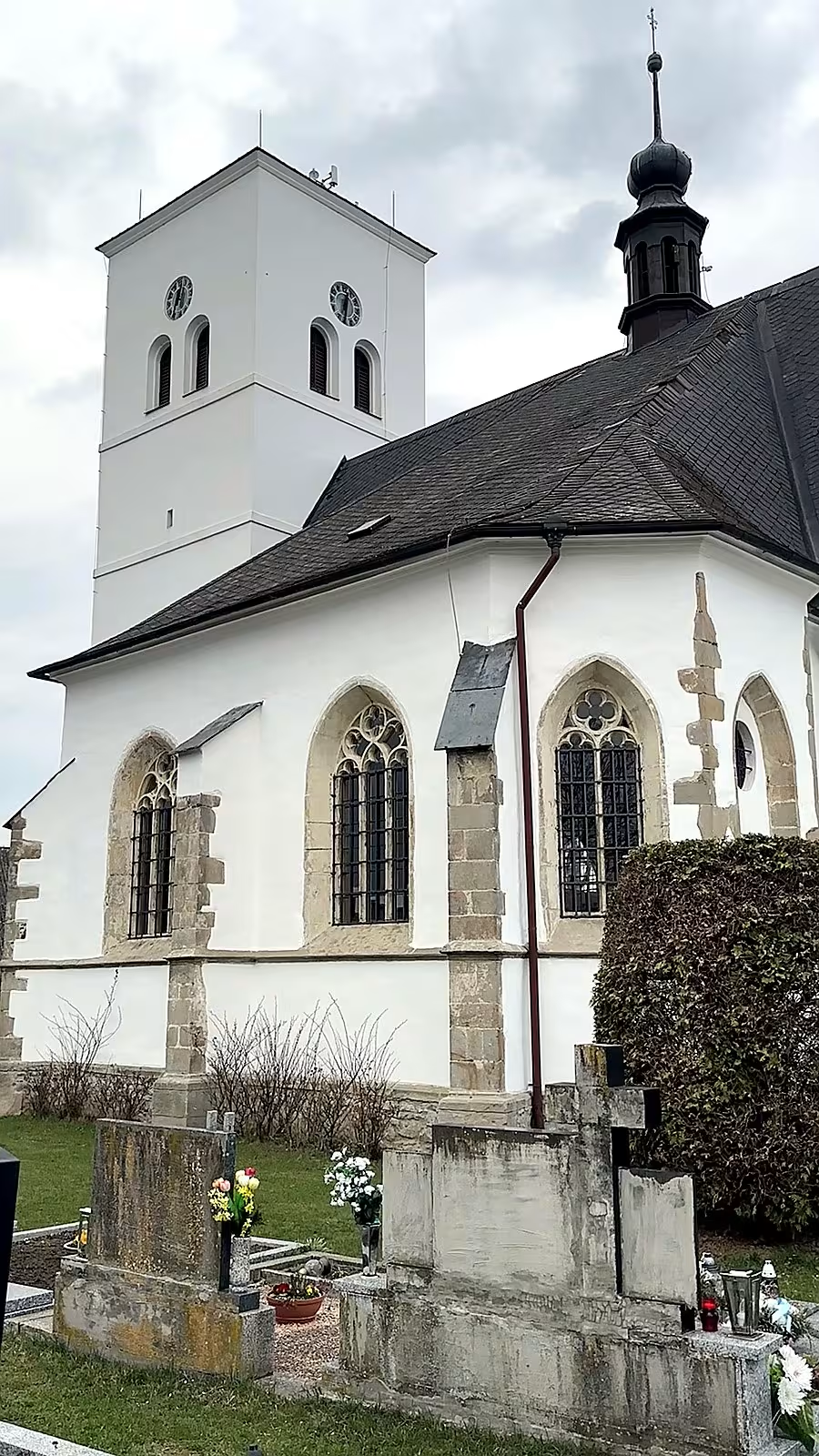
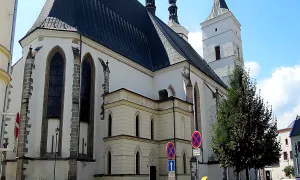
St. Nicholas Church in Šumvald is a single-boat Gothic building, the oldest part of which dates back to the second half of the 13th century. The object forms a dominant part of the wide area. Over the centuries he underwent many modifications, including Baroque reconstruction in 1780 and later neo-gothic interventions. Today it serves as a Roman Catholic parish church and is surrounded by a still functional cemetery.
The first stage of construction of the boat and presbytery took place in the 1970s and 1980s. The dating of the oldest structures allows preserved stoneware elements, especially the vault of the presbytery, whose rib profile corresponds to the early gotics. Another proof of age is the window in the western shield of the ship. Originally it contained a circular pattern of the triplet, similar to elements from Zdik's palace. The southern chapel and sacristy were added to the building during the 14th and 15th centuries. At the end of the 17th century, the western facade was supplemented by a prism tower, the foundation of which was served by a stone from a broken wall.
The construction stands on a mild surface. The exterior consists of simple, white-plastered facades with exposed wall of quarry stone in the lower parts. The four-sided tower breaks the cordon ledge and ends with a complicated shaped crown ledge. The southern wall of the ship is surrounded by the rectangular chapel of St. Anthony of Padua, known as the Apostolic, considered to be the region's ultimate Gothic work. Its interior is covered by a circumferential rib arch with a closure equipped with four arched arches. The presbytery separates the broken victory arch from the ship and is encapsulated by the sacral arch with ribs in the shape of a fallopian.
In 1780 the church underwent a major reconstruction, in which part of the original architectural elements disappeared. The windows were changed, the portal leading to the South Chapel was removed and the entrances in the South Wall of the ship and the north entrance to the tower were closed. The original spiral staircase was replaced by a new lead to the bark; the current ceiling of the ship and a new roof were also created. The Baroque equipment later partially replaced the neo-gothic elements, such as the pulpit or altar of the Holy Family from the early 20th century. A cross from the Baroque sculptor Jiří Antonín Heinz from 1721 is placed above the main altar.
Historical sources and inscriptions in the memorial book of the parish from the end of the 19th century contain theories about the possible Romanesque origin of the church, supported by the discovery of a stone warhead in the cemetery. Pastor Grmela, the author of these entries, believed that the original construction in 1241 was destroyed by the Tartars. Experts do not rule out that contemporary painting of the interior can hide baroque frescoes from 1728 and 1729 under the newer layers, whose presence has not yet been confirmed by the restoration survey. A historical bell from 1506 is still located on the tower's bell floor.
The church of St. Nicholas is a valuable proof of the development of sacral architecture in the region, where the elements of early Gothic have been preserved in authentic form. Visiting this place offers the opportunity to learn about the history that has been printed in the form of a building over many centuries.
Historical milestones
- 1270
- Likely beginning of construction and presbytery.
- 1506
- The bell is cast, which is still in the tower.
- 1780
- Extensive reconstruction of the church during which the windows were changed and the interior was modified.
Architectural development
The original early Gothic core from the 13th century was extended in the 14th and 15th centuries by the southern chapel and sacristy. At the end of the 17th century, the prism tower was built using the stone from the broken wall. In 1780 the construction was significantly modernised when the ceiling of the ship, roof and some original inputs were changed.
Historical events
The first phase of construction of the ship and presbytery took place in the 1970s and 1980s. In 1780 there was a major reconstruction, during which part of the original elements disappeared and the interior was modified.
Points of interest
- The church is a single-boat Gothic building, the oldest part of which dates back to the second half of the 13th century. - The foundations of the prism tower from the end of the seventeenth century were built from a stone left over after the broken wall. - The South Chapel of St. Anthony of Padua is considered the ultimate Gothic work in the region. - There is a cross above the main altar, created by sculptor Jiří Antonín Heinz in 17 and twenty-one. - On the bell floor of the tower, there is still a historical bell, which was made in the year 15500.
Guide
Show guide text
This text was created by artificial intelligence and has not been editorially reviewed. It may contain inaccuracies.
Welcome to this noble place that dominates the whole area. You're standing in front of St. Nicholas' church in Šumvald. Before you take another step, stop for a moment and feel the atmosphere. Look at the total silhouette of this building, as it rises to the sky and by its presence determines the character of the whole place. It is a building that carries the walls of time and witnessed countless events that took place in this region. Feel the weight of history that only affects you when you look at this object from the outside.
Now let's look deeper into the past together to understand how this important object came into being. This building is not just a cluster of stones, but a living story that he began to write in the second half of the 13th century. If we were to try to pinpoint the beginning, we could look at a thousand two hundred seventy. This is probably the moment when the main ship of the church and its presbytery began to emerge. Imagine the first builders who laid the first stones here 700 years ago. Even though today we do not know the names of the particular architects or personalities who controlled this building in its beginnings, their work here remains as an unwavering proof of their art and faith. This church has undergone many changes, but its core remains loyal to its roots.
Now pay attention to the architecture itself, which you are now observing. The church is a one-legged Gothic building, which means that its inner space is made up of one main ship, which creates a sense of unity and tonnage. Now that you're looking at the whole, you can see the specific face of early Gothic. One of the most valuable elements we have managed to preserve is the authentic Gothic vault in the presbytery. Although you are now out, this vault represents one of the most important documents of architecture of the time in our territory.
Look up now, the characteristic tower, which is such a typical element of this church. But it was not here from the very beginning. It was built only much later, in the seventeenth century, and gave a whole of its contemporary, dominant appearance. It's fascinating to see centuries intertwine into one whole. And if your eyes move towards the south, notice the chapel there. It's the chapel of St. Anthony of Padua. This part of the building is considered the ultimate work of Gothic style and represents the incredible quality of the craft at the time.
If we continue to browse, we must also mention other important milestones that shaped this object. In 15 hundred and six there was an event that gave the church his voice. The bell was cast at the time, which is located in the tower and which sounds for the surrounding area today. Imagine the sound that has spread through the air and has been signaling important moments in people's lives for centuries. The next big change came in a thousand seven hundred and eighty. That's when the church went through a massive reconstruction. In this modification, the windows were changed and the interior space changed overall, thus adapting the construction to the new times and needs of the time.
Now I want to tell you one strange thing, one little mystery that's hidden right in the foundation of that tower you're looking at. You may not see it at first sight, but the existence of this detail gives the place special depth. The foundation of the prism tower, which was built at the end of the seventeenth century, is not just made up of any stone. They were built from stones left over from the broken wall. It's like history is recycling if parts of the old world become the basis for something new and higher. These stones, which once formed defense, now form the basis for a tower that heads towards the sky.
You are standing in front of a place where the medieval fortress is joined with later modifications, where the old walls are turned into the foundation of towers and where the sound of the bell from the year fifteen hundred and six still links the past to the present. Every stone here has its own time and every year, which has passed since the year one thousand two hundred seventy, added to the church of St. Nicholas on its importance.
I hope you're interested in this brief view of history and that you perceive the beauty that this Gothic building brings to the landscape. Before you go any further, pay close attention to the details you see around you. Look at the structure of the walls, see the shadows and light as it hits this historic monument. I wish you a nice walk and other interesting discoveries in this beautiful neighborhood. Goodbye.
Tips for visitors
The best time to visit is late afternoon, when the sun illuminates the facade of the church and highlights its Gothic elements. At this time the surrounding cemetery is quiet and offers a pleasant atmosphere for a tour of the exterior.
You can easily reach the village of Šumvald by car. Use the national connection search engine to travel by public transport, which will show you the current arrival options.
Take comfortable shoes to visit, because the terrain around the church is slightly elevated and the cemetery paths can be uneven. Don't forget about the camera because the building is very photogenic because of its history.
The best images can be taken from a slight distance from the cemetery wall, where the total silhouette of the one-ship building stands out. The light in the evening beautifully depicts the details of the stone wall.
For families with children, the surrounding area of the church is suitable for a short walk in the quiet surroundings of the village. Children can admire historical architecture and ancient tombstones, while it is important to take care of respect for the piety site.
Frequently asked questions
Can the monument be visited?
Religious buildings are usually open mainly during services; at other times a visit is normally arranged with the parish or the operator. We have not verified specific times.
Where is the monument?
Location: Olomoucký kraj. The map on this page shows the exact spot.
Why is the monument protected?
It is listed in the Central List of Cultural Monuments of the Czech Republic as a cultural monument (register no. 1000137356).
Businesses nearby
Do you run a restaurant, accommodation, shop, museum, rental, wellness or other visitor service near this monument? Show yourself directly to the people heading to it — this is how they will see you in the app and on the web:
Nearby
Kostel se nachází v intravilánu obce Šumvald, obklopen hřbitovem a mírně vyvýšeným terénem.
Accommodation nearby
Trips and activities nearby
Guided tours, tickets and activities nearby from GetYourGuide
Affiliate link: if you buy from the partner, we may receive a commission. The price for you does not change.
Search tours and activities →Themed route
Thematic cruise route from the church of St. Nicholas (Šumvald)
1. St. Nicholas Church (Šumvald) - Church This Baroque temple is our main destination. Its architecture and history attract visitors who are interested in the spiritual monuments of the region. The church of St. Nicholas is not only the sacral centre of the village of Šumvald, but also an important cultural monument.
2. Cemetery at St. Nicholas' Church - Cemetery Around the same location as the church is located a cemetery which is an important place to understand the history and traditions of the village. Visiting this place offers a view of the old tombstones and monuments that tell about the past generations of Šumvald.
3. View from the surrounding terrain - Elevated location Around the church and cemetery there is a slightly elevated area that can be visited for beautiful views of the surrounding countryside. This place offers a peaceful space for relaxing and observing nature near St. Nicholas' church.
4. Tanks by the church - Tanks In the courtyard of the church you can find a place where you can look at the interior of the temple from the outside and understand its architectural details. This place is ideal for a short break during church visits and offers a comfortable area to relax.
This route will allow you to get to know in depth the cultural heritage and history of the village of Šumvald, focused mainly on the church of St. Nicholas and its immediate surroundings.
Seasonal recommendations
Spring: In the spring season, the church of St. Nicholas in Šumvald appears in the most beautiful shade of green when trees and shrubs begin to bloom. The sun rays illuminate the architectural elements of the church, which adds to the touching of its historical appearance. At this time it is recommended to visit the memory early in the morning to save the sun heat and possible increase in traffic with the arrival of warmer weather. Sufficient clothing is a light coat or plaid that can be useful in cold mornings and evenings.
Summer: In summer, St. Nicholas' church is surrounded by ripe trees that provide a natural shade and wings of relief from heat. Today's visitors can enjoy a quiet moment in these green spaces through the church pages. This season is a good time to visit in the morning or evening to avoid the heat and crowds that can be in the main summer season. Don't forget to bring with you a protective umbrella for UV rays and a sufficient amount of drinking.
Autumn: In autumn, Šumvald is also melancholy colored when tree leaves pass into yellow and red shades. This wonderful view provides a unique background for photographs of St. Nicholas' church. Visitors should take advantage of the mild temperatures and usually lower traffic rates offered by autumn. It is important to equip yourself with the expected cold weather - warm clothes and rain guards are crucial at this time.
Winter: The winter visit to St. Nicholas' church offers a unique view of the historical monument, which is often covered with snow. Sun rays create fine shading and flashes on the church walls, which adds to the touching of the whole picture. This season, opening times are often shorter due to cold temperatures, so we recommend visiting it soon after opening. Hot clothes and protective shoes are necessary for comfortable walks in the winter environment.
Visualizations and artistic views


The visualisations are generated by artificial intelligence and serve as inspiration.
Photos from the area
Real photos taken near the monument


Zdroj a licence jsou uvedeny u každého snímku.
Tips from visitors
No tips yet. Be the first!
Log in and add your tip.
Sources and literature
Photos: Sovicka169 / CC BY-SA 4.0 — Wikimedia Commons. The author and licence also appear when you hover over the image.
Faktickým podkladem tohoto textu byl článek na Wikipedii, jehož autory jsou přispěvatelé Wikipedie. Článek je dostupný pod licencí CC BY-SA 4.0.
Location on the map
Příběhy a pověsti
Legendy, pověsti a příběhy spjaté s touto památkou
Fotografie návštěvníků
Zatím žádné fotografie. Buďte první, kdo přidá fotografii z návštěvy!
Log in a přidejte svou fotografii nebo hodnoťte.
Za ověřenou návštěvu v aplikaci získáte víc bodů — poznáme podle GPS, že jste na místě.
Reviews and comments