






Kostel svatého Mikuláše Tolentinského (Vysoké Veselí) Church
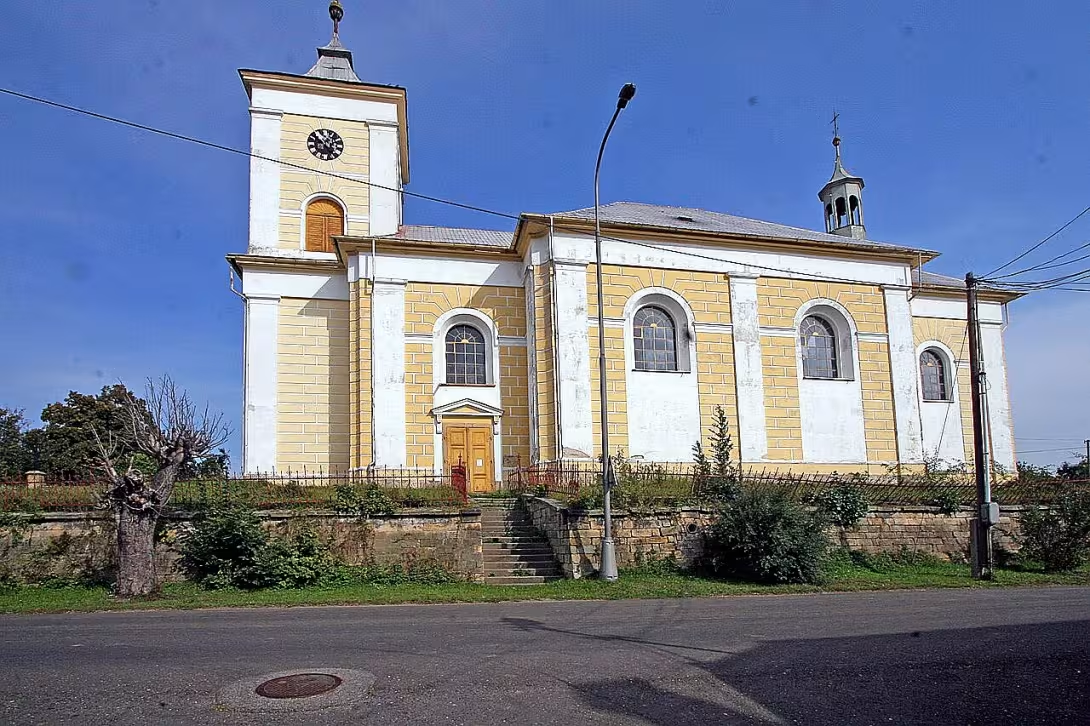
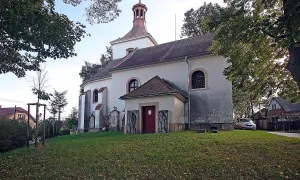
The Church of Saint Nicholas Tolentine in Vysoké Veselí is a Roman Catholic parish church recognized as a cultural monument since May 3, 1958. Located east of the town square and connected to a former castle site via an elevated walkway, this church stands as a significant historical structure within the community. Originally documented in 1335, it has undergone numerous transformations over the centuries, reflecting various architectural styles from its initial construction through Baroque foundations to its current Empire-style renovation following a major fire in the mid-19th century.
The origins of the Church of Saint Nicholas Tolentine trace back to at least 1335. Some historical sources suggest it may have existed even before Vysoké Veselí was founded in 1311. This early church experienced significant changes over time; notably, a devastating fire in 1577 led to its reconstruction during the late 16th or early 17th century. By the years 1770-1773, Baroque foundations were established for what would become the current structure of the church.
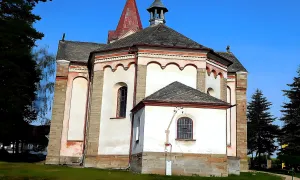
The architectural evolution of this church is marked by significant stylistic transitions. Following a major fire between 1835 and 1840, architects Alois Turka and Josef Oppolzer undertook an Empire-style renovation that shaped its present form. The church features a three-nave layout with a prominent tower, showcasing intricate facade detailing. Its design includes a prismatic presbytery on the northern side, connected to a former castle site by an elevated walkway, which now serves as a school. Architectural elements such as flat pilasters and smooth cornices enhance its façade, while the interior boasts Empire-style altars crafted between 1849 and 1850 by Jan Sucharda ml., with artwork from the Vienna Academy.
Throughout its history, the church has remained under the administration of the local parish community in Vysoké Veselí. The dramatic changes it underwent, particularly during the mid-19th century renovation, highlight its resilience and adaptability to both natural disasters and evolving architectural trends. This period also saw contributions from notable figures such as Jan Sucharda ml., who created the main altar, and J. Stoklasa, a sculptor responsible for side altars featuring works by Josef Hellich.
The church's history is punctuated by key events that have shaped its current state. The original structure documented in 1335 underwent significant reconstruction after burning down in 1577. Its Baroque foundations laid between 1770 and 1773 set the stage for the Empire-style renovation following a major fire from 1835 to 1840, which was instrumental in defining its present architectural character.
Today, the Church of Saint Nicholas Tolentine stands as an accessible cultural monument open to visitors who wish to explore its rich history and architectural beauty. Regular services are held every Thursday throughout the month, with timings adjusted for summer daylight hours. Its historical significance, combined with its unique architectural features, make it a compelling destination for those interested in exploring the cultural heritage of Vysoké Veselí.
The Church of Saint Nicholas Tolentine is not only a testament to the enduring spirit of its community but also an embodiment of architectural evolution over centuries. Visitors are invited to experience this remarkable monument and appreciate its historical and cultural significance within the picturesque setting of Vysoké Veselí.
Then and now
Drag the slider to compare how the landmark may have looked when it was built with the view today.
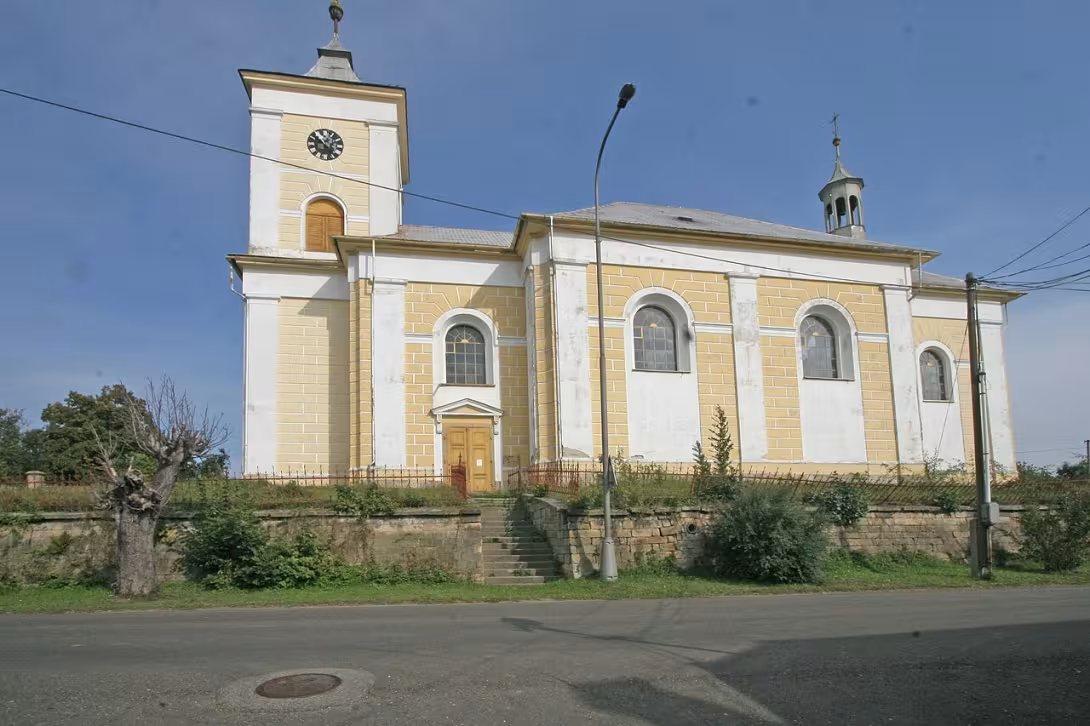
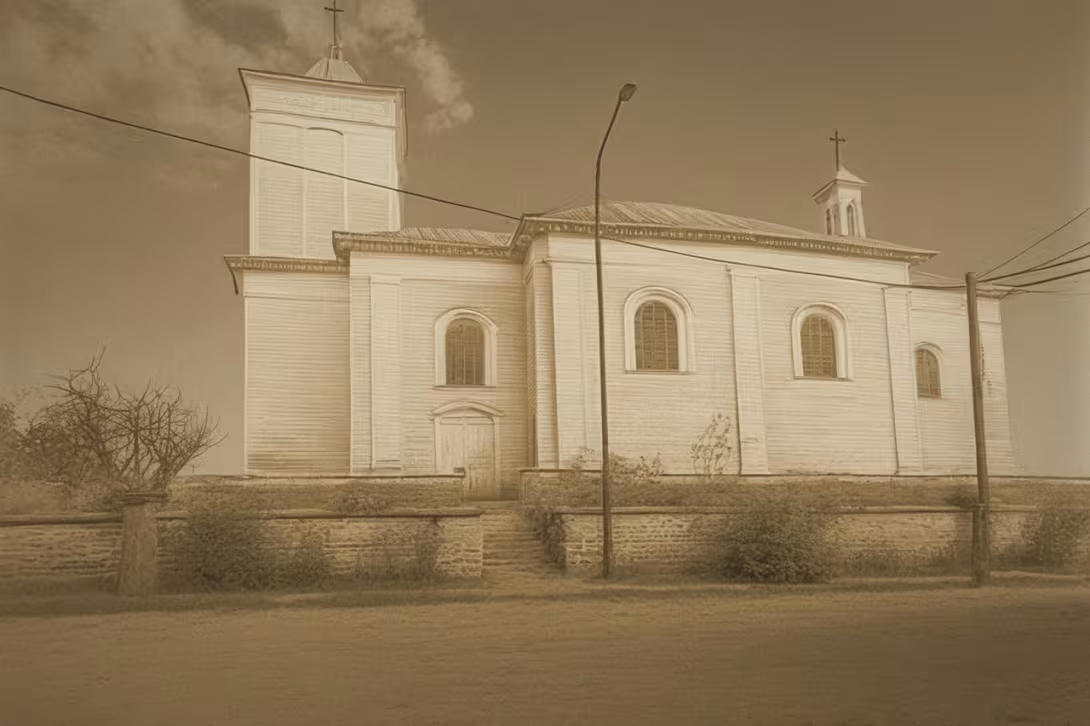
The historical appearance on the left is an AI-generated visualisation and serves as inspiration only.
Historical milestones
- 1335
- The original church was documented.
- 1577
- The church burned down, leading to its reconstruction.
- 1770-1773
- Baroque foundations were established for the current structure.
- 1835-1840
- Empire-style renovation occurred after a major fire.
Architectural development
The church's architectural evolution began with its initial construction documented in 1335. It was rebuilt in the late 16th or early 17th century, transitioning to Baroque foundations by 1770-1773. Following a devastating fire in the mid-19th century, it underwent an Empire-style renovation led by architects Alois Turka and Josef Oppolzer.
Historical events
The original church was documented in 1335, possibly predating the founding of the town in 1311.
In 1577, the church burned down, leading to its reconstruction in the late 16th or early 17th century.
A significant Empire-style renovation occurred after a major fire between 1835 and 1840.
Points of interest
- The Church of Saint Nicholas Tolentine might have existed even before the founding of Vysoké Veselí in 1311, suggesting its origins could predate the town itself. - A devastating fire in 1577 led to a significant reconstruction period for the church during the late 16th or early 17th century, marking an important phase in its architectural evolution. - The connection between the church and a former castle site via an elevated walkway highlights a unique historical link, with this walkway now serving as part of a school building. - Notable figures such as Jan Sucharda ml., who crafted the main altar, and J. Stoklasa, a sculptor for side altars, contributed to the church's rich artistic heritage during its Empire-style renovation in the mid-19th century. - The architectural transformation from Baroque foundations laid between 1770 and 1773 to the current Empire style after the fire of 1835–1840 showcases the church’s adaptability to evolving styles and resilience against natural disasters.
Guide
This guide is narrated by a synthetic voice generated by artificial intelligence.
Show guide text
This text was created by artificial intelligence and has not been editorially reviewed. It may contain inaccuracies.
Welcome to the Church of Saint Nicholas Tolentine in Vysoké Veselí, a remarkable cultural monument that stands as a testament to centuries of history and architectural evolution. As you stand here, take a moment to soak in the serene presence of this Roman Catholic parish church. Its grandeur is immediately apparent, with its Empire-style renovation evident in every detail.
The origins of this sacred site date back to 1335, when it was first documented. Interestingly, it might have existed even before Vysoké Veselí itself was founded in 1311, suggesting a rich history that predates the town. Over time, the church has witnessed significant transformations. In 1577, a devastating fire led to its reconstruction during the late 16th or early 17th century. This period marked a new chapter in its architectural journey.
From 1770 to 1773, Baroque foundations were laid for what we see today, setting the stage for further evolution. The most recent transformation occurred between 1835 and 1840 when the church underwent an Empire-style renovation following another major fire. Architects Alois Turka and Josef Oppolzer played pivotal roles in shaping its current form.
As you look around, notice the three-nave layout that defines its structure. While specific architectural details are not detailed here, the overall design invites you to appreciate the blend of styles that have come together over the centuries. The church's resilience through fires and reconstructions speaks volumes about its historical significance.
While many historical figures associated with this site remain unknown, the stories embedded in its walls are a testament to its enduring legacy. One intriguing aspect is the possibility that the church existed before Vysoké Veselí itself, hinting at an even deeper connection to the past than we might realize.
As you continue your exploration, let yourself be drawn into the atmosphere of this historic site. Each step around it offers a glimpse into its storied past and architectural beauty. We invite you to delve deeper into its history and perhaps uncover more about the mysteries that surround it.
Thank you for joining us on this journey through time at the Church of Saint Nicholas Tolentine. May your visit inspire curiosity and appreciation for the rich tapestry of history it represents.
Tips for visitors
The best time to visit the Church of Saint Nicholas Tolentine is during late spring or early autumn, when the weather is pleasant for walking around Vysoké Veselí and exploring its surroundings. These seasons offer mild temperatures and beautiful natural scenery, enhancing your experience as you explore the church's architecture and history. Additionally, visiting outside peak tourist seasons can provide a more serene atmosphere, allowing you to appreciate the church’s tranquility without large crowds.
Public transportation options are also accessible; however, it's advisable to check current routes and schedules online prior to your visit for convenience.
When visiting the Church of Saint Nicholas Tolentine, consider bringing comfortable walking shoes, especially if you plan to explore the elevated walkway connecting it to the nearby school. A camera is recommended for capturing the church’s architectural details and scenic views from its vantage point overlooking Vysoké Veselí. Additionally, carrying a light jacket or sweater can be beneficial as temperatures might drop in shaded areas or during evening visits.
For photography enthusiasts, the best spots to capture the Church of Saint Nicholas Tolentine are from the elevated walkway and the town square below. Early morning or late afternoon light provides soft illumination that enhances the church’s features and surrounding landscape. The eastward view from the church offers a picturesque perspective of Vysoké Veselí, making it ideal for capturing stunning images.
Families with children can enjoy exploring the nearby former castle site now used as a school, which is accessible via an elevated walkway connected to the church. This area provides opportunities for outdoor activities and exploration within a short walking distance. While there are no specific family-oriented attractions mentioned in the vicinity, the historical context of both sites offers educational insights that can be engaging for children.
Frequently asked questions
Can the monument be visited?
Religious buildings are usually open mainly during services; at other times a visit is normally arranged with the parish or the operator. We have not verified specific times.
Where is the monument?
Location: Vysoké Veselí, Královéhradecký kraj. The map on this page shows the exact spot.
Why is the monument protected?
It is listed in the Central List of Cultural Monuments of the Czech Republic as a cultural monument (register no. 23630/6-1437).
Businesses nearby
Do you run a restaurant, accommodation, shop, museum, rental, wellness or other visitor service near this monument? Show yourself directly to the people heading to it — this is how they will see you in the app and on the web:
Nearby
Located east of the town square, the church overlooks Vysoké Veselí. It is adjacent to a former castle site now used as a school and connected via an elevated walkway.
Accommodation nearby
Themed route
Tematická výletní trasa Vysoké Veselí
1. Kostel svatého Mikuláše Tolentinského
- Typ: Kostel
- Proč stojí za návštěvu: Tento barokní kostel, postavený v 18. století, je nejen duchovním centrem obce Vysoké Veselí, ale také architektonickou perli s bohatou historií a uměleckými prvky. Jeho polohu nad městem poskytuje vynikající pohled na okolní krajinu.
2. Bývalá zámeková lokalita
- Typ: Historické místo
- Proč stojí za návštěvu: Toto místo, kde kdysi stál zámek, je dnes domovem školy a nabízí vhled do historie obce. Představuje zajímavý přechod od minulosti k současnosti a je spojeno s kostelem výhlednou chodbou.
3. Výhledná chodba
- Typ: Architektonický prvek
- Proč stojí za návštěvu: Tato chodba spojuje kostel s bývalou zámekovou lokalitou a nabízí jedinečnou perspektivu na obec. Je to nejen praktické spojení, ale také architektonicky zajímavá konstrukce, která přidává do trasy další dimenzi.
Tato trasa vás provede krátkým, ale zaujímavým prozkoumáním klíčových historických a architektonických prvků Vysoké Veselí.
Seasonal recommendations
Spring: Visiting the Church of Saint Nicholas Tolentinianus during springtime offers a refreshing experience as nature begins to awaken. The surrounding countryside is adorned with vibrant wildflowers and budding trees, creating a picturesque backdrop for exploring this historical site. As daylight extends into the evening, natural lighting enhances the church's architectural features, making it an ideal time for photography enthusiasts. With fewer visitors compared to summer months, spring provides a more intimate setting for appreciating the church’s intricate details. It is advisable to wear comfortable walking shoes and layers that can be adjusted with the fluctuating temperatures typical of this season.
Summer: Summer brings the church alive with lush greenery and warm sunlight, casting dramatic shadows across its historic façade. This period marks the peak tourist season, so arriving early in the morning or later in the afternoon is recommended to avoid crowds. The longer days allow for extended exploration time, but it's wise to carry a hat, sunglasses, and sunscreen to protect against the strong sun. Light, breathable clothing will keep you comfortable as you wander through Vysoké Veselí’s charming streets before heading to this serene sanctuary.
Autumn: Autumn transforms the landscape around the Church of Saint Nicholas Tolentinianus into a tapestry of reds, oranges, and yellows. The cooler temperatures make for pleasant strolls along the nearby trails, where fallen leaves create a cozy atmosphere. As daylight hours shorten, visiting in the late morning or early afternoon ensures ample time to appreciate the church's beauty before dusk. It’s advisable to wear layers that can be adjusted as temperatures drop throughout the day and bring a light jacket for the crisp evenings.
Winter: Winter cloaks the Church of Saint Nicholas Tolentinianus in a serene, snow-covered quietude, offering a unique perspective on its architecture against a stark landscape. The shorter days mean planning your visit during daylight hours is essential to make the most of your time. With fewer tourists around, it’s an ideal season for those seeking tranquility and reflection. Dress warmly with thermal layers, gloves, and a hat, as temperatures can be quite cold. Be mindful that opening times may vary due to weather conditions, so checking ahead is recommended.
Visualizations and artistic views


The visualisations are generated by artificial intelligence and serve as inspiration.
Photos from the area
Real photos taken near the monument


Zdroj a licence jsou uvedeny u každého snímku.
Atmosphere of the place
This atmospheric visualisation of the place and period was generated by artificial intelligence. It is not real footage of the location.
Tips from visitors
No tips yet. Be the first!
Log in and add your tip.
Sources and literature
Photos: Petr1888 / CC BY-SA 3.0 — Wikimedia Commons. The author and licence also appear when you hover over the image.
Faktickým podkladem tohoto textu byl článek na Wikipedii, jehož autory jsou přispěvatelé Wikipedie. Článek je dostupný pod licencí CC BY-SA 4.0.
Location on the map
Příběhy a pověsti
Legendy, pověsti a příběhy spjaté s touto památkou

Fotografie návštěvníků
Zatím žádné fotografie. Buďte první, kdo přidá fotografii z návštěvy!
Log in a přidejte svou fotografii nebo hodnoťte.
Za ověřenou návštěvu v aplikaci získáte víc bodů — poznáme podle GPS, že jste na místě.
Reviews and comments