






Kostel svatého Mikuláše v Lounkách Church
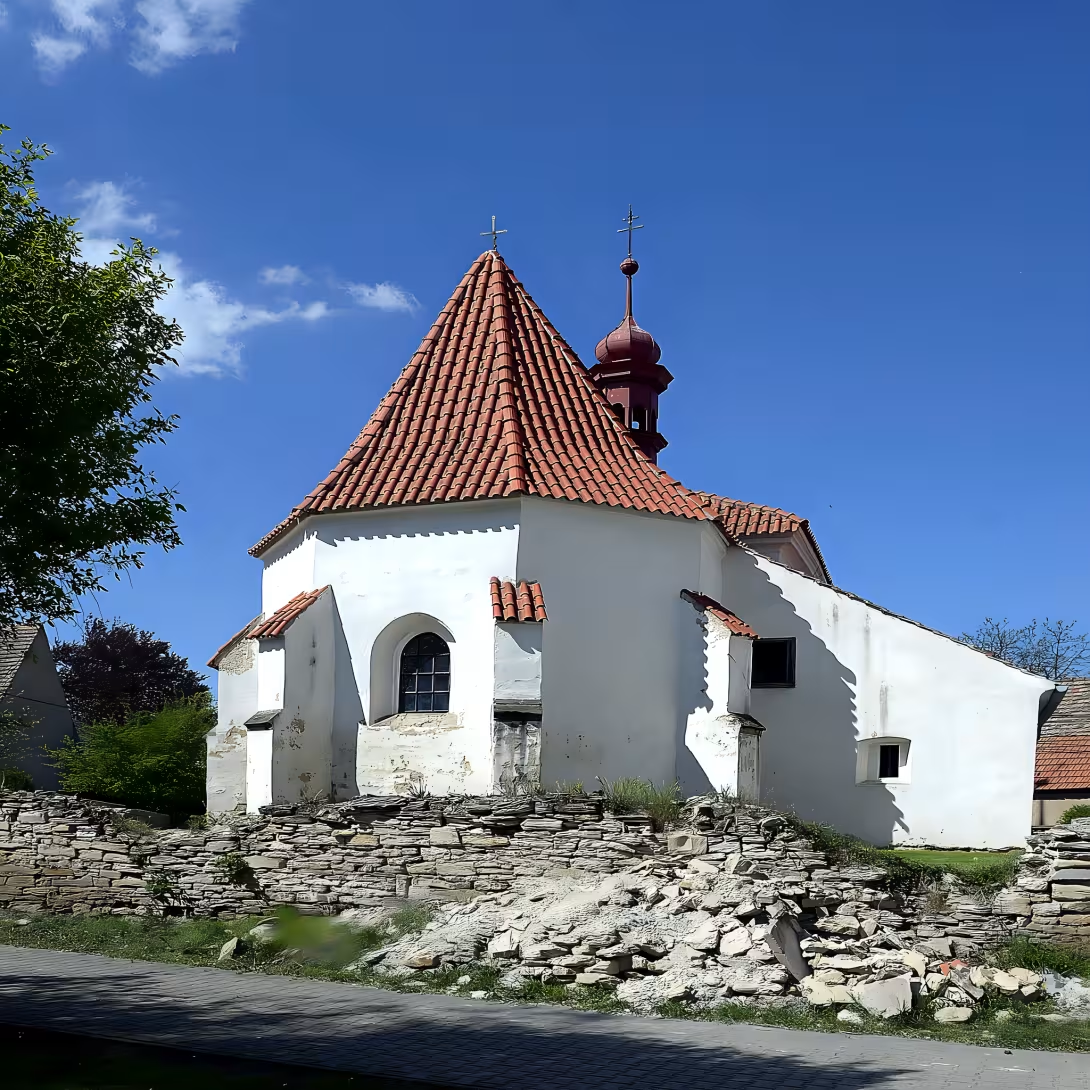
The Church of Saint Nicholas in Lounky is a Roman Catholic filial church located in the village of Lounky, part of Chodouny municipality in the Litoměřice District. Originally constructed in the Gothic style during the late 13th century, it underwent partial Baroque renovations over time. The church stands centrally within an elevated sacred area and features a polygonal presbytery with supporting pillars. It retains elements of both Gothic and Baroque architecture, making it notable for its historical significance and architectural evolution.
The origins of the Church of Saint Nicholas in Lounky trace back to the late 13th century when a small brick church was built on this site. By 1344, Lounky and surrounding villages came under the ownership of the Prague archbishopric as part of the Roudnice estate. This period marked significant political and religious changes in Bohemia, including tensions leading up to the Hussite Wars. During these wars, the ecclesiastical system in the area was destroyed, necessitating clergy from Roudnice to manage spiritual affairs.
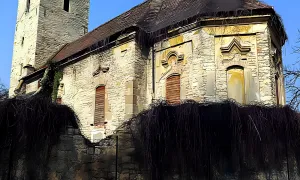
Architecturally, the church underwent an expansion around 1400 with the addition of a polygonal presbytery featuring supporting pillars. The building showcases both Gothic and Baroque elements; for instance, it has two walled-up early Gothic windows on its south side and a late Gothic portal with profiled framing on the north. In the 17th and 18th centuries, the church experienced Baroque modifications, including the addition of a baroque sacristy and a volute turret at the west façade. The nave and presbytery feature cross-vaulted ceilings from around 1400, incorporating simplified elements reminiscent of the vaults in the Roudnice Augustinian monastery.
Throughout its history, the church has seen various changes in administration and fortune. In 1992, Miroslav Šantin initiated efforts to resume services at the church when it became part of the Stětí Catholic parish. This period also marked a significant restoration effort under the Program záchrany architektonického dědictví, with funding amounting to 1.4 million Kč between 1995 and 2014, ensuring its preservation as a cultural monument.
The church is surrounded by an elevated sacred area that includes a polygonal brick belfry with battlements located in the northeast. This setting enhances the historical ambiance of the site. In 1964, the church was designated as a cultural monument along with its surrounding wall, bell tower, and cemetery chapel, underscoring its importance to the region's heritage.
Today, the Church of Saint Nicholas in Lounky is accessible for visitors who wish to explore its rich history and architectural beauty. Regular services are held on Sundays, often conducted by clergy from other parishes due to the extensive area covered by the Stětí Catholic parish. The church remains a testament to the religious and cultural evolution of the region, making it a worthwhile destination for those interested in historical architecture and ecclesiastical history.
The Church of Saint Nicholas in Lounky stands as a remarkable example of architectural resilience and historical continuity. Its blend of Gothic and Baroque styles offers a unique glimpse into the past, inviting visitors to appreciate its enduring legacy. Whether drawn by its architectural beauty or intrigued by its storied past, this church is a must-visit for anyone exploring the Litoměřice District.
Then and now
Drag the slider to compare how the landmark may have looked when it was built with the view today.
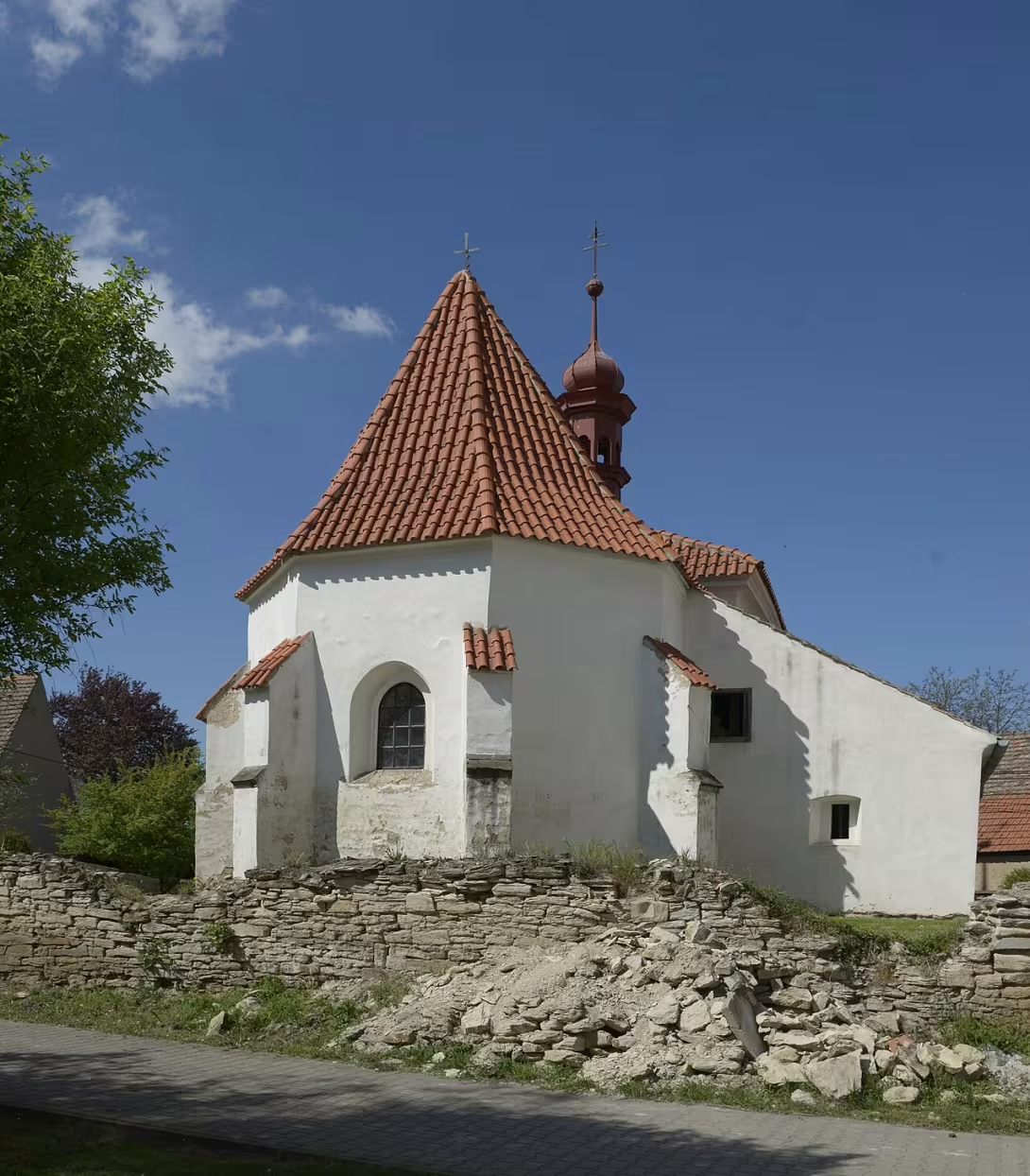

The historical appearance on the left is an AI-generated visualisation and serves as inspiration only.
Historical milestones
- konec 13. století
- Výstavba původní gotické cihlové kostela.
- 1344
- Lounky přešly pod vlastnictví pražské arcibiskupství.
- kolem 1400
- Rozšíření kostela s polygonálním presbytářem.
- 17. a 18. století
- Barokní úpravy, včetně barokní sakristie.
- 1964
- Kostel byl vyhlášen kulturním památkou.
Architectural development
The church was expanded around 1400 with a polygonal presbytery featuring supporting pillars. It underwent Baroque modifications in the 17th and 18th centuries, including the addition of a baroque sacristy and a volute turret at the west façade. The nave has two walled-up early Gothic windows on its south side, while the north features a late Gothic portal with profiled framing.
Historical events
In the late 13th century, a small brick church was built on the site where the current Church of Saint Nicholas stands. By 1344, Lounky and surrounding villages came under the ownership of the Prague archbishopric as part of the Roudnice estate.
During the Hussite Wars, the ecclesiastical system in the area was destroyed, necessitating clergy from Roudnice to manage spiritual affairs.
In 1992, Miroslav Šantin initiated efforts to resume services at the church when it became part of the Stětí Catholic parish.
Points of interest
- The Church of Saint Nicholas in Lounky is notable for its unique blend of Gothic and Baroque architectural elements, including two walled-up early Gothic windows and a late Gothic portal with profiled framing, reflecting the historical transitions it has undergone.
- In 1344, the village of Lounky became part of the Prague archbishopric's Roudnice estate, marking a significant shift in ownership that influenced both its religious and political landscape during the tumultuous period leading up to the Hussite Wars.
- The church features a polygonal presbytery with supporting pillars added around 1400, showcasing an architectural evolution from its original Gothic construction, which includes cross-vaulted ceilings reminiscent of those found in the Roudnice Augustinian monastery.
- Efforts led by Miroslav Šantin in 1992 to resume services at the church were part of a broader restoration initiative under the Program záchrany architektonického dědictví, which secured funding for its preservation as a cultural monument from 1995 to 2014.
- The church's sacred area is enhanced by an elevated polygonal brick belfry with battlements located in the northeast, adding to the historical ambiance and architectural significance of the site, recognized as a cultural monument since 1964.
Guide
This guide is narrated by a synthetic voice generated by artificial intelligence.
Show guide text
This text was created by artificial intelligence and has not been editorially reviewed. It may contain inaccuracies.
Welcome to the historic Church of Saint Nicholas in Lounky, a remarkable blend of architectural styles and centuries of history nestled within this serene village. As you stand here, take a moment to absorb your surroundings: the church's presence is both humble yet strikingly prominent, elevated on its sacred site, inviting contemplation and admiration.
Let's delve into the origins of this cherished landmark. The Church of Saint Nicholas was initially constructed in the late 13th century, embodying the Gothic architectural style that defined an era of spiritual aspiration and artistic innovation. This period marked a time when villages like Lounky were flourishing under ecclesiastical influence, with the church originally serving as a beacon for the local community.
In 1344, a significant shift occurred as Lounký transitioned into the possession of the Prague archbishopric, marking an era where religious and political dynamics intertwined. Around the turn of the 15th century, the church underwent expansion to include a polygonal presbytery, reflecting both growing spiritual needs and architectural ambitions.
As we move through time, notice how the church embraced Baroque influences during the 17th and 18th centuries, evident in its renovations that added layers of ornate detail. A baroque sacristy was introduced, blending harmoniously with the existing Gothic elements—a testament to the evolving aesthetic sensibilities over centuries.
Now, let's focus on some architectural features you can see right before your eyes. The church stands out for its unique combination of Gothic and Baroque styles. Observe the two walled-up early Gothic windows and the late Gothic portal adorned with profiled framing—each element narrating a story of historical transitions and artistic endeavors.
While specific architects remain unknown, the enduring legacy of this place is intertwined with the community's history and faith. In 1964, the Church of Saint Nicholas was officially recognized as a cultural monument, ensuring its preservation for future generations to cherish and explore.
Here’s an intriguing tidbit: in 1344, Lounký became part of the Prague archbishopric—a pivotal moment that shaped its spiritual journey. This connection underscores the church's significance within broader ecclesiastical networks during medieval times.
As we conclude our brief exploration, I invite you to wander around this sacred site and let your imagination traverse through time. Discover more about the stories etched into every stone and perhaps find a personal connection with this enduring symbol of faith and history in Lounký.
Thank you for joining me on this journey. May your visit inspire reflection and discovery as you continue exploring the wonders of Ústecký kraj.
Frequently asked questions
Can the monument be visited?
Religious buildings are usually open mainly during services; at other times a visit is normally arranged with the parish or the operator. We have not verified specific times.
Where is the monument?
Location: Lounky, Ústecký kraj. The map on this page shows the exact spot.
Why is the monument protected?
It is listed in the Central List of Cultural Monuments of the Czech Republic as a cultural monument (register no. 31517/5-2165).
Businesses nearby
Do you run a restaurant, accommodation, shop, museum, rental, wellness or other visitor service near this monument? Show yourself directly to the people heading to it — this is how they will see you in the app and on the web:
Events nearby

Zdroj akcí: otevřená data měst a obcí ČR (Národní katalog otevřených dat) a kalendář akcí Národního památkového ústavu.
Nearby
Located in the village of Lounky, the church is part of a sacred area that includes an elevated terrain. A polygonal brick belfry with battlements stands to the northeast of the church.
Accommodation nearby
Trips and activities nearby
Guided tours, tickets and activities nearby from GetYourGuide
Affiliate link: if you buy from the partner, we may receive a commission. The price for you does not change.
Search tours and activities →Themed route
Tematická výletní trasa kolem Kostela svatého Mikuláše v Lounkách
1. Kostel svatého Mikuláše
- Typ: Historická památka, náboženský objekt
- Proč stojí za návštěvu: Kostel svatého Mikuláše v Lounkách je klíčovou kulturní a historickou památkou obce. Jeho architektura představuje bohatý dějiny regionu, což jej činí nezbytnou návštěvní pro každého zájemce o místní kulturu a historii.
2. Vysoká terasa
- Typ: Přírodní výhled
- Proč stojí za návštěvu: Terasa, která se nachází poblíž kostela, nabízí jedinečný pohled na okolní krajinu. Je to ideální místo pro odpočinek a užívání si klidného prostředí, kde můžete ocenit přírodní krásy oblasti.
3. Polygonální kamenná věž s baštami
- Typ: Historický belfry
- Proč stojí za návštěvu: Věž se nachází na severovýchod od kostela a je přitažlivá svou historickou architekturou. Její polygonální tvar a bašty jsou významnými prvky, které odrážejí místní stavitelské tradice a historii.
Tato trasa nabízí pohled na nejen kulturní, ale i přírodní krásy oblasti kolem Kostela svatého Mikuláše v Lounkách.
Seasonal recommendations
Spring: Visiting the Church of St. Nicholas in Lounky during spring offers a unique experience as nature begins to awaken, with blooming flowers and fresh greenery enhancing the church's historic charm. The soft light filtering through budding trees creates a serene atmosphere ideal for contemplation. Practical advice includes wearing comfortable walking shoes suitable for exploring nearby trails or gardens that may still be muddy after winter rains. Early mornings are often quieter, providing a peaceful time to appreciate both nature and architecture without large crowds.
Summer: Summer is the peak season for visiting the Church of St. Nicholas in Lounky, when the surrounding landscape is lush and vibrant with long daylight hours enhancing the church's architectural details. The warm weather invites visitors to enjoy outdoor activities nearby, but it also means larger crowds are likely. Arriving early can help avoid the busiest times, and wearing light, breathable clothing will ensure comfort during your visit. Despite the potential for higher temperatures, summer offers a lively atmosphere with plenty of opportunities to engage in local cultural events.
Autumn: Autumn brings a stunning transformation to the Church of St. Nicholas in Lounky, as the surrounding landscape is painted in rich hues of red, orange, and gold. The softer light during this season casts a warm glow over the church's façade, creating an inviting atmosphere perfect for photography or leisurely walks. As temperatures begin to cool, wearing layers is advisable to stay comfortable throughout your visit. This period often sees fewer visitors compared to summer, making it ideal for those seeking a more tranquil experience amidst nature’s autumnal beauty.
Winter: The Church of St. Nicholas in Lounky presents a picturesque scene during winter, with snow-covered surroundings and the church's architecture standing out starkly against the white landscape. The shorter days mean that lighting is softer, offering a unique perspective on the historic structure. Visitors should dress warmly in layers to handle the cold weather and be prepared for potentially limited access if heavy snowfall affects the area. Winter visits are typically quieter, providing an intimate opportunity to explore the church without the bustle of other seasons.
Visualizations and artistic views


The visualisations are generated by artificial intelligence and serve as inspiration.
Photos from the area
Real photos taken near the monument


Zdroj a licence jsou uvedeny u každého snímku.
Atmosphere of the place
This atmospheric visualisation of the place and period was generated by artificial intelligence. It is not real footage of the location.
Tips from visitors
No tips yet. Be the first!
Log in and add your tip.
Sources and literature
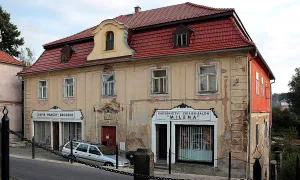
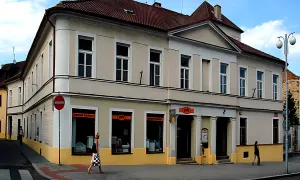
Photos: Jirka Dl / CC BY-SA 4.0, rozlišení zvýšeno umělou inteligencí — Wikimedia Commons. The author and licence also appear when you hover over the image.
Faktickým podkladem tohoto textu byl článek na Wikipedii, jehož autory jsou přispěvatelé Wikipedie. Článek je dostupný pod licencí CC BY-SA 4.0.
Location on the map

Příběhy a pověsti
Legendy, pověsti a příběhy spjaté s touto památkou
Příběh: Kostel svatého Mikuláše v Lounkách
Bylo to v pondělí ráno, kdy Vilém zjistil, že svět kolem sebe je opojný a podivuhodný. Stál před kostelem svatého Mikuláše v Lounkách, jeho střechy zakryté s…
Číst příběh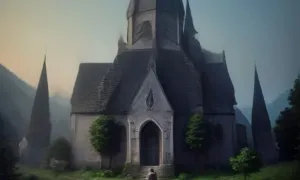
Pověst: Kostel svatého Mikuláše v Lounkách
Podle místní pověsti, která se v Lounkách dědí z úst do úst po mnoho pokolení, nesestoupil kostel svatého Mikuláše do země sám od sebe a ne bez příčiny. Stař…
Číst příběhFotografie návštěvníků
Zatím žádné fotografie. Buďte první, kdo přidá fotografii z návštěvy!
Log in a přidejte svou fotografii nebo hodnoťte.
Za ověřenou návštěvu v aplikaci získáte víc bodů — poznáme podle GPS, že jste na místě.
Reviews and comments