



Kostel svatého Ondřeje (Luby) Church
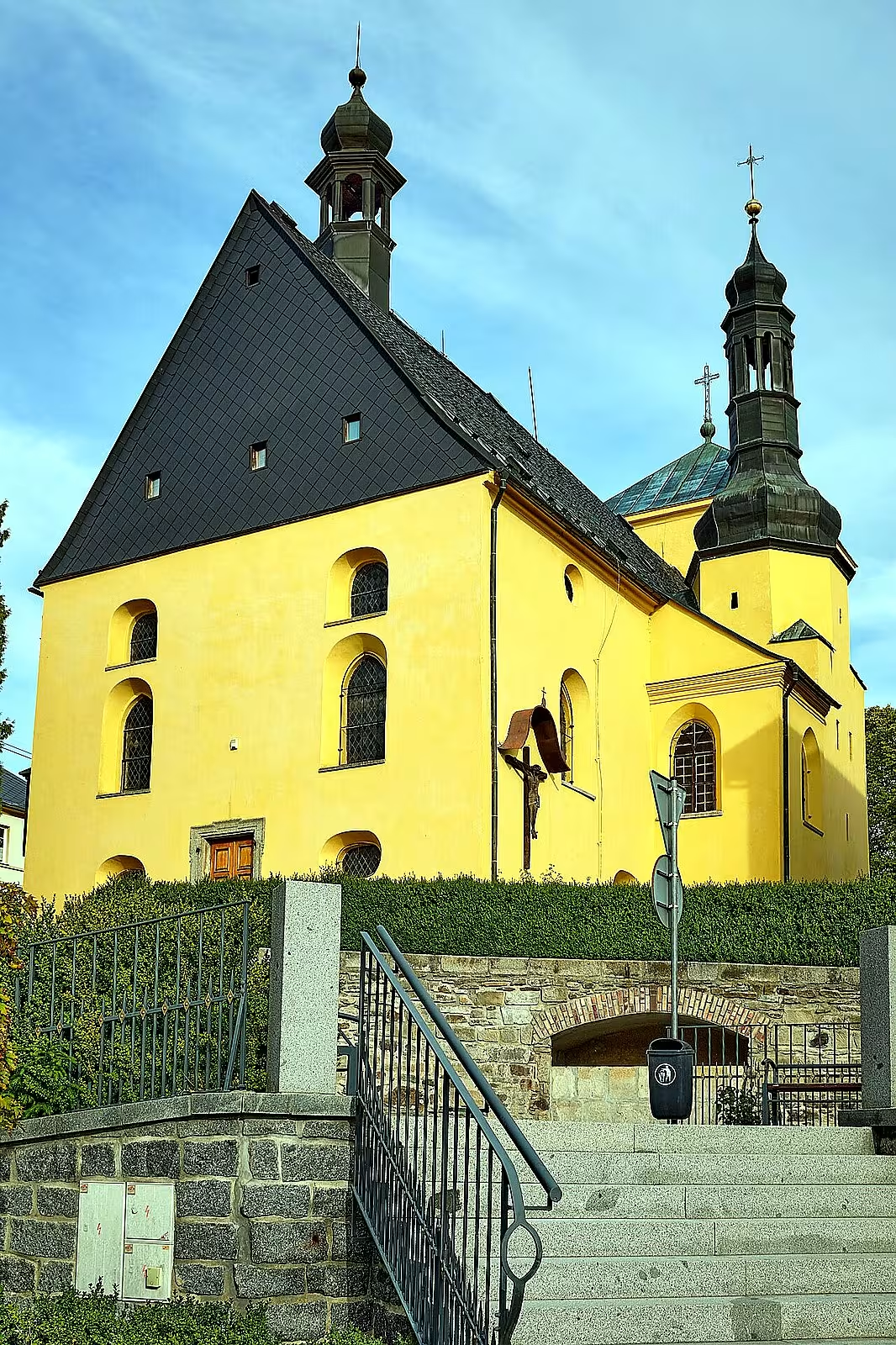
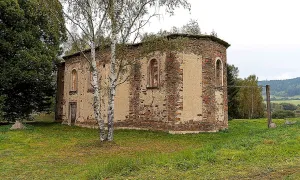
The Church of Saint Andrew in Luby is a Romanesque-style church with significant historical and cultural significance. Located in the village Luby within the District of Cheb Karlovarský kraj, this church comes from the 11th century, originating from the first colonization area. It is evidence of architectural evolution for centuries, where it served various roles from fortified structure to its present position as a branch of the church in the Roman Catholic parish of Skalné.
The origin of St. Andrew's Church is rooted in the early Middle Ages, when the Czechs experienced significant political and cultural developments within the Přemyslovci. The expansion of Romanesque architecture throughout Europe affected local building styles, which is evident from the original construction of this church. Historical records refer for the first time to the church in 1184 as property of the Vodňan monastery, a gift from the Czech king Vratislav II to the monastery in 1165. This connection underlines its importance in the religious and feudal systems of the time.
Architecturally, St. Andrew's Church is remarkable for its Romanesque tower, which has undergone various transformations. Originally built as a fortified construction, it has a massive tower with narrow windows and surrounding walls of fortifications. The tower was later baroqueized in 1734 and repaired in 1856, showing a mixture of styles that characterize the church's current form. The construction also includes a gothic sacristy, while the boat, including a polygonal bell with a staircase to the gallery, comes from reconstruction in 1697.
Property and administration of the church have recorded significant changes over time. At first under the jurisdiction of the Aquanian monastery, it remained until 1501 when the area switched from the bishop's office in Ratisbona. The 16th century brought religious shifts as Lutheranism spread from Germany, making the region largely Protestant until 1621. These historical changes reflect the wider socio-religious dynamics in Central Europe.
Several key events throughout their history marked the importance of the church. In 1199, the parish priest for Luby was first mentioned, suggesting the establishment of a church administration. The architectural evolution of the church is pushed through various renovations and stylistic changes, including baroque modifications of the tower in 1734, interior updates in 1735 and installation of the pipes of Ignace Schmidt in 1792.
Today the church of St. Andrew is a cultural monument of the Czech Republic. Its interior has a Baroque main altar from the beginning of the 18th century, decorated with statues of the apostles Peter and Paul and an altar depicting the crucified St. Andrew. The boat is decorated with frescoes from 1856, where the late baroque organs and Rococo confess. Thanks to these elements it is a fascinating place for visitors who are interested in architectural history and religious art.
A visit to St. Andrew's Church offers a unique view of the historical layers that shaped this region. Its blend of Romanesque, Gothic and Baroque styles provides a view of cultural and religious transformations for centuries. As a preserved monument, it calls for the exploration and recognition of its lasting legacy in Central European history.
Then and now
Drag the slider to compare how the landmark may have looked when it was built with the view today.
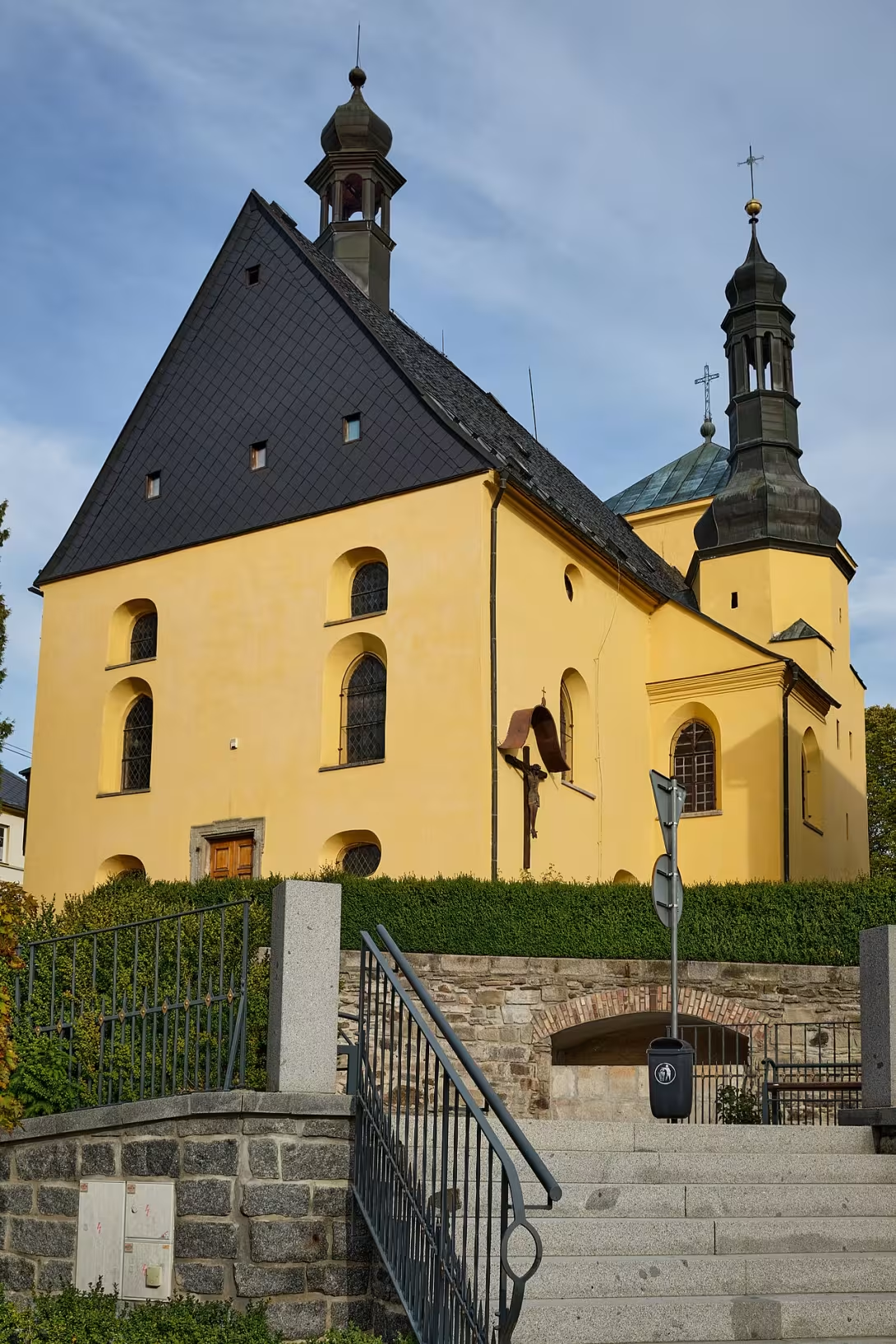
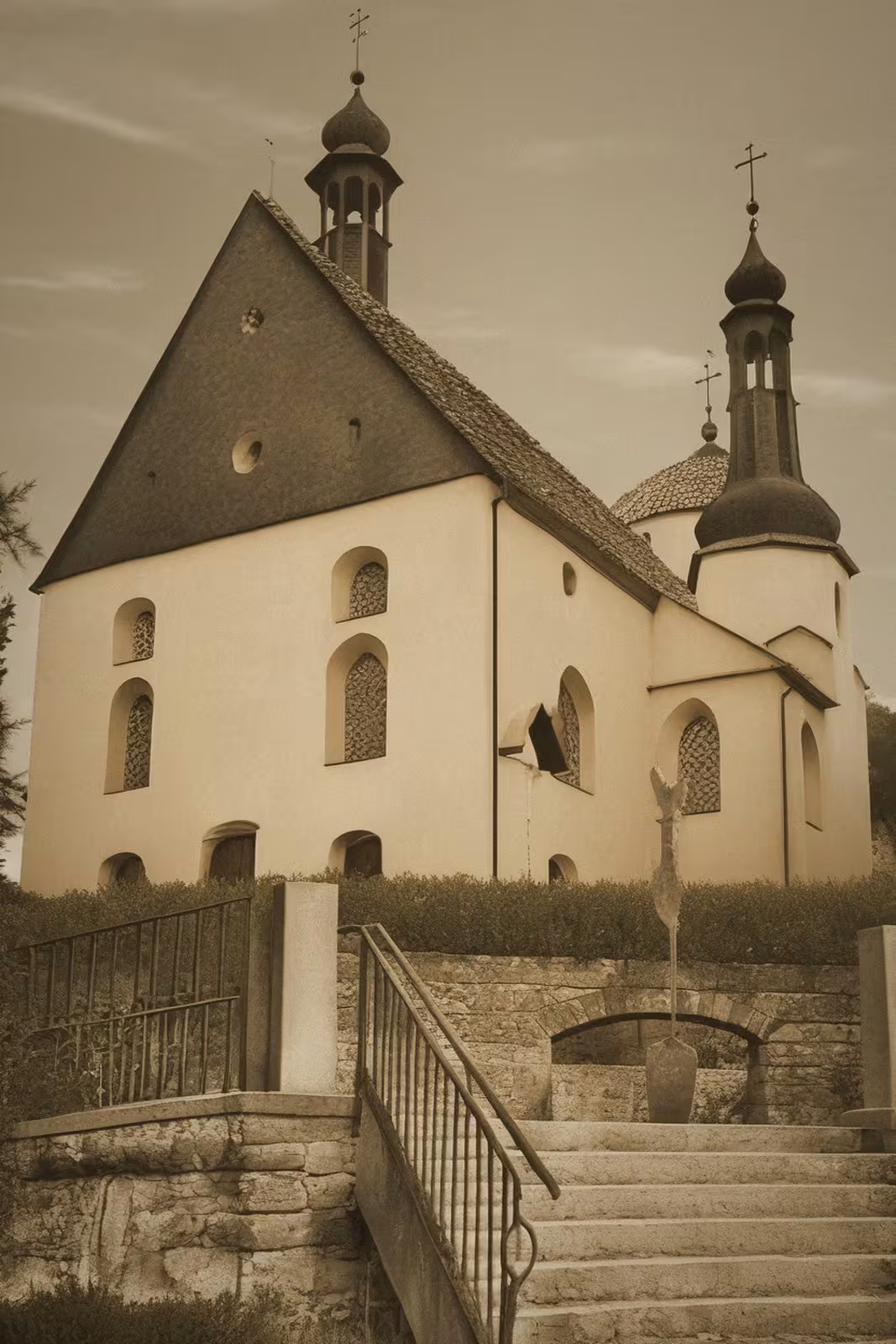
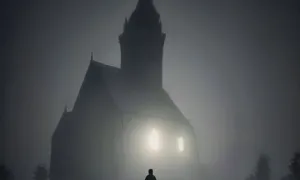
The historical appearance on the left is an AI-generated visualisation and serves as inspiration only.
Historical milestones
- 1184
- The first documented mention as property of the Aquanian monastery.
- 1199
- Mention of the first parish priest in Luby.
Architectural development
The current form of church is based on various architectural phases. The Romanesque tower was later baroqueized in 1734 and repaired in 1856. A Gothic sacristy is also part of the construction. The boat, including the polygonal bell tower with staircase to the gallery, comes from the reconstruction of 1697.
Historical events
The first documented mention in 1184 as property of the Aquanian monastery.
In 1199, the parish priest in Luby is first mentioned.
During the 16th century the region became largely Protestant thanks to the spread of Lutheranism from Germany to 1621.
Owners
the church was originally owned by the Vodňan monastery, on which the Czech king Vratislav II was donated. v1165. The area remained under the jurisdiction of the Bishop in Ratisbona until 1501.
Points of interest
- The church of Saint Andrew was originally fortified by a structure that reflected its strategic importance in the early Middle Ages when it needed to serve as a place of worship and defense.
- In 1734 the church passed through baroque adaptations and mixed two different architectural styles which illustrate evolving aesthetic preferences for centuries in Central Europe.
- The church was once under the jurisdiction of the Aquanian monastery until 1501, highlighting its important role in both church and feudal systems in the Middle Ages.
- The Gothic sacristy is part of the church of St. Andrew's building, where a rare architectural mixture is manifested with mostly Romanesque design that reflects various stages of construction and renovation throughout history.
- The church moved from largely Protestant in the 16th century because of the spread of Lutheranism from Germany until it returned to Catholic hands in 1621, reflecting wider socio-religious shifts in Central Europe.
Guide
This guide is narrated by a synthetic voice generated by artificial intelligence.
Show guide text
This text was created by artificial intelligence and has not been editorially reviewed. It may contain inaccuracies.
Welcome to St. Andrew's Historical Church in Luby! As you stand before this architectural jewel, take a moment to absorb its timeless presence. The church's Romanesque style emits a sense of strength and history, with its massive tower reaching towards the sky - proof of its permanent heritage.
Let's go back to the 11th century when Luby was first colonized. This remarkable structure appeared both as a spiritual sanctuary and as a fortified bastion, reflecting its strategic importance during stormy times. The Church of Saint Andrew served not only as a place of worship, but also as a protective fortress for the community.
Now focus on the impressive Romanesque tower in front of you. Notice how he stands with narrow windows that indicate his original defensive purpose. This architectural miracle has undergone significant transformations over time, including baroque modifications in 1734, which breathed new life into its design while preserving its historical nature.
The history of the church is connected with remarkable figures such as Vladislav II, whose influence is heard over time. In 1184 it was first documented as property of the Vodnian monastery, marking an important chapter in the past. By 1199, Luby was appointed his first parish priest, further cementing the church role within the community.
One interesting aspect that divides this church is its dual purpose throughout history - both sacred space and fortress. This mixture of spirituality and defense offers a fascinating view of medieval life, where churches often served as beacons of security in the midst of uncertainty.
At the end of our short survey, I urge you to continue to discover the wonders of Luby. Every corner has stories waiting to be revealed, promising a rewarding experience for those looking for them. Thank you for joining me on this journey of time and history.
Tips for visitors
The best time to visit St. Andrew's church in Luby is at the end of spring or early autumn, when the weather is pleasant, which allows convenient examination of both the church interior and its surroundings. During these months, you can enjoy fresh greenery around the area without the discomfort of summer heat or winter. In addition, a visit outside the top tourist season ensures a calmer experience, so you can realize historical architecture in peace.
Public transport options can also be used, but specific routes and plans should be verified through local transit websites or applications before your journey. This ensures a smooth journey to Luby without any difficulty in navigating unknown roads.
When visiting St. Andrew's Church, it is recommended to bring comfortable walking shoes as you can wish to explore the surroundings. The camera is also necessary to capture the stunning Romanesque architecture and all surrounding scenic sites. In addition, consider bringing a light jacket or sweater, especially if your visit spreads to the evening when the temperature may drop.
Photographed enthusiasts will find several views around the church that offer beautiful lighting during the golden hour - early morning or late afternoon. The game of natural light through the windows the church creates fascinating inside shots. For external views consider capturing the church from a distance to include its historical environment in the landscape.
Close to Luby, you can visit other attractions during a 30-minute drive. These can include surrounding locks or natural trails that offer picturesque landscapes and opportunities for outdoor activities. This site is ideal for extending your daily trip and exploring the more rich history of the region and natural beauty.
Frequently asked questions
Can the monument be visited?
Religious buildings are usually open mainly during services; at other times a visit is normally arranged with the parish or the operator. We have not verified specific times.
Where is the monument?
Location: Luby, Karlovarský kraj. The map on this page shows the exact spot.
Why is the monument protected?
It is listed in the Central List of Cultural Monuments of the Czech Republic as a cultural monument (register no. 34151/4-51).
Businesses nearby
Do you run a restaurant, accommodation, shop, museum, rental, wellness or other visitor service near this monument? Show yourself directly to the people heading to it — this is how they will see you in the app and on the web:
Nearby
ITEX Show interactive overview of the surroundings - restaurants, accommodation, rentals and other places within a 15 km radius.
Data: OpenStreetMap contributors, 15 km radius.
‡ Historical monuments
- Zamek Horni Luby (1.3 km)
- Freilichtmuseum Eubabrunn (Kasse) (6.2 km)
- Bismarcksäule (7.7 km)
- Alte Freilichtbühne (7.7 km)
- Musikwerkausstellung (8.3 km - Hauptstraße 10)
- Framus-Werksmuseum (8.6 km - Adorfer Straße 25)
- Herrengräber (10.4 km)
- Museum (12.1 km - Schloßstraße 3)
Restaurant and catering
- Baráček (0.2 km)
- Brči (0.2 km)
- Death (0.3 km)
- Restaurant on Golfu (1.6 km - Upper Luby 25)
- Bergasthof "Heiterer Blick" (7.4 km - Oberer Berg 54)
- Restaurant Am Paulusschlöß 'l (8.2 km - Bienenengarten 11)
- Berghof (8.3 km)
- Wirtshaus Markneukirchner Löwe (8.6 km - Albertstraße 1)
Accommodation
- Kozabar (1.7 km - Masarykova 27)
- Wohlfühlherberge Weitblick (6.9 km - Hetzschen 10)
- Pension & Gasthof Fickert (7.7 km)
- Hotel Sächsischer Hof (8.6 km - Adorfer Straße 17)
- Castle Vildstejn (10.0 km)
- Hotel Quellenpark (11.5 km)
- Central (12.3 km)
- Haus Asgard (12.4 km - Bahnhofstraße 23)
› Rental and sports
- Rudolf-Thiele-Freibad (7.4 km)
- Sporthalle Gymnasium Markneukirchen (8.2 km - Alte Wohlhausener Straße 10)
- Trainingszentrum Kolonnaden (8.3 km - Badstraße 38)
- Badelandschaft und Saunadorf Bad Brambach (8.6 km - Badstraße 47)
- Naturbad Sohl (8.9 km)
- Zwota Zechenbach (10.9 km)
- Cykla, outdoor, ski & snow (11.2 km)
- Sport Schulze (12.4 km - Auerbacher Straße 21)
© Tourism and nature
- U Streets (1.7 km)
- Christians Ruh (4.0 km)
- High Kamen (5.1 km)
- Wirtsberg (5.1 km)
- Galgenberg (6.7 km)
- Tourism büro (8.3 km - Trobitzschen 14)
- Hahnenpfalz (8.6 km)
- Watchtower at Aze (10.0 km)
Accommodation nearby
Themed route
Thematic cruise route: Kostel svatého Ondřeje (Luby)
1. Kostel svatého Ondřeje (Luby) - Church Start your trip at the central memory school Luby, St. Andrew's Church. This Baroque church is famous for its architectural beauty and historical importance to the region. Significant findings took effect on the impressionable facade, while inside you can appreciate rich interiors and art da.
2. Church of St. Andrew - Tower After the prospectus church they will go to the higher level, which offers or does not request to the village Luby and surrounding landscape, but also to the history of solitary chromium. An overview of the information by stairs take a look at the audio expedition about the history of the skeleton and is an architecture.
3. Church of St. Andrew - Tanks After expiry of the period, it is considered that, on the basis of the decisions under investigation, it is considered that it is a service contract. This place is ideal for a rest after the profile temple and a view of the church from another hive.
4. Church of St. Andrew - Exposition If available, please visit the exhibition inside the church, which should focus on the history and importance of the hram for the village. Here you will find information about artwork, architectural and historical events associated with this bridge.
5. Church of St. Andrew - Park The ultimate point of your route may be the park around the church where you can use a quiet moment to walk or relax in nature. This space is ideal for locking the trip and reflective experiences that are intended to be used only for St. Andrew's.
This route offers a comprehensive use of St. Andrew's Church and it is an unfounded announcement that can be used to make its historical and cultural plan.
Seasonal recommendations
Spring: During the spring period, St. Andrew's church in Lübeck is transformed into a special place where the atmosphere is full of new life and blooming nature. The sunny days are ideal for exploring the surrounding park with its thriving shrubbery, adding a romantic and dazzling touch to your visit. Visitors should come during the early afternoon to enjoy mild temperatures and minimise the chances of meeting crowds that begin to grow around noon. Due to sudden weather changes, it is advisable to have an umbrella or raincoat in your bag and wear outer clothes that can be easily added or removed.
Summer: In summer, St. Andrew's church becomes a popular destination for both tourists and locals during the peak season. Long sunny days and warm weather attract large crowds, especially around noon, when visitors gather to explore historical interiors. To ensure comfort and relaxed experience, it is recommended to visit the church early in the morning or later in the evening when the crowd weakens. It is necessary to wear light clothes suitable for warm soil, sunglasses and lots of drinks, especially if you plan to spend the whole day in this area.
Autumn: In autumn, the church of St. Andrew in Lübeck offers a unique atmosphere with vaults swimming in sunlight and leaves turning into vivid colors. This season is ideal for visiting thanks to milder temperatures and fewer tourists compared to summer. Visitors should take advantage of the earlier light that highlights the historical architecture of the church and bring warm clothes because afternoon temperatures can drop quickly. The expected rainy days mean that wearing durable shoes and preparing for wind conditions are crucial for a comfortable visit.
Winter: Winter visit to St. Andrew's Church offers a completely different experience, with historical facades and surrounding landscapes transformed into snow beauty. The atmosphere is calmer thanks to smaller crowds, allowing visitors to explore the church in peace without fear of overpopulation. Due to cold temperatures and shorter opening times, it is important to visit early in the morning to save time on tour. Wearing warm clothes, including leather shoes and hat, contributes to comfort during your visit. In addition, it is recommended to have an umbrella or raincoat, as snow conditions can quickly turn to rain.
Visualizations and artistic views


The visualisations are generated by artificial intelligence and serve as inspiration.
Photos from the area
Real photos taken near the monument


Zdroj a licence jsou uvedeny u každého snímku.
Tips from visitors
No tips yet. Be the first!
Log in and add your tip.
Sources and literature
Photos: Lubor Ferenc / CC BY-SA 4.0 — Wikimedia Commons. The author and licence also appear when you hover over the image.
Faktickým podkladem tohoto textu byl článek na Wikipedii, jehož autory jsou přispěvatelé Wikipedie. Článek je dostupný pod licencí CC BY-SA 4.0.
Location on the map
Příběhy a pověsti
Legendy, pověsti a příběhy spjaté s touto památkou
Fotografie návštěvníků
Zatím žádné fotografie. Buďte první, kdo přidá fotografii z návštěvy!
Log in a přidejte svou fotografii nebo hodnoťte.
Za ověřenou návštěvu v aplikaci získáte víc bodů — poznáme podle GPS, že jste na místě.
Reviews and comments