






Kostel svatého Blažeje (Branišov) Church
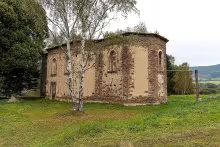
The ruin of the baroque pilgrimage church on the banks of the pond under Třebouňský vrchem near Branišova is among the most interesting and dramatic building remains of the Karlovy Vary district. In 1999 it was declared a cultural monument. The church is situated in a landscape rich in history - the area around it is part of the European site NATURA 2000 and offers educational and pilgrimage paths.
The beginnings of the place go back to the distant past. The Temple of Tepel founded a pond under today's church in 1476. The construction consisted of an older monastery settlement or court called Genoa or Genovec. This territory has remained under the patronage of the monastery for centuries.
The present Baroque church was created only in the middle of the 18th century when it was built by the abbot of the thermal monastery Raimund III. in 1732- 1733. The new construction took place in the place of an old defunct Gothic church. The builders had nothing to forget - among the ruins of the Gothic predecessor they found and preserved fragments of architectural articles whose traces remained printed on his architecture.
The built church was a representative building of its time. He had a valbic shingles roof, and a distinctive six-sided onion sandtuce stood over the presbytery. The interior was decorated with Baroque equipment from the first half of the 18th century - elements that later spoke of its past majesty.
The fate of the memorial was to draw a dramatic tragedy. On June 20th, 1957, the church was struck by lightning. The fire was catastrophic - it destroyed the baroque device and left only burnt walls. The emblem above the presbytery first resisted the test room, but later collapsed due to long-term lack of maintenance. From that moment on, the church was a ruin.
His property-social journey was complicated. It belonged to a thermal monastery for centuries, but at the end of the 20th century it belonged to the city of Toužim. The town later dedicated it to the Bishop of Pilsen. The real turnaround came in 2007 when the church became the property of the Civic Association Road from the city. The first rescue work was carried out at the same time - the landfill that had become the interior was destroyed and the flint wood was destroyed. In 2008, rescue restoration work took place, a year later the crown of masonry was strengthened.
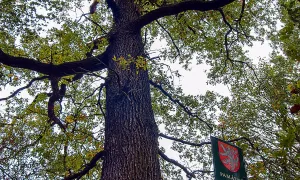
The visitor has a chance to look inside today. The interior is accessible after previous arrangement or during organized events. The path is enriched by surrounding natural beauty - the area of NATURA 2000 is spread around the pond with educational paths. They had a turn of the pilgrimage trail of the Skok and the educational paths of David. In 2014, the pond and its surroundings were declared a natural monument to the Blažej pond. The memorial Blažejská lipa, the institute of witness to a quiet place in the middle of the countryside, also grows near the church.
Then and now
Drag the slider to compare how the landmark may have looked when it was built with the view today.
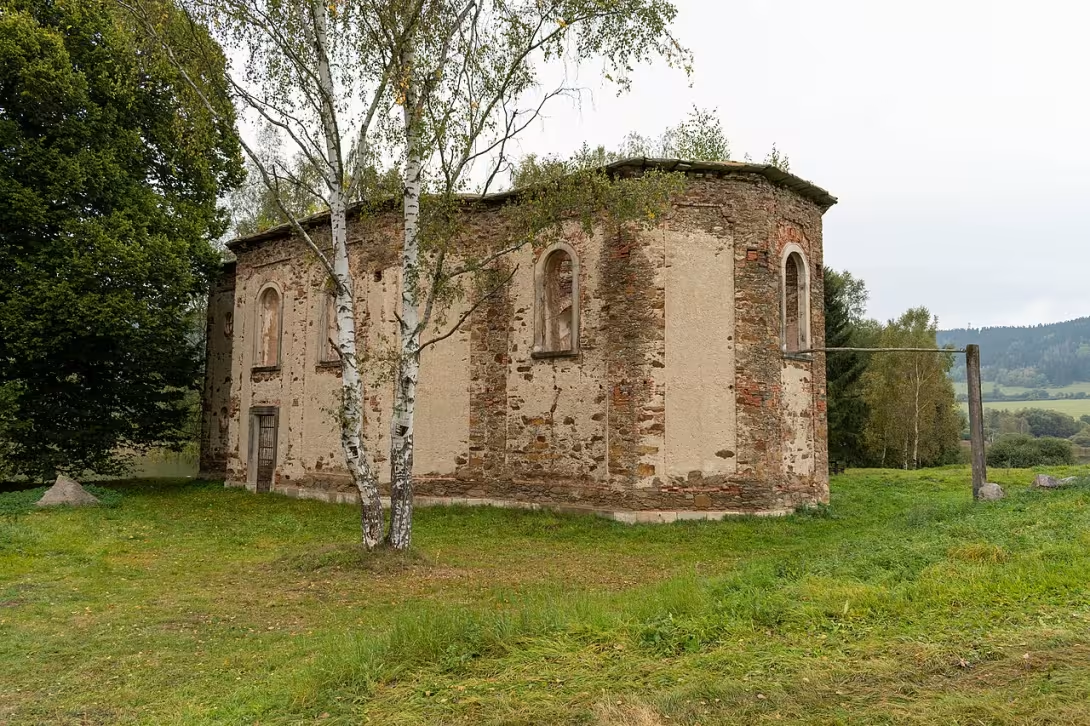

The historical appearance on the left is an AI-generated visualisation and serves as inspiration only.
Historical milestones
- 1476
- Establishment of the pond by thermal monastery under the place of future construction
- 1732-1733
- Construction of the present Baroque church by Abbot Raimund III.
- 1957
- A devastating fire caused by lightning that turned the church into a ruin
- 1999
- Declaration by the church for a cultural monument
- 2007
- The church became the property of the civil association Journey from the city
- 2014
- Announcement o
Architectural development
Originally there was a Gothic church on the site, which was replaced by a Baroque building in 1732-1733. The church burned down in 1957 and its vault collapsed later because of a lack of maintenance.
Historical events
- 1476
- The Temple of Tepel founded a pond under today's church.
- 1732
- The Baroque new building of the church was built in the place of the older Gothic church.
- 1957
- The church burned down after a lightning strike.
Owners
Tepel monastery (until fire 1957), town of Toužim, Bishop of Pilsen, civil association Road from the city
Points of interest
- The ruin of the Baroque pilgrimage church is one of the most dramatic monuments of the Karlovy Vary district. - The church was built in the years 1732-1733 by the abbot Raimund III Thermal Monastery in the place of the older Gothic church. - After the fire of 1957, which destroyed the baroque facility and left only burned walls, the church became a ruin. - In 2007, the church was transferred to the civil association Journey from the city, which allowed us to start his rescue work. - The interior of the church is now accessible by appointment or during events and surroundings is part of th
Guide
This guide is narrated by a synthetic voice generated by artificial intelligence.
Show guide text
This text was created by artificial intelligence and has not been editorially reviewed. It may contain inaccuracies.
Welcome to a place full of historical secrets and beauty - you are facing the ruins of the baroque pilgrimage church of St. Blaze at Branišova. This church, located on the shore of the same-name pond under the hill of Treboune, awaits you with a story full of changes and transformations. Look up - although the church is today a ruin, you can still recognize the elegant line of its former Baroque architecture. Notice the rest of the vault above the presbytery that even survived the fire in 1957 and stands as a testament to its past glory.
Let's dive into the history of this place. In 1476 he founded a thermal monastery pond under the place where later this church was founded. The Baroque version was built between 1732 and 1733 by Abbot Raimund III, who sought to create a pilgrimage center for the beliefs of people from around the world. This newly built church has replaced an older Gothic building, bringing to the area the nobility of baroque architecture.
Now pay attention to the specific details behind your attention. Even if the church is destroyed, the stems of its original wealth may be visible in broken stone cuts and alternately preserved fragments of the facade. These elements remind us of how the church was once revived by Baroque decorations.
Among the key figures associated with this monument is Abbot Raimund III., who not only led the church, but also contributed to its importance as a spiritual centre. His efforts to introduce Baroque architecture in this area point to a rich history of religious traditions and artistic expression.
The interesting thing is that despite the fire in 1957, which destroyed the church, his vault over the presbytery survived. This accidental escape was a result of lack of maintenance and lightning, which makes this fragment a unique part of the history of the place today.
In 1999 the church was declared a cultural monument and in 2007 it became property of the Civic Association Road from the city. In 2014, the entire pond and its surroundings were declared a natural monument to the Blažej pond, which underlines not only the historical but also the ecological value of this place.
An invitation to further explore there are many secrets waiting to be discovered. If you look around, you can see how nature and history exist together in harmony, providing shelter for the mind and soul. Let us rest here for a while and listen to the silence that this church has preserved. And when you decide to continue your adventure, let's remember that every stone has its own story. Thank you for your visit and we hope you will come back with new experiences and insights about this fascinating historical monument.
Tips for visitors
The best time to visit is the late afternoon when the sun sets and its light illuminates the ruins of a baroque church. Photography at the pond bank offers unique possibilities to capture the reflections of ruins in the water surface, especially in calm weather.
You can get to the memory by car or public transport. Please check the current traffic connections in the traffic tracking system. Parking in the vicinity of Branišova is possible, but we recommend looking for reserved places.
Since you are at the ruins and in nature, bring comfortable shoes, water and repellent. For families with children is ideal combination of sightseeing tours and walks along nearby paths, which is an interesting activity in nature.
After the church tour, we recommend exploring the area. You can visit the Pond under the Třeboňský Hill or take the educational path. For lovers of longer routes there are turnovers available on the pilgrimage Scouts and David trail.
Frequently asked questions
Is Kostel svatého Blažeje (Branišov) open to the public?
Yes, the church is open to the public. It's open daily except Monday from 9: 00 to 5: 00.
How do I get to the place by car / public transport?
The church is located in the village Branišov near Pilsen. The best thing is to come by car because parking in front of the church is free. If you want to use public transport, you can order a taxi or bus from Pilsen.
How much is the entrance fee and is it paid on the spot?
The church entrance is free.
Is the tour suitable for children and seniors?
Yes, a church tour is also suitable for families with children. The church has a quiet atmosphere and children can have fun while viewing the interior.
How long does the tour take?
The church tour takes approximately 30 minutes.
What are the opening times and booking is required?
The church is open daily except Monday from 9: 00 to 17: 00. Reservation is not required, but if you want to secure a group entry, you can order in advance.
What's interesting in the immediate vicinity?
In the vicinity of the church there is a flat landscape and several other historical objects. In 30 minutes walk you can reach Pilsen, where you can find many cultural and historical attractions.
For kids
Imagine going back 296 years to a time when many people lived here. It was a different era, a different era. In a few centuries, the locals built the church of St. Blaze.
In 1730 a beautiful Baroque church grew in Branišov. It was built by local craftsmen and builders who were trying to build something really impressive. And they did it! The church of St. Blaze is now one of the most beautiful monuments in the surroundings of Pilsen.
Businesses nearby
Do you run a restaurant, accommodation, shop, museum, rental, wellness or other visitor service near this monument? Show yourself directly to the people heading to it — this is how they will see you in the app and on the web:
Nearby
Pond under the hill of Třeboňský, a learning path and a turn of the pilgrimage of Skoda and David.
Accommodation nearby
Trips and activities nearby
Guided tours, tickets and activities nearby from GetYourGuide
Affiliate link: if you buy from the partner, we may receive a commission. The price for you does not change.
Search tours and activities →Themed route
1. Rybník under the Třeběnský vrchem, a water area, offers a quiet environment for the start of a trip in nature. 2. Educational stezka, walking route, allows you to explore local natural attractions. 3. Skokovská and David's stezka, pilgrimage trails, lead you through pleasant terrain towards the main monument. 4. Kostel svatého Blažeje (Branišov), a sacral monument, represents the main destination of the trip and the location for a tour of history.
Seasonal recommendations
Spring: Spring around the ruins brings a sense of renewal when fresh green vegetation begins to intertwine between old stones. The lighting is delicate in this period, which beautifully highlights the structure of the walls. We recommend wearing layered clothes because morning cooling can be challenging. The best time to visit is in the morning when nature is the most active and tourists are getting fewer and fewer.
Summer: In the summer months the atmosphere around the monument is very bright and sunny, creating sharp shadows in the open parts of the church. The thick crop around the ruins gives the place a shadow, but it can also be hot. In the main summer season it is advisable to arrive early in the morning to enjoy the peace before the arrival of larger groups of people and avoid the highest noon heat. Don't forget the sun protection and comfortable shoes.
Autumn: Autumn offers the most melancholy atmosphere, especially thanks to morning fog and golden leaves surrounding the ruins. The light is low at this time and creates deep shadows, ideal for capturing the history of the place. It is important to prepare for wet and cold, therefore we recommend a waterproof jacket and solid shoes. The best is to visit the place in the afternoon, when the colors of autumn nature excel most.
Winter: Winter turns the church into a quiet and raw monument, where frost and snow emphasize the tree of stone remains. The atmosphere is very lonely and calm at this time, which allows a deeper perception of history. Due to short days and low temperatures it is necessary to have very warm clothes and plan a visit in the time of the greatest daylight. Watch out for possible ice on uneven terrain around ruins.
Visualizations and artistic views


The visualisations are generated by artificial intelligence and serve as inspiration.
Photos from the area
Real photos taken near the monument


Zdroj a licence jsou uvedeny u každého snímku.
Tips from visitors
No tips yet. Be the first!
Log in and add your tip.
Sources and literature
Fotografie: Michal Gregor / CC BY-SA 4.0 — Wikimedia Commons. The author and licence also appear when you hover over the image.
Faktickým podkladem tohoto textu byl článek na Wikipedii, jehož autory jsou přispěvatelé Wikipedie. Článek je dostupný pod licencí CC BY-SA 4.0.
Location on the map


Příběhy a pověsti
Legendy, pověsti a příběhy spjaté s touto památkou
Fotografie návštěvníků
Zatím žádné fotografie. Buďte první, kdo přidá fotografii z návštěvy!
Přihlaste se a přidejte svou fotografii nebo hodnoťte.
Za ověřenou návštěvu v aplikaci získáte víc bodů — poznáme podle GPS, že jste na místě.
Reviews and comments