



Kostel svatého Petra Church
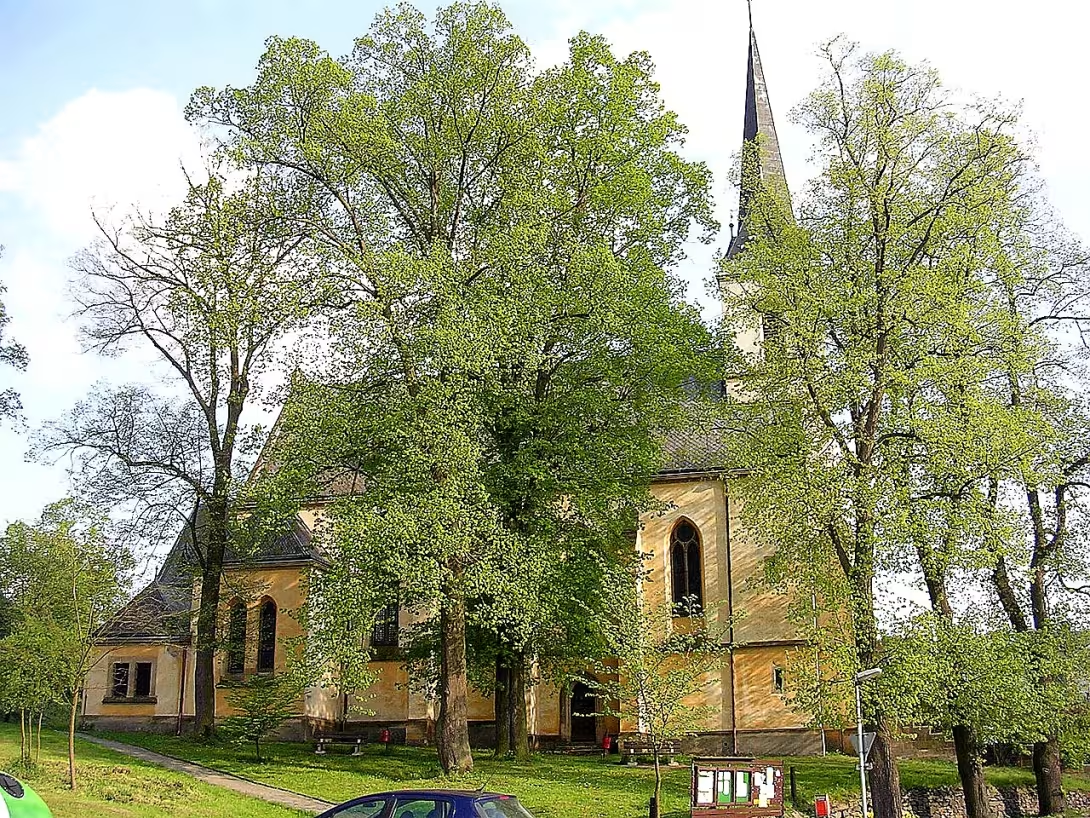
Kostel svatého Petra in Amalina, the local part of the town Křivoklát in the district of Rakovnik, is a late Gothic sacral building from the first third of the 16th century. The building forms an important architectural and urban dominant over the valley of the Rakovnický creek in the prefix of castle Křivoklát. It is protected as a cultural monument of the Czech Republic.
The creation of the temple is closely linked to the history of Royal Castle Křivoklát and the development of adjacent settlements. In the place of today's Amalina, formerly called Chamrdoves, the building for the chateau family, officials and craftsmen of the Křivoclat estate grew. Kostel svatého Petra was founded in 1522 during the late Jagellonian Gothic period, so that the inhabitants of the growing underground do not have to go to more remote parishes. The construction was probably completed during the 1920s. This oldest phase preserved the basic structure of the ship, the circumferential masonry of the presbytery and part of the window circles.
The church is oriented, one-ship building made of quarry masonry with architectural articles made of fine grain sandstone. The plan consists of a rectangular boat and a narrower presbytery with a polygonal five-sided finish. The presbytery strengthens tightened support pillars from outside with counter roofs, between which high broken windows are broken. The western facade of the ship is decorated with a stone portal with a broken tympanone and carved flowers on its shoulders. Inside the Tympanon is a stone emblem of the Fürstenberk family with a prince's crown, above it a vimperk and a statue of St. Peter. There is a circular window above the portal with a simple, undivided circle. The steep saddle roof covers the big ones. At the point of contact of the boat and presbytery stands a thin, wood-lined sandtuscan with a needle cap, poppy and cross.
The interior retains medieval linearity, which has been enhanced by later modifications. The presbytery adorns one field of cross rib arches and a radiant arch in a polygonal finish. Ribs with pear profile converge into geometrically decorated brackets; One of them on the north wall has a unique form of human face. The triumphal arch separating the presbytery from the ship is broken and finely profiled. The boat has a simple rectangular plan, smooth walls and windows with a broken arch. The main space of the ship covers the modern flat ceiling, while the passable ground floor of the tower at the entrance is encapsulated by one field of cross vaults without ribs. In the western part is built a walled music circle behind a wide bearing arch.
The inner furnishings of the church are uniform and come mainly from the end of the 19th century, which makes it an example of a comprehensive neo-gothic concept. The main whole-edged altar is richly divided, decorated with fials, crabs and cross-flowers; His center is the painting of St. Peter. It is connected in style to the side altar at the triumphant arch and to the wooden pulpit with the relief of evangelists and blind circles on the rhetoric. On the circle stands an organ from the late 19th century in a neo-gothic closet.
The building was historically under the patronage of the Křivoclat estate, which was owned by the Valdstejns and later by the Fürstenberks. In the 17th and 18th centuries the church did not undergo radical reconstruction, but it was supplemented by a baroque mobiliary and there were routine repairs of the exterior. The fundamental breakthrough occurred in 1881- 1885 during the general purist reconstruction under the guidance of architect Josef Mocker. He removed baroque and classicist extensions and returned the building to an ideal Gothic form. He carried the older roof, reconstructed the supporting pillars, newly cut the windows and designed a complete neo-gothic mobility. The work took place at the same time as the reconstruction of the castle Křivoklát and repairs of the St. Vitus Cathedral in Prague.
Interesting is the original name of the village where the church stands. Historically, the place was called Chamrdoves, according to artisans making wooden buttons, so-called chumps. In the 19th century the name was changed to Amalan in honor of Princess Amalia, the wife of Karl Egon II of Fürstenberg. The church was parochial until 12 January 2004, then became filial.
Kostel svatého Petra is a valuable testimony of late Gothic and 19th century, which combines the original building material with the precise work of Josef Mocker. The monument offers insight into the architectural development of the Křivoklátské podraj and is an ideal destination for walking around the chateau.
Historical milestones
- 1522
- The establishment of St. Peter's church during the late Jagellonian Gothic period.
- 1881-1885
- General Purist reconstruction and regotization of the building by architect Josef Mocker.
- 2004
- The church stopped being parochial and became a filial church.
Architectural development
The church was built after 1522 as a single-boat oriented building made of quarry masonry with five sides closed by a presbytery reinforced with support. In the 17th and 18th centuries, the interior was supplemented by a Baroque mobiliary and modified by a ring with organas. In 1881- 1885, architect Josef Mocker removed younger modifications, newly rebooted window circles, mounted a steep saddle roof with a sandbox and designed a complete neo-gothic mobility.
Historical events
1522 - The establishment of a late Gothic church for the inhabitants of the substation. 1881- 1885 - Total puristic reconstruction led by architect Josef Mocker. 2004 - Change the status of church from parish to filial.
Owners
The Roman Catholic Church, historically under the patronage of the Křivoclat estate (Valdštejn, Fürstenberk).
Points of interest
- Kostel svatého Petra in Amalina is a late Gothic sacral building from the first third of the 16th century, which forms an important architectural and urban dominance over the valley of the Rakovnik creek in the prefix of castle Křivoklát. - The creation of the temple is closely linked to the history of the Royal Castle Křivoklát and the development of the adjacent settlement, founded in 1522 during the period of late Jagellonian Gothic. - Inside the presbytery there are ribs with pear profile which converge into geometrically decorated consoles, one of which on the north wall has a unique form of human face. - The inner equipment of the church comes mainly from the end of the 19th century and consists of a comprehensive neo-gothic concept including the main whole-edged altar, side altars, wooden pulpit and organ on a circle. - The building was historically under the patronage of the Křivoclát estate owned by the Valdstejns and later by the Fürstenberks.
Guide
Show guide text
This text was created by artificial intelligence and has not been editorially reviewed. It may contain inaccuracies.
Welcome to Amalina, the quiet and picturesque part of Křivoklát, where time seems to be stopped. Right now you're standing in front of St. Peter's Church. Before you begin your closer examination, stop for a moment, take a deep breath and just look in front of you. Feel this structure as a whole. You will see that the church is not just an ordinary building, but a real architectural dominance that is proud to guard the River Rakovnik Valley. It is a place where human faith, the history of the royal chateau and the natural beauty of the surrounding countryside are united. It is this position in the forefront of the castle Křivoklát that gives the whole place a special and noble atmosphere.
Let us now go back a few centuries together to see why this temple was created. Imagine the beginning of the 16th century, namely 1522. At that time, late Jagellonian goth ruled in Bohemia. Křivoklát was not only the place of the chateau, but also the centre around which the life of the inhabitants in the substation began to grow. The people who lived and worked here needed their own spiritual sanctuary, a place where they could seek comfort and celebrate the holidays together. It is from this need that the church of St. Peter was created as a filial sanctuary. This means he was not the main parish church, but he served as an additional church building for the local community. Since its foundation, this temple has been closely associated with the fate of the people who served the royal chateau and lived in its shadow.
Now pay attention to the architecture itself. When you look at the shapes of the building, you see echoes of late Gothic. Gothic is a style that goes up to heaven, and even this church carries this desire for spiritual height. However, what you see today is not exactly what people saw in 1522. The construction went through a major transformation in the nineteenth century. Between 1881 and 1885, there was a general reconstruction, which we call purist reconstruction. Let's explain for a second what that means. Purism was at that time a very popular approach when architects tried to cleanse the building from later, according to them inappropriate modifications, and return it to its original, ideal form. In this case, it was regotization, that is, an attempt to emphasize the Gothic elements and erase traces of later epoch.
Today, when you are looking at the facade and the overall execution of the church, it is this precision and effort to clean the lines. Everything you see is the result of the work of one of the most important Czech architects of his time. His name is Josef Mocker. If you have ever visited the St. Vitus Cathedral in Prague or other important temples in our regions, you have probably met his hand. Mocker was a master of detail and a supporter of strict history. He was the one who gave the church of St. Peter in Amalin his present face. His approach was uncompromising and systematic, which turned the church into a building that is very balanced and harmonious in the landscape.
While you're looking around, think about how the role of this place has changed over the centuries. The church was not just a silent witness to history, but was actively involved in the life of the community. At some point in history, he was also a parish church, which means he had a much greater responsibility for spiritual care of the surrounding population. However, times change and with them the organizational structures of the church. In 2004 the circle closed and the church stopped being parochial and became a filial church again. It's a fascinating reminder of how the functions of buildings can change while their stone walls remain the same and tell the same stories.
You may now be interested in one interesting thing that links this church to a wider context. Notice how the building is situated in relation to the Valley of the Cancer River. This position is not random. The church was designed to be seen from a distance to serve as a beacon of faith as well as an orientation point for all who came to Křivoklát. Its creation is inextricably linked to the development of the entire substation. Imagine the hundreds of people who have gone up to this temple over the centuries to find peace before demanding work in the forest or in the chateau workshops. It's a place where the royal power of the chateau met with the simple life of the locals.
Now that you're standing in front of this construction, try to imagine Josef Mocker controlling every line and every arch with the plains in his hand to achieve the perfect Gothic purity. It's basically a two-time dialogue. On the one hand, we have the 16th century with its Jagellonian energy and on the other side of the nineteenth century with its desire for order and historical truth. This church is a bridge between these two worlds.
I'm no longer interrupting your observation. I suggest you go around the church, see how his silhouette changes depending on the point of view, and let the silence of Amalina consume you. Look how the roof is drawn against the sky and how the building fits into the green of the surrounding valley. It is an ideal moment for a brief reflection or simply for a quiet admiration of human craft and architectural vision.
Thank you for accompanying me on this short journey through the history of St. Peter's Church. I hope this view has helped you to see more than just the old walls in this building, but the real living fragment of our history. You are now fully entrusted with the space. Explore the surroundings, perceive the atmosphere of this unique place and if you continue your journey, let yourself follow the paths leading to castle Křivoklát. I wish you a pleasant rest of the day and many other discoveries in this beautiful landscape. Goodbye.
Tips for visitors
For a visit to the late Gothic church of St. Peter in Amalin, we recommend choosing the morning hours, when the sun highlights the historical details of the building beautifully and it is calmer in the substation.
Pack your comfortable shoes suitable for walking on uneven historical terrain and forest trails, drinking water and a headgear during the summer months. If you plan longer trips to nature, you will also appreciate repellent.
The surrounding slopes in the Protected Landscape Area of Křivoklátsko and the Valley of the Rakovnický Brook are best used for photography, from where the breathtaking views of the church architecture and the majestic chateau are opened.
In the immediate vicinity within 30 minutes walk do not miss a visit to the Royal Castle Křivoklát, which stands in the immediate vicinity of the church, and explore the picturesque forest slopes of the Protected Landscape Area Křivoklátsko ideal for family trips with children.
Frequently asked questions
Can the monument be visited?
Religious buildings are usually open mainly during services; at other times a visit is normally arranged with the parish or the operator. We have not verified specific times.
Where is the monument?
Location: Křivoklát, Středočeský kraj. The map on this page shows the exact spot.
Why is the monument protected?
It is listed in the Central List of Cultural Monuments of the Czech Republic as a cultural monument (register no. 1000130844).
Businesses nearby
Do you run a restaurant, accommodation, shop, museum, rental, wellness or other visitor service near this monument? Show yourself directly to the people heading to it — this is how they will see you in the app and on the web:
Events nearby
Zdroj akcí: otevřená data měst a obcí ČR (Národní katalog otevřených dat) a kalendář akcí Národního památkového ústavu.
Nearby
The royal castle Křivoklát, the valley of the Rakovnik Brook and the forested slopes of the Protected Landscape Area Křivoklátsko are located in a close neighbourhood.
Accommodation nearby
Themed route
1.Kostel svatého Petra Type: church Why is it worth a visit: This main destination of our trip represents an important historical building with a distinctive atmosphere that forms an integral part of the local landscape. It offers a quiet environment to reflect and admire ancient architecture.
2. Royal Castle Křivoklát Type: castle Why is it worth a visit: In the immediate neighbourhood of the church, this magnificent Gothic fortress, which once served the Czech monarchs, is erected. It attracts visitors with its rich history and impressive interiors.
3. Valley of Cancer Creek Type: water flow Why is worth a visit: The valley surrounding the water stream offers a pleasant and picturesque environment for a peaceful walk. It is the path of deeper nature in close proximity to the monuments.
4. Wooden slopes Protected Landscape Area Křivoklátsko Type: natural area Why is it worth a visit: The vast woodland slopes surrounding the entire village create a unique setting to explore the wilderness. It is an ideal place to admire deep forests and local landscapes.
Seasonal recommendations
The spring moons bring an extremely fresh atmosphere to St. Peter's Church on Křivoklát, where the surrounding Křivoclat forests begin to green and awaken to life. The soft morning sun pleasantly illuminates the exterior walls of the monument and creates ideal conditions for a peaceful tour without great haste. Visiting is usually mild during this period, allowing you to enjoy spiritual space in private. We recommend choosing layered clothes because the stone interior remains cold after winter, although the sun is already warm outside. The best time to visit is the late morning when the light is most suitable for admiring architecture.
In the main summer season the surrounding area of the church is covered with bright sunshine and lush vegetation, which gives the monument a lively and impressive character. Due to the high number of visitors heading to Křivoklát, larger crowds must be counted, especially during weekends. It is best to visit in the early morning or in the evening, when the greatest heat and main onslaught of people will fall. Although there are high temperatures outside, light summer clothes are good to fill with a light scarf or light jacket, as strong stone walls keep inside pleasant but noticeable cold.
Autumn covers the church of St. Peter in a fascinating palette of warm colors, where leaves in the surrounding valleys are coloured golden and red. The atmosphere is often drawn by morning fog rising from the forests, which give the monument a mysterious and peaceful feel, while the afternoon low sun creates long shadows and warm reflections. The number of visitors falls significantly compared to summer. The practical advice is to wear a warm jacket and solid shoes, as the cold from the walls begins to grow again. The best time for arrival is early afternoon in clear weather, when you will enjoy the most beautiful views of the colorful nature.
In winter, St. Peter's church receives a quiet, contemplative and mysterious atmosphere, especially if snow or ice cover the landscape. The sharp winter light highlights the silhouette of the building on the background of bare trees and in advent time there is real peace. People rarely pass through here at this time, which ensures a completely undisturbed experience. The most important practical advice is very warm winter clothes including gloves and hats, because the unheated interior of the church is freezing. Due to early dimming and a shorter day, best plan your visit around noon.
Visualizations and artistic views


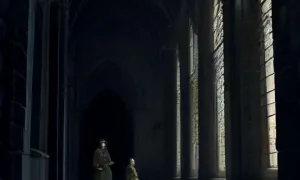
The visualisations are generated by artificial intelligence and serve as inspiration.
Photos from the area
Real photos taken near the monument

Zdroj a licence jsou uvedeny u každého snímku.
Tips from visitors
No tips yet. Be the first!
Log in and add your tip.
Sources and literature
Photos: cs:ŠJů / CC BY-SA 3.0 — Wikimedia Commons. The author and licence also appear when you hover over the image.
Faktickým podkladem tohoto textu byl článek na Wikipedii, jehož autory jsou přispěvatelé Wikipedie. Článek je dostupný pod licencí CC BY-SA 4.0.
Location on the map





Příběhy a pověsti
Legendy, pověsti a příběhy spjaté s touto památkou
Fotografie návštěvníků
Zatím žádné fotografie. Buďte první, kdo přidá fotografii z návštěvy!
Log in a přidejte svou fotografii nebo hodnoťte.
Za ověřenou návštěvu v aplikaci získáte víc bodů — poznáme podle GPS, že jste na místě.
Reviews and comments