



Kostel svatého Prokopa (Chotětov) Church
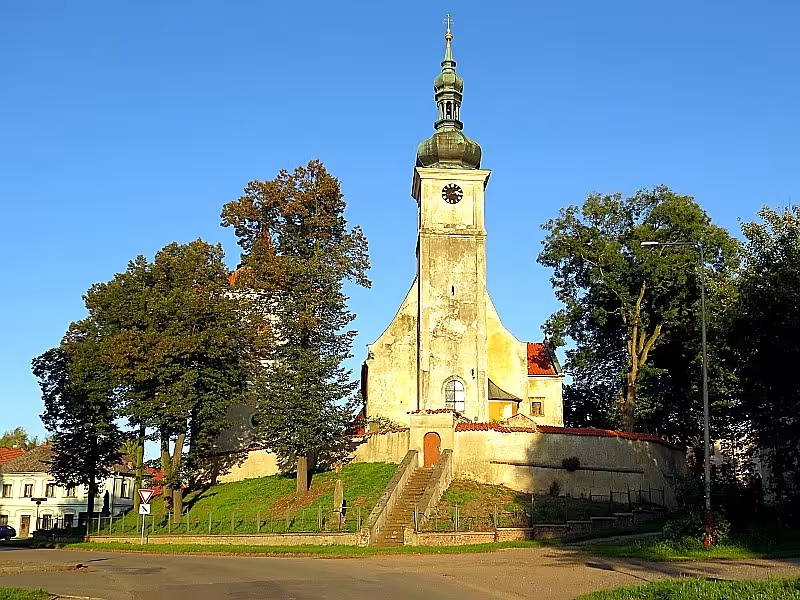
The Roman Catholic parish church of St. Prokop on the south side of the Chototovska village represents a characteristic example of the rotation of styles in the construction. The church was established in a Gothic style around 1546 on the site of an older church building dating back to the 14th century. However, the transformation of his form came in 1773, when he was completely remodeled into a baroque style, which he kept until today.
The construction is a single and rectangular plan. The most striking element is the front prism tower, which slowly narrows to the height and is smooth at the bottom, while the frames are subdivided above. At the top dominates the characteristic onion roof. The tower is organically integrated into a smooth facade with a high shield. On the triumphant arch of the church there is a inscription board. The inner spaces cover various glassings - the ship has a flat ceiling, while the presbytery, which is narrower and polygonal, is glazed with a rib cross with a beam inserted in the wedged ribs. Part of the construction is the south hall and the oratory from 1612; The presbytery is surrounded by Gothic supports and half-circle windows. The interior is complemented by a quality walled circle on three arcades.
The most valuable is undoubtedly the indoor equipment from 1773 in the rococo style. The main altar is a portal type, column and double, bearing a copy of Saint Prokop's Sazza painting. On the sides are busts of St. Wenceslas and St. Vitus. Credent altar marks a picture of St. Anne in the rococo box with angels. The church has two side opposite altars with a picture of Scan with crosses on the left and a picture of St. John Nepomuk on the right. The pulpit is decorated with reliefs of four evangelists. Special attention should be paid to the glazed rococo altar in which the Gothic crucifix with the 15th century Gothic Corpus is exposed. Above the entrance to the sacristy hanging a picture of the Painful Virgin Mary in a rolling baroque frame with medallions from the early 18th century. Artistic quality also includes pews carved in Baroque style from the first half of the 18th century. The baptism is tin and dates back to 1531.
On the village under the church there is an empir niche chapel built above the well in 1819. The Baroque sculpture of the Coronation of the Virgin Mary, dated around 1730 and restored in 1936, deserves attention. At the crossroads towards Bezno are God's torture - walled polygonal chapel with odd arcades and forged cross from the second half of the 17th century.
Since 1967, the church has been protected as a cultural monument. The same protection was obtained by the nearby parish no. 22. The visit reveals the layering of architectural styles and reminds of the rich sacral tradition of Czech cities.
Then and now
Drag the slider to compare how the landmark may have looked when it was built with the view today.
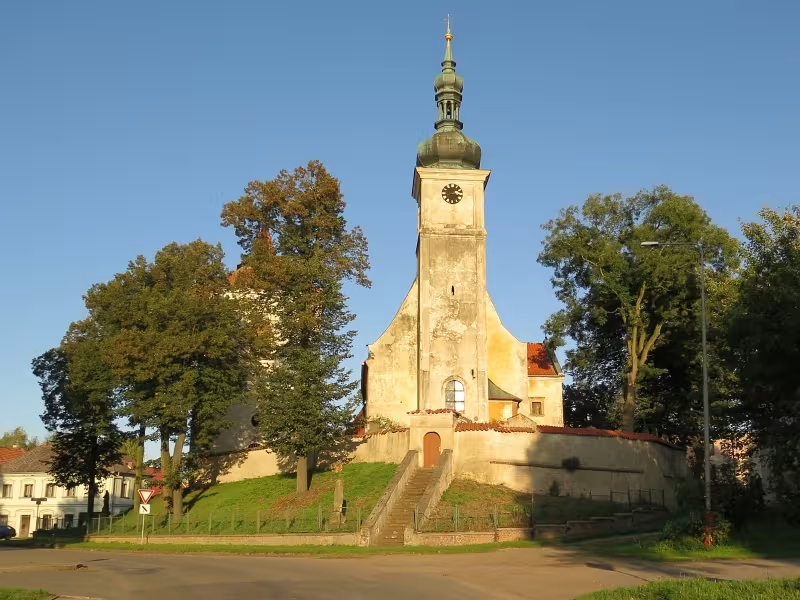
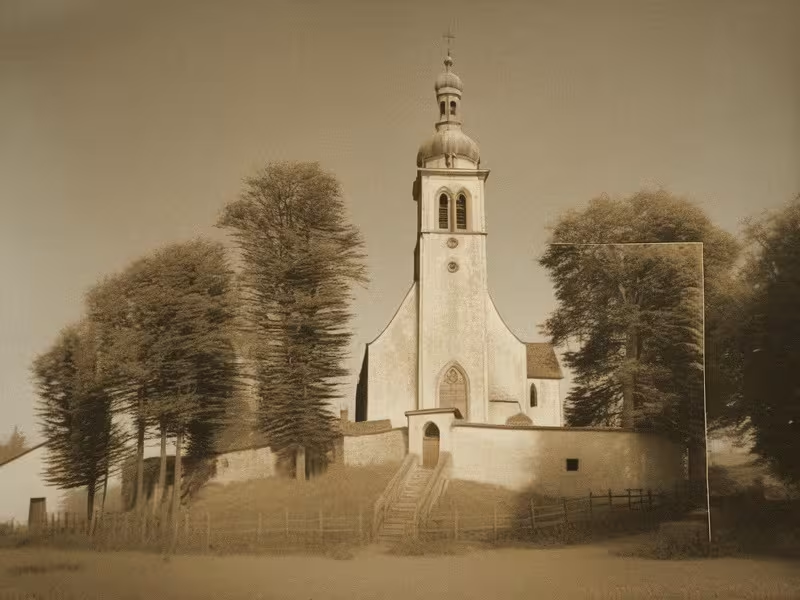
The historical appearance on the left is an AI-generated visualisation and serves as inspiration only.
Historical milestones
- 1546
- Construction of the original Gothic building on the site of an older church from the 14th century.
- 1773
- Baroque reconstruction of the church in which the contemporary interior with rococo equipment was created.
- 1967
- Registration of the church in the list of cultural monuments of the Czech Republic.
Architectural development
The original Gothic building from around 1546 was built on the site of an older church from the 14th century. In the 17th century, the south hall and the orator were added. In 1773, a Baroque reconstruction took place in which the current form of the Rococo plant was created. The boat has a flat ceiling, the presbytery is glazed with a begging cross, and the tower is prismatic with an onion roof. The materials are mainly made of stone and bricks.
Historical events
- 1531
- A tin christening plant was installed in the church, which is still preserved to this day.
- 1612
- An orator was added, which is one of the preserved early Baroque elements.
- 1773
- The church underwent Baroque reconstruction, during which the contemporary interior with rococo equipment was created.
Points of interest
- The church of St. Prokop was built in a Gothic style around 1546 on the site of an older church building from the 14th century.
- In 1773 it passed through the Baroque reconstruction, during which the present interior equipment was created in rococo style.
- In the interior there is a gothic crucifix with a 15th-century corpus, displayed in a glass rococo altar.
The baptism dates back to 1531 and is made of tin.
- On the beach under the church stands an empirical niche chapel from 1819 above the well.
Guide
This guide is narrated by a synthetic voice generated by artificial intelligence.
Show guide text
This text was created by artificial intelligence and has not been editorially reviewed. It may contain inaccuracies.
The Roman Catholic parish Church of Saint Prokop stands on the southern side of the Chotětov square, on the site of a former cemetery. Originally a Gothic structure, it was later modified in the Baroque style. Since 1967, the church has been protected as a cultural monument, as is the nearby rectory.
The church was built in the Gothic style around 1546. It was constructed on the site of an older ecclesiastical building from the 14th century. In 1773, it was rebuilt in Baroque form.
It is a rectangular single-nave building with a narrower polygonal choir, buttresses and semicircular windows. The dominant feature is a prismatic tower with an onion dome, built into a flat façade with a high gable. The lower part is smooth, while higher up it is articulated by recessed frames. The church also includes a Baroque entrance gate, a southern vestibule and an oratory from 1612.
The nave has a flat ceiling and a brick gallery that rests on three arcades. The southern extension is barrel-vaulted on both floors. The choir is covered by a ribbed cross and fan vault with wedge-shaped carved ribs. Above the triumphal arch is an inscription plaque, and in the wall is a late Gothic vaulted sanctuary.
The furnishings are Rococo from 1773. The main altar features a copy of the Sázava painting of Saint Prokop and busts of Saint Wenceslaus and Saint Vitus on the sides. On the credence altar is an image of Saint Anna in a Rococo frame, towards which two angels turn. Two side altars form a pair. On the left is a painting of the Descent from the Cross, on the right a painting of Saint John of Nepomuk with newer angels. The pulpit is decorated with reliefs of the four evangelists.
Among the oldest objects are a Gothic crucifix with a 15th-century corpus, housed in a glazed Rococo altar, and a tin baptismal font from 1531. Above the entrance to the sacristy hangs a painting of the Sorrowful Virgin Mary in a Baroque frame with medallions from the early 18th century. The carved Baroque pews from the first half of the 18th century are also artistically valuable.
Below the church stands an Empire-style vaulted chapel from 1819 above a spring. In the square there is also a Baroque sculptural group of the Coronation of the Virgin Mary, probably from 1730, restored in 1936. At the crossroads towards Bezno stands a wayside shrine. It is a stone polygonal chapel with a wrought-iron cross from the second half of the 17th century.
Frequently asked questions
Can the monument be visited?
Religious buildings are usually open mainly during services; at other times a visit is normally arranged with the parish or the operator. We have not verified specific times.
Where is the monument?
Location: Chotětov, Středočeský kraj. The map on this page shows the exact spot.
Why is the monument protected?
It is listed in the Central List of Cultural Monuments of the Czech Republic as a cultural monument (register no. 34343/2-1569).
For kids
Imagine going back to a time when rabbits and warriors fought for power and land. So far back lies the city of Chotětov with its most famous church of St. Prokop.
How did it look here? Who lived here? What happened here? Imagine you're a young knight who came to town to take part in a battle against attacking forces. The city was full of life and energy, people gathered in the square to hear war talks and consult with the king.
Businesses nearby
Do you run a restaurant, accommodation, shop, museum, rental, wellness or other visitor service near this monument? Show yourself directly to the people heading to it — this is how they will see you in the app and on the web:
Accommodation nearby
Themed route
Thematic cruise route: Baroque Chotětov and its spiritual monuments
1. Church of St. Prokop The main dominant of the village is a simple but distinctive Baroque church from the 18th century, dedicated to the local patron. Its spacious interior with simple painting and historical tombstones represents a rare example of rural sacral architecture. Visit him first - he is the heart of the village and from there you can easily get to other attractions.
2. Fara (No 22) On foot only 50 metres from the church there is a rectory, originally a fortress, which is protected as a cultural monument. Its Renaissance and Baroque elements reveal the history of the local home. Enter the courtyard - often there are old fountains or remnants of the wall that tell about the past.
3. Empire niche chapel Another 50 metres towards the village will lead you to a picturesque chapel built over the well in 1819. Its empire portal and niche with a statue is the ideal place for a short rest. The well under the chapel still attracts clean water to drink.
4. The Statue of the Coronation of the Virgin Mary In the middle of the village stands a Baroque sculpture from the 18th century, which dominates the local area. Its location at the crossroads symbolizes the protection of the village. Stop by - this is the last point of your journey, but also the starting point for returning to the church.
* The route is closed and covers all listed monuments in logical order - from the sacral centre of outdoor spiritual symbolism. *
Seasonal recommendations
Spring The church of St. Prokop in Chotětov is awakened to life in the spring months along with the surrounding nature - green meadows and flowering trees in the surrounding area provide a peaceful, refreshing atmosphere. The sun rays penetrating through the stained glass make a light game on the stone walls that highlights the Gothic details. The appropriate time for visiting is early morning or in the afternoon when the church is less visited and temperatures are pleasant. Comfortable shoes are recommended, because after rainy days the roads to the monument can be muddy. At this time it is also ideal to combine a visit with a walk in the surrounding fields, where carpets of wild flowers are spread out in April and May.
Summer In the summer months, the church attracts St. Prokop mainly through its inner space, where thanks to open windows a pleasant breeze and shade trees in the surrounding area maintain a pleasant temperature. The best time to visit is early in the morning to avoid crowds of tourists who often seek the shadow of church walls in the main summer season. It is recommended light but decent clothes that protect from the sun, and plenty of water, because there are no refreshment stands nearby. In summer evenings, when the sun sets behind the surrounding hills, the church is surrounded by golden light, creating a magical atmosphere for photography.
Autumn Autumn brings to Chotětova golden colour leaves and a calm, almost meditative atmosphere, complemented by the noise of wind in the surrounding groves. The church of St. Prokop is more mysterious at this time, as the sunlight is softer and shadows longer, highlighting its architectural details. It is recommended to visit in the morning when the air is clean and warm while the afternoon can be cold and wet. Warmer clothes are suitable because evenings are cold, and solid shoes, because forest paths can be slippery on fallen leaves. In November, in the time of St. Catherine's, the church is surrounded by silver light, which gives a visit a special charm.
Winter The winter visit to the church of St. Prokop offers a unique atmosphere where the snow cover transforms the surrounding landscape into a fairy tale scenery and the church seems even more majestic. In the interior of the church, sunlight reflected from snow creates fine, silvery reflections that highlight its historical beauty. It is recommended to come in the morning when the church is best lit and temperatures still tolerable. In winter the opening time is shorter, so it is good to check in advance whether the church is accessible at all. It is suitable for warm but comfortable clothing, which allows you to move up stone stairs, and solid shoes with anti-slip liners. At the advent time, when the church is surrounded by candlesticks, the visit offers special mental peace.
Visualizations and artistic views


The visualisations are generated by artificial intelligence and serve as inspiration.
Photos from the area
Real photos taken near the monument


Zdroj a licence jsou uvedeny u každého snímku.
Atmosphere of the place
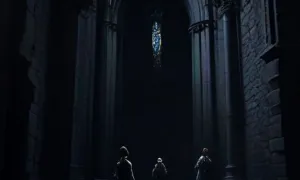
This atmospheric visualisation of the place and period was generated by artificial intelligence. It is not real footage of the location.
Tips from visitors
No tips yet. Be the first!
Log in and add your tip.
Sources and literature
Photos: Sovicka169 / CC BY-SA 4.0 — Wikimedia Commons. The author and licence also appear when you hover over the image.
Faktickým podkladem tohoto textu byl článek na Wikipedii, jehož autory jsou přispěvatelé Wikipedie. Článek je dostupný pod licencí CC BY-SA 4.0.
Location on the map





Příběhy a pověsti
Legendy, pověsti a příběhy spjaté s touto památkou
Fotografie návštěvníků
Zatím žádné fotografie. Buďte první, kdo přidá fotografii z návštěvy!
Log in a přidejte svou fotografii nebo hodnoťte.
Za ověřenou návštěvu v aplikaci získáte víc bodů — poznáme podle GPS, že jste na místě.
Reviews and comments