






Kostel svatého Prokopa (Libošovice) Church
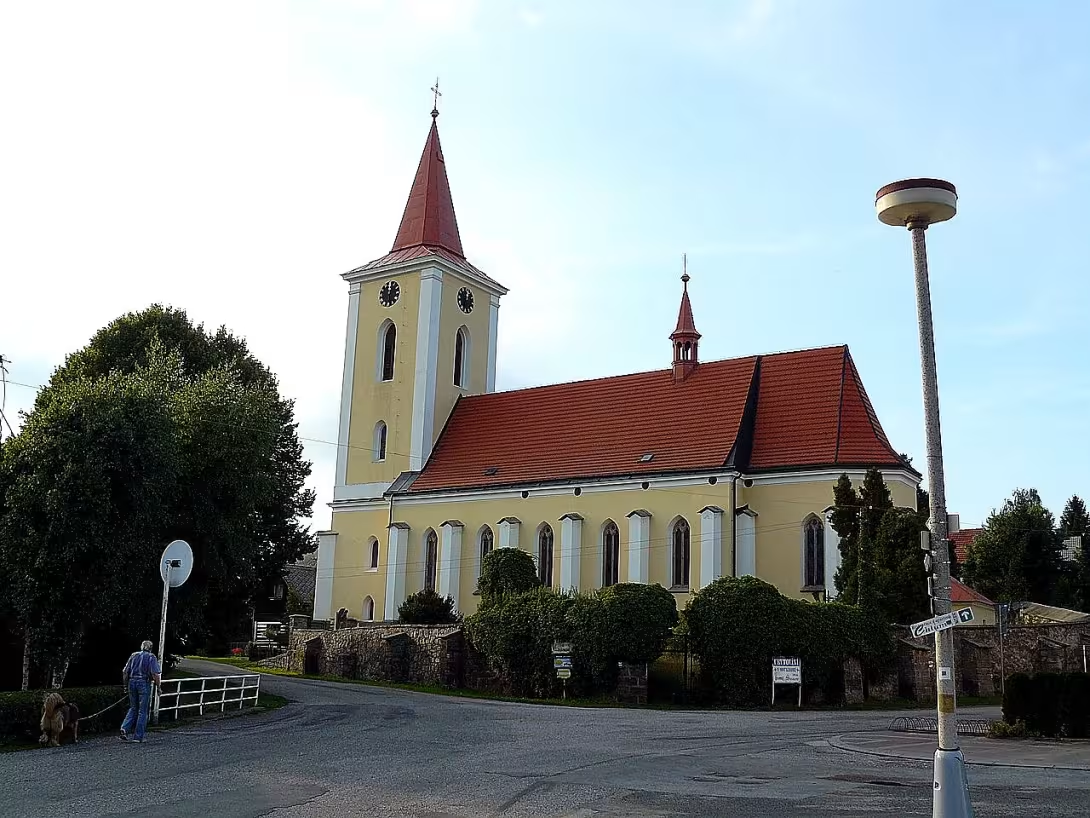
The Church of Saint Procopius in Libošovice stands as a testament to architectural evolution from late Gothic to pseudo-Gothic styles. It has been recognized as a significant cultural monument since 1964. Centrally located within the village, it was once surrounded by a cemetery enclosed with a stone wall. This Roman Catholic parish church has been integral to the community's spiritual life for centuries. Its historical significance is underscored by its first mention in records dating back to 1352.
The origins of the Church of Saint Procopius trace back to at least the 14th century, with documented evidence from as early as 1352. This period was marked by Bohemia's inclusion within the Holy Roman Empire under Luxembourg rule, a time when religious and architectural developments were intertwined with political dynamics. The church underwent significant reconstruction around 1610, reflecting broader European trends of religious and political upheaval during the early 17th century, including events like the Thirty Years' War.
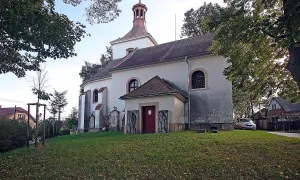
Architecturally, the Church of Saint Procopius is an oblong, single-nave structure featuring a polygonally closed presbytery. It boasts a new western facade with a tower added in 1874 to extend the nave and unify the building's style into neo-Gothic forms. The church includes double-curved windows and corner buttresses, while its southern portal remains smooth. Inside, the church is vaulted with lunettes, supported by plaster ribs along the edges. A date of 1610 is inscribed on the nave's ceiling, marking the period of significant reconstruction. The interior also features a Renaissance choir built from brick and resting on three pilaster arches, while both the oratory and sacristy are square with vaulted ceilings.
Throughout its history, the church has seen various modifications to its furnishings, particularly in the 18th century when rococo altars were introduced. These include a main altar framed by angels, adorned with an original painting of Saint Procopius and sculptures of Saints Norbert and John on the portals. The side altars also reflect rococo influences, depicting the Calvary on one and Saint John Nepomucene on the other. Additionally, a neoclassical pulpit from the late 18th century features images of the Sermon on the Mount and the Evangelists.
In terms of its surroundings, a nearby neoclassical statue of Saint Procopius stands on a stone base, adding to the church's historical ambiance. This monument not only serves as a place of worship but also as a cultural beacon reflecting centuries of architectural and artistic evolution.
Today, the Church of Saint Procopius remains accessible to visitors, offering a glimpse into its rich history and architectural beauty. Its status as a protected cultural monument ensures that it continues to be preserved for future generations. Visitors are invited to explore this remarkable site, where they can appreciate both its historical significance and enduring legacy within the community of Libošovice.
Then and now
Drag the slider to compare how the landmark may have looked when it was built with the view today.
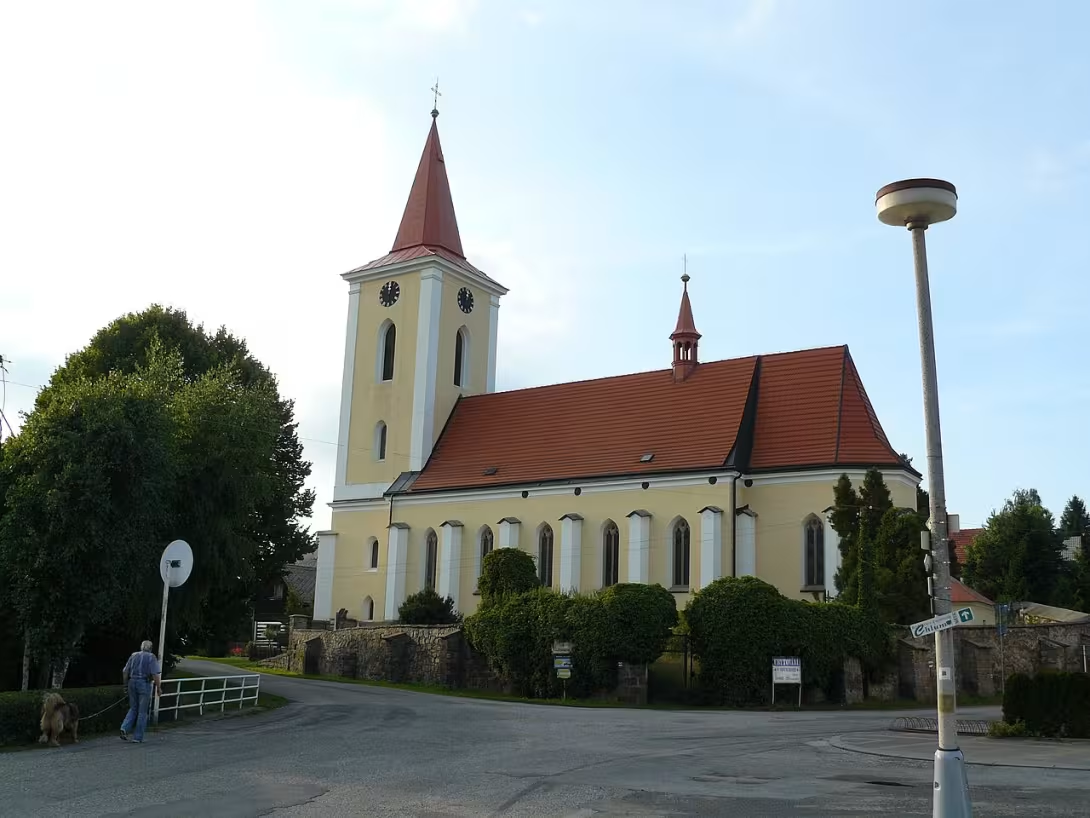
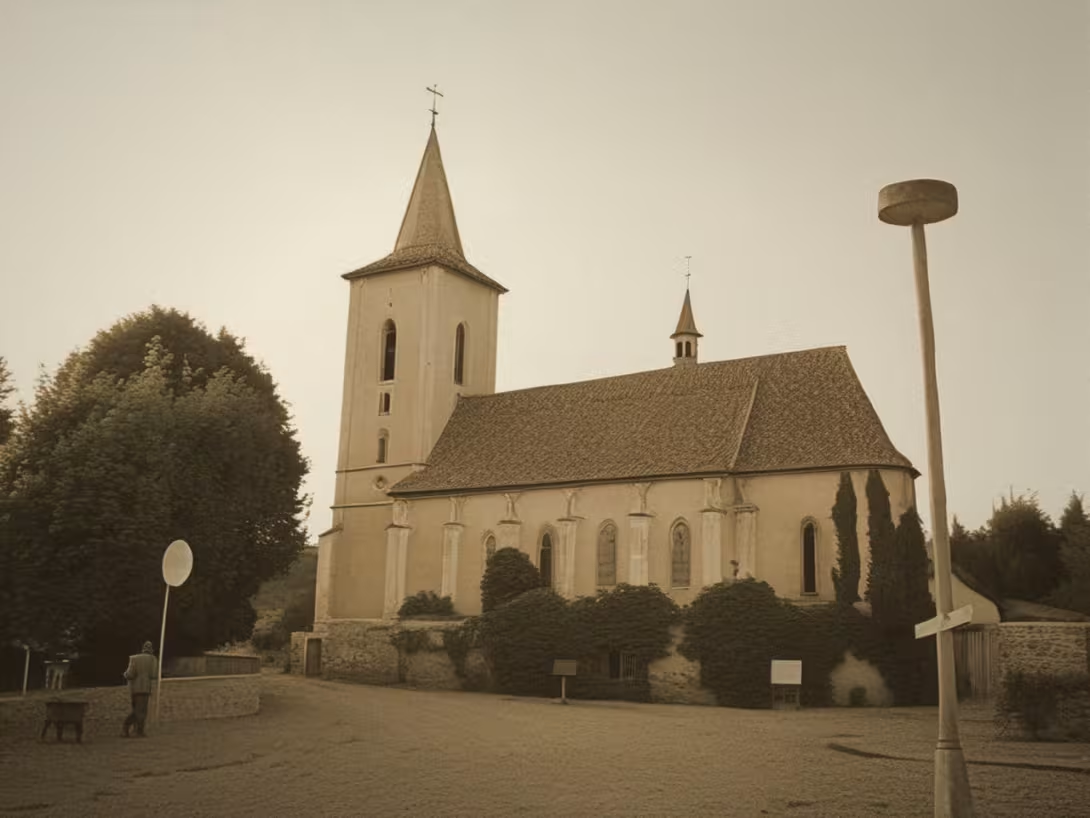
The historical appearance on the left is an AI-generated visualisation and serves as inspiration only.
Historical milestones
- 1352
- První zmínka o kostele svatého Prokopa.
- kolem 1610
- Významná rekonstrukce kostela.
- 1874
- Přidání nové západní fasády s věží.
- 1964
- Označení jako kulturní památka.
- konec 18. století
- Přidání rokokových oltářů a neoklasicistní kazatelny.
Architectural development
Originally existing in the 14th century, the Church of Saint Procopius was significantly reconstructed around 1610. In 1874, the nave was extended westward and a tower was added to the western facade, unifying the structure in neo-Gothic style.
Historical events
The church was first mentioned in historical records in 1352, indicating its existence since at least the 14th century.
In 1610, the church underwent significant reconstruction or rebuilding, marking a major phase in its architectural history.
Points of interest
- The Church of Saint Procopius was once surrounded by a cemetery enclosed with a stone wall, reflecting medieval practices where churches often served as central points for both spiritual and community life.
- Despite its architectural evolution into neo-Gothic forms in the 19th century, the church retains elements from earlier periods, such as its Renaissance choir built from brick, illustrating how historical layers are preserved within a single structure.
- The date "1610" inscribed on the nave's ceiling marks a significant reconstruction period, aligning with broader European religious and political upheavals like the Thirty Years' War, which influenced architectural styles across the continent.
- A neoclassical statue of Saint Procopius stands near the church, adding to its historical ambiance. This statue not only serves as a cultural landmark but also reflects the artistic trends of the late 18th century that extended beyond ecclesiastical architecture.
- The introduction of rococo altars in the 18th century brought about significant changes to the church's interior aesthetics. These altars, adorned with intricate designs and religious iconography, highlight how art movements influenced sacred spaces during this period.
Guide
This guide is narrated by a synthetic voice generated by artificial intelligence.
Show guide text
This text was created by artificial intelligence and has not been editorially reviewed. It may contain inaccuracies.
The Church of Saint Prokop stands in the middle of Libošovice in the Jičín region. It is a Roman Catholic parish church where late Gothic meets pseudo-Gothic architecture. It is surrounded by a former cemetery with a stone perimeter wall. Since nineteen sixty-four it has been protected as a cultural monument.
The church stood here already in the fourteenth century. It is first mentioned in thirteen fifty-two. In sixteen ten it underwent significant reconstruction, or rather one could say it was essentially rebuilt. Another major change came in eighteen seventy-four. At that time the nave was extended to the west and a tower rose in the axis of the western facade. The entire building was then stylistically unified in the spirit of neo-Gothic architecture.
The church is rectangular and has a single nave. The presbytery is closed off by a polygon. On the eastern side a sacristy adjoins it, and on the northern side an oratory. The front section with the tower is newer. The facade is articulated by buttresses and pointed windows with double tracery. The southern portal is plain. Plain too is the pyramidal tower, which is topped by an ashlar pyramid and which rises from the cemetery space.
Inside the church is vaulted with a barrel vault with lunettes and has stone ribs along the edges. On the vault in the nave the date sixteen ten appears, a reminder of the major reconstruction. The brick Renaissance gallery rests on three pillar arcades. Both the oratory and the sacristy have a square ground plan and a barrel vault. In the oratory on the eastern side is a pointed window.
The church furnishings date from the eighteenth century. The main altar is Rococo and framed and is carried by angels. It bears the original painting of Saint Prokop. On the portals stand statues of Saint Norbert and Saint Ivan. Both side altars are likewise Rococo and framed. On the left is depicted Calvary, on the right Saint John of Nepomuk. The cylindrical Classical pulpit is from the end of the eighteenth century. It is decorated with a painting of the Sermon on the Mount and depictions of the evangelists.
Near the church stands on a stone base a Classical statue of Saint Prokop from the nineteenth century.
Tips for visitors
The best time to visit the Church of Saint Procopius in Libošovice is during late spring or early autumn. During these seasons, the weather is typically mild and pleasant, making it ideal for exploring both the church's interior and its surrounding village. Additionally, visiting outside of peak tourist season ensures a quieter experience, allowing you to appreciate the intricate details of its late Gothic and pseudo-Gothic architecture without large crowds.
For those preferring public transport, local buses serve the area, providing a practical way to reach Libošovice from nearby towns.
When visiting the Church of Saint Procopius, consider bringing comfortable walking shoes and weather-appropriate clothing, as you may wish to explore the village beyond the church itself. A camera is highly recommended to capture the stunning architectural details and serene atmosphere. The best spots for photography are in front of the church during golden hour—just after sunrise or before sunset—when the light beautifully illuminates its facade.
For families with children, the Church of Saint Procopius offers a peaceful environment that can be both educational and enjoyable. After exploring the church, consider visiting nearby attractions within 30 minutes' travel. The village itself has charming streets perfect for a leisurely walk, allowing children to explore at their own pace. Always check online resources or local guides for any family-friendly activities in the area.
In terms of what to see nearby, the surrounding countryside offers picturesque landscapes ideal for a short hike or bike ride. These outdoor activities provide an excellent opportunity for families and individuals alike to enjoy nature while being close to historical sites like the Church of Saint Procopius.
Frequently asked questions
Can the monument be visited?
Religious buildings are usually open mainly during services; at other times a visit is normally arranged with the parish or the operator. We have not verified specific times.
Where is the monument?
Location: Libošovice, Královéhradecký kraj. The map on this page shows the exact spot.
Why is the monument protected?
It is listed in the Central List of Cultural Monuments of the Czech Republic as a cultural monument (register no. 16520/6-1243).
Businesses nearby
Do you run a restaurant, accommodation, shop, museum, rental, wellness or other visitor service near this monument? Show yourself directly to the people heading to it — this is how they will see you in the app and on the web:
Accommodation nearby
Themed route
Tematická výletní trasa kolem Kostela svatého Prokopa (Libošovice)
1. Kostel svatého Prokopa (Libošovice) - Hlavní cíl
Typ: Historická památka
Proč stojí za návštěvu: Tento barokní kostel je nejen architektonickým dílem, ale také kulturním centrem obce Libošovice. Jeho bohatě zdobená interiér a historie přitahují návštěvníky z celého regionu.
2. Obecní úřad (Libošovice)
Typ: Místní správa
Proč stojí za návštěvu: Navštívit obecní úřad vám umožní získat informace o místních událostech a historii Libošovic. Je to ideální místo pro poznání aktuálního života ve vesnici.
3. Školní dům (Libošovice)
Typ: Vzdělávací zařízení
Proč stojí za návštěvu: Tento starobylý školní dům je připomínkou vzdělávací tradice obce. Jeho historie a architektura jsou zajímavé pro ty, kdo se zajímají o místní kulturu a vzdělání.
4. Kaple svaté Anny (Libošovice)
Typ: Religiozní památka
Proč stojí za návštěvu: Tato kaple je malým, ale působivým dílem v obci. Je známá svou klidnou atmosférou a krásnými venkovními zahradami, kde si můžete užít chvíli odpočinku.
5. Náves (Libošovice)
Typ: Místní centrum
Proč stojí za návštěvu: Náves je srdcem Libošovic, kde se setkávají místní obyvatelé a hosté. Je to ideální místo pro procházku, zastavení si v jednom z místních kaváren nebo prohlédnutí tradičního života ve vesnici.
Tato trasa nabízí komplexní pohled na historii a současnost Libošovic, přičemž každý bod přináší své jedinečné poznatky o místní kultuře.
Seasonal recommendations
Spring: Visiting the Church of Saint Procopius during spring offers a unique experience as nature begins to awaken around Libošovice. The surrounding landscape is adorned with blooming flowers and fresh greenery, creating a picturesque setting that complements the historic charm of the church. This season often brings mild weather, making it an ideal time for leisurely exploration without the summer crowds. Visitors should consider wearing comfortable layers as temperatures can vary, and early morning visits are recommended to fully enjoy the serene atmosphere before larger groups arrive.
Summer: The summer months bring vibrant life to the Church of Saint Procopius, with long daylight hours enhancing the beauty of its architecture under bright sunlight. This is the peak tourist season, so expect higher visitor numbers and plan accordingly by arriving early in the day to avoid crowds. Comfortable walking shoes are advisable as you explore both the church and the surrounding countryside, which may be bustling with outdoor activities. The warm weather makes it perfect for enjoying a picnic nearby after your visit.
Autumn: Autumn transforms Libošovice into a stunning tapestry of reds, oranges, and yellows, offering a breathtaking backdrop to the Church of Saint Procopius. The cooler temperatures make it a pleasant time for a visit, with fewer tourists compared to summer. This season is ideal for photography enthusiasts looking to capture the church amidst the fall foliage. Visitors should dress in layers to accommodate the changing weather throughout the day and consider bringing a light jacket or sweater as evenings can be chilly.
Winter: In winter, the Church of Saint Procopius takes on a quiet, serene beauty, often blanketed by snow that adds a magical touch to its historic facade. The shorter days mean earlier closures, so plan your visit accordingly. Winter is also the least crowded season, offering a peaceful experience as you explore the church in solitude or with very few other visitors. Dress warmly in layers and wear sturdy footwear for walking on potentially slippery surfaces. While some interior features may be less accessible due to heating restrictions, the external views during winter can be particularly enchanting.
Visualizations and artistic views


The visualisations are generated by artificial intelligence and serve as inspiration.
Photos from the area
Real photos taken near the monument


Zdroj a licence jsou uvedeny u každého snímku.
Tips from visitors
No tips yet. Be the first!
Log in and add your tip.
Sources and literature
Photos: Prasopestilence / CC BY 3.0 — Wikimedia Commons. The author and licence also appear when you hover over the image.
Faktickým podkladem tohoto textu byl článek na Wikipedii, jehož autory jsou přispěvatelé Wikipedie. Článek je dostupný pod licencí CC BY-SA 4.0.
Location on the map

Příběhy a pověsti
Legendy, pověsti a příběhy spjaté s touto památkou
Fotografie návštěvníků
Zatím žádné fotografie. Buďte první, kdo přidá fotografii z návštěvy!
Log in a přidejte svou fotografii nebo hodnoťte.
Za ověřenou návštěvu v aplikaci získáte víc bodů — poznáme podle GPS, že jste na místě.
Reviews and comments