






Kostel svatého Urbana (Vysoká) Church
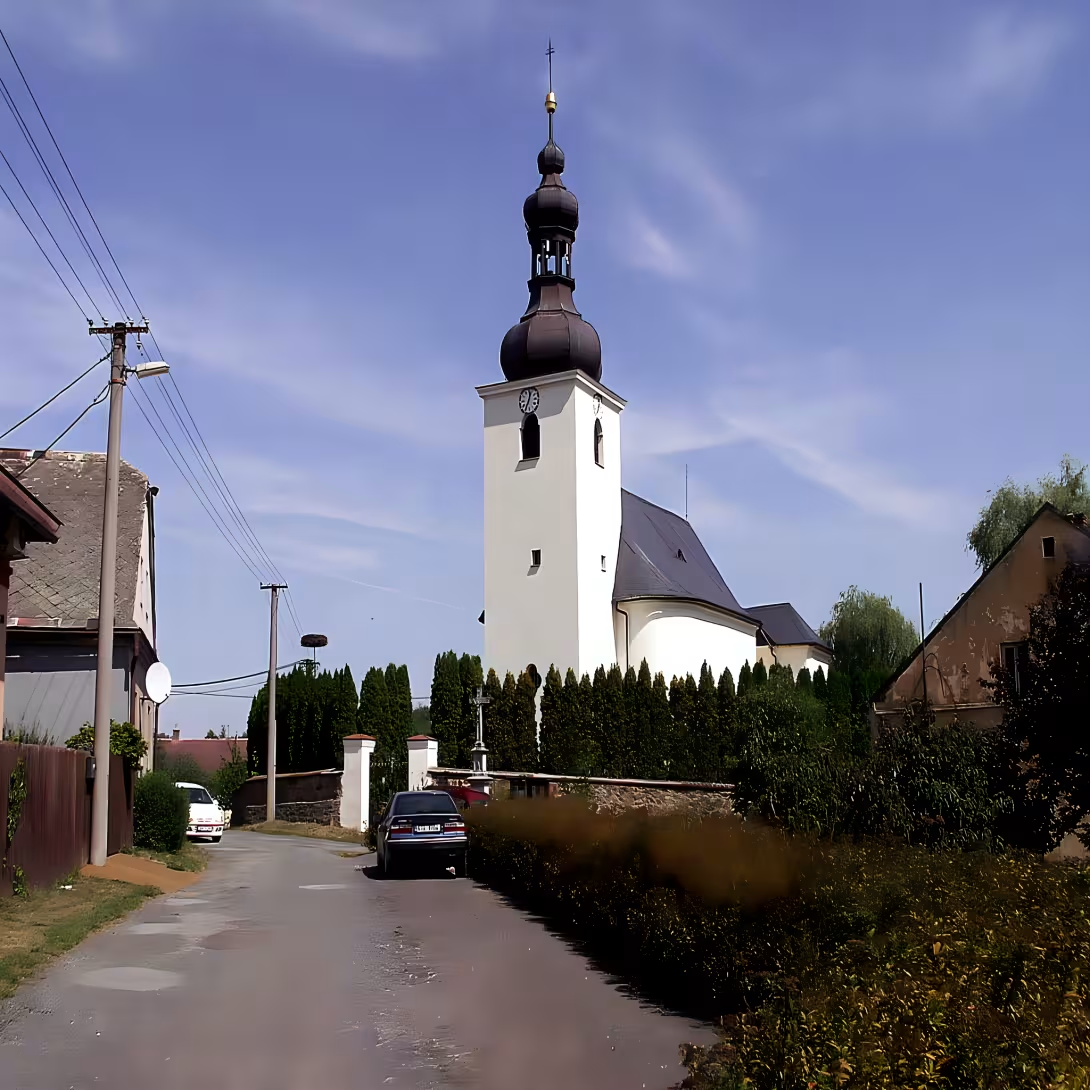
Saint Urban Church in Vysoká is a remarkable Baroque parish church in the village Vysoká in the Bruntál region of the Moravian-Silesian region. This cultural monument is built between 1766 and 1767 and offers a single brick building with attached pyramid tower. It serves as a place of worship and a historical place reflecting architectural styles and social influences of its era.
The origin of Vysoká dates back to 1267 and refers to it as a settlement with a long history. In the mid-18th century, when the church was built, Europe experienced significant changes as a result of enlightenment. This period blended traditional and modern influences in architecture and culture across Bohemia, including Vysoká. Construction church at this time reflects these wider cultural shifts.
Architecturally, the church of St. Urban is characterized by its Baroque style, which is visible in its single-boat structure and pyramid tower attached to the facade. The brick construction embodies typical baroque features focusing on symmetry and grandeur. A stone wall dating back to the 19th century surrounds the church and adds historical significance.
During its history, the church was under the administration of the Roman Catholic diocese Bruntál, specifically within the parish of Vysoká u Krnova. This connection underlines his role as the main place of worship in the community. Over time, efforts have been made to preserve and restore its cultural importance. In 2008, funds were allocated to repair the roof through a regional programme aimed at restoring cultural monuments. The national agricultural funds have also made a significant contribution to its restoration and stressed greater recognition of its value.
One interesting aspect of the church is the bell from 1674 created by Mathias Munz. This bell weighs 500 kg with a diameter of 75 cm and bears a sign providing historical knowledge of Saint Urban's creation and commitment. Such details offer visitors a tangible connection to the past.
Today, the Church of Saint Urban remains open to visitors and serves both as a place of worship and as a cultural monument. Its preservation ensures that it remains an interesting place for those who explore Czech history and architecture. The church is a mixture of historical significance, architectural beauty, and the community role makes it a valuable place for anyone interested in the Moravian- Silesian heritage.
Visiting the church offers an opportunity to return to a time when Baroque architecture flourished under the influence of the Enlightenment. Its permanent presence is proof of the cultural and historical stories that shaped this region and called on visitors to appreciate its architectural elegance and historical depth.
Then and now
Drag the slider to compare how the landmark may have looked when it was built with the view today.
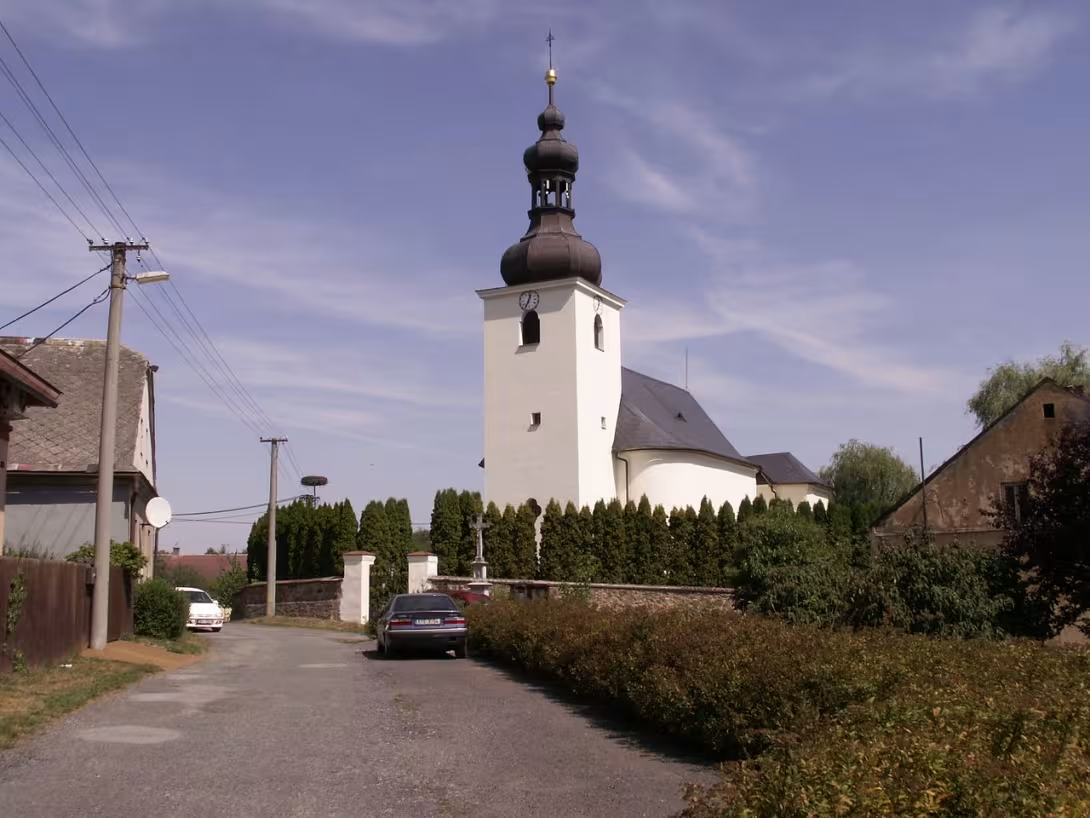
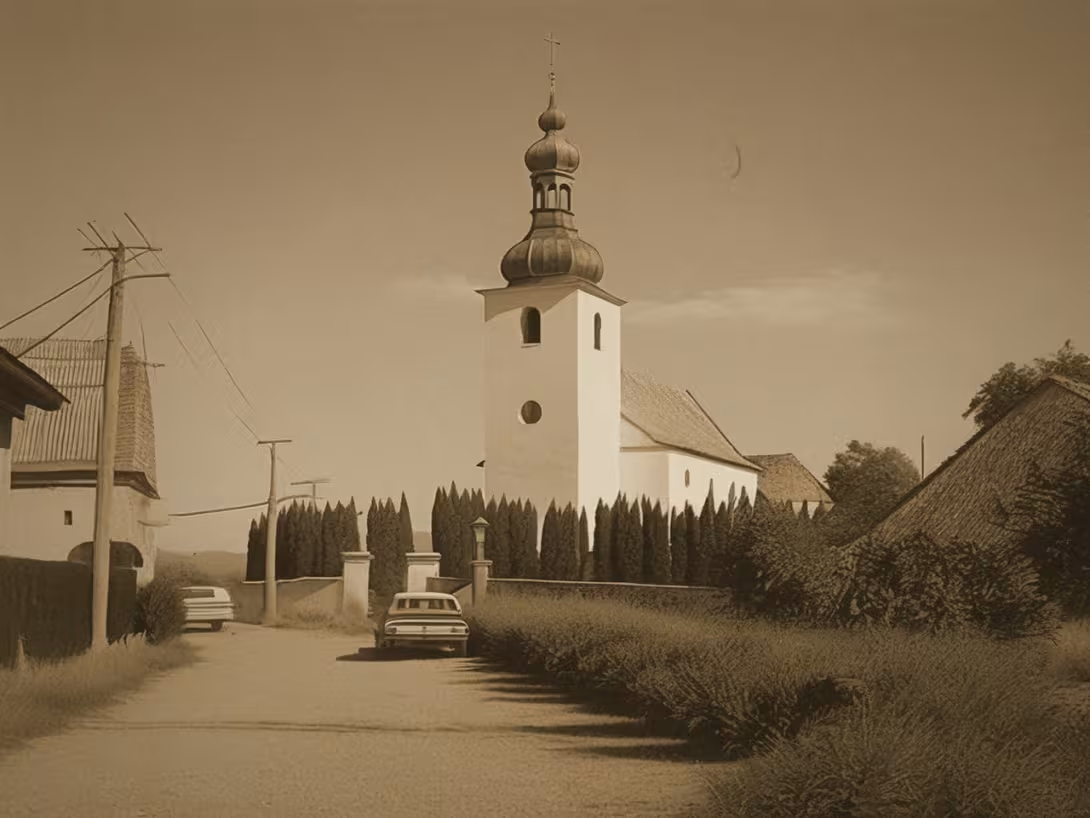
The historical appearance on the left is an AI-generated visualisation and serves as inspiration only.
Historical milestones
- 1267
- Vysoká is referred to as an agreement.
- 1766
- The beginning of the construction of St. Urban's Church.
- 1767
- The completion of the church of St. Urban.
- 1674
- Creating a bell from Mathias Munz.
- 2008
- Financing of roof repairs through a regional programme.
Architectural development
The Church of Saint Urban features its Baroque style with a single-boat structure and attached pyramid tower. The surrounding stone wall from the 19th century adds to historical architecture.
Historical events
The first written mention of Vysoká dates back to 1267.
In 2008, funds were allocated to repair the roof under the cultural heritage restoration programme.
Points of interest
- The church of St. Urban was built in 1766-1767.
- The first written mention of the village Vysoká is from 1267.
- The surrounding stone wall around the church dates back to the 19th century.
- 220 000 CZK was released to repair the roof of St. Urban's Church in 2008.
- The 1674 bell weighing 500 kg has a diameter of 75 cm and bears a sign about its shell and celebration of St. Urban.
Guide
This guide is narrated by a synthetic voice generated by artificial intelligence.
Show guide text
This text was created by artificial intelligence and has not been editorially reviewed. It may contain inaccuracies.
Welcome to the historic church of Saint Urban in Vysoká! As you stand before this remarkable structure, take a moment to absorb its peaceful presence and architectural grace. This one-arm brick Baroque building captures your view with its distinctive longitudinal design and attached pyramid tower that reaches the sky.
Let's dive into his origins. The Church of Saint Urban was built in a short but significant period from 1766 to 1767, reflecting the rapid architectural development influenced by enlightenment ideas during this time. Before this church, Vysoká has been recognised as an established settlement since 1267.
Architecturally, you can see the simplicity and elegance of its baroque style, which often contains sophisticated decorations, but in this case it is extremely underrated. The brick construction church offers a warm texture that complements the surrounding stone wall that surrounds it - proof of the craftsmanship of this period. If you look around, imagine the skilled craftsmen who revived this vision.
While particular architects and historical figures remain unknown, the Church of Saint Urban holds its own stories inside these walls. One remarkable feature is the 1674 bell from Mathias Munz, which hangs in the tower. This bell carries inscriptions that whisper stories from centuries ago, and they call on you to listen carefully as it echoes.
The interesting aspect of this church lies in its fast construction period - only two years, an act reflecting ambition and efficiency at the time of enlightenment. Despite the Baroque style, known for decorative details, this church maintains relative simplicity, which offers a unique contrast which calls for contemplation.
As you continue to explore, consider how this place served as a parish church under the Roman Catholic diocese in Bruntál, providing spiritual guidance and community cohesion over time. In 2008, the commitment of the region to preserve its heritage was evident when financing roof repairs came from a regional programme that ensured that future generations could experience its beauty.
Now I urge you to wander around this historic place, immerse yourselves in its atmosphere and think about its stories. Whether you are attracted to architectural curiosity or spiritual contemplation, there is much to discover. Thank you for joining me on this journey through time at Saint Urban Church. May your research be rewarding and inspiring.
Businesses nearby
Do you run a restaurant, accommodation, shop, museum, rental, wellness or other visitor service near this monument? Show yourself directly to the people heading to it — this is how they will see you in the app and on the web:
Nearby
ITEX Show interactive overview of the surroundings - restaurants, accommodation, rentals and other places within a 15 km radius.
Data: OpenStreetMap contributors, 15 km radius.
‡ Historical monuments
- sv Jan Nepomucký (2.0 km)
- Joseph von Eichendorff (4.6 km)
- Pomnik walczącej młodzieży w II wojnie światowej (pomnik harcerski) (6.5 km)
- Kolona Maryjna (6.7 km)
- Figura św. Jana Nepomucena (6.7 km)
- Statua Jan Nepomucena (7.1 km)
- Pozostałości Młynu Wodnego (7.1 km)
- mining monument (7.8 km)
Restaurant and catering
- U Shooter (2.6 km)
- U Kamila (4.5 km)
- Guesthouse Eden (4.9 km)
- Dwork Szumilas (5.9 km - 3)
- Farma Foltis (7.8 km)
- Restaurant Gól (10.8 km)
- Picolo (13.6 km - Krnovská)
- Hotel Pradad Thamm (13.6 km)
Accommodation
- Vilka Anna (4.0 km)
- Kantadali Village Domki Prestige (6.0 km - 2)
- Ośrodek Chrobry (8.5 km)
- Ośrodek Natura (8.5 km)
- Szkolne Schronisko Młodzieżowe w Głuchołazak (8.6 km)
- Autocamp (9.0 km)
- Kemp Personlaha (9.0 km)
- Złota Dolina (9.8 km)
› Rental and sports
- Hala Sportowa Obuwnik (5.8 km - Łucznicza 1)
- Club Sportowy Obuwnik (5.9 km)
- MixFitness (6.3 km - Włoska 10)
- Kompleks Sportowy "Sojka" (6.5 km)
- 4F (7.6 km)
- Martes Sport (7.6 km)
- Sport Ivan (13.8 km - Freedom Square 87)
© Tourism and nature
- Bun (6.6 km)
- Silesian Rudoltice (inn) (9.0 km)
- Spring of the creek Zhorova (9.2 km)
- Zamkowa Góra (9.4 km)
- Pod Border vrchem (9.5 km)
- Olszak (10.0 km)
- Piekiełko (10.6 km)
- Krzyżówka (11.5 km)
Accommodation nearby
Themed route
Thematic Walking Tour: Discovering the Magic High
1. Kostel svatého Urbana (Vysoká) - Church Start your journey in the heart of Vysoká with the amazing Church of St. Urbana, a remarkable example of Baroque architecture, which stands as proof of the rich cultural and religious history of the region. Explore its intricate interior, characterized by beautiful frescoes and impressive organ. The church is not only a place of worship, but also a monument that surrounds centuries of artistic expression.
2. St Urban's Tanks - Church Court After immersed in the spiritual environment inside, get out to admire the peace of the Tanks Church of St. Urban. This courtyard offers a peaceful sanctuary with its well-maintained gardens and historic tombstones that tell stories of past generations. It is an ideal place for reflection or simply enjoy peace away from the rush.
3. Local memorial - Local memorial A short walk from the church will lead you to a moderate local monument dedicated to honoring local heroes and important historical events in the form of Vysoká. This monument serves as a reminder of the resilience and pride of the community and offers visitors a deeper understanding of the city's heritage.
4. City center - City center Continue your research by heading towards the lively center of the village. Here you will find charming streets lined with traditional architecture and local shops that reflect everyday life in Vysoká. It is an excellent opportunity to experience the community spirit, perhaps stop for coffee in one of the cozy cafes or browse craft crafts.
5. Church Park - Church Park Close your tour with a quiet walk in the nearby park near the church, where nature and history mix harmonically. The park offers a picturesque view, especially in spring, when flowers bloom in full bloom. It is an ideal place to relax or capture memorable photographs of the Highlands of Natural Beauty.
This thematic walking tour provides a comprehensive view of the cultural and historical nature of Vysoká, which makes it an enrichment experience for both local and visitors.
Seasonal recommendations
Spring: The Church of St. Urban's in the spring possible acquisition of one experience where nature lags out of its winter sleep. Green meadows and providing shrubs around the church live, which have historical architecture of the monument. Sunny days with mild temperatures extracted ideal for ordinary prosthetics and photographs. Inventories should be converted into national agreements, as spring market and rain storms are not included. There is no longer the desire to discover small crowds of tourists, especially in these days with a more sunny day, is ideal for those who have been exposed slightly without superior crowds. Due to the weather promunding, what are the risks that could be posed with long clothing and possible rain.
Summer: Summer is the Church of St. Urban in the High Favorite Designation for Own Resources, which require these data and bright sunlight to be connected. The atmosphere is full of life with which shrubs and beams translate a rich color contrast to the stone architecture of the church. This Regulation shall be binding in its entirety and directly applicable in all Member States. Inventory bodies should be equipped with an authorised sunflower course and light clothing intended for body temperature within the appropriate limits. Wall in the early order or if it is an intended restriction with smaller conceived people and allowed temperatures.
Autumn: In autumn, the Church of St. Urban offers a unique one-figure view, where the leaves of the trees are colored in live golden and red drafts. This seasonal change brings the romantic atmosphere of the monument, which is dazzling in the world of sunny dyes or the light of autumn clouds. The delegation decision shall not apply in respect of State aid to be granted to Member States and intended for sale. Všstavy should be equipped with veal because temperatures are falling, especially in the final phase of autumn. The winning contribution is possible, so that the resulting volume and rain may be imposed an additional contribution to the performance of duties.
Winter: The winter value of the Church of St. Urban offers a quiet experience where the surrounding landscape is covered with snow and a quiet atmosphere is howling. Although the opening times of the skeleton may be shorter because of cold temperatures, their signaling contribution is one-way photovoltaic in an easy landscape and the opportunity to enjoy its own resting areas. The entrustment authorities should be subject to measures with such obligations, gloves and mandatory obligations. As a result, it is necessary to verify that the conditions referred to in Article 1 (2) are met.
Visualizations and artistic views


The visualisations are generated by artificial intelligence and serve as inspiration.
Photos from the area
Real photos taken near the monument

Zdroj a licence jsou uvedeny u každého snímku.
Atmosphere of the place
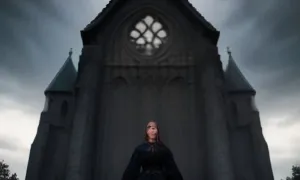
This atmospheric visualisation of the place and period was generated by artificial intelligence. It is not real footage of the location.
Tips from visitors
No tips yet. Be the first!
Log in and add your tip.
Sources and literature
Fotografie: BíláVrána / CC BY-SA 4.0, rozlišení zvýšeno umělou inteligencí — Wikimedia Commons. The author and licence also appear when you hover over the image.
Faktickým podkladem tohoto textu byl článek na Wikipedii, jehož autory jsou přispěvatelé Wikipedie. Článek je dostupný pod licencí CC BY-SA 4.0.
Location on the map
Příběhy a pověsti
Legendy, pověsti a příběhy spjaté s touto památkou
Fotografie návštěvníků
Zatím žádné fotografie. Buďte první, kdo přidá fotografii z návštěvy!
Přihlaste se a přidejte svou fotografii nebo hodnoťte.
Za ověřenou návštěvu v aplikaci získáte víc bodů — poznáme podle GPS, že jste na místě.
Reviews and comments