






Kostel svatého Václava a Božího Těla Church
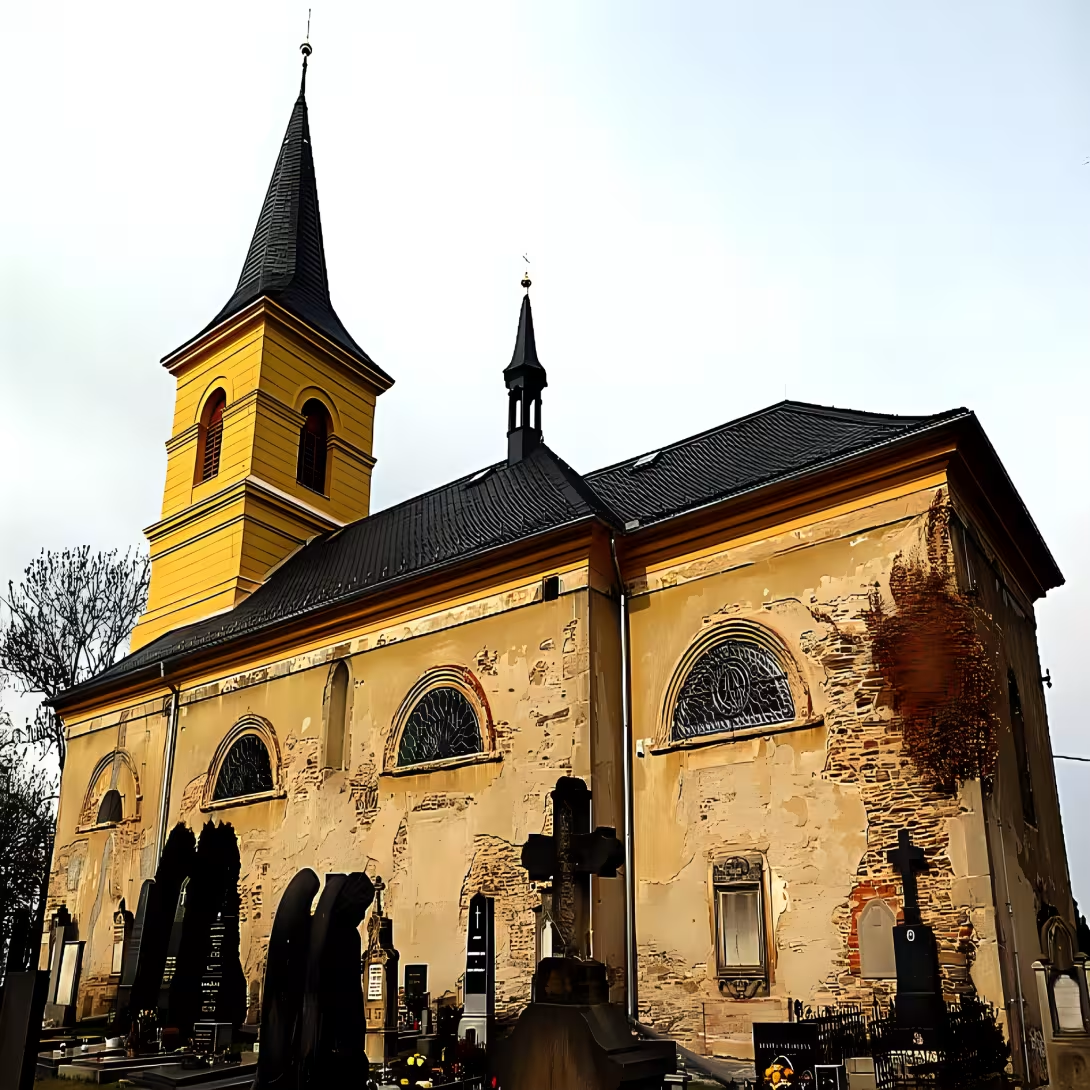
The Church of Saint Wenceslas and the Body of Christ in Křečhoř is a remarkable historical monument situated at the northern edge of the village near the road to Kamhajek. Documented since the early 14th century, this church evolved from a small Gothic structure through significant transformations during the Hussite Wars into its current Empire style form established between 1846 and 1848. Recognized as a cultural heritage site in the Czech Republic, it offers insights into architectural transitions and religious history.
The origins of this church trace back to the start of the 14th century when it first appeared in records. During the Hussite Wars, the church was converted into an Utraquist church, reflecting broader religious shifts in Bohemia at that time. The original Gothic structure, characterized by its wooden belfry and lack of a tower, underwent significant changes over the centuries. By 1846, it had been demolished to make way for a new design in the Empire style, completed two years later.
Architecturally, the church has transformed significantly from its initial form. The current structure is a single-nave building with a rectangular chancel and a spire adorning the western facade. While much of the original Gothic elements were replaced during reconstruction, some features remain intact. These include walls of the chancel and nave that still showcase narrow embedded Gothic windows. The west facade now boasts semi-circular windows and pilasters typical of the Empire style, marking a distinct departure from its earlier design.
Throughout its history, the church has seen various administrative changes. Initially serving as a parish church until at least 1350, it became part of the Kolín parish in 1626. After being demolished in 1846, it was rebuilt and consecrated on September 17th, 1848. The church underwent further renovations in 1930, which revealed some of its original Gothic details.
Several intriguing historical elements are associated with this site. A stone cross inscribed with the year 1318 and biblical texts once adorned the chancel wall, though it no longer remains there. Additionally, the original entrance portal from the west facade was relocated to a chapel in Chocenice, adding another layer of historical significance.
Today, the Church of Saint Wenceslas and the Body of Christ stands as a testament to architectural resilience and religious history. Visitors can explore its unique blend of Gothic remnants within an Empire-style structure, offering a tangible connection to the past. Its status as a protected cultural monument underscores its importance, making it a worthwhile destination for those interested in Czech heritage and architecture.
This church not only reflects historical shifts in Bohemia but also serves as a reminder of the enduring nature of faith and community through centuries of change. It invites visitors to step back in time and appreciate the layers of history embedded within its walls.
Then and now
Drag the slider to compare how the landmark may have looked when it was built with the view today.
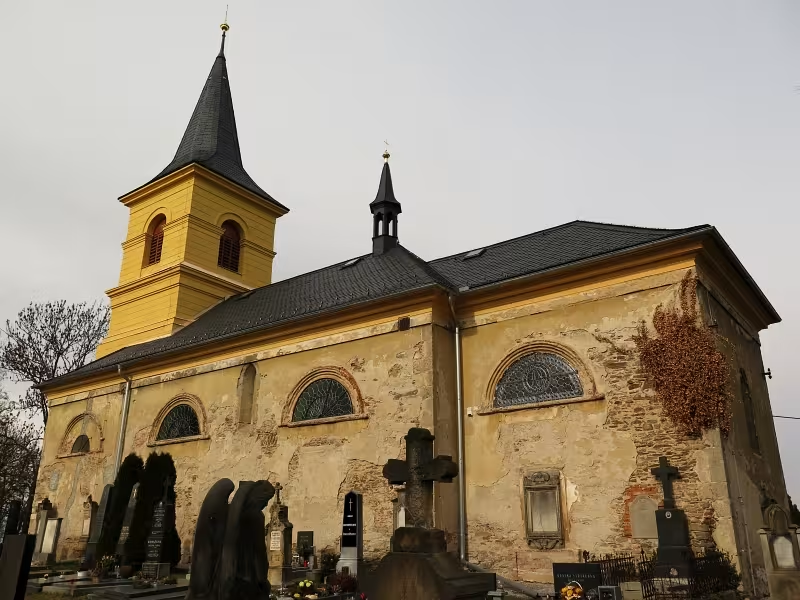

The historical appearance on the left is an AI-generated visualisation and serves as inspiration only.
Historical milestones
- 1363
- The first known parish priest died.
- 1626
- It became a branch church of the Kolín parish.
- 1848
- The new Empire-style church was consecrated on September 17th.
Architectural development
Originally a small Gothic church with wooden belfry and no tower, the current building is single-nave with a rectangular chancel and a spire over the western facade. The west facade features semi-circular windows and pilasters in Empire style. Some elements from the original Gothic structure remain, including walls of the chancel and nave with narrow embedded Gothic windows.
Historical events
In the early 14th century, the first records of the church were documented.
During the Hussite Wars, it became an Utraquist church.
The original structure was demolished and rebuilt in Empire style between 1846-1848.
Points of interest
- The Church of Saint Wenceslas and the Body of Christ in Křečhoř once featured a stone cross inscribed with the year 1318 and biblical texts on its chancel wall, though this artifact no longer remains at the site.
- During the Hussite Wars, the church was transformed into an Utraquist church, reflecting significant religious shifts in Bohemia during that era.
- The original entrance portal from the west facade of the church was relocated to a chapel in Chocenice, adding historical intrigue and connection between these sites.
- Before its demolition in 1846, the church served as part of the Kolín parish starting in 1626, indicating shifts in administrative oversight over time.
- In 1930, renovations at the church uncovered some original Gothic details that had been obscured by previous architectural changes.
Guide
This guide is narrated by a synthetic voice generated by artificial intelligence.
Show guide text
This text was created by artificial intelligence and has not been editorially reviewed. It may contain inaccuracies.
The Church of Saint Václav and the Body of Christ stands on the northern edge of Křečhoř in the Kolín district, on the road to Kamhajek. It is a Roman Catholic subsidiary church and is protected as a cultural monument.
The first records of the church date back to the early fourteenth century. By the year 1350 at the latest, it served as a parish church. The first known parish priest died in 1363. During the Hussite Wars, the church became Utraquist. From 1626 to 1682 it belonged as a subsidiary church to the Kolín parish, and the same has been true again since January 1, 2005.
Contemporary documents describe the original Gothic church as small and unsightly. It had no tower and the bells hung in a wooden bell tower. On the façade of the presbytery wall stood a stone cross with the date 1318, and the walls were decorated with ancient inscriptions with biblical texts. In 1818 the church was repaired, but as early as 1846 it was demolished. Between 1846 and 1848 a new building in the Empire style was constructed. The new church was consecrated in honor of the Body of Christ on September 17, 1848. Until 1948, however, it was referred to as the Church of Saint Václav. During repairs in 1930, original Gothic details were uncovered.
More has survived from the older Gothic structure than one might think. The walls of the presbytery with rusticated corners remained, as did the walls of the nave with narrow bricked-up Gothic windows. In the south wall is a bricked-up rectangular entrance portal. The Empire style, on the other hand, is evident in the western façade with pilasters and a triangular gable, as well as in the semicircular windows and façades. The original entrance portal from the western façade was transferred to the Chapel of Saint Anne in Chocenice and reinstalled there.
The church is single-naved and rectangular, with a rectangular presbytery and a prismatic tower above the western façade. The presbytery is vaulted with a Czech vault, the triumphal arch is semicircular, and the nave has a flat ceiling. In the western part of the nave is an Empire-style gallery.
The oldest interior monument is the evangelical sedilia in the presbytery from the first half of the fourteenth century. It is a recess forty-eight centimeters above the floor, forty-six centimeters deep and two meters and forty-six centimeters long. It is divided by two pilasters with plinths and corniced capitals. The capitals of the end pilasters are decorated with foliage in their lower half. Slightly closer to the altar is another recess, one meter above the ground, measuring eighty-three by one hundred twenty-six centimeters.
The church furnishings are mostly Neo-Renaissance, and the altar dates from 1892. The organ was built in 1822 by Josef Gartner.
Frequently asked questions
Can the monument be visited?
Religious buildings are usually open mainly during services; at other times a visit is normally arranged with the parish or the operator. We have not verified specific times.
Where is the monument?
Location: Křečhoř, Středočeský kraj. The map on this page shows the exact spot.
Why is the monument protected?
It is listed in the Central List of Cultural Monuments of the Czech Republic as a cultural monument (register no. 41960/2-815).
Businesses nearby
Do you run a restaurant, accommodation, shop, museum, rental, wellness or other visitor service near this monument? Show yourself directly to the people heading to it — this is how they will see you in the app and on the web:
Accommodation nearby
Trips and activities nearby
Guided tours, tickets and activities nearby from GetYourGuide
Affiliate link: if you buy from the partner, we may receive a commission. The price for you does not change.
Search tours and activities →Themed route
Thematic Walking Tour: Křečhoř and the Church of St. Wenceslas and the Body of Christ
1. Church of St. Wenceslas and the Body of Christ (Church) Begin your journey at the heart of Křečhoř with the Church of St. Wenceslas and the Body of Christ. This stunning Baroque church, dating back to the 18th century, is a testament to the rich architectural heritage of the region. Its intricate façade and beautifully preserved interior make it an essential visit for anyone interested in historical architecture and religious art.
2. Křečhoř Village Square (Public Space) A short walk from the church will take you to the Křečhoř Village Square, a charming public space that serves as the social hub of the village. This area is perfect for soaking up local life, with its quaint cottages and traditional Czech atmosphere. It's an ideal spot to relax and perhaps enjoy a coffee at one of the nearby cafes.
3. Local Historical Markers (Monuments) As you explore further around Křečhoř, keep an eye out for Local Historical Markers scattered throughout the village. These markers provide insights into the area's past, highlighting significant events and figures that have shaped local history. They offer a deeper understanding of the cultural heritage that defines this charming community.
4. Surrounding Countryside Walk (Nature Trail) Conclude your tour with a leisurely walk through the Surrounding Countryside, just outside Křečhoř. This area offers picturesque views and a peaceful escape into nature, allowing you to reflect on the day's experiences while enjoying the serene landscape typical of the Středočeský region.
This thematic walking tour provides a comprehensive exploration of Křečhoř, focusing on its historical and cultural highlights without straying beyond the village’s immediate surroundings.
Seasonal recommendations
Spring: Visiting the Church of St. Wenceslas and Body of Christ during spring offers a unique experience as nature begins to bloom around Křečhoř, enhancing the church's serene beauty with vibrant colors. The gentle light filtering through budding trees creates an ethereal atmosphere perfect for reflection. Spring is generally less crowded than summer, making it ideal for those seeking tranquility without large crowds. Visitors should wear comfortable walking shoes and layers, as temperatures can vary throughout the day.
Summer: Summer brings long days of sunshine to Křečhoř, illuminating the Church of St. Wenceslas with a warm glow that accentuates its architectural details. The lush greenery surrounding the church is at its peak, providing a picturesque backdrop for photography enthusiasts. However, this season also attracts more visitors, so it's advisable to arrive early in the morning to avoid crowds and fully enjoy the site’s beauty. Light clothing and sun protection are recommended due to the warmer weather.
Autumn: Autumn transforms Křečhoř into a tapestry of reds, oranges, and yellows, offering a stunning visual contrast against the historic church. The cooler temperatures create a crisp atmosphere ideal for leisurely strolls through the surrounding landscape while admiring the changing foliage. This season is perfect for those who appreciate nature's palette without the summer crowds. Visitors should dress in layers to accommodate fluctuating temperatures and consider bringing an umbrella, as autumn weather can be unpredictable.
Winter: Winter at Křečhoř presents a serene and mystical experience with snow-covered landscapes that provide a magical setting around the Church of St. Wenceslas. The shorter days mean the church is often shrouded in soft, diffused light or twinkling under streetlights, creating an enchanting atmosphere. While fewer visitors typically explore during this time, it's important to dress warmly and wear sturdy boots for walking on potentially icy paths. Due to limited daylight hours, planning your visit earlier in the day will allow you to make the most of your time at the site.
Visualizations and artistic views


The visualisations are generated by artificial intelligence and serve as inspiration.
Photos from the area
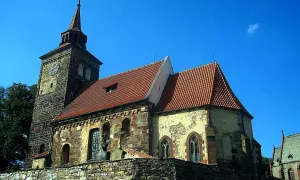
Real photos taken near the monument


Zdroj a licence jsou uvedeny u každého snímku.
Atmosphere of the place
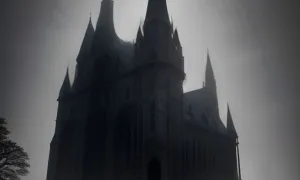
This atmospheric visualisation of the place and period was generated by artificial intelligence. It is not real footage of the location.
Tips from visitors
No tips yet. Be the first!
Log in and add your tip.
Sources and literature
Photos: Sovicka169 / CC BY-SA 4.0, rozlišení zvýšeno umělou inteligencí — Wikimedia Commons. The author and licence also appear when you hover over the image.
Faktickým podkladem tohoto textu byl článek na Wikipedii, jehož autory jsou přispěvatelé Wikipedie. Článek je dostupný pod licencí CC BY-SA 4.0.
Location on the map
Příběhy a pověsti
Legendy, pověsti a příběhy spjaté s touto památkou
Fotografie návštěvníků
Zatím žádné fotografie. Buďte první, kdo přidá fotografii z návštěvy!
Log in a přidejte svou fotografii nebo hodnoťte.
Za ověřenou návštěvu v aplikaci získáte víc bodů — poznáme podle GPS, že jste na místě.
Reviews and comments