






Kostel svatého Václava (Brozánky) Church
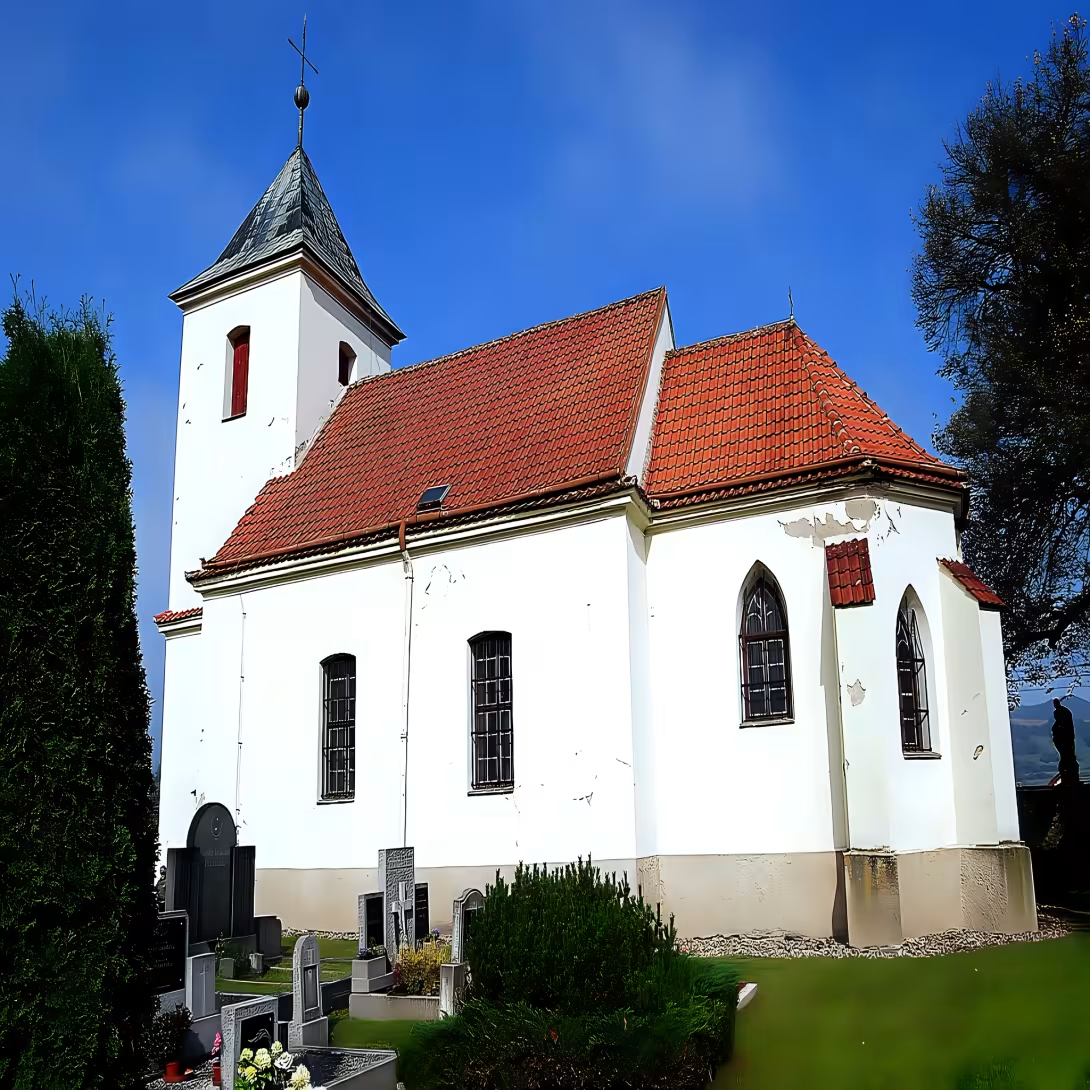
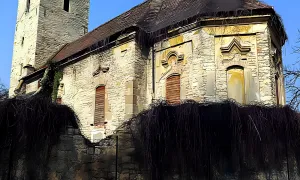
The Church of Saint Václav in Brozánky exemplifies architectural evolution from Gothic to Baroque styles. Situated in Brozánky within the Ústecký kraj region, this church was originally built in the 14th century and first documented in historical records in 1352. It transformed into its current Baroque form in 1718. Located on a gentle elevation above Bílina near a railway station, it is surrounded by an operational cemetery. Recognized for its cultural significance since 1963, the church is notable not only for its architectural transition but also for its intricate artistic details reflecting broader European Gothic and Baroque trends.
The origins of the Church of Saint Václav trace back to the 14th century when it was initially constructed as a Gothic structure. During this period, Bohemia was part of the Holy Roman Empire, experiencing significant cultural and architectural developments influenced by wider European movements. The church's first recorded mention in 1352 marks its early regional significance. By 1718, substantial renovations transformed it into its present Baroque form, reflecting changes in artistic tastes and religious practices.
Architecturally, the Church of Saint Václav showcases both Gothic and Baroque influences. Original Gothic elements are evident in the three-sided closed presbytery, which retains historical significance despite later modifications. The church's oblong Baroque nave contrasts with these older features, showcasing segmental windows framed in stucco that enhance its aesthetic appeal. A distinctive spire topped by a pyramidal roof adds vertical emphasis to the structure. Inside, the nave is characterized by hipped vaults and lunettes, while the presbytery boasts a cross-ribbed vault with a star-shaped conclusion. The use of consoles where herringbone ribs converge highlights the intricate craftsmanship involved in its construction.
Throughout its history, the Church of Saint Václav has undergone various restoration phases, particularly during the 70s and 80s of the 20th century, ensuring its preservation as a cultural monument. The church's interior features significant artistic elements, including a main altar dating back to around 1500. This Gothic altar was restored in 1718, featuring movable wings painted on both sides, depicting scenes from the life of Saint Václav and biblical events related to the Virgin Mary. Although some parts were heavily repainted early in the 20th century, the altar remains a focal point of artistic interest.
Adjacent to the church stands a mid-18th-century Pieta statue, adding historical and cultural depth to the site. This statue features reliefs of the Holy Trinity, Saint Anne, and Saint Francis of Assisi on its base, reflecting the religious significance and artistic endeavors of that era.
Today, the Church of Saint Václav remains a well-preserved monument open for visitors who wish to explore its rich history and architectural beauty. Its status as a protected cultural site ensures ongoing conservation efforts, making it an accessible destination for those interested in historical architecture and art. The church's blend of Gothic and Baroque elements, along with its surrounding cemetery and the Pieta statue, offer a comprehensive glimpse into the region's past.
Visiting the Church of Saint Václav provides not only a journey through architectural history but also an opportunity to appreciate the cultural heritage preserved in Brozánky. Its significance as a monument is underscored by its enduring beauty and historical importance, inviting visitors to explore and reflect on the artistic and spiritual legacy it represents.
Then and now
Drag the slider to compare how the landmark may have looked when it was built with the view today.
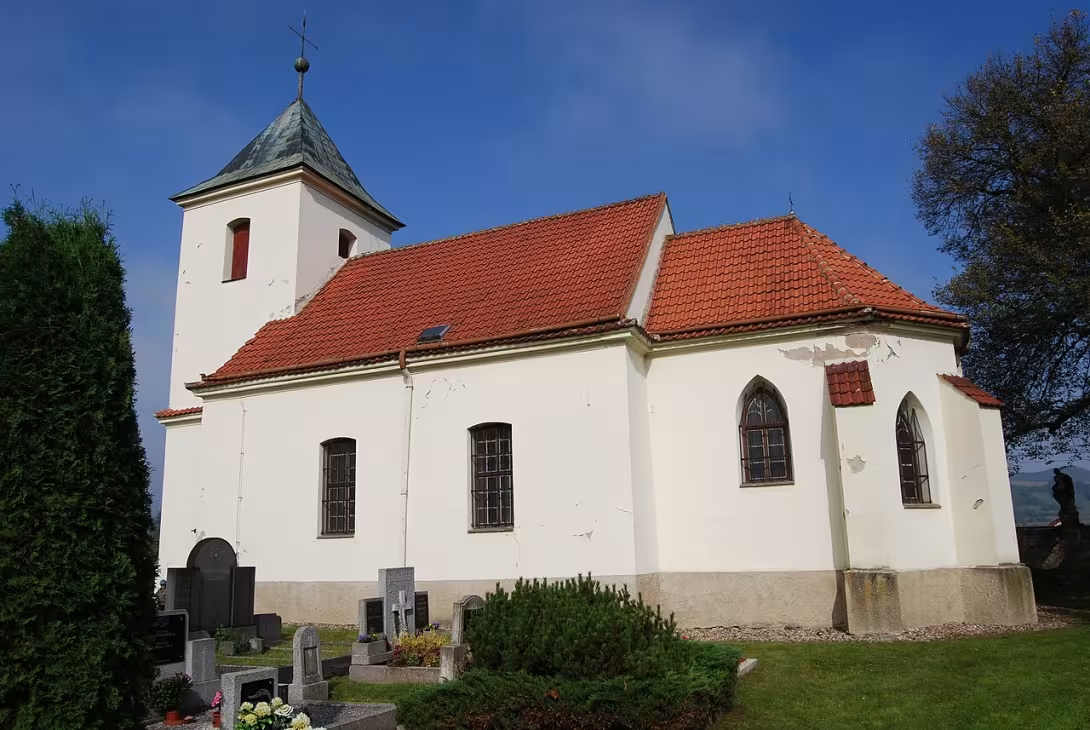

The historical appearance on the left is an AI-generated visualisation and serves as inspiration only.
Historical milestones
- 1352
- The church was first mentioned in historical records.
- 1718
- The church underwent Baroque renovations.
Architectural development
The Church of Saint Václav began as a Gothic structure and later evolved into its present Baroque form through renovations completed in 1718. The building features an oblong Baroque nave with a three-sided closed Gothic presbytery, topped by a spire with a pyramidal roof. Notable architectural elements include segmental windows framed in stucco and hipped vaults with lunettes.
Historical events
The original Gothic church was first mentioned in records in 1352.
In 1718, the church underwent significant Baroque renovations.
Points of interest
- The Church of Saint Václav's architectural evolution from Gothic to Baroque styles mirrors broader European trends during its time, showcasing how local religious buildings were influenced by wider cultural shifts.
- Despite being a prominent site for centuries, the church’s first documented mention in 1352 suggests that it may have existed even earlier, highlighting the often undocumented early history of many medieval structures.
- The main altar, dating back to around 1500 and restored in 1718, features movable wings with paintings on both sides. This design reflects a unique blend of functionality and artistry typical of Gothic altars transitioning into Baroque aesthetics.
- A mid-18th-century Pieta statue near the church adds cultural depth, featuring reliefs of the Holy Trinity, Saint Anne, and Saint Francis of Assisi, indicating the diverse religious influences present at the site during that period.
- The church's location on a gentle elevation above Bílina not only provides a picturesque setting but also suggests its historical role as a prominent landmark for travelers approaching from the railway station.
Guide
This guide is narrated by a synthetic voice generated by artificial intelligence.
Show guide text
This text was created by artificial intelligence and has not been editorially reviewed. It may contain inaccuracies.
The Church of Saint Wenceslas in Brozánky is a Roman Catholic branch church that originated as a Gothic structure and was later adapted in the Baroque style. It stands on a gentle elevation above Bílina in the center of the village, above a railway station, and is surrounded by a still-used cemetery. Since nineteen sixty-three, it has been protected as a cultural monument.
The first mention of the church dates from thirteen fifty-two. The original Gothic building from the fourteenth century was rebuilt in seventeen eighteen into its present Baroque form. Repairs took place in the nineteen seventies and nineteen eighties.
Both stylistic periods are clearly distinguishable on the structure. The Baroque nave has a rectangular floor plan and rectangular windows with segmental tops in stucco frames. It is adjoined by the older Gothic presbytery, which is the space around the main altar. It is enclosed on three sides and reinforced on the outside by buttresses. Its pointed windows with false tracery date from the end of the nineteenth century. In front of the nave rises a prismatic tower with a pyramidal roof.
Inside, the nave is covered by a barrel vault with lunettes. The gallery is brick and a pointed triumphal arch leads into the presbytery. The presbytery is covered by a Gothic cross rib vault. The ribs have a pear-shaped profile and converge on consoles. Access to the sacristy is through a pointed portal.
The most valuable part of the furnishings is a Gothic main altar from around fifteen hundred. It was restored in seventeen eighteen. It is a three-part winged altar with two moveable wings that are painted on both sides. In the center is an image of Saint Wenceslas and above it the Madonna with the Christ Child. On the inner sides of the wings are scenes from the life of the Virgin Mary: the Annunciation, the Visitation, the Nativity of the Lord, and the Adoration. The center of the altar and the inner sides of the wings were heavily repainted during restoration at the beginning of the twentieth century. The outer sides of the wings with faintly distinguishable figures of saints were not restored and are difficult to access.
A Baroque side altar from the first half of the eighteenth century has the form of a columned portal and bears an image of Saint Mary Magdalene.
On the edge of the village stands a statue of the Pietà from the middle of the eighteenth century. On its base are reliefs of the Holy Trinity, Saint Anna, and Saint Francis of Assisi.
Frequently asked questions
Can the monument be visited?
Religious buildings are usually open mainly during services; at other times a visit is normally arranged with the parish or the operator. We have not verified specific times.
Where is the monument?
Location: Brozánky, Ústecký kraj. The map on this page shows the exact spot.
Why is the monument protected?
It is listed in the Central List of Cultural Monuments of the Czech Republic as a cultural monument (register no. 43572/5-238).
Businesses nearby
Do you run a restaurant, accommodation, shop, museum, rental, wellness or other visitor service near this monument? Show yourself directly to the people heading to it — this is how they will see you in the app and on the web:
Nearby
Near the church, there is a statue of Pieta from the mid-18th century, featuring reliefs of the Holy Trinity, Saint Anne, and Saint Francis of Assisi on its base.
Accommodation nearby
Trips and activities nearby
Guided tours, tickets and activities nearby from GetYourGuide
Affiliate link: if you buy from the partner, we may receive a commission. The price for you does not change.
Search tours and activities →Themed route
Thematic Walking Tour: Brozánky
1. Kostel svatého Václava (Brozánky) - Church Begin your journey at the heart of Brozánky with the charming Church of Saint Wenceslas. This historic church, dating back to the 14th century, is a testament to the region's rich architectural heritage. Its serene atmosphere and intricate Gothic features make it an ideal starting point for exploring local history and spirituality.
2. Statue of Pieta - Sculpture A short walk from the church, discover the mid-18th-century Statue of Pieta. This poignant sculpture captures a moment of deep emotion and is adorned with reliefs depicting the Holy Trinity, Saint Anne, and Saint Francis of Assisi on its base. The statue offers insight into religious artistry and devotion prevalent during that era.
3. Relief of the Holy Trinity - Sculpture Located at the base of the Pieta statue, take a moment to appreciate the detailed relief of the Holy Trinity. This artwork is not only a visual treat but also serves as an educational piece on theological symbolism in religious art, reflecting the community's spiritual values.
4. Relief of Saint Anne - Sculpture Nearby, observe the exquisite relief of Saint Anne, mother to the Virgin Mary. The craftsmanship highlights her significance within Christian iconography and provides a glimpse into the artistic influences that shaped local religious sculptures during the 18th century.
5. Relief of Saint Francis of Assisi - Sculpture Conclude your tour with the relief of Saint Francis of Assisi, renowned for his dedication to poverty, humility, and love for all creatures. This piece invites reflection on the teachings of one of Christianity's most beloved saints and underscores the cultural and spiritual narratives cherished in Brozánky.
This thematic walking tour offers a compact yet enriching exploration of Brozánky’s religious art and history, centered around its main church and nearby sculptures.
Seasonal recommendations
Spring: Visiting the Church of Saint Wenceslas in Brozánky during spring offers a unique experience as nature comes to life around this historic site. The surrounding landscape is adorned with blooming wildflowers and fresh greenery, creating an enchanting atmosphere that enhances the church's serene beauty. As daylight extends, visitors can enjoy longer hours exploring both the interior and exterior of the church. It’s advisable to wear comfortable walking shoes for a gentle stroll through the picturesque surroundings and bring along a light jacket in case of cool breezes.
Summer: Summer is an ideal time to visit the Church of Saint Wenceslas due to its pleasant weather, allowing visitors to fully appreciate both the architectural details inside and the lush greenery outside. The longer daylight hours mean more time for exploration, but it's wise to arrive early to avoid larger crowds during peak tourist season. Light clothing is recommended to stay comfortable in the warm temperatures, along with sun protection such as hats or sunglasses.
Autumn: Autumn brings a distinct charm to Brozánky and its Church of Saint Wenceslas, with vibrant fall foliage painting the landscape in rich hues of red, orange, and yellow. The cooler air adds a crispness that enhances the historical ambiance of the site, making it an inviting setting for photography and reflection. As days begin to shorten, planning your visit during daylight hours is advisable. Layered clothing will help accommodate the changing temperatures throughout the day.
Winter: Winter transforms the Church of Saint Wenceslas into a serene winter wonderland, with snow often blanketing Brozánky in a soft layer that adds a magical quality to its historic architecture. The shorter days and colder weather mean visiting hours may be limited, so arriving early is recommended. Warm clothing, including coats, hats, gloves, and sturdy boots, is essential for comfort during your visit. Despite the chill, the quiet atmosphere makes it an ideal time for those seeking peace and reflection.
Visualizations and artistic views


The visualisations are generated by artificial intelligence and serve as inspiration.
Photos from the area
Real photos taken near the monument


Zdroj a licence jsou uvedeny u každého snímku.
Tips from visitors
No tips yet. Be the first!
Log in and add your tip.
Sources and literature
Photos: Martin Davídek / CC BY-SA 4.0, rozlišení zvýšeno umělou inteligencí — Wikimedia Commons. The author and licence also appear when you hover over the image.
Faktickým podkladem tohoto textu byl článek na Wikipedii, jehož autory jsou přispěvatelé Wikipedie. Článek je dostupný pod licencí CC BY-SA 4.0.
Location on the map

Příběhy a pověsti
Legendy, pověsti a příběhy spjaté s touto památkou
Fotografie návštěvníků
Zatím žádné fotografie. Buďte první, kdo přidá fotografii z návštěvy!
Log in a přidejte svou fotografii nebo hodnoťte.
Za ověřenou návštěvu v aplikaci získáte víc bodů — poznáme podle GPS, že jste na místě.
Reviews and comments